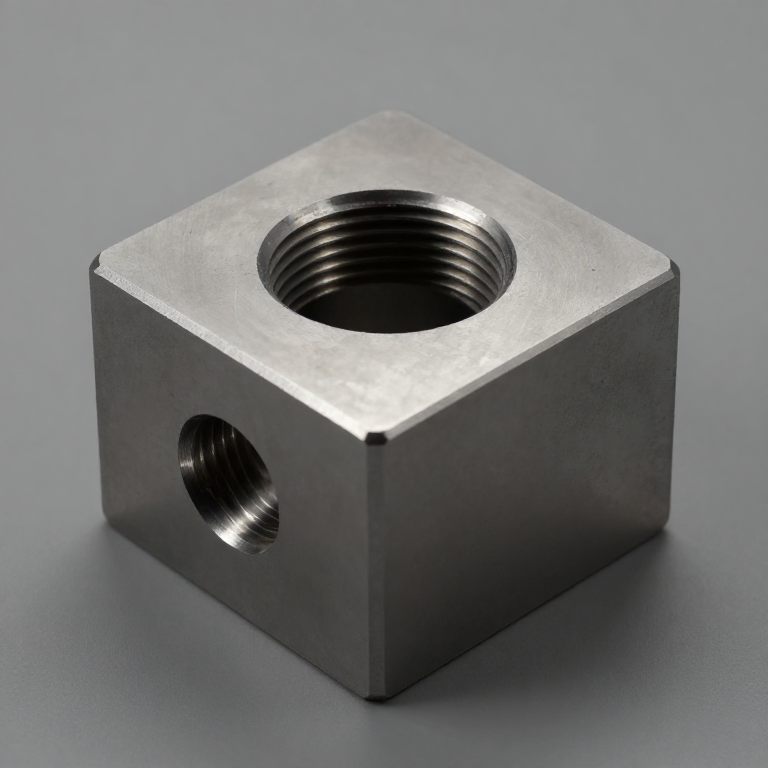


Electroless Nickel Plating
Every plating process before this one had the same blind spot: current. Electricity does not distribute itself evenly over an awkward shape — it crowds onto edges and corners and barely reaches into recesses. Plate a threaded blind hole and the mouth gets thick, the bottom gets nothing. Plate the inside of a long tube and you cannot reach it at all.
Electroless nickel removes the current. The bath reduces nickel chemically, using sodium hypophosphite as the reducing agent, and the reaction is autocatalytic — it happens only on a catalytic surface, and freshly deposited nickel is itself catalytic. So it starts on the part, and it keeps going on what it has already laid down.
The consequence is the point: with no current there is no current distribution, so the coating is the same thickness everywhere the liquid touches. Inside bores, in threads, in blind holes, on complex castings. It will also plate non-conductors once they are catalysed, which electroplating cannot do at all.
Abner Brenner and Grace E. Riddell at the US National Bureau of Standards found it in 1946 while trying to plate the inside of tubes — the hypophosphite was there to do something else, and its reducing behaviour was the surprise. US 2,532,283, "Nickel plating by chemical reduction", filed 5 May 1947, granted 5 December 1950.
নির্দেশ
Mix the bath
Mix the bath
In 1 litre of distilled water dissolve, in this order:
25 g nickel sulfate — the metal source.
25 g sodium hypophosphite — the reducing agent, doing the job the power supply used to do.
15 g sodium citrate — a complexing agent, which holds nickel in solution so it plates on the part instead of precipitating everywhere at once.
Adjust to pH 4.5–5.0. Goggles and gloves.
এই ধাপের উপকরণ:
 Nickel Sulfate Hexahydrate25 গ্রা
 Sodium Hypophosphite25 গ্রা
 Sodium Citrate15 গ্রা
 Distilled Water (1 Liter)1000 মিলি
আবশ্যক উপকরণ:
 Glass Beaker
 Anti-Fog Safety Goggles
 Nitrile Disposable Gloves
Choose a part with a hole in it
Choose a part with a hole in it
Use a steel part with a deep recess, a bore or a thread — not a flat plate. Clean to bare metal and degrease.
A flat coupon will not show you anything. The recess is the experiment: it is the place electroplating cannot reach.
এই ধাপের উপকরণ:
 Mild Steel Flat Bar1 টুকরা
Heat the bath and immerse — no wiring at all
Heat the bath and immerse — no wiring at all
Bring the bath to 88–92 °C and hold it there. Lower the part in.
There is no power supply and no anode. Nothing is clipped to the part. Steel is catalytic, so deposition begins on contact and then sustains itself on the nickel it has just laid down — that is what autocatalytic means.
Temperature is the throttle: below about 85 °C the reaction stalls, above 95 °C the whole bath decomposes and plates the glass.
আবশ্যক উপকরণ:
 Hot Plate
 Cooking Thermometer (0-200°C)
Plate for a measured time
Plate for a measured time
Deposition runs at roughly 15–25 µm per hour. Run 45 minutes for about 15 µm.
The bath depletes as it works — nickel and hypophosphite are consumed and are not replaced by an anode, unlike a copper plating bath. A tired bath slows and then stops.
Measure the thickness in the hard place
Measure the thickness in the hard place
Rinse and dry. The finish is uniform matt silver, slightly warmer in tone than bright electroplated nickel.
Now do the measurement that matters: compare coating thickness on an outside face against the bottom of the recess.
Expect them to be the same within a few per cent. On an electroplated part the same comparison typically shows several times more metal on the edge than in the recess. That single number is the whole reason the process exists.
History & Context
History & Context
The patent. US 2,532,283, "Nickel plating by chemical reduction", Abner Brenner and Grace E. Riddell, filed 5 May 1947, granted 5 December 1950. The specification argues its own case commercially — no "generators and rheostats" — and claims the deposit "has the same protective value as the plate secured by electrodeposition" in salt-spray testing.
It was an accident, and the record is unusually clear about it. Brenner and Riddell were at the National Bureau of Standards in 1946 trying to plate the inner walls of tubes with a nickel-tungsten alloy, using a citrate bath and an insoluble anode. The hypophosphite was in the bath for another purpose. Its reducing behaviour was the unexpected observation, and they followed it.
Not the first chemical nickel — the first controlled one. Chemical reduction of nickel had been seen before, by Wurtz in 1844 and in Roux's patent. The US Patent Office distinguished those as spontaneous and complete reactions — the bath dumps its metal everywhere and dies — from Brenner and Riddell's catalytic process, where deposition happens only on catalytic surfaces immersed in the bath. Controllability is the invention, not the chemistry.
Grace Riddell should be named. The process is frequently written as "Brenner's". The patent names them both, in that order.
What it is really used for now. Not decoration. The deposit is a nickel-phosphorus alloy, typically 7–12% phosphorus, and heat-treating it to about 400 °C precipitates nickel phosphide and takes the hardness up toward hardened steel. Oil-field valves, hydraulic bores, moulds, and the aluminium substrates of hard-disk platters are all electroless nickel — chosen for uniformity in places a current will not go.
সামগ্রী
5- 25 গ্রাপ্লেসহোল্ডর
- 25 গ্রাপ্লেসহোল্ডর
- 15 গ্রাপ্লেসহোল্ডর
- 1000 মিলিপ্লেসহোল্ডর
- 1 টুকরাপ্লেসহোল্ডর
আবশ্যক উপকরণ
5- প্লেসহোল্ডর
- প্লেসহোল্ডর
- প্লেসহোল্ডর
- প্লেসহোল্ডর
- প্লেসহোল্ডর
কনেক্টেড ব্লূপ্রিংট সামগ্রী
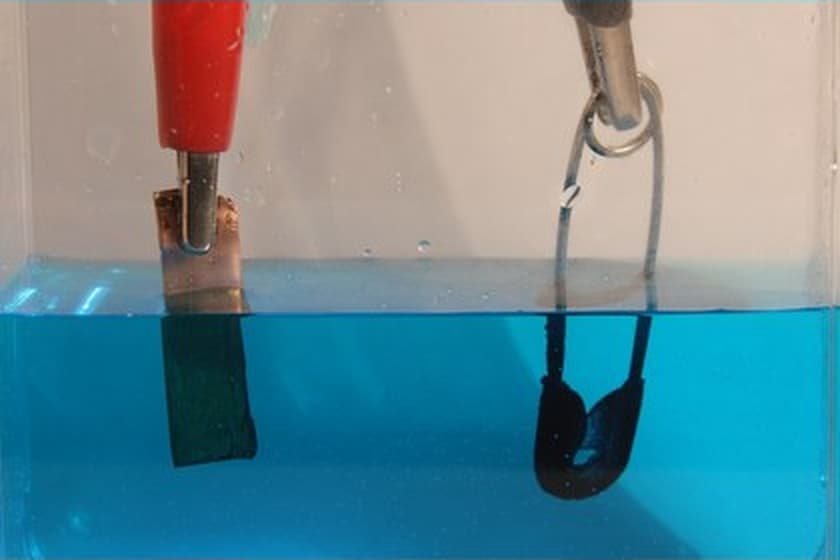
সম্পর্কিত ব্লুপ্রিন্ট
এই ব্লুপ্রিন্টগুলি জ্ঞান ভাগ করে — কৌশল, উপকরণ বা নীতি
CC0 পব্লিক ডোমেন
এই ব্লুপ্রিন্ট CC0-এর অধীনে প্রকাশিত। আপনি অনুমতি ছাড়াই যেকোনো উদ্দেশ্যে এটি অনুলিপি, পরিবর্তন, বিতরণ ও ব্যবহার করতে পারেন।
মেকারের ব্লুপ্রিন্টের মাধ্যমে পণ্য কিনে তাঁকে সমর্থন করুন, যেখানে তিনি আয় করেন মেকর কমীশন বিক্রেতাদের নির্ধারিত, অথবা এই ব্লুপ্রিন্টের একটি নতুন সংস্করণ তৈরি করে নিজের ব্লুপ্রিন্টে সংযোগ হিসেবে যুক্ত করে আয় ভাগ করুন।