
কলা
সৌন্দর্য এবং সুস্থতা
ক্রাফট
সংস্কৃতি ও ইতিহাস
বিনোদন
পরিবেশ
খাদ্য ও পানীয়
সবুজ ভবিষ্যৎ
রিভার্স ইঞ্জিনিয়ারিং
বিজ্ঞান
খেলাধুলা
টেকনোলজি
পরিধানযোগ্য
Making a Clay Crucible for Smelting — The Vessel That Holds Molten Metal
Forge

দ্বারা বনাযা গযা

Forge

26. মে 2026NO
২৪

Making a Clay Crucible for Smelting — The Vessel That Holds Molten Metal

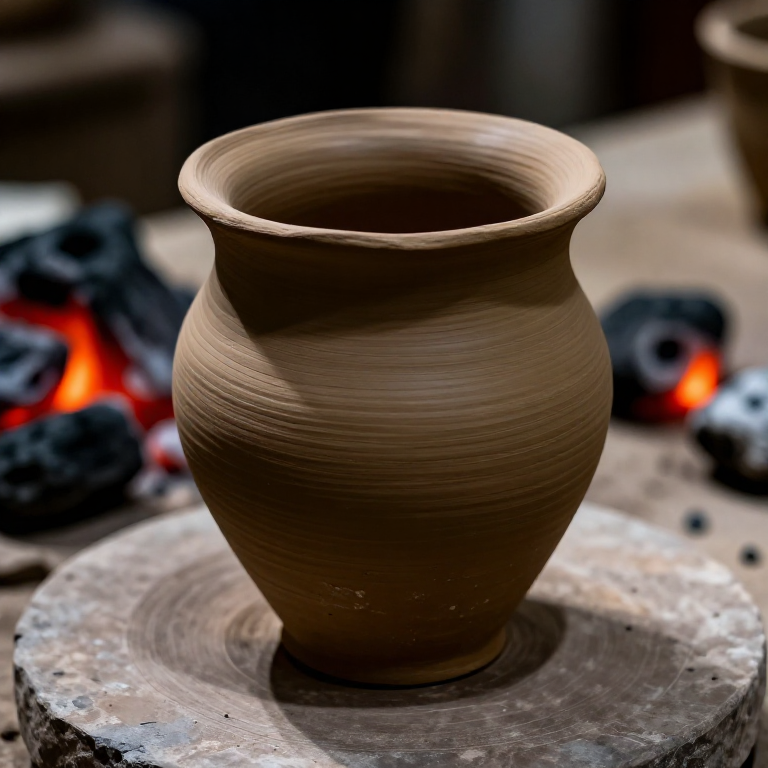
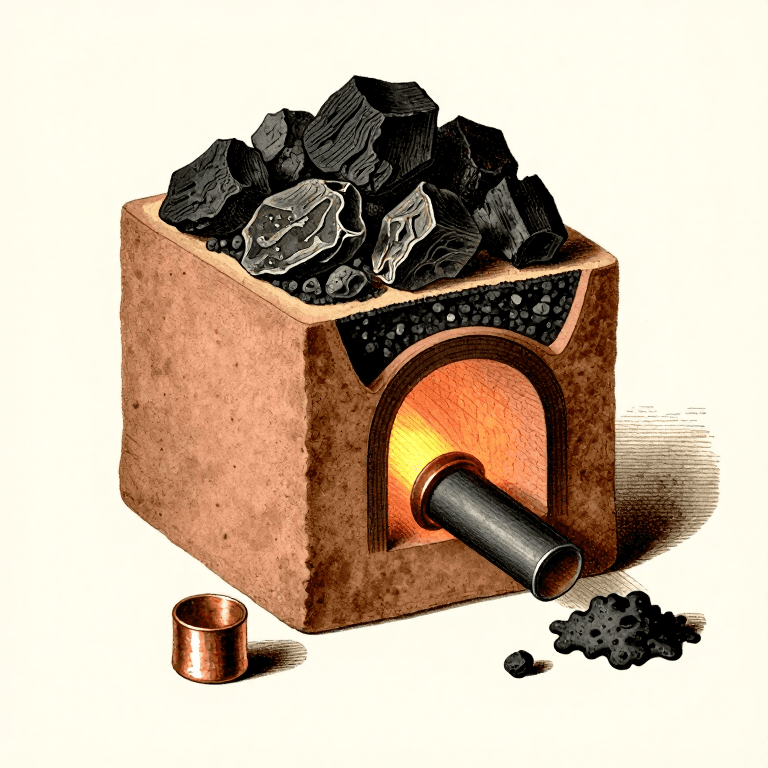
The clay crucible is the most essential tool in early metallurgy — a hand-formed vessel of refractory clay and grog that can withstand the 1,100 °C temperatures needed to melt copper and bronze. Without it, smelting is impossible.

This blueprint follows the Bronze Age method of mixing local clay with crushed pottery (grog) to create a thermal-shock-resistant vessel. The grog opens the clay body, allowing steam to escape during firing instead of shattering the crucible. The thick walls and tapered form channel heat inward while the pouring lip allows controlled transfer of molten metal into moulds.

Every bronze tool, weapon, and ornament of the ancient world began inside a vessel like this one.

মধ্যবর্তী
6-8 hours (plus drying and firing)

নির্দেশ

1

Collect and prepare the clay

Dig refractory clay from a deposit near a riverbank or hillside. Remove stones, roots, and organic debris by hand. Break the clay into walnut-sized lumps and spread on a flat stone to dry in the sun for one day.

ইস চরণ কে লিএ সামগ্রী:

Refractory ClayRefractory Clay2 কেজি
2

Crush fired pottery into grog

Take broken pieces of previously fired pottery or old crucible fragments. Place them on a flat stone and crush with a hammerstone until reduced to coarse grains no larger than 3 mm. Sieve out any fine dust — you want sharp angular grains that interlock with the clay body.

ইস চরণ কে লিএ সামগ্রী:

Grog (Crushed Fired Pottery)Grog (Crushed Fired Pottery)500 গ্রা
3

Mix the crucible body

Combine 2 parts dry clay with 1 part grog and a handful of clean quartz sand on a flat working stone. Mix thoroughly while dry, then add water gradually. Knead the mixture like bread dough for at least 10 minutes until it becomes a uniform, stiff paste with no dry pockets.

ইস চরণ কে লিএ সামগ্রী:

Quartz Sand (clean)Quartz Sand (clean)200 গ্রা
WaterWater500 মিলি

আবশ্যক উপকরণ:

Flat Stone SlabFlat Stone Slab
Wooden Mixing StickWooden Mixing Stick
4

Wedge the clay to remove air

Slam the clay mass onto the stone and fold it over itself repeatedly. Push down with the heel of your hand, fold, rotate 90 degrees, repeat. Do this at least 30 times. Air bubbles trapped in the wall will expand when heated and explode the crucible.
5

Form the base

Tear off a ball of clay the size of your fist. Press it flat on the working stone into a disc about 8 cm across and 2 cm thick. This is the crucible floor — it must be uniformly thick with no thin spots.
6

Build up the walls with coils

Roll clay into ropes about 1.5 cm thick. Lay the first coil around the edge of the base disc, pressing it firmly to bond. Score the joining surfaces with a stick before adding each coil. Stack coils one upon another, angling slightly outward to create a tapered cup shape. Build to about 12 cm tall.
7

Smooth and compress the walls

Use a smooth stone on the outside and your fingers inside to press the coils together into a solid wall. Work upward from the base, compressing until no coil seams are visible. The finished wall should be 1.5-2 cm thick — thinner will crack, thicker wastes fuel.

আবশ্যক উপকরণ:

Smooth StoneSmooth Stone
8

Form the pouring lip

At one point on the rim, pinch the clay outward and downward to create a V-shaped spout about 3 cm long. This channels molten metal in a controlled stream when you tilt the crucible. Make the lip thick — it bears the most stress during pouring.
9

Thicken the base and lower walls

Add an extra coil of clay around the bottom third of the outside and smooth it in. The base takes the most heat and holds the heaviest pool of liquid metal. A reinforced base prevents blowout.
10

Dry the crucible slowly

Set the crucible in shade for 2-3 days, turning it daily. Do not place it in direct sun — fast drying causes surface cracks. The clay must lose moisture evenly through the entire wall thickness. The crucible is ready when it feels warm-cool to the touch, not cold.
11

Pre-heat near a fire

Place the bone-dry crucible near (not in) a small fire for 2 hours, rotating occasionally. This drives out any remaining moisture trapped deep in the clay. Steam escaping too fast from a cold crucible placed directly into a kiln will shatter it.
12

Fire the crucible in a kiln

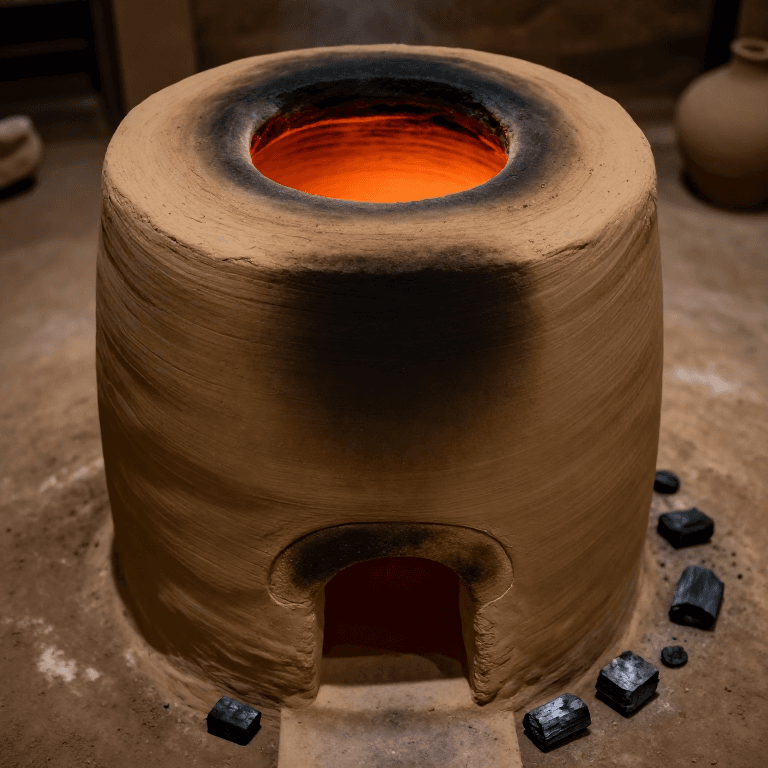
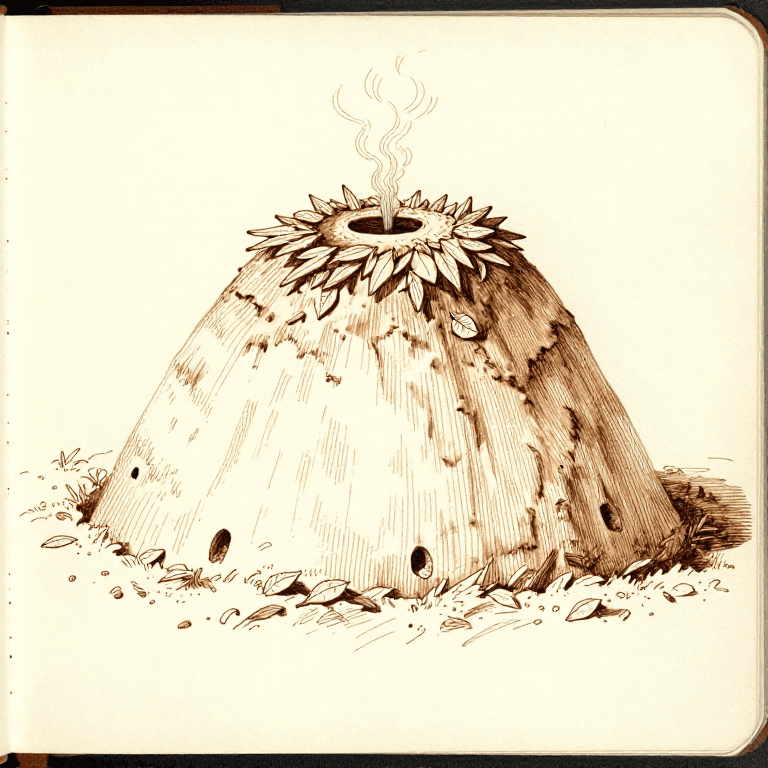
Place the pre-heated crucible into a charcoal-fueled kiln or pit firing. Raise temperature slowly over 3-4 hours to at least 900 °C. The grog particles prevent the clay from shrinking unevenly. Hold at peak temperature for 1 hour, then allow to cool overnight without opening the kiln.
13

Inspect and test

When cool, tap the crucible with a knuckle — a clear ring means fully vitrified, a dull thud means under-fired. Check for cracks, especially around the base and pouring lip. A properly made crucible will survive 5-10 melts before the thermal cycling degrades it.

সামগ্রী

4

আবশ্যক উপকরণ

3

কনেক্টেড ব্লূপ্রিংট সামগ্রী

সম্পর্কিত ব্লুপ্রিন্ট

এই ব্লুপ্রিন্টগুলি জ্ঞান ভাগ করে — কৌশল, উপকরণ বা নীতি
CC0 পব্লিক ডোমেন

যহ ব্লূপ্রিংট CC0 কে তহত জারী কিযা গযা হৈ। আপ বিনা অনুমতি মাঁগে ইস কার্য কো কিসী ভী উদ্দেশ্য কে লিএ কॉপী, সংশোধিত, বিতরিত ঔর উপযোগ করনে কে লিএ স্বতংত্র হৈং।

উনকে ব্লূপ্রিংট কে মাধ্যম সে উত্পাদ খরীদকর মেকর কা সমর্থন করেং জহাঁ বে মেকর কমীশন কমাতে হৈং জো বিক্রেতাওং দ্বারা নির্ধারিত হোতা হৈ, যা ইস ব্লূপ্রিংট কা নযা সংস্করণ বনাএঁ ঔর রাজস্ব সাঝা করনে কে লিএ ইসে অপনে ব্লূপ্রিংট মেং কনেক্শন কে রূপ মেং শামিল করেং।

চর্চা

(0)

লॉগ ইন করেং চর্চা মেং শামিল হোনে কে লিএ

টিপ্পণিযাঁ লোড হো রহী হৈং...