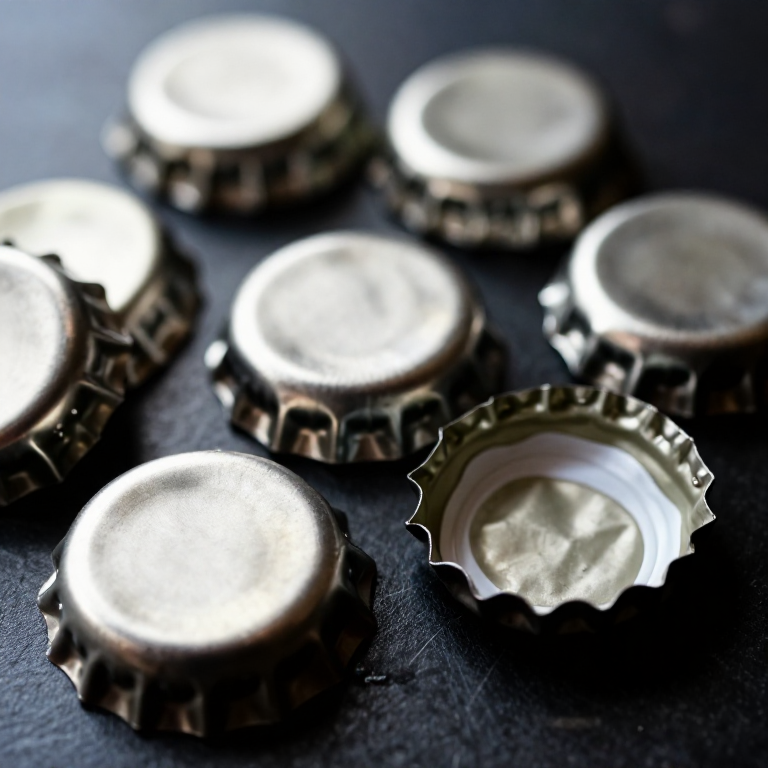


Crown Cork
A bottle of carbonated drink is a pressure vessel. Inside is three or four atmospheres pushing outward, and before 1892 the thing holding it in was a cork wired down, a swing-top with a rubber ring, or an internal glass marble. All of them were expensive, all of them were reusable, and all of them leaked eventually.
William Painter's answer was to make the closure disposable and let the pressure help. A shallow metal cap with twenty-one fluted teeth is crimped over the bottle lip onto a soft liner. The flutes let the skirt shrink inward as it is pressed, so the cap grips under the glass bead — and the internal pressure pushes the liner harder against the seat, making the seal tighter the more it is tested.
US Patent 468,258, "Bottle-Sealing Device", granted 2 February 1892. Painter was the employer who told a young salesman named King Gillette to invent something people throw away.
নির্দেশাবলি
A carbonated bottle is a pressure vessel
A carbonated bottle is a pressure vessel
Test only with cold, low-carbonation bottles, wear eye protection, and never apply heat. Glass under internal pressure fails without warning.
Read US 468,258 and count the teeth
Read US 468,258 and count the teeth
Painter specifies a fluted skirt. Twenty-one teeth became the standard and remains so — a number chosen because it works, not because it is round.
Measure a bottle lip precisely
Measure a bottle lip precisely
Record the outside diameter of the bead and the height from the top face to its underside. The cap is designed to the bottle, not the reverse.
প্রয়োজনীয় সরঞ্জাম:
 রুলার
রুলারCut a disc from thin tinplate
Cut a disc from thin tinplate
Cut a blank a few millimetres wider than the finished cap. Thin sheet, because the skirt has to fold cold without tearing.
এই ধাপের উপকরণ:
 টিন-মোড়া পাত1 শিট
Dish the centre over a forming die
Dish the centre over a forming die
Press the disc into a shallow cup so it has a flat top and a straight skirt. The top must stay flat — it carries the liner and takes the pressure.
প্রয়োজনীয় সরঞ্জাম:
 ধাতুর উকো
Cut the flutes into the skirt
Cut the flutes into the skirt
Notch the rim into evenly spaced teeth. The flutes exist so the skirt can shrink in circumference — a plain skirt has nowhere for the metal to go and simply buckles.
Keep the tooth spacing even
Keep the tooth spacing even
Mark them out rather than eyeballing. Uneven teeth crimp unevenly and leave one segment loose, which is exactly where it will leak.
Cut a soft liner disc
Cut a soft liner disc
Cut cork or rubber to sit inside the cap top. Painter used natural cork; the metal never touches the glass and never seals anything by itself.
এই ধাপের উপকরণ:
 কর্কের পাত1 শিট
Understand which part actually seals
Understand which part actually seals
The liner seals against the flat top of the bottle lip. The metal only supplies clamping force — confusing the two is the commonest misreading of the design.
Make a crimping die that closes the skirt inward
Make a crimping die that closes the skirt inward
Turn a die with a tapered bore. Pressing the cap in forces every tooth inward together, under the bottle bead.
Crimp in one firm stroke
Crimp in one firm stroke
Apply steady pressure once. Repeated part-strokes work-harden the teeth and they crack instead of folding.
Check every tooth is under the bead
Check every tooth is under the bead
Look round the whole skirt. One tooth sitting proud is a leak path and a cap that will blow off under pressure.
Pressure-test cold, behind a shield
Pressure-test cold, behind a shield
Seal a carbonated bottle and leave it cold overnight. Any hiss or loss of fizz means the liner is not seating flat.
Note that the seal improves under pressure
Note that the seal improves under pressure
Internal pressure pushes the liner up against the lip. The harder it is tested the tighter it seals — a self-energising seal, and the reason the design has outlived every rival.
Compendium — twenty-one teeth and a disposable idea
Compendium — twenty-one teeth and a disposable idea
The patent. US 468,258, "Bottle-Sealing Device", granted 2 February 1892 to William Painter of Baltimore. Painter held some eighty-odd patents and had already tried several bottle stoppers. The crown cork's competition was the wired cork, the Hutter swing-top with its rubber gasket, and the Codd-neck bottle with a glass marble held up by the gas. Every one of those was reusable and had to be cleaned, returned and inspected; the crown cork was cheap enough to throw away, and that changed bottling from a craft into a production line.
The flutes are a sheet-metal necessity. To grip under a bottle bead the skirt must reduce in circumference. Sheet metal does not compress along its length, so a plain cylinder can only buckle unpredictably. Cutting the skirt into teeth gives the material somewhere to go — each tooth folds inward independently and the gaps close up. Twenty-one is the number that distributes the grip evenly without leaving segments wide enough to spring back, and it has been standard for over a century.
Self-energising sealing. The metal never touches the glass sealing face; a soft liner does. Crimping supplies an initial clamping load, and internal pressure then adds to it by pushing the liner against the lip from beneath. Higher pressure means a tighter seal — the opposite of a cork forced outward by the same pressure. The same principle appears in lip seals, O-ring glands and pressure-actuated valve seats, and it is the reason a crown cork will hold several atmospheres on a two-cent piece of tinplate.
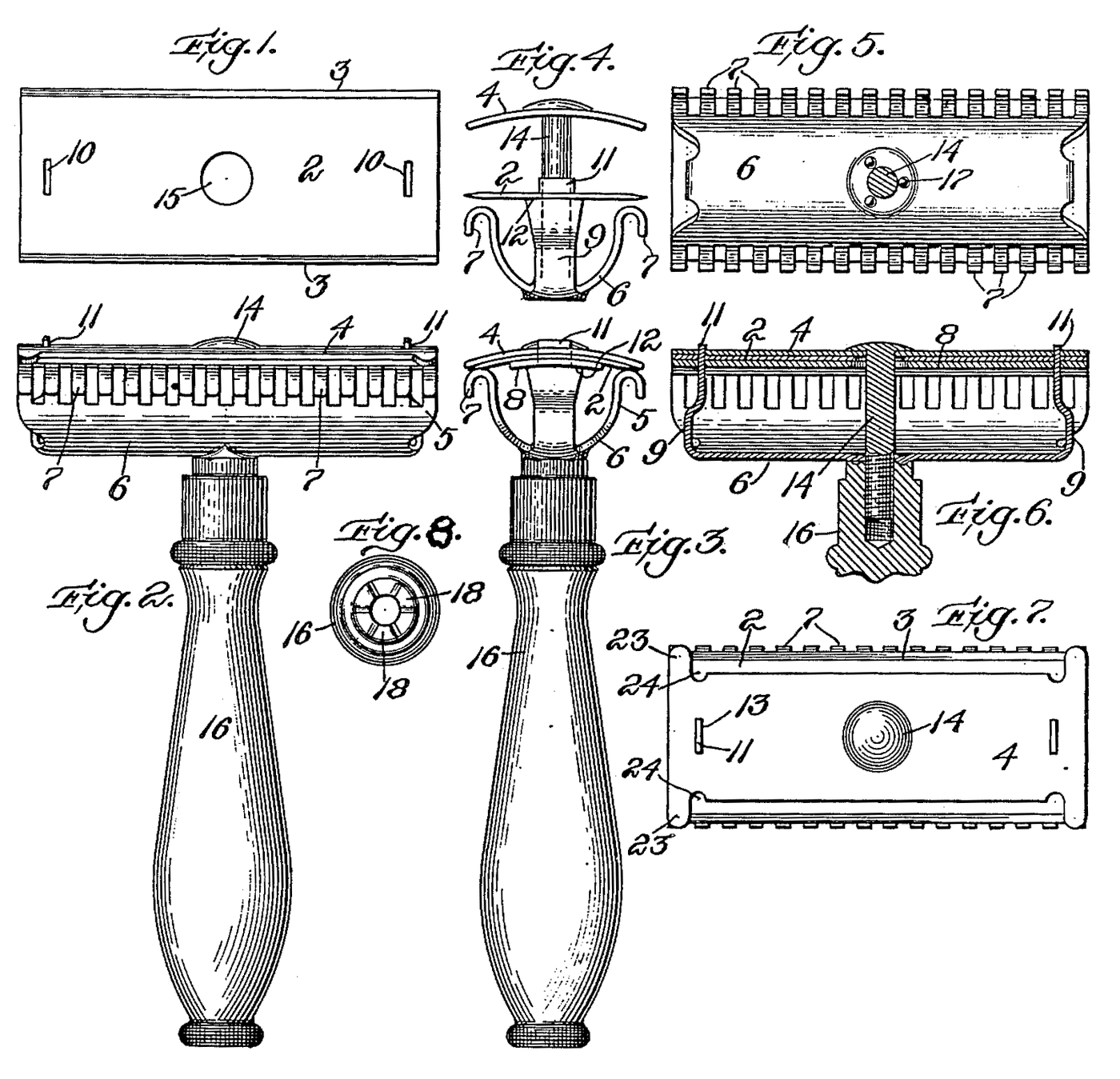
The link to a much more famous patent. Painter's business advice to one of his salesmen was to invent something that is used once, thrown away, and bought again. That salesman was King Camp Gillette, who spent six years failing to make a disposable razor blade before succeeding. The liner material changed — natural cork gave way to plastic in the 1960s — and the pull-tab and screw cap took much of the market, but the crown cork is still made in the tens of billions annually, essentially to Painter's 1892 drawing.
উপকরণ
2- 1 শিটপ্লেসহোল্ডার
- 1 শিটপ্লেসহোল্ডার
সম্পর্কিত ব্লুপ্রিন্ট
এই ব্লুপ্রিন্টগুলি জ্ঞান ভাগ করে — কৌশল, উপকরণ বা নীতি

CC0 পাবলিক ডোমেন
এই ব্লুপ্রিন্ট CC0-এর অধীনে প্রকাশিত। আপনি অনুমতি ছাড়াই যেকোনো উদ্দেশ্যে এটি অনুলিপি, পরিবর্তন, বিতরণ ও ব্যবহার করতে পারেন।
মেকারের ব্লুপ্রিন্টের মাধ্যমে পণ্য কিনে তাঁকে সমর্থন করুন, যেখানে তিনি আয় করেন মেকার কমিশন বিক্রেতাদের নির্ধারিত, অথবা এই ব্লুপ্রিন্টের একটি নতুন সংস্করণ তৈরি করে নিজের ব্লুপ্রিন্টে সংযোগ হিসেবে যুক্ত করে আয় ভাগ করুন।