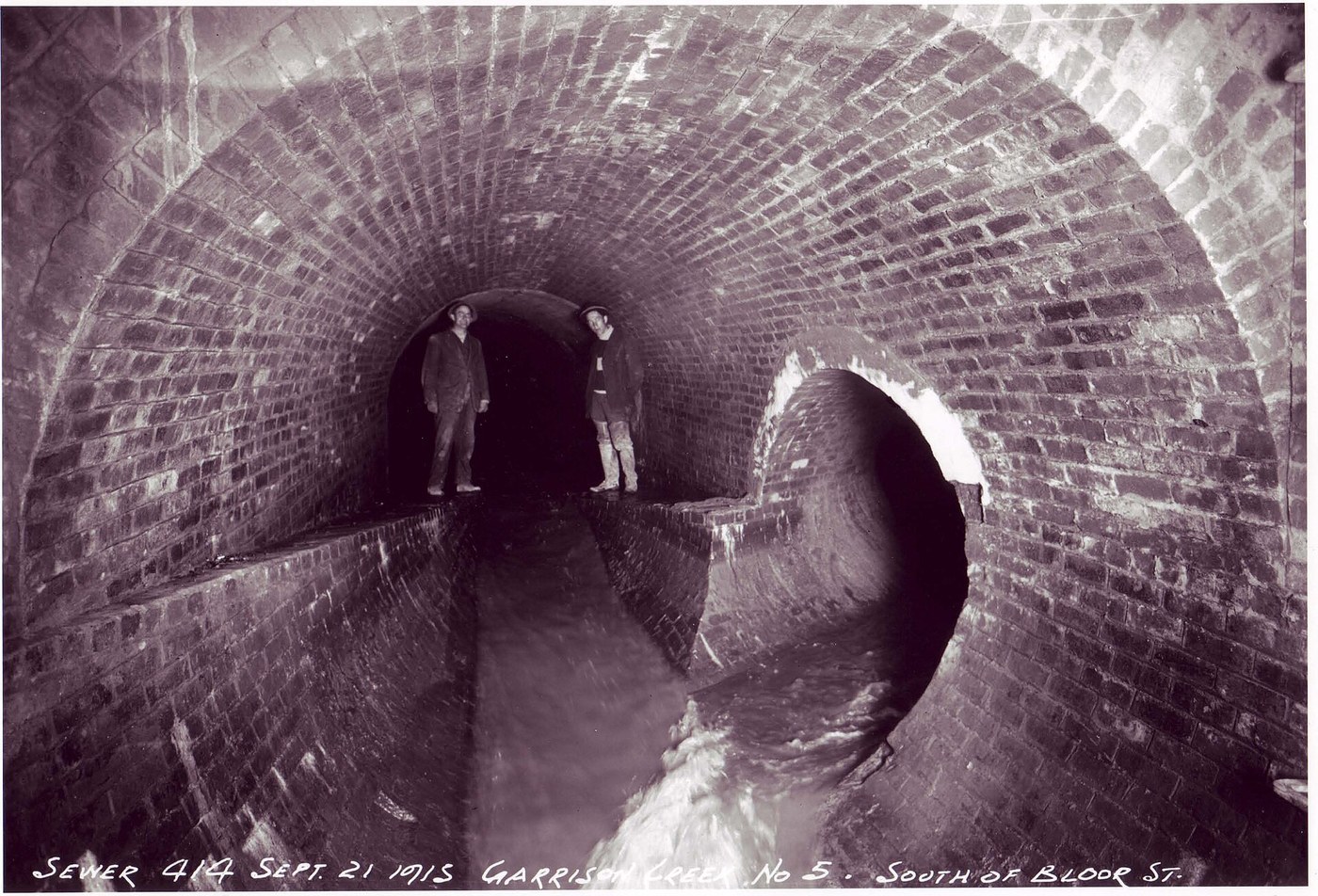


The Egg-Shaped Sewer
A sewer has to carry two completely different flows through the same pipe. In a storm it runs nearly full and fast. At four in the morning it carries a trickle. The trickle is the problem.
Solids stay suspended only while the water is moving quickly enough. Below roughly 0.6 to 0.8 metres per second they settle out, and once settled they stay, accumulate, and eventually block the sewer — which then has to be dug up, because nobody can reach it.
In a round pipe the low flow spreads out into a wide, shallow, slow film. Exactly when there is least water, the pipe gives it the most room, and the velocity collapses. The geometry works against you at the worst moment.
The egg shape inverts that. Stand the pipe with the narrow end down, and a small flow is squeezed into a narrow deep channel — so the same trickle runs deeper and faster, and keeps carrying its solids. The wide upper section is still there when the storm arrives.
It is a solution with no mechanism at all: no pump, no flushing gate, no maintenance schedule. The sewer cleans itself because of its cross-section, in exactly the condition where every other design fails.
The form is associated with Joseph Bazalgette's London intercepting sewers, much of which are still carrying flow.
নির্দেশ
Find the speed at which solids stop moving
Find the speed at which solids stop moving
Run water down a shallow sloped channel with sand and small grit in it. Start with a good flow and reduce it gradually, timing a float over a measured length to get the velocity at each stage.
Record the speed at which the grit stops moving and settles.
Expect somewhere around 0.6 m/s, depending on your particles.
That number is the whole design constraint. Everything a sewer's cross-section does is in service of staying above it at the lowest flow the pipe will ever see.
এই ধাপের উপকরণ:
 Coarse Gravel2 কেজি
আবশ্যক উপকরণ:
 Measuring Tape 3m
Watch a round pipe betray you at low flow
Watch a round pipe betray you at low flow
Take a length of round pipe cut in half lengthwise, set it on a slope, and run a large flow, then a small one. Measure the depth and velocity of each.
Expect the small flow to be wide, shallow and slow.
Sketch the wetted cross-section in both cases. At low flow the water is a thin film across a wide arc: a lot of pipe surface rubbing against very little water.
The pipe is generous with space exactly when the flow needed constriction. That is the failure the egg shape exists to correct.
Narrow the invert and measure the gain
Narrow the invert and measure the gain
Fit a narrow V or U channel into the bottom of your test pipe, so a small flow is confined to it. Run the same small flow again.
Measure depth and velocity, and compare with step 2.
Expect the water to be deeper and faster for exactly the same volume per second.
Now repeat the grit test from step 1 in both shapes. The narrow invert should keep grit moving at a flow where the round pipe lets it settle — which is the entire claim, demonstrated.
Prove the shape still works when full
Prove the shape still works when full
Run both shapes at high flow and compare how much they carry before overtopping.
Expect the egg to carry a large flow perfectly well — the upper part is still a generous arch.
This is why it is not simply a narrow pipe. A narrow pipe would fix the low-flow problem and then flood the streets in a storm.
The egg is a single shape serving two flow regimes: narrow where the trickle runs, wide where the flood needs room. That dual-duty reasoning is the transferable part of this blueprint.
Find why it is built that way up, structurally
Find why it is built that way up, structurally
Make two arches from stiff card, one a plain semicircle and one with the tighter curve at the base, and load each from above with weights.
Expect the tighter-radius base to resist better.
A buried sewer carries the weight of the ground and everything on it, and a brick arch is strong in compression only. The egg's narrow lower curve is a better shape for that load than a flat or wide invert.
So the section is doing two unrelated jobs at once — hydraulic self-cleansing and structural strength — which is why it survived as a form for so long in brick.
History & Context
History & Context
Built to stop a smell, and it stopped a plague. Joseph Bazalgette's London intercepting sewers were authorised in the panic following the Great Stink, when the Thames became unbearable to a Parliament sitting beside it. The reasoning was miasmatic — foul air was believed to be the disease. Diverting sewage away from where people drew water ended London's cholera epidemics anyway. Like the water trap, a right answer arrived through a wrong theory, because the action the theory recommended happened to break the real transmission route.
He doubled the pipe diameter on a guess, and it saved the city. Bazalgette calculated the flow for the population, then doubled the diameter, reportedly reasoning that this would only ever be done once. London grew far beyond anything he could have forecast, and the system carried it for over a century. It is the most cited engineering example of designing for a future you cannot predict — and the honest lesson is not "always oversize" but that where replacement is effectively impossible, capacity is cheap and regret is not.
Why the shape faded. Egg sections were laid in brick by hand, and every one was a skilled job. Once pipes were mass-produced in concrete and clay, round became overwhelmingly cheaper, and modern practice controls low-flow velocity with gradient and with narrower pipes sized to the actual flow. The shape survives where it was built, and in some large modern sewers where the same low-flow problem returns at scale.
The idea outlived the shape. The principle — shape the channel so the smallest flow is still fast enough to carry its load — is now standard in drainage design, in irrigation, in flumes, and in the trapezoidal low-flow channels cut into the floor of large storm drains. That last one is an egg-shaped invert by another name, poured in concrete instead of laid in brick.
What it cannot do. A self-cleansing section handles grit and organic solids. It does nothing about what should never have entered the sewer: fat congealing into blockages, wet wipes that do not break down, and the rubble people tip down manholes. No cross-section solves a material the system was not designed to carry, which is why the modern sewer's worst enemy is not its geometry but its inputs.
সামগ্রী
5- 2 কেজিপ্লেসহোল্ডর
- 2 টুকরাপ্লেসহোল্ডর
- 1 প্যাকপ্লেসহোল্ডর
- 10 লিটারপ্লেসহোল্ডর
- 2 কেজিপ্লেসহোল্ডর
আবশ্যক উপকরণ
2- প্লেসহোল্ডর
- প্লেসহোল্ডর
কনেক্টেড ব্লূপ্রিংট সামগ্রী
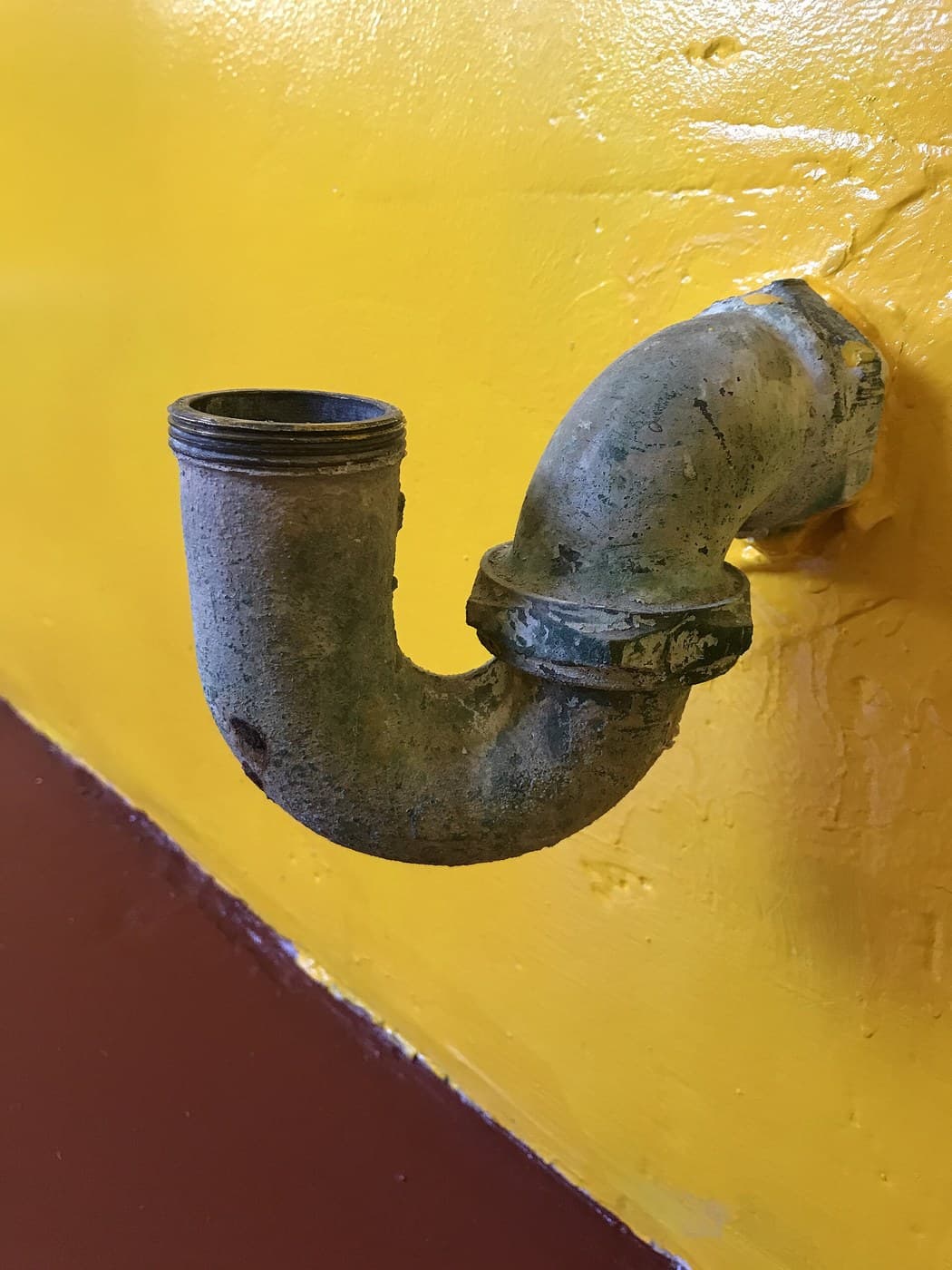

সম্পর্কিত ব্লুপ্রিন্ট
এই ব্লুপ্রিন্টগুলি জ্ঞান ভাগ করে — কৌশল, উপকরণ বা নীতি

CC0 পব্লিক ডোমেন
এই ব্লুপ্রিন্ট CC0-এর অধীনে প্রকাশিত। আপনি অনুমতি ছাড়াই যেকোনো উদ্দেশ্যে এটি অনুলিপি, পরিবর্তন, বিতরণ ও ব্যবহার করতে পারেন।
মেকারের ব্লুপ্রিন্টের মাধ্যমে পণ্য কিনে তাঁকে সমর্থন করুন, যেখানে তিনি আয় করেন মেকর কমীশন বিক্রেতাদের নির্ধারিত, অথবা এই ব্লুপ্রিন্টের একটি নতুন সংস্করণ তৈরি করে নিজের ব্লুপ্রিন্টে সংযোগ হিসেবে যুক্ত করে আয় ভাগ করুন।