

Lithography
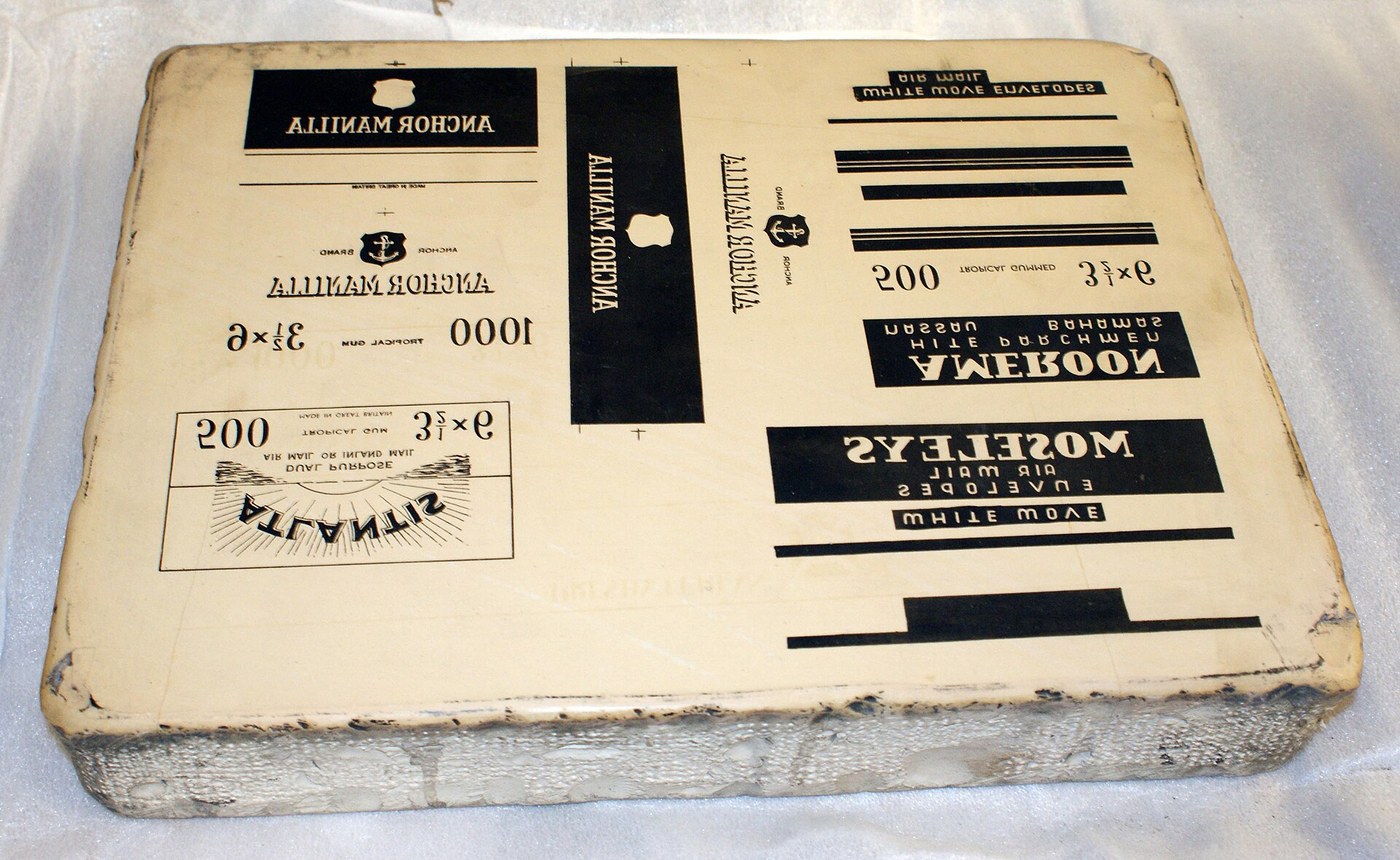
Every printing process before this one worked by height. Letterpress and woodcut put the image up in relief and ink the raised parts. Engraving and etching cut the image down and hold ink in the grooves. Either way you are carving, and the image is a shape in a surface.
Lithography prints from a surface that is completely flat. There is nothing to feel.
It works because grease and water refuse each other. Draw on a porous limestone slab with a greasy crayon, then treat the stone chemically so the bare areas become firmly water-attracting. Now damp the stone: water sits on the blank areas and not on the greasy drawing. Roll on a greasy ink: it sticks to the drawing and is repelled by the wet areas.
The image is held by chemistry alone. The stone is a map of where something is wettable and where it is greasy, and that map is what prints.
The consequence is the point. Because no cutting is involved, the artist draws directly, in their own hand, with a crayon or a brush, at full speed — no engraver translating the work, no craft between intention and plate. Tone can be washed on. A drawing takes minutes rather than days.
The method is credited to Alois Senefelder, who was looking for a cheap way to publish his own plays.
নির্দেশ
Watch grease and water refuse each other
Watch grease and water refuse each other
Draw a bold mark on a sheet of glass or glazed tile with a wax crayon, then flood the whole surface with water and tip it off.
Expect a clean film of water everywhere except on the crayon, which stays dry and repels the water into beads at its edge.
Now dab an oily ink across the whole tile with a roller or cloth.
Expect the ink to take on the crayon and to be pushed off the wet areas.
That is the entire principle, on a tile, in five minutes. Everything after this is about making it reliable and repeatable.
এই ধাপের উপকরণ:
 Wax Crayon1 টুকরা
Prepare a stone that holds water in its bones
Prepare a stone that holds water in its bones
Grind a fine-grained limestone slab flat with abrasive and a levigator or a second stone, working through progressively finer grits, then rinse and dry it completely.
Test it: breathe on the surface, or drop water on it, and watch how readily it takes water in.
The stone must be porous and scrupulously clean. Any grease — a fingerprint — will print, and it will print permanently.
Note that the grain you leave decides the drawing's texture: a coarse grain holds crayon in a rough tooth, a fine grain suits washes and delicate line.
আবশ্যক উপকরণ:
 Sandpaper (220 Grit)
Draw, then fix the difference chemically
Draw, then fix the difference chemically
Draw your image with a greasy lithographic crayon. Then apply the etch — a weak acid solution in gum arabic — over the whole stone, and leave it before washing off.
The name is misleading and worth correcting: it does not bite anything away. It does two things chemically. The gum makes the bare stone strongly water-attracting and grease-rejecting, and the acid helps fix the greasy image into the stone's surface.
Test the result by damping the stone and rolling up. Expect a crisper separation than in step 1, and one that survives repeated inking.
এই ধাপের উপকরণ:
 Gum Arabic100 গ্রা
Find the balance that decides everything
Find the balance that decides everything
Print three impressions: one with the stone too wet, one too dry, one correct.
Expect the too-wet stone to print pale and patchy as water invades the image, and the too-dry stone to scum — ink creeping across the blank areas until the whole thing greys over.
Record how narrow the good band is.
Lithography is a continuous balancing act between water and ink, held by the operator on every single impression. That is its great weakness by hand — and step 6 explains how the offset press automated exactly this judgement.
Wash a tone and see what the process gives you
Wash a tone and see what the process gives you
On a fresh area, apply a diluted greasy wash with a brush rather than a crayon line, and process it as before.
Expect a genuine continuous-looking tone, breaking into a grain where it thins.
Then attempt the same soft gradient with a burin on metal, or picture doing so.
Engraving builds tone from thousands of deliberate marks. Lithography lets a brushstroke be a brushstroke. That is why artists took to it immediately — it is the first printing process that records a gesture instead of translating it.
History & Context
History & Context
Invented by a playwright who could not afford a printer. Alois Senefelder was trying to publish his own plays cheaply and was experimenting with etching stone as a substitute for copper. The usual account has him writing a laundry list on a limestone slab with a greasy crayon and realising the stone had recorded it. Whether or not the laundry list is true, the discovery's shape is: he was looking for a cheaper intaglio and found a completely different principle.
It is the first genuinely new printing principle in three and a half centuries. Relief and intaglio are both about depth; planographic printing is about surface chemistry. Once the image no longer had to be a shape, it could be made by anything that changed the wettability of a surface — which is exactly how a photographic image is put onto a plate today, and why nearly all commercial printing is now lithographic.
It gave artists a press they could use themselves. Goya, Daumier, Toulouse-Lautrec and Munch worked directly on stone. Daumier's political cartoons could be drawn and printed fast enough to be topical, which made lithography the engine of the illustrated satirical press — and, because posters could now be large, colourful and quick, of the poster as an art form.
Colour, by repetition. Chromolithography prints from a separate stone per colour, each registered to the last, sometimes a dozen or more. It put full-colour images into ordinary homes for the first time, and it is the direct ancestor of the four-colour separation used in every printer today.
Honest limits. Stone is heavy, fragile and finite in size, and preparing it is laborious — metal plates replaced it commercially for exactly those reasons. The water-ink balance of step 4 needs constant attention. The stone must be kept immaculately free of grease, which in practice means a fingerprint can ruin an afternoon. And the chemistry is not permanent: an image left inked and undamped will scum, and a stone can be ground down and reused, which is why so few original stones survive.
সামগ্রী
6- 1 টুকরাপ্লেসহোল্ডর
- 100 গ্রাপ্লেসহোল্ডর
- 1 টুকরাপ্লেসহোল্ডর
- 100 মিলিপ্লেসহোল্ডর
- 5 লিটারপ্লেসহোল্ডর
- 500 গ্রাপ্লেসহোল্ডর
আবশ্যক উপকরণ
3- প্লেসহোল্ডর
- প্লেসহোল্ডর
- প্লেসহোল্ডর
কনেক্টেড ব্লূপ্রিংট সামগ্রী
সম্পর্কিত ব্লুপ্রিন্ট
এই ব্লুপ্রিন্টগুলি জ্ঞান ভাগ করে — কৌশল, উপকরণ বা নীতি

CC0 পব্লিক ডোমেন
এই ব্লুপ্রিন্ট CC0-এর অধীনে প্রকাশিত। আপনি অনুমতি ছাড়াই যেকোনো উদ্দেশ্যে এটি অনুলিপি, পরিবর্তন, বিতরণ ও ব্যবহার করতে পারেন।
মেকারের ব্লুপ্রিন্টের মাধ্যমে পণ্য কিনে তাঁকে সমর্থন করুন, যেখানে তিনি আয় করেন মেকর কমীশন বিক্রেতাদের নির্ধারিত, অথবা এই ব্লুপ্রিন্টের একটি নতুন সংস্করণ তৈরি করে নিজের ব্লুপ্রিন্টে সংযোগ হিসেবে যুক্ত করে আয় ভাগ করুন।