

Applying Wattle-and-Daub to a Wall Panel — Medieval Wall Construction
নির্দেশাবলি
Prepare the Wattle Framework
Prepare the Wattle Framework
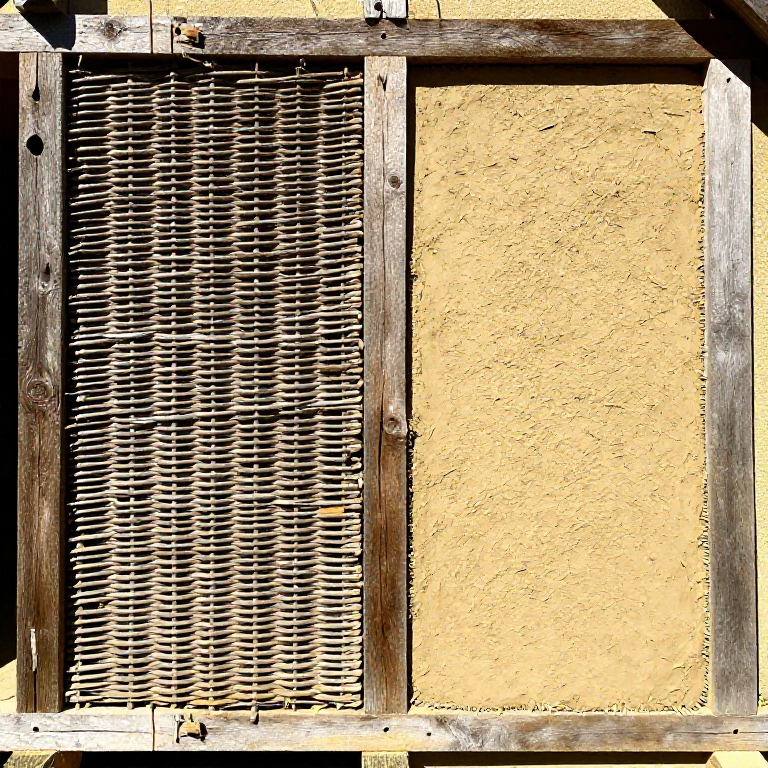
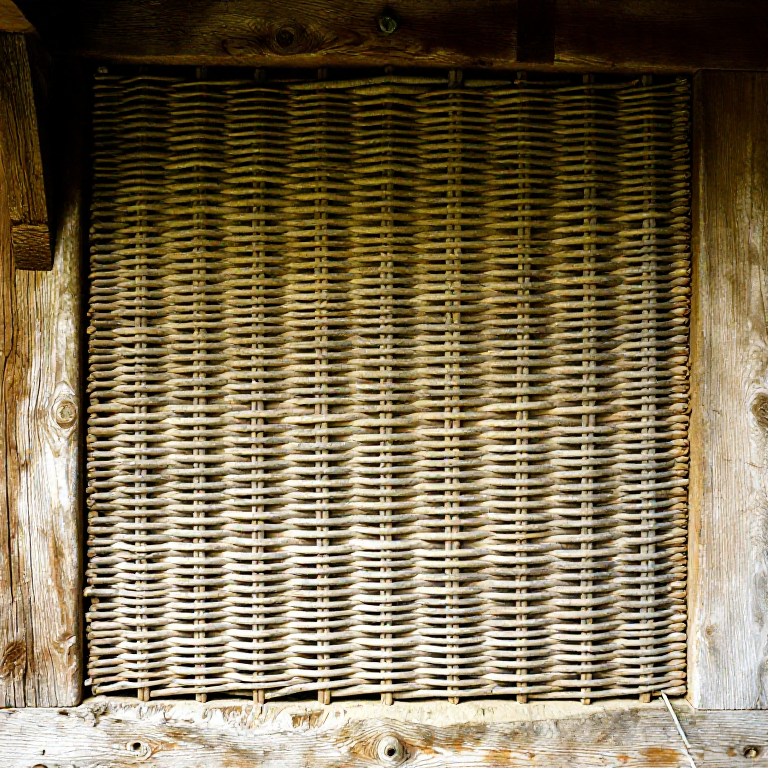
Within the timber frame, drill or chisel holes approximately 3 to 4 cm in diameter into the top and bottom horizontal timbers (rails) at intervals of 15 to 20 cm. Drive vertical staves (stout sticks approximately 2 to 3 cm diameter) into these holes to create an upright framework. Then weave flexible rods (hazel or willow, approximately 1 to 2 cm diameter) horizontally between the staves in a basket-weave pattern — over one stave, under the next, alternating with each row. Pack the horizontal rods tightly together to create a dense lattice. The woven wattle should fill the entire panel area within the timber frame and be sturdy enough to support the weight of the wet daub on both sides without bulging. Soak the rods in water before weaving if they are too stiff to bend without breaking.
এই ধাপের উপকরণ:
 হেজেল-এর ছড়ি (কাঁচা, নমনীয়)enough to weave the panel area টুকরা
 বুনো কাদামাটিenough to coat both sides টুকরা
 উদ্ভিজ্জ মিশ্রণlarge bundle টুকরা
 মিহি বালিequal volume to clay টুকরা
 পশুর গোবরsmall amount টুকরা
প্রয়োজনীয় সরঞ্জাম:
 আঁকশি-দা
 হাতের খুরপি
 পাথর
পাথর জল
জলMix the Daub
Mix the Daub
Combine clay subsoil, sand, and chopped straw in a mixing pit or trough. A typical ratio is 1 part clay to 1 part sand to generous handfuls of straw. The clay provides binding strength, the sand reduces shrinkage cracking, and the straw fibres reinforce the mixture like rebar in concrete. If available, add fresh cow or horse dung — the fibres and natural binders in dung significantly improve the workability and crack resistance of the daub. Mix by treading (walking on the mixture) or working with a hoe until thoroughly combined. Add water to achieve a thick, sticky consistency that holds its shape when thrown against the wattle without slumping. Medieval daub-mixers often trod the mixture with bare feet, and the process was sometimes a communal village activity.
Apply the First Coat of Daub
Apply the First Coat of Daub
Working from one side, push the daub firmly through and around the wattle lattice by hand or with a daubing paddle. Force the daub into every gap in the wattle weave so that it keys through to the other side — this mechanical interlocking is what holds the daub to the wattle permanently. Build up a layer approximately 15 to 20 mm thick on this first side. The daub should squeeze through the gaps and form small mushroom-shaped keys on the far side. Do not attempt to smooth the surface at this stage — a rough first coat provides a better key for the finishing coat. Allow this coat to dry partially (firm to the touch but not fully hard) before applying daub to the opposite side.
Apply the Second Side and Finishing Coat
Apply the Second Side and Finishing Coat
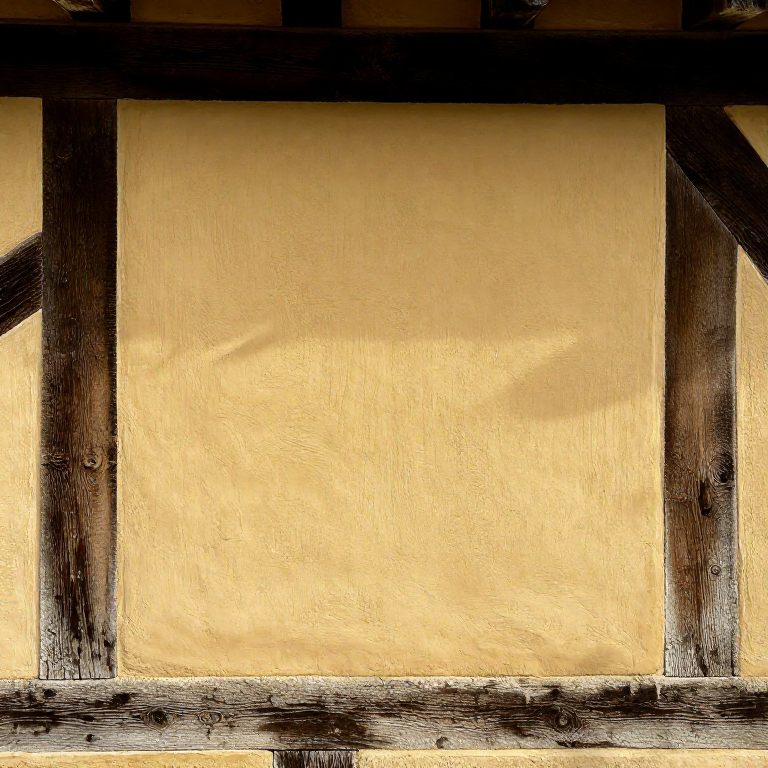
Apply daub to the opposite side of the wattle, again pressing firmly to bond with the keys protruding from the first coat. Build up to approximately 15 to 20 mm thick on this side as well, so the total wall thickness is approximately 50 to 80 mm including the wattle. Once both sides have stiffened, apply a final smoothing coat of finer daub (with less straw and finer sand) approximately 5 to 10 mm thick. Smooth this coat with a trowel or a wet wooden float to create a reasonably flat surface suitable for limewash. The finished surface will have slight irregularities — this is characteristic and historically correct. Allow each coat to dry slowly to minimise cracking; in hot weather, shade the wall and mist with water to slow the drying process.
Apply Limewash for Protection
Apply Limewash for Protection
Once the daub is fully dry (which may take one to three weeks depending on climate and wall thickness), apply two to three coats of limewash for weather protection. Limewash is simply slaked lime putty thinned with water to a milk-like consistency. Brush it onto the daub surface with a large limewash brush, working in thin, even coats. Each coat should dry before the next is applied. Limewash serves multiple functions: it seals the porous clay surface against rain, provides a bright white finish that reflects light (important in dark medieval interiors), and has mild antiseptic properties due to its high pH. Limewash must be renewed annually or every few years as it wears, but this maintenance is simple and inexpensive. Well-maintained wattle-and-daub walls in timber-frame buildings have lasted for 500 years or more across England, France, and Germany.
উপকরণ
7- enough to weave the panel area টুকরাপ্লেসহোল্ডার
- enough to coat both sides টুকরাপ্লেসহোল্ডার
- large bundle টুকরাপ্লেসহোল্ডার
- equal volume to clay টুকরাপ্লেসহোল্ডার
- large bundle টুকরাপ্লেসহোল্ডার
- small amount টুকরাপ্লেসহোল্ডার
- 1 কেজিপ্লেসহোল্ডার
CC0 পাবলিক ডোমেন
এই ব্লুপ্রিন্ট CC0-এর অধীনে প্রকাশিত। আপনি অনুমতি ছাড়াই যেকোনো উদ্দেশ্যে এটি অনুলিপি, পরিবর্তন, বিতরণ ও ব্যবহার করতে পারেন।
মেকারের ব্লুপ্রিন্টের মাধ্যমে পণ্য কিনে তাঁকে সমর্থন করুন, যেখানে তিনি আয় করেন মেকার কমিশন বিক্রেতাদের নির্ধারিত, অথবা এই ব্লুপ্রিন্টের একটি নতুন সংস্করণ তৈরি করে নিজের ব্লুপ্রিন্টে সংযোগ হিসেবে যুক্ত করে আয় ভাগ করুন।