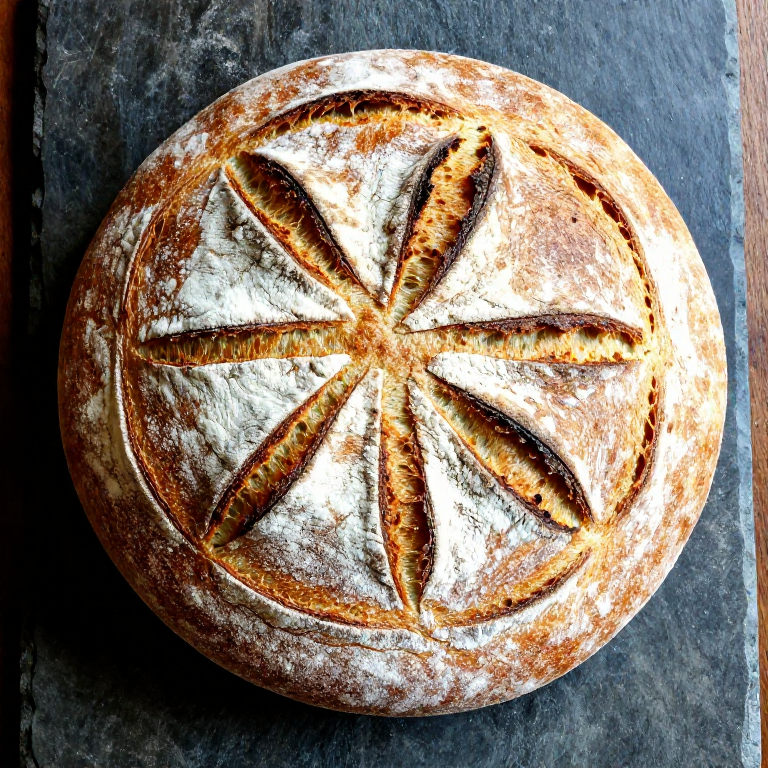


Baking Panis Quadratus Roman Scored Bread — Pompeian Round Loaf
নির্দেশাবলি
Mix the Dough
Mix the Dough
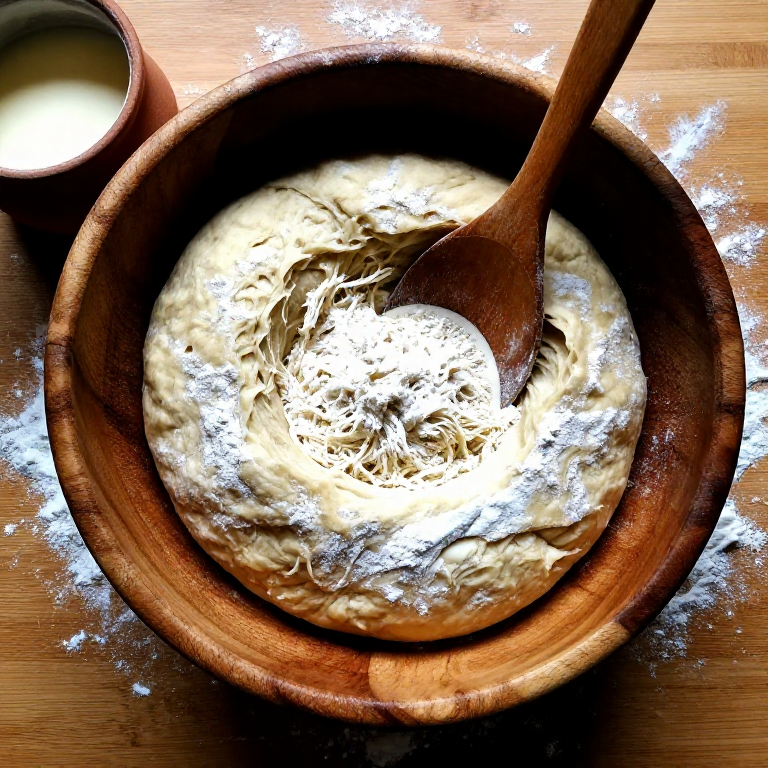
Combine the flour and salt in a large mixing bowl. Add the sourdough starter and lukewarm water. Mix by hand or with a wooden spoon until a shaggy dough forms and no dry flour remains. Roman bakers used sourdough leavening exclusively — commercial yeast did not exist until the 19th century. Pliny the Elder describes how Roman bakers maintained their leaven (fermentum) from batch to batch, noting that bread made with proper leaven was lighter and more digestible than unleavened bread. If using modern whole wheat flour, the dough will be slightly sticky; if using emmer flour (Triticum dicoccum, the most common Roman grain), the dough will be drier and denser, as emmer has less gluten than modern bread wheat.
এই ধাপের উপকরণ:
 গমের আস্ত আটা500 grams টুকরা
 টক ময়দার বীজ150 grams টুকরা
 জল280-300 ml মিলি
 মিহি সমুদ্র-লবণ8-10 grams টুকরা
 রান্নাঘরের সুতির দড়ি60 cm length সেমি
প্রয়োজনীয় সরঞ্জাম:
 মেশানোর বাটির সেট
 মাটির কাজের ক্যানভাস তল
 ওভেন
ওভেন ওভেনের ট্রে
 কাপড় (ছাঁকার)
Knead and Ferment
Knead and Ferment
Turn the dough onto a lightly floured surface and knead for 10 to 15 minutes until the dough becomes smooth and elastic. With whole wheat or emmer flour, the dough will never become as stretchy as white bread dough, but it should hold together without crumbling and spring back slightly when pressed. Shape into a ball and return to the bowl. Cover with a damp cloth and let the dough ferment at room temperature (20-25 degrees Celsius) for 4 to 8 hours, or until roughly doubled in volume. Sourdough fermentation is slower than commercial yeast — the wild Lactobacillus and Saccharomyces strains in the starter produce lactic and acetic acids alongside carbon dioxide, giving the bread its characteristic tangy flavour. Cato the Elder, writing in the 2nd century BC, provides the earliest Roman bread recipe, emphasising thorough kneading as essential for quality bread.
Shape the Loaf and Apply the String
Shape the Loaf and Apply the String
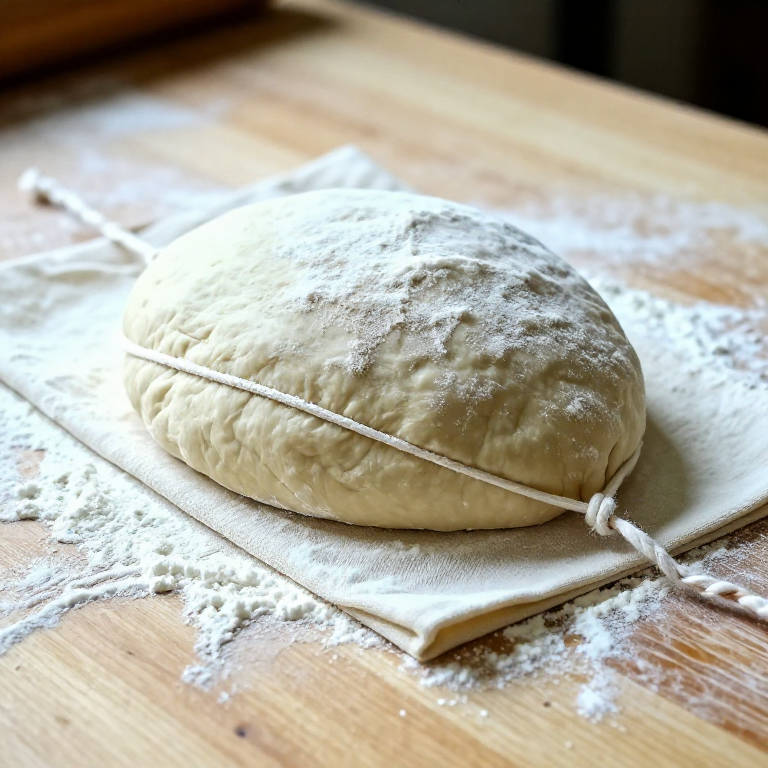
Gently deflate the fermented dough and shape it into a tight round ball on a lightly floured surface. The loaf should be domed, approximately 18 to 20 cm in diameter and 8 to 10 cm tall — matching the proportions of the Pompeii loaf. Tie a length of cotton string snugly around the equator of the loaf, pulling it tight enough to create a visible groove that divides the loaf into upper and lower hemispheres. This string groove is the most distinctive feature of panis quadratus and may have served to make the loaf easier to carry on a cord or to help portion it. Place the shaped loaf on a floured cloth or in a proofing basket and allow it to proof for a further 1 to 2 hours until it is puffy and a gentle finger poke springs back slowly.
Score the Top into Eight Sections
Score the Top into Eight Sections
Using a sharp knife or razor blade, score the top of the loaf with four deep cuts that cross at the centre, dividing the dome into eight equal wedge-shaped sections — like cutting a pie. The scores should be at least 1 cm deep to ensure they open fully during baking and allow the sections to be broken apart after baking. The carbonised Pompeii loaf shows these eight sections clearly, and bread stamps (signacula) found at Pompeii bakeries confirm this was the standard presentation. Do not score all the way through the dough — the base should remain intact as a single loaf. Immediately after scoring, transfer the loaf to the oven.
Bake the Loaf
Bake the Loaf
Preheat the oven to 220 degrees Celsius (or fire a wood-burning dome oven and sweep the coals aside). If using a conventional oven, place a baking stone or heavy inverted baking sheet on the middle rack during preheating. Slide the scored loaf onto the hot stone. Create steam by pouring a cup of water into a preheated pan on the oven floor — steam in the first 10 minutes allows the crust to expand before setting, producing a better rise. Bake for 35 to 45 minutes until the crust is deep golden-brown and the loaf sounds hollow when tapped on the bottom. The internal temperature should reach approximately 93-96 degrees Celsius. Remove and cool on a wire rack. The scored sections should have opened into pronounced ridges that allow the loaf to be broken cleanly into eight portions — the original purpose of the panis quadratus design.
উপকরণ
5- 500 grams টুকরাপ্লেসহোল্ডার
- 150 grams টুকরাপ্লেসহোল্ডার
- 280-300 ml মিলিপ্লেসহোল্ডার
- 8-10 grams টুকরাপ্লেসহোল্ডার
- 60 cm length টুকরাপ্লেসহোল্ডার
প্রয়োজনীয় সরঞ্জাম
8- প্লেসহোল্ডার
- প্লেসহোল্ডার
- প্লেসহোল্ডার
- প্লেসহোল্ডার
- Sharp knife or blade for scoring
- প্লেসহোল্ডার
- প্লেসহোল্ডার
- প্লেসহোল্ডার
CC0 পাবলিক ডোমেন
এই ব্লুপ্রিন্ট CC0-এর অধীনে প্রকাশিত। আপনি অনুমতি ছাড়াই যেকোনো উদ্দেশ্যে এটি অনুলিপি, পরিবর্তন, বিতরণ ও ব্যবহার করতে পারেন।
মেকারের ব্লুপ্রিন্টের মাধ্যমে পণ্য কিনে তাঁকে সমর্থন করুন, যেখানে তিনি আয় করেন মেকার কমিশন বিক্রেতাদের নির্ধারিত, অথবা এই ব্লুপ্রিন্টের একটি নতুন সংস্করণ তৈরি করে নিজের ব্লুপ্রিন্টে সংযোগ হিসেবে যুক্ত করে আয় ভাগ করুন।