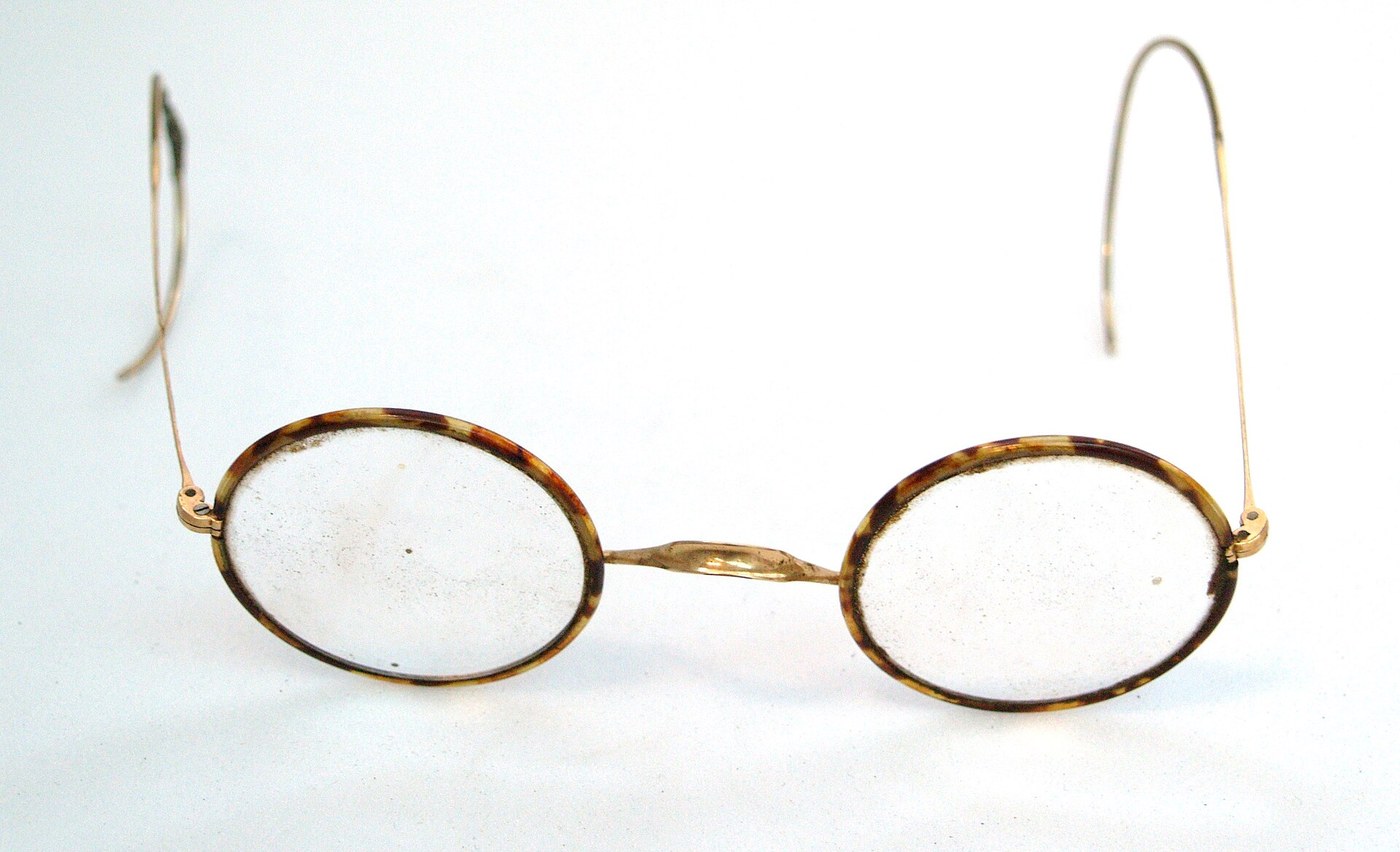


Spectacles
The eye focuses by bending light onto the retina. If the eyeball is slightly too long, the light converges in front of the retina and distant things blur. Slightly too short, and it would converge behind — near things blur. Both are errors of a few tenths of a millimetre in the length of an eyeball, and neither can be fixed by trying harder.
A lens in front of the eye corrects it by pre-bending the light so that the eye's own focusing lands in the right place. A concave lens spreads the rays slightly before they arrive, pushing the focus back; a convex lens converges them, pulling it forward.
The useful measure is not thickness or curvature but optical power, in dioptres: D = 1 / f, with the focal length in metres. A lens that focuses at 50 cm is +2 D; one at 25 cm is +4 D. The reason opticians use this unit rather than focal length is that powers simply add — put a +2 and a +1 together and you have +3, which makes prescribing arithmetic instead of geometry.
The sign carries the meaning. Minus for short sight, plus for long sight, and the number is how far the eye missed by.
Everything else — frames, hinges, bifocals, the fitting of a pair to a face — is the engineering that turned a physics correction into something a person can wear all day.
নির্দেশ
Measure a lens's focal length, then its power
Measure a lens's focal length, then its power
Take a convex lens — a magnifier will do — and focus a distant light or the sun onto a card. Measure the distance from lens to sharpest image.
That is the focal length. Convert it to metres and take the reciprocal.
A 25 cm focal length gives 1 / 0.25 = +4 dioptres.
Repeat for two or three lenses and tabulate focal length against power. Note that as the lens gets stronger the focal length gets shorter — power and distance run in opposite directions, which is why the reciprocal unit exists.
If using the sun, never look through the lens at it, and expect the focused spot to scorch the card.
এই ধাপের উপকরণ:
 কার্ডস্টক1 টুকরা
আবশ্যক উপকরণ:
 ফিতা-মাপ
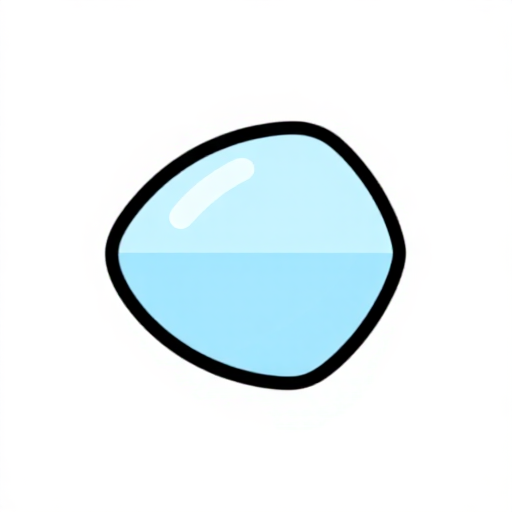 উত্তল লেন্স
Prove that powers add
Prove that powers add
Measure two lenses separately to get their powers. Now hold them together, touching, and measure the combined focal length.
Convert to power and compare with the sum of the two.
Expect them to add, within your measurement error.
Try the same with focal lengths and note that those do not add at all.
This is the whole reason the dioptre is the working unit of the trade. A trial frame with a stack of lenses in it is doing addition, and the optician is simply searching for a total.
Tell the two errors apart by their sign
Tell the two errors apart by their sign
Look through a convex (plus) lens at distant text and then at near text; repeat with a concave (minus) lens.
Expect the plus lens to help close work and blur distance, and the minus lens to do the opposite.
Now hold each lens a little away from a printed page and move it. Expect the plus lens to make the text move against your motion and the minus lens to make it move with you.
That movement test identifies a lens's sign in a second, with no equipment, and it is how you can tell what someone's spectacles are correcting just by picking them up.
আবশ্যক উপকরণ:
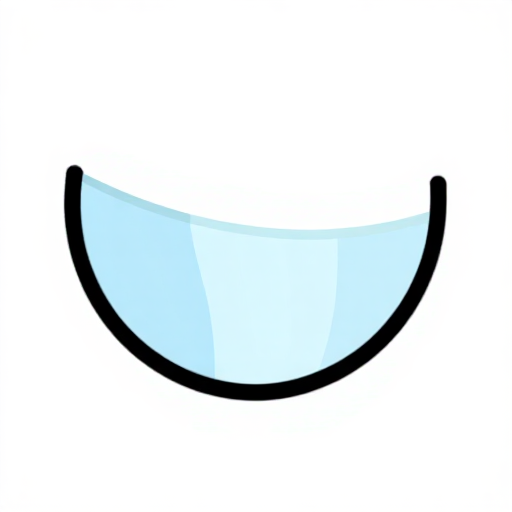 অবতল লেন্স
Find the third error, which is not about strength
Find the third error, which is not about strength
Look at a printed cross or a wheel of radiating lines, first through a spherical lens and then through a cylindrical one — a clear round bottle or a glass rod works.
Expect the cylinder to focus one direction and not the other, so one set of lines is sharp while the perpendicular set is blurred.
That is astigmatism: the eye's surface is not equally curved in every direction, so a single spherical power cannot fix it.
The correction is a cylindrical component at a specified angle — which is why a prescription has three numbers, and why spectacle lenses have an orientation and must not be rotated in the frame.
আবশ্যক উপকরণ:
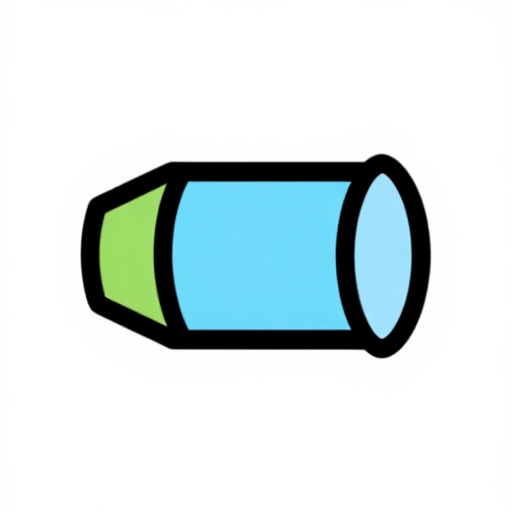 বেলনাকার লেন্স
Find why the frame is part of the prescription
Find why the frame is part of the prescription
Hold a strong lens in front of your eye at the correct distance, then move it 10 mm further away and note the change.
Expect the effective correction to shift noticeably — strongly with powerful lenses, barely at all with weak ones.
Then look through the edge of the lens rather than its centre and notice the image displace.
Both are why fitting matters: vertex distance and optical centre alignment are part of the prescription, not cosmetics. Spectacles bought off a rack with the centres in the wrong place induce a prism the wearer's eyes must fight all day, which is felt as headache rather than as blur.
History & Context
History & Context
They arrived without a theory. Reading stones and then spectacles appear in Italy in the late thirteenth century, made by craftsmen who knew that a shaped piece of glass helped an ageing reader — and had no account of why. The optics of the eye came centuries later, with Kepler. The device worked for three hundred years before anyone could explain it, which is the ordinary order of events and worth remembering when a mechanism is demanded before a result is believed.
They quietly extended working life. The eye's ability to focus close falls off with age for everyone, and before spectacles that ended the careers of scribes, weavers, engravers and anyone else doing fine work in their forties. Cheap reading glasses returned decades of skilled output to entire trades. It is one of the least dramatic and most economically significant inventions in this corpus.
Bifocals split the lens because the eye lost a variable. A young eye changes its own focus; an older one cannot. Franklin's solution was to put two powers in one frame and let the wearer choose by moving their eyes — distance above, reading below. Modern progressive lenses do the same with a continuous gradient, at the cost of narrow useful zones and a period of adaptation.
Same physics, other instruments. The telescope, microscope and camera in this corpus all bend light to land an image where a detector sits. Spectacles are the case where the detector is a person, which adds constraints nothing else has: they must be light, tough, cosmetically acceptable, and worn on a face for sixteen hours a day.
Honest limits. They correct where light lands and nothing else — cataract, retinal disease and nerve damage are untouched by any lens. Strong prescriptions distort and shrink or magnify the world, and the edges of powerful lenses are optically poor. They fog, scratch, slip and get sat on. And the number on a prescription is only right for the distance it was measured at, which is why one pair rarely serves every task.
আবশ্যক উপকরণ
4- 1 vendor sell this, none ship to you yetপ্লেসহোল্ডর
- প্লেসহোল্ডর
- প্লেসহোল্ডর
- প্লেসহোল্ডর
কনেক্টেড ব্লূপ্রিংট সামগ্রী

CC0 পব্লিক ডোমেন
এই ব্লুপ্রিন্ট CC0-এর অধীনে প্রকাশিত। আপনি অনুমতি ছাড়াই যেকোনো উদ্দেশ্যে এটি অনুলিপি, পরিবর্তন, বিতরণ ও ব্যবহার করতে পারেন।
মেকারের ব্লুপ্রিন্টের মাধ্যমে পণ্য কিনে তাঁকে সমর্থন করুন, যেখানে তিনি আয় করেন মেকর কমীশন বিক্রেতাদের নির্ধারিত, অথবা এই ব্লুপ্রিন্টের একটি নতুন সংস্করণ তৈরি করে নিজের ব্লুপ্রিন্টে সংযোগ হিসেবে যুক্ত করে আয় ভাগ করুন।