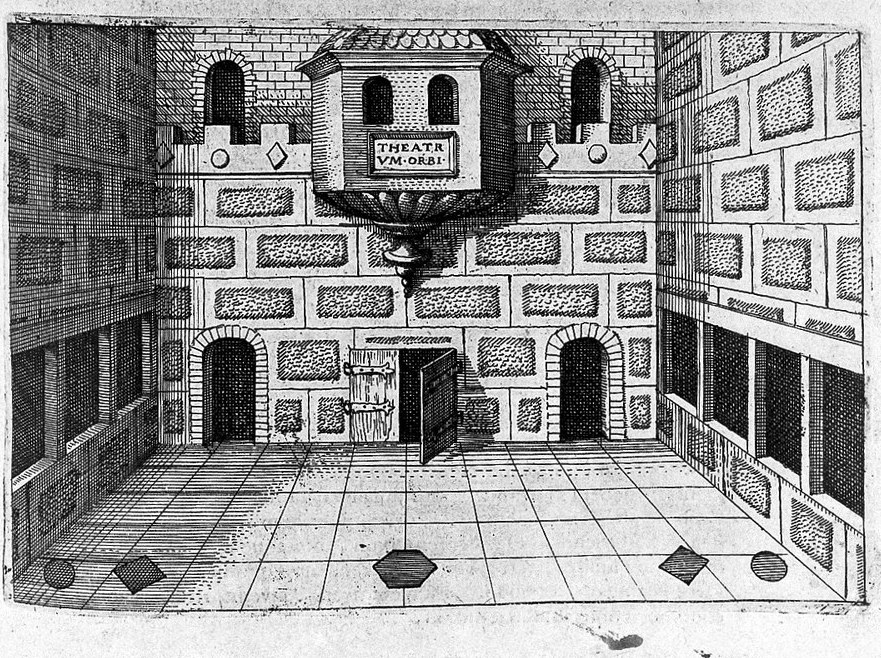


The Memory Palace
Human memory is bad at arbitrary lists and extraordinarily good at places. You can walk through a house you left twenty years ago and name what was in each room, in order, without ever having tried to learn it. That asymmetry is not a curiosity — it is exploitable.
The method of loci converts the thing you are bad at into the thing you are good at. Choose a route you know well. Fix an ordered series of loci along it — the doormat, the hall table, the foot of the stairs. Then, for each item you want to remember, invent a vivid image and place it at the next locus. To recall the list, walk the route.
It works because it gives arbitrary material two things it otherwise lacks: a retrieval cue (the place tells you where to look) and an order (the route can only be walked one way). Recalling a list from nothing is hard; recalling what is on your own hall table is easy.
The images have to earn their place. Bland ones fail. Exaggerated, moving, absurd, interacting-with-the-furniture images work — not because oddness is magic, but because it forces you to process the item instead of glancing at it.
This is a technique that predates every other item in this corpus by two thousand years, and it is still what memory competitors use. Build one palace, test it against rote learning, and measure the difference yourself.
নির্দেশাবলি
Get a baseline before you learn anything
Get a baseline before you learn anything
Write 20 unrelated concrete nouns on cards. Study them for three minutes, wait five minutes doing something else, then write down as many as you can in order.
Score two ways: total recalled, and longest correct run.
Do this before reading on. Without a baseline you have no way to tell whether the method worked or whether you simply tried harder the second time.
এই ধাপের উপকরণ:
 কার্ডস্টক1 প্যাক
প্রয়োজনীয় সরঞ্জাম:
 সব আবহাওয়ার মাঠ-খাতা
 স্টপওয়াচ
Survey a real route and fix the loci
Survey a real route and fix the loci
Choose a building you know without thinking — your home, your school, a walk to the shop. Physically walk it once, in one fixed direction.
Write down 20 loci in the order you meet them: distinct, large, unmoving objects or spots.
Number them.
Avoid repeated identical features — five identical radiators will collide, and collisions are the single commonest reason a beginner's palace fails.
Walk the empty palace until it is automatic
Walk the empty palace until it is automatic
With the list covered, recite the 20 loci from memory, forwards. Then backwards. Then starting from number 12.
Repeat until you can do all three without hesitation.
Learn the container before you put anything in it. A palace you have to think about costs you the attention you need for the images, and it is why people who skip this step conclude the method does not work.
Place 20 new items, one image per locus
Place 20 new items, one image per locus
Take a fresh set of 20 nouns. At each locus in turn, spend about 10 seconds building one image that interacts with that place — not sitting beside it.
Make it oversized, moving, and if possible absurd. A whale is forgettable on a shelf; a whale wedged in your bathroom doorway, thrashing, is not.
Interaction is what separates a stored image from a decorated one.
প্রয়োজনীয় সরঞ্জাম:
স্টপওয়াচRecall, and score it the same way
Recall, and score it the same way
Wait the same five minutes, doing the same kind of distracting task as in step 1. Then walk the route mentally and write down what you find, in order.
Score total recalled and longest correct run, exactly as before.
Then walk it backwards and score again.
Expect a large improvement over your baseline, and expect backwards recall to be nearly as good — something rote learning essentially cannot do.
Find where it breaks
Find where it breaks
Test it properly. Re-test the same list a week later without revising. Then load a second list of 20 into the same palace and re-test both.
Then try a list of abstract words — justice, entropy, ratio — instead of concrete nouns.
Expect week-later recall to hold up far better than rote, expect the second list to interfere badly with the first, and expect abstract words to be much harder until you convert each into a concrete image.
Every one of those three findings is a real, documented property of the method, not a personal failing.
Compendium — the history and the evidence
Compendium — the history and the evidence
The origin story is a story, and should be labelled as one. Cicero, in De Oratore, relates that the poet Simonides of Ceos was reciting at a banquet in Thessaly when he was called outside; the roof collapsed and crushed the diners beyond recognition; Simonides identified every body by recalling where each guest had been sitting, and thereby realised that orderly places are the key to orderly memory. It is a good story told several centuries after the supposed event, and there is no independent evidence for it. What is documentary is the technique itself, set out in the anonymous Rhetorica ad Herennium (c. 80 BC) — the earliest surviving full treatment — and discussed by Cicero and by Quintilian in the Institutio Oratoria. Those texts carried it through the Middle Ages and the Renaissance, when a trained memory was a professional necessity for anyone who had to speak at length without notes.
Modern evidence is unusually good for a self-help-sounding technique. Studies of memory-championship competitors have consistently found that they do not have unusual raw memory or unusual brain structure — they have trained strategies, and the method of loci is overwhelmingly the strategy they use. Training studies with ordinary participants show large, durable gains in list recall, together with changes in the pattern of brain activity towards that seen in experts. The effect is real, it is teachable, and it is narrow.
Narrow is the important word. The gains are in memorising ordered sets of items you deliberately encode. They do not generalise into a better memory in daily life, they do not raise general intelligence, and they do not help you understand the material — a palace full of formulas you cannot use is a palace full of noise. It is a retrieval technology, not a comprehension one, which is why it has always been paired with, not substituted for, actually learning the subject.
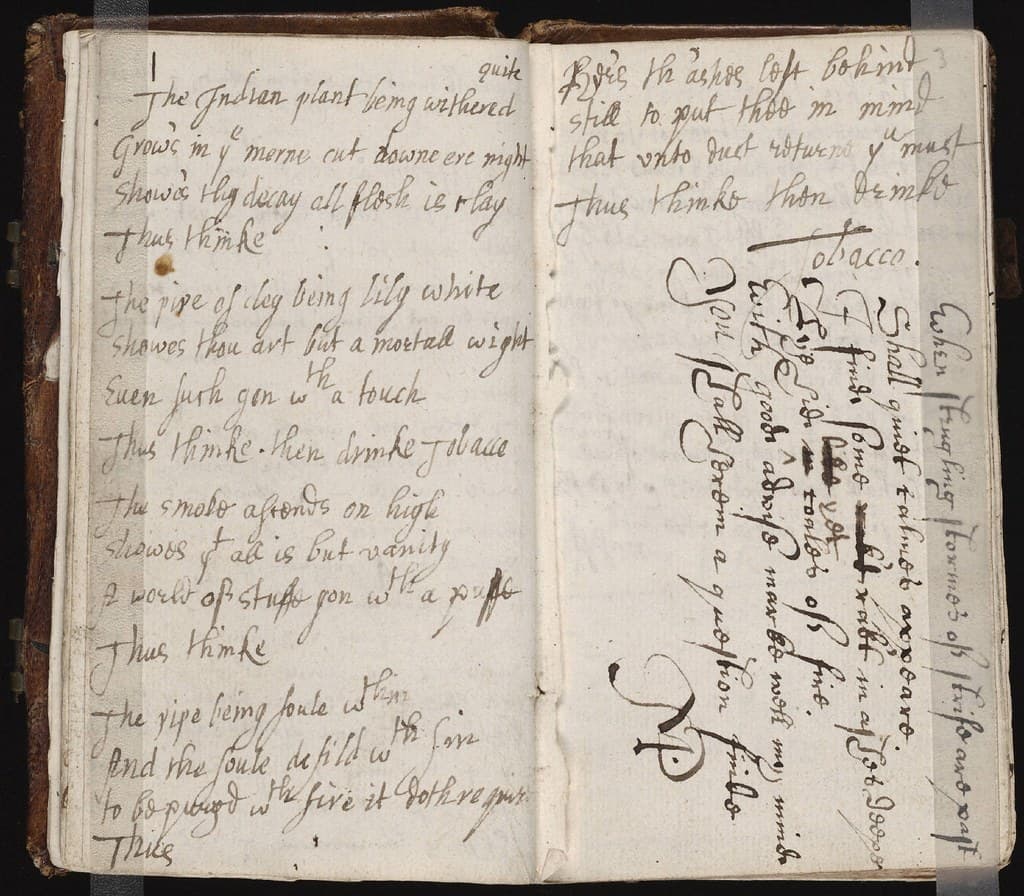
Related techniques worth knowing. The major system converts digits into consonant sounds and then into words, so numbers become imageable; person-action-object encodes three items into one composite image and is what competitors use for speed. And the written counterpart to a palace is the commonplace book — the same problem of finding material again, solved with paper and an index instead of imagined rooms.
Honest limits. Building a palace is slow, and for a five-item shopping list it is not worth it. Interference between lists stored in the same palace is real, and serious users keep many distinct palaces and rotate them. Abstract material must be converted to concrete images first, which is itself a skill. It relies on visual-spatial imagery, and people vary widely in that. And it needs review: a palace loaded once and never revisited fades like anything else — the method improves encoding and retrieval, it does not repeal forgetting.
সংযুক্ত ব্লুপ্রিন্টের উপাদান

CC0 পাবলিক ডোমেন
এই ব্লুপ্রিন্ট CC0-এর অধীনে প্রকাশিত। আপনি অনুমতি ছাড়াই যেকোনো উদ্দেশ্যে এটি অনুলিপি, পরিবর্তন, বিতরণ ও ব্যবহার করতে পারেন।
মেকারের ব্লুপ্রিন্টের মাধ্যমে পণ্য কিনে তাঁকে সমর্থন করুন, যেখানে তিনি আয় করেন মেকার কমিশন বিক্রেতাদের নির্ধারিত, অথবা এই ব্লুপ্রিন্টের একটি নতুন সংস্করণ তৈরি করে নিজের ব্লুপ্রিন্টে সংযোগ হিসেবে যুক্ত করে আয় ভাগ করুন।