ART
BEAUTY & WELLNESS
CRAFT
CULTURE & HISTORY
ENTERTAINMENT
ENVIRONMENT
FOOD & DRINKS
GREEN FUTURE
REVERSE ENGINEERING
SCIENCES
SPORTS
TECHNOLOGY
WEARABLES
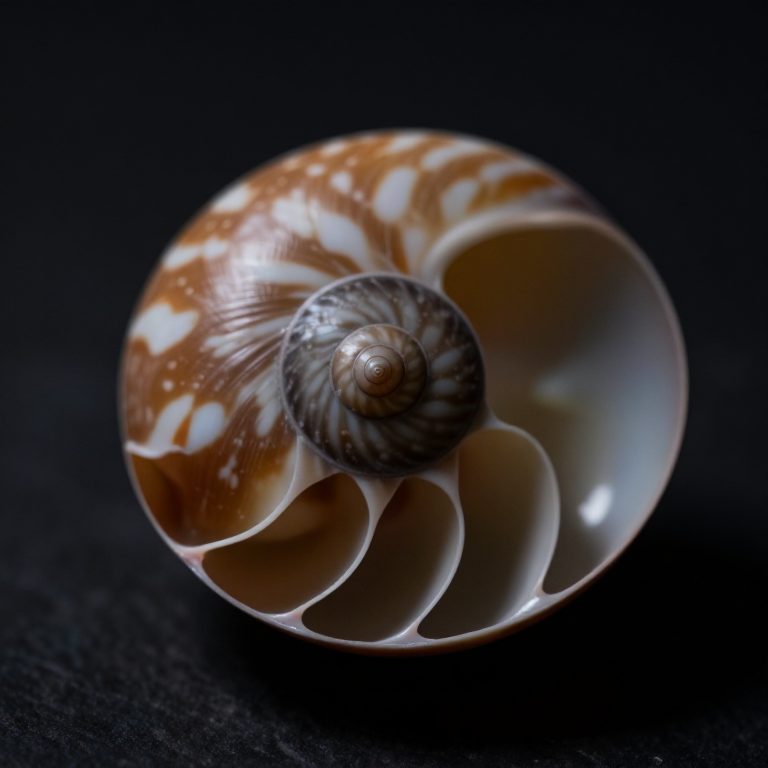


Fibonacci Numbers — Count the Spirals on a Pinecone
A hands-on maths project: count the two sets of spirals on a real pinecone or sunflower and discover they are Fibonacci numbers, then find the golden ratio hiding in the sequence. A Python cell shows the ratios closing in on 1.618, and a compendium separates the real maths of nature from the myths.
Beginner
30 minutes
Instructions
1
1
Nature's favourite numbers
Nature's favourite numbers
In 1202 Leonardo of Pisa -- Fibonacci -- wrote down a sequence where each number is the sum of the two before: 1, 1, 2, 3, 5, 8, 13, 21... The astonishing thing is that plants count with these numbers, and you can check it yourself.
2
2
Count the spirals
Count the spirals
Take a pinecone (a sunflower head or a pineapple works too). Look at the base: the scales form spirals winding one way and another set winding the other way. Mark a starting scale and count the spirals going clockwise, then count those going anticlockwise. Write both numbers down.
Materials for this step:
 Acorn & Pinecone Craft Supply Box1 piece
Tools needed:
 Graphite Pencil Set
3
3
Find the Fibonacci numbers
Find the Fibonacci numbers
Your two spiral counts are almost always two numbers that sit next to each other in the Fibonacci sequence -- very often 8 and 13, or 5 and 8, or 13 and 21. Check them against the sequence 1, 1, 2, 3, 5, 8, 13, 21, 34. Plants grow this way because it packs the seeds most efficiently.
Tools needed:
 Calculator
4
4
Meet the golden ratio
Meet the golden ratio
Loading Jupyter Notebook...
Tools needed:
 Desktop ComputerCalculator
5
5
Compendium: real patterns and tall tales
Compendium: real patterns and tall tales
What is true and what is exaggerated. (1) Fibonacci spiral counts in pinecones, sunflowers, pineapples and daisy petals are REAL, and happen because each new part grows at the 'golden angle' of about 137.5 degrees, which packs them tightest. (2) The ratio of neighbouring Fibonacci numbers genuinely approaches the golden ratio, phi = (1 + square root of 5) over 2 = 1.618..., the number satisfying phi-squared = phi + 1. (3) But be sceptical of claims that the golden ratio rules the Parthenon, the Mona Lisa or the 'perfect' face -- many are cherry-picked or made up. The maths in the pinecone is beautiful and real; not every romantic story about it is.
Materials
1- Placeholder
Tools Required
3- Placeholder
- Placeholder
- Placeholder
Related Blueprints
These blueprints share knowledge with this one — techniques, materials, or principles that connect them in the learning graph.
Related blueprints
Other builds that share materials, tools, or techniques with this one.
Understanding Niobium from Columbite — The Superconducting Steel Strengthenerchemistry

Building a Celestial Globe — Mapping the Stars on a SpherePhysics & Astronomy
Making Malachite Green Pigment — Grinding the Copper Mineral into Painter's Greenchemistry
Al-Khwarizmi's Algebra — Complete the Square with Paper Tiles
Understanding Erbium from Xenotime — The Pink Amplifier of the Internetchemistry
The Sand Reckoner — Count the Grains and Tame Huge Numbers
CC0 Public Domain
This blueprint is released under CC0. You are free to copy, modify, distribute, and use this work for any purpose, without asking permission.
Support the Maker by purchasing products through their Blueprint where they earn a Maker Commission set by Vendors, or create a new iteration of this Blueprint and include it as a connection in your own Blueprint to share revenue.