ART
BEAUTY & WELLNESS
CRAFT
CULTURE & HISTORY
ENTERTAINMENT
ENVIRONMENT
FOOD & DRINKS
GREEN FUTURE
REVERSE ENGINEERING
SCIENCES
SPORTS
TECHNOLOGY
WEARABLES
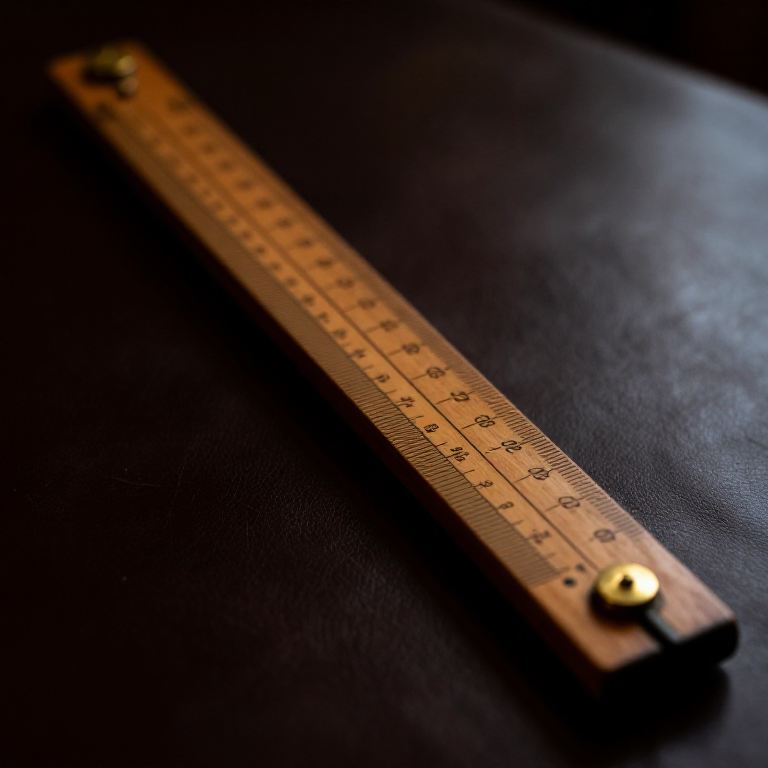


Napier's Logarithms — Build a Paper Slide Rule and Multiply by Sliding
A hands-on maths project: make a slide rule from two paper strips marked with a logarithmic scale, then multiply numbers just by sliding them -- because logarithms turn multiplication into addition. A Python cell shows the log trick, and a compendium covers 300 years of computing before the calculator.
Beginner
30 minutes
Instructions
1
1
Turning times into plus
Turning times into plus
In 1614 John Napier published logarithms, which turn hard multiplication into easy addition. The slide rule mechanised the trick and did the world's calculating for 300 years. You will build one from paper.
2
2
Make two logarithmic strips
Make two logarithmic strips
Cut two identical strips of card. On each, mark 1 at the left and 10 at the right, but space the numbers so that 2 sits about 30% along, 3 about 48%, 5 about 70% -- these positions are the logarithms. (Mark 1,2,3,...,10 at the log positions; a printed log scale helps.) These uneven marks are the secret.
Materials for this step:
 Cardstock Assorted Pack (50 sheets)1 piece
Tools needed:
 Steel Ruler (30cm)
 Sharp Scissors
 Graphite Pencil Set
3
3
Multiply by sliding
Multiply by sliding
To multiply, say, 2 by 3: slide the 1 of the top strip to sit above the 2 on the bottom strip. Now look above the 3 on the top strip -- it points at 6 on the bottom. You just multiplied by ADDING two lengths. Try 2 by 4, or 3 by 3. Sliding adds the log-distances, and adding logs multiplies the numbers.
4
4
See the log trick in numbers
See the log trick in numbers
Loading Jupyter Notebook...
Tools needed:
 Desktop Computer
 Calculator
5
5
Compendium: three centuries of computing
Compendium: three centuries of computing
What your slide rule teaches. (1) A logarithm answers 'what power of 10 gives this number?', and the one law log(a times b) equals log(a) plus log(b) is why sliding (adding lengths) multiplies. (2) Equal MULTIPLES sit at equal DISTANCES on a log scale -- that is why the marks bunch up toward 10. (3) From Kepler's orbits to the Apollo programme, science ran on log tables and slide rules until electronic calculators retired them in the 1970s. (4) Logarithms never left: they measure sound in decibels, acidity in pH, earthquakes on the Richter scale and information in bits.
Materials
1- Placeholder
Tools Required
5- Placeholder
- Placeholder
- Placeholder
- Placeholder
- Placeholder
Related Blueprints
These blueprints share knowledge with this one — techniques, materials, or principles that connect them in the learning graph.
Related blueprints
Other builds that share materials, tools, or techniques with this one.
Pascal's Triangle — Build a Pyramid of Numbers by Adding

Kepler's Laws — Draw a Planet's Ellipse with Two Pins and a String
Forging Iron Nails by Hand — Drawing, Cutting, and HeadingMetalworking
Cutting Decorative Deer Antler Slices — Polished Rounds for Display and Jewelrywoodworking
Making a Glass Bead on a Mandrel — Lampwork BeadmakingGlassworking
Making a Fishing Spear (Leister) — Multi-Pronged Fish Gigsurvival
CC0 Public Domain
This blueprint is released under CC0. You are free to copy, modify, distribute, and use this work for any purpose, without asking permission.
Support the Maker by purchasing products through their Blueprint where they earn a Maker Commission set by Vendors, or create a new iteration of this Blueprint and include it as a connection in your own Blueprint to share revenue.