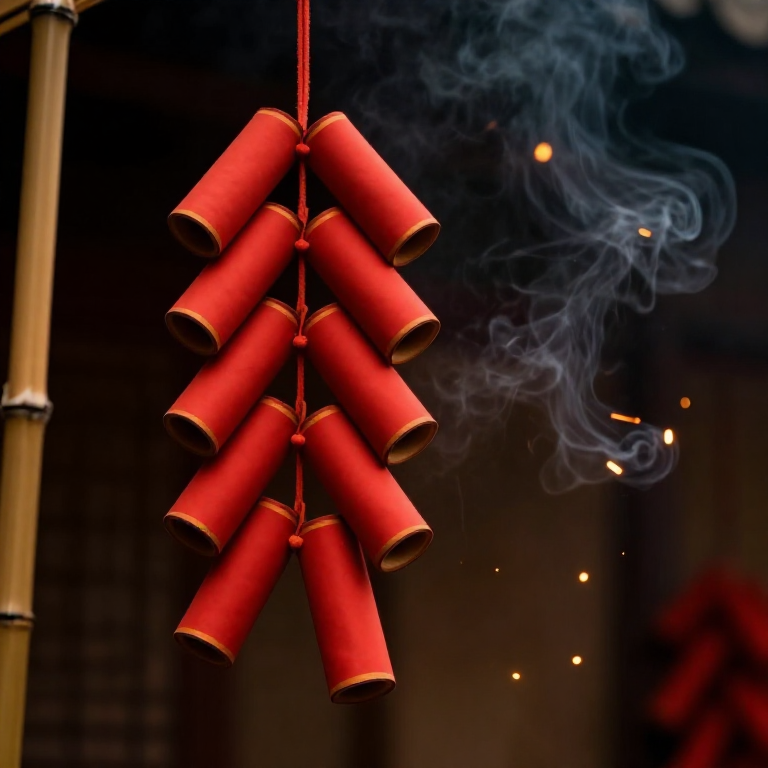


Making Song Dynasty Fireworks — Bamboo Firecrackers and Ground Salutes
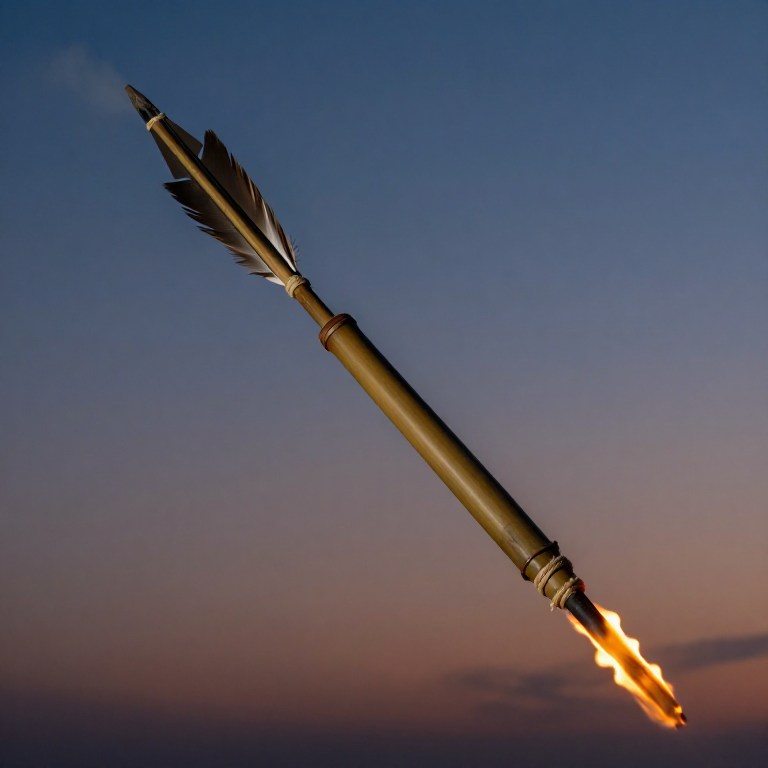
Chinese fireworks (烟花, yānhuā — literally 'smoke flowers') evolved alongside military gunpowder applications during the Song dynasty (960-1279 AD). While soldiers were building fire lances and fire arrows, festival organizers discovered that stuffing black powder into sealed bamboo tubes produced spectacular explosions of noise, light, and colored sparks — terrifying evil spirits and delighting crowds.
The earliest firecrackers were literally that: sections of green bamboo thrown into bonfires. The moisture trapped inside the bamboo nodes would boil and burst the tube with a sharp crack — 'bao zhu' (爆竹, exploding bamboo). When gunpowder became available, artisans began filling dried bamboo tubes with black powder and sealing both ends, creating far more powerful explosions. By the 12th century, Chinese pyrotechnicians had developed ground salutes (ground-level crackers strung together on a fuse), aerial shells launched from mortars, and colored spark compositions using iron filings for gold sparks and copper compounds for blue-green effects.
Marco Polo described Chinese fireworks displays with astonishment when he visited the Yuan court around 1275 AD. The technology spread westward along the Silk Road, reaching the Arab world by the 13th century and Europe by the 14th century. Today, China still produces over 90% of the world's fireworks — a craft tradition spanning more than a thousand years from those first bamboo tubes packed with black powder in Song dynasty workshops.
Instructions
Prepare the bamboo casings
Prepare the bamboo casings
Select dry bamboo culms that have been seasoned for at least 6 months — green bamboo contains moisture that interferes with the powder charge. Cut sections 10-15 cm long with an internal diameter of 2-3 cm. Each section must have one natural node intact at the bottom to act as a sealed base. The open top end will be packed with powder and sealed.
For a string of firecrackers (bian pao, 鞭炮), prepare 10-20 identical tubes. Inspect each one for cracks — a split tube will fail to build pressure and produce only a fizzle instead of a sharp crack. Sand the exterior smooth to allow the fuse cord to lie flat against the tubes when strung together.
Materials for this step:
 Mature Bamboo Culm (3-5 years)2 pieces
Tools needed:
 Hand Saw
 Sharp Knife
Mix the firecracker powder charge
Mix the firecracker powder charge
Firecracker powder uses a slightly different ratio than military black powder — optimized for a sharp report rather than sustained burn. The Song dynasty formula for firecrackers was approximately 75% saltpeter, 14% charcoal (softwood charcoal preferred for faster burn rate), and 11% sulfur. Grind each ingredient separately to a fine powder using a stone mortar and pestle.
Combine the powders in a ceramic bowl and mix gently with a wooden spatula until uniformly blended. For a string of 10 small firecrackers, prepare approximately 50-70 grams of mixed powder total. Store the mixed powder in a sealed ceramic container away from heat and flame until ready to pack.
Materials for this step:
 Potassium Nitrate (saltpeter)55 g
 Charcoal10 g
 Native Sulfur (collected)8 g
Tools needed:
 Stone Mortar and Pestle (large)
Prepare spark-producing additives
Prepare spark-producing additives
Song dynasty pyrotechnicians discovered that adding metal filings to the powder charge produced spectacular spark effects. Iron filings create a shower of branching gold-orange sparks as the burning particles trace bright arcs through the air. The filings must be clean — rust or oil on the iron surface will dampen the effect.
For each firecracker, mix approximately 2-3 grams of iron filings into the powder charge. The iron does not change the explosive force — it adds visual spectacle. Some Song dynasty formulas also added small amounts of crushed pine resin, which produces a brighter flash and a distinctive crackle sound as the resin particles ignite independently of the main charge.
Materials for this step:
 Iron Filings (clean scrap iron)30 g
Pack the powder into bamboo tubes
Pack the powder into bamboo tubes
Working outdoors on a clean stone or ceramic surface, pour the powder-and-iron mixture into each bamboo tube through the open top. Fill each tube approximately three-quarters full — the empty space above the charge is necessary for gas pressure to build before the tube bursts. Use a wooden dowel to tamp the powder firmly but not excessively — over-compression can prevent the powder from igniting evenly.
Seal the open top of each tube with a clay plug approximately 1 cm thick, pressed firmly into the tube opening. The clay seal must be strong enough to resist the initial gas pressure, forcing the explosion to burst the bamboo walls rather than simply blowing the plug out. Allow the clay to dry for several hours before handling.
Tools needed:
 Dowel Rod
Make the slow-match fuse
Make the slow-match fuse
Prepare a slow-match fuse by soaking hemp cord in a saltpeter solution: dissolve 50 grams of saltpeter in 200 ml of warm water and submerge a length of hemp cord for at least 2 hours. Remove and hang to dry completely — this takes 12-24 hours depending on humidity. The treated cord burns slowly and reliably at approximately 1 cm per 10 seconds.
For a string of firecrackers, cut fuse lengths of 3-4 cm per tube plus 15 cm of leader fuse at the beginning. Pierce a small hole through each bamboo tube wall near the clay seal using an awl, and thread the fuse through so it contacts the powder inside. The leader fuse extends from the first tube, giving time to retreat after lighting.
Materials for this step:
 Hemp Cord2 metersPotassium Nitrate (saltpeter)50 g
Tools needed:
 Awl
AwlString the firecrackers together
String the firecrackers together
The classic Chinese firecracker string (bian pao) connects multiple tubes on a single continuous fuse. Lay the tubes side by side and thread the fuse through each tube in sequence — as one firecracker detonates, the burning fuse ignites the next tube automatically, creating a rapid chain of explosions.
Space the tubes 2-3 cm apart along the fuse to ensure each explosion does not prematurely detonate the next one before the fuse has time to burn through. Bind the tubes together with thin cord, wrapping them into a compact bundle or leaving them in a loose string that can be hung from a hook or pole — the traditional display method for Chinese New Year celebrations.
Materials for this step:
Hemp Cord1 meterWrap the tubes in decorative paper
Wrap the tubes in decorative paper
Song dynasty firecrackers were wrapped in red mulberry bark paper — red being the traditional Chinese colour for luck, celebration, and warding off evil spirits. The paper wrapping also serves a functional purpose: it adds confinement to the bamboo tube, increasing the pressure at the moment of detonation and producing a louder crack.
Cut strips of paper wide enough to wrap around each tube with a 1 cm overlap. Apply a thin layer of rice paste to the paper and wrap each tube tightly, smoothing out air bubbles. Twist the paper at the sealed end to create a decorative tail. The fuse should protrude clearly from the paper wrapping so it can be easily lit.
Materials for this step:
 Mulberry Bark Paper5 sheets
Test-fire the firecracker string
Test-fire the firecracker string
Hang the completed firecracker string from a tall pole or hook in an open outdoor area, well away from buildings, dry vegetation, and people. Clear a safety radius of at least 10 meters. The traditional Chinese method is to suspend the string from the eaves of a building or from a bamboo pole extended from an upper window, letting the crackers hang freely in the air.
Light the leader fuse at its tip and retreat immediately. The fuse will burn for 15-20 seconds before reaching the first tube. Each firecracker will detonate in sequence with sharp cracks, showers of golden iron sparks, and clouds of white smoke. A well-made string of 10 firecrackers fires in approximately 5-10 seconds, filling the air with noise and light — exactly as Song dynasty festival-goers experienced a thousand years ago.
Tools needed:
 Chemical Splash Goggles
 Nitrile Rubber Gloves (Thick)
Materials
7- 2 piecesPlaceholder
- Placeholder
- Placeholder
- Placeholder
- 5 sheetsPlaceholder
Connected Blueprint Materials
Related Blueprints
These blueprints share knowledge with this one — techniques, materials, or principles that connect them in the learning graph.
Related blueprints
Other builds that share materials, tools, or techniques with this one.
CC0 Public Domain
This blueprint is released under CC0. You are free to copy, modify, distribute, and use this work for any purpose, without asking permission.
Support the Maker by purchasing products through their Blueprint where they earn a Maker Commission set by Vendors, or create a new iteration of this Blueprint and include it as a connection in your own Blueprint to share revenue.