མཉམ་ལས།
སྒྱུ་རྩལ
མཛེས་སྡུག་དང་བདེ་ཐང
བཟོ་རིག
རིག་གནས་དང་ལོ་རྒྱུས
དགའ་སྟོན
ཁོར་ཡུག
ཟས་དང་བཏུང་རྫས
ཕྱིར་འཕྲུལ་རིག
ཚན་རིག
རྩེད་འགྲན
རིག་རྩལ
གྱོན་རུང
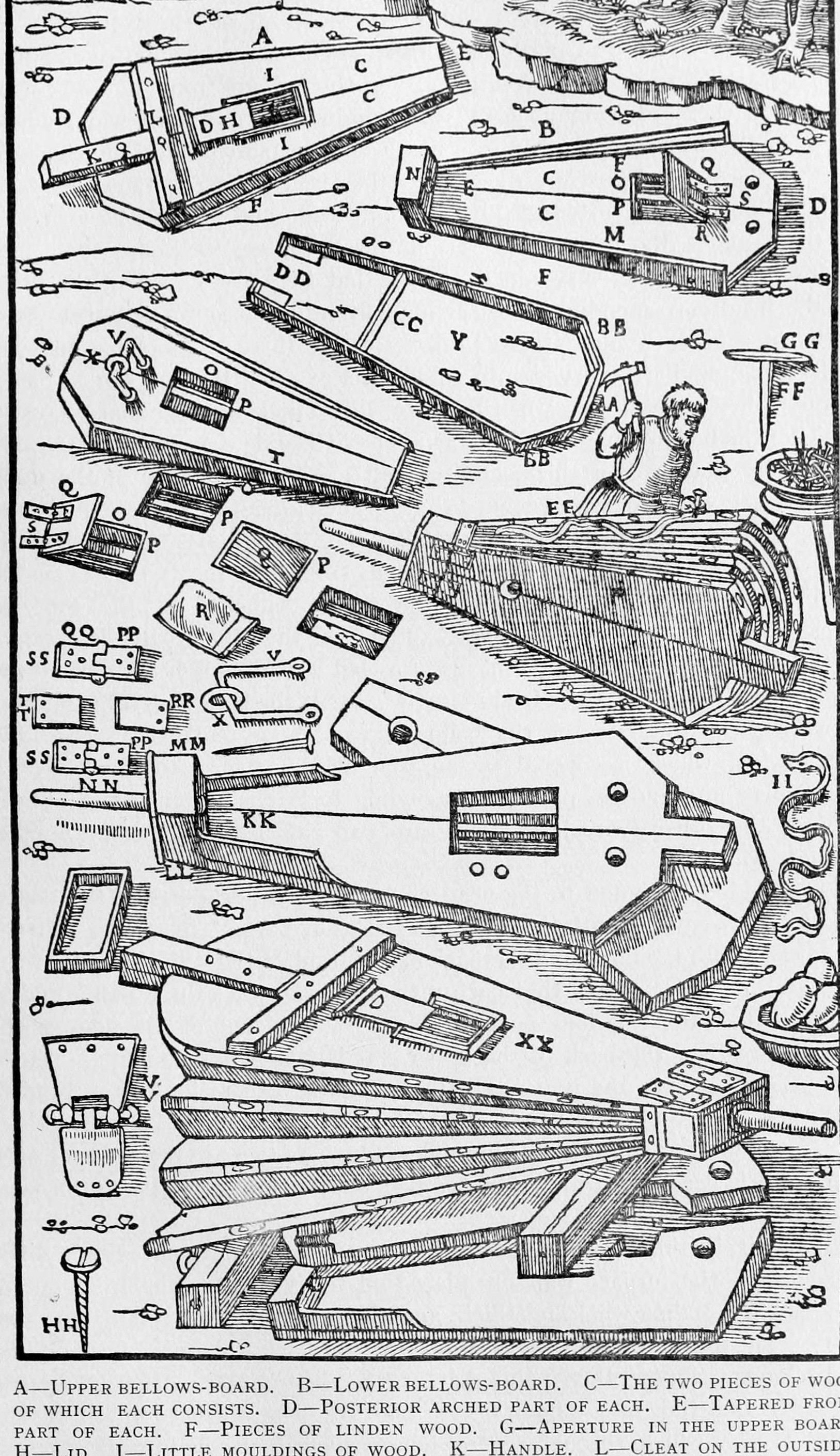


Great Bellows of the Smelting Works: Pine Boards, Linden Bows, Ox-Hide and Iron Nozzle (Agricola, 1556)
The large blast bellows of a 16th-century smelting works, every part measured, from Agricola's De Re Metallica, Book IX (1556): two tapered boards of glued pine edged with linden, about 1.7 m long, two linden bows, two ox-hides nailed on with T-headed nails, a goatskin flap valve in the lower board, and a glued head carrying a 3 ft iron nozzle.
མཐོ་རིམ
About 2 weeks
ལམ་སྟོན
1
1
Roman units in metric
Roman units in metric
Jupyter ཚང་དེབ་མངོན་གསལ་འབད་དོ་…
2
2
Read De Re Metallica, Book IX
Read De Re Metallica, Book IX
"Each bellows consists of a body and a head. The body is composed of two 'boards', two bows, and two hides."
3
3
Make the upper board
Make the upper board
Glue two pieces of pine into a board a palm thick, 5 ft 3 palms long, 2-1/2 ft wide at the back (sides a little curved) and a cubit wide at the front, tapering to the head. Glue on linden edge strips, 7 digits wide at the back and 1-1/2 at the front, to take the nails. Cut an aperture 6 by 4 digits in the middle, 1 ft 3 palms from the head, with a sliding lid 2 palms 1 digit square and 3 digits thick running in mouldings a palm wide and 3 digits thick (or bore 2-3 round holes with plugs). Glue and peg a handle 7 palms or longer (2 palms wide, 1 thick on the board; rounded and 7 digits thick beyond), with a 2 ft cleat 2 palms wide and a palm thick over it and another 2 ft cleat underneath, 3 palms from the end.
གོམ་པ་འདིའི་རྫས་རིགས:
 ཐང་ཤིང་གི་ལེབ།2 དུམ་བུ།
 བཱསི་ཝུཌ་ཤིང་གི་ལེབ་ཤོག1 དུམ་བུ།
 པགས་ཀོའི་སྤྱིན།1 དུམ་བུ།
 ཤིང་གི་གཟེར་ཤིང་།1 དུམ་བུ།
ལག་ཆས་དགོས་མཁོ:
 ལག་སོག་ལེ།
 ལག་གི་ཤིང་བཞོག་ཆས།
 གཟོང་རྣམས།
 ལག་པ་གིས་འཁོར་བའི་སྦུབས་ཆས་དང་མགོ།
 དབྱུག་ཏོའི་འཛིན་ཆས།
4
4
Make the lower board and flap valve
Make the lower board and flap valve
Make the lower board the same way and a cubit longer (the extra length is part of the head). About a cubit from the back, centred, cut an air-hole a foot long and 3 palms wide, leaving a rib a palm long and 1/3 digit wide across it. Make the flap a foot 3 digits by 3 palms 3 digits of thin board covered with goatskin, hair toward the ground, hinged with a doubled strip of leather a palm wide nailed to it and tied through two holes 7 digits apart. A foot beyond, fix a slightly elliptical iron ring 2 palms by 1 on a staple, 3 palms from the back, for the wooden bolt that holds the board to its frame (or use two iron screws).
གོམ་པ་འདིའི་རྫས་རིགས:
ཐང་ཤིང་གི་ལེབ།2 དུམ་བུ།བཱསི་ཝུཌ་ཤིང་གི་ལེབ་ཤོག1 དུམ་བུ།པགས་ཀོའི་སྤྱིན།1 དུམ་བུ། ར་ཡི་པགས་ཀོ་རྗེན་པ།1 དུམ་བུ།
 ཀོ་བའི་སྐེད་རགས།1 དུམ་བུ།
 Metal Ring1 དུམ་བུ།
 གཟེར་བུ1 དུམ་བུ།
ལག་ཆས་དགོས་མཁོ:
ལག་སོག་ལེ།གཟོང་རྣམས།ལག་པ་གིས་འཁོར་བའི་སྦུབས་ཆས་དང་མགོ། ཐོ་བ།
5
5
Make the bows
Make the bows
Make each bow as long as the upper board from four pieces of linden 3 digits thick: two long pieces 7 digits wide at the back and 2-1/2 at the front, a back piece 2 palms wide, its ends a little over a digit thick, bent to meet the long pieces, mortised, bored and pegged with glued pegs. Mortise in a crossbar a cubit from the head, a foot long without tenons and a palm 2 digits wide. Glue and peg two small pieces, 3 palms 2 digits long, a palm high and a digit thick, at the head to keep the bow ends off the air passage.
གོམ་པ་འདིའི་རྫས་རིགས:
བཱསི་ཝུཌ་ཤིང་གི་ལེབ་ཤོག2 དུམ་བུ།པགས་ཀོའི་སྤྱིན།1 དུམ་བུ།ཤིང་གི་གཟེར་ཤིང་།1 དུམ་བུ།ལག་ཆས་དགོས་མཁོ:
ལག་སོག་ལེ།གཟོང་རྣམས།ལག་པ་གིས་འཁོར་བའི་སྦུབས་ཆས་དང་མགོ། ཤིང་གི་ཐོ་བ།
6
6
Make the head and nozzle
Make the head and nozzle
Glue the upper head board, a cubit long and 1-1/2 palms thick, onto the lower board's extension (a palm and a digit thick). Shape it a cubit wide at the back, 2 digits narrower 3 palms forward, then round the front to 2 palms 2 digits across and bind it with an iron ring 3 digits wide. Bore it for the nozzle: a pipe of thin iron plate 3 ft long, 3 digits across in front and a palm high by 2 palms wide at the back.
གོམ་པ་འདིའི་རྫས་རིགས:
ཐང་ཤིང་གི་ལེབ།1 དུམ་བུ།པགས་ཀོའི་སྤྱིན།1 དུམ་བུ། ལྕགས་ཀྱི་ཤོག་ལེབ་ (བརྡུང་ཡོད་མི)1 དུམ་བུ།Metal Ring1 དུམ་བུ།
ལག་ཆས་དགོས་མཁོ:
ལག་སོག་ལེ།ལག་པ་གིས་འཁོར་བའི་སྦུབས་ཆས་དང་མགོ། མགར་ཐབ།
 མགར་བའི་རྡོ་ལེབ།ཐོ་བ།
7
7
Hide the bellows
Hide the bellows
Use ox-hide (far better than horse), two hides each 3-1/2 ft wide at the back. Lay a long leather thong along each board and bow and nail the hide through it with T-shaped iron nails 5 digits long, horns 2-1/2 digits long and half a digit wide, the horn of one nail almost touching the next along the boards; on each bow two nails in the back piece and four in each long piece, ten in all. Pine strips nailed over the hide on the long pieces guard against tearing; iron screws through strips over the hide hold even better.
གོམ་པ་འདིའི་རྫས་རིགས:
 རྩི་ཤིང་གིས་བཟོ་བའི་པགས་ཀོ།2 དུམ་བུ།ཀོ་བའི་སྐེད་རགས།1 དུམ་བུ།གཟེར་བུ1 དུམ་བུ།
ལག་ཆས་དགོས་མཁོ:
ཐོ་བ། ཀོ་བ་ གཏུབ་པའི་ གྱི་ཅུང
 ཇེམ་ཙི།
8
8
Troubleshooting
Troubleshooting
Bellows troubleshooting.
Flow
Loading...
9
9
History and honest limits
History and honest limits
From Georgius Agricola, **De Re Metallica** (1556), Book IX, translated by Herbert C. and Lou H. Hoover, 1912 (checked on the archive.org scan georgiusagricola00agri, pp. 362-365). The frame and the machinery that work the bellows are not covered here. The metric conversions (digit ~1.85 cm, palm ~7.4 cm, Roman foot ~29.6 cm, cubit ~44.4 cm) and the tools are ours.
རྫས་རིགས
10- 2 དུམ་བུ།ས་ཆ་འཛིན
- 2 དུམ་བུ།ས་ཆ་འཛིན
- 1 དུམ་བུ།ས་ཆ་འཛིན
- 1 དུམ་བུ།ས་ཆ་འཛིན
- 1 དུམ་བུ།ས་ཆ་འཛིན
- 2 དུམ་བུ།ས་ཆ་འཛིན
- 1 དུམ་བུ།ས་ཆ་འཛིན
- 2 དུམ་བུ།ས་ཆ་འཛིན
- 1 དུམ་བུ།ས་ཆ་འཛིན
- 2 དུམ་བུ།ས་ཆ་འཛིན
ལག་ཆས་དགོས་མཁོ
11- ས་ཆ་འཛིན
- ས་ཆ་འཛིན
- ས་ཆ་འཛིན
- ས་ཆ་འཛིན
- ས་ཆ་འཛིན
- ས་ཆ་འཛིན
- ས་ཆ་འཛིན
- ས་ཆ་འཛིན
- ས་ཆ་འཛིན
- ས་ཆ་འཛིན
བིལུ་པིརིན་ཊི་འདི་གིས་བཟོ་མི
འབྲེལ་ཡོད་བིལུ་པིརིན་ཊི
བིལུ་པིརིན་ཊི་འདི་ཚུ་ཐབས་ལམ་དང་རྫས་རིགས། སྤྱི་ཆོས་བགོ་བཤའ་བྱེད
CC0 སྤྱི་དབང
བིལུ་པིརིན་ཊི་འདི་CC0 འོག་བཀྲམས་ཡོད། ཁྱེད་རང་གིས་ཆོག་མཆན་མ་བཞེས་པར་ཕབ་ལེན་དང་བཟོ་བཅོས། བགོ་བཤའ། དགོས་མཁོ་གང་ལའང་བཀོལ་སྤྱོད་བྱས་ཆོག
བཟོ་མཁན་ལ་རྒྱབ་སྐྱོར་བྱེད་པའི་ཆེད་ཁོང་ཚོའི་བིལུ་པིརིན་ཊི་བརྒྱུད་ཐོན་སྐྱེད་ཉོ། བཟོ་མཁན་གྱིས བཟོ་མཁན་གྱི་ཁེ་ཕོགས ཚོང་པས་གཏན་འཁེལ་བྱས་པ། ཡང་ན་བིལུ་པིརིན་ཊི་འདིའི་པར་གསར་བཟོས་ཏེ་ཁྱེད་རང་གི་བིལུ་པིརིན་ཊི་ནང་མཐུད་སྦྲེལ་བྱས་ཏེ་ཡོང་སྒོ་བགོ་བཤའ་བྱེད།