སྒྱུ་རྩལ
མཛེས་སྡུག་དང་བདེ་ཐང
བཟོ་རིག
རིག་གནས་དང་ལོ་རྒྱུས
དགའ་སྟོན
ཁོར་ཡུག
ཟས་དང་བཏུང་རྫས
ཕྱིར་འཕྲུལ་རིག
ཚན་རིག
རྩེད་འགྲན
རིག་རྩལ
གྱོན་རུང

Audio Amplifier: an LM386 with Gain 20 and the Fewest Parts, on a 9 V Battery
A small loudspeaker amplifier for a phone, a microphone preamp or a guitar, built around the LM386 chip. Its gain of 20 is set inside the chip, so it needs only a volume control, two capacitors and a resistor, as in the datasheet's minimum part circuit. It runs from a 9 V battery and drives an 8 ohm speaker.
འགོ་བཙུགས
About 2 hours
ལམ་སྟོན
1
1
An LM386 amplifier working
An LM386 amplifier working
An LM386 amplifier on a 9 V battery and an 8 ohm speaker (Tyro Mix).
2
2
The circuit
The circuit
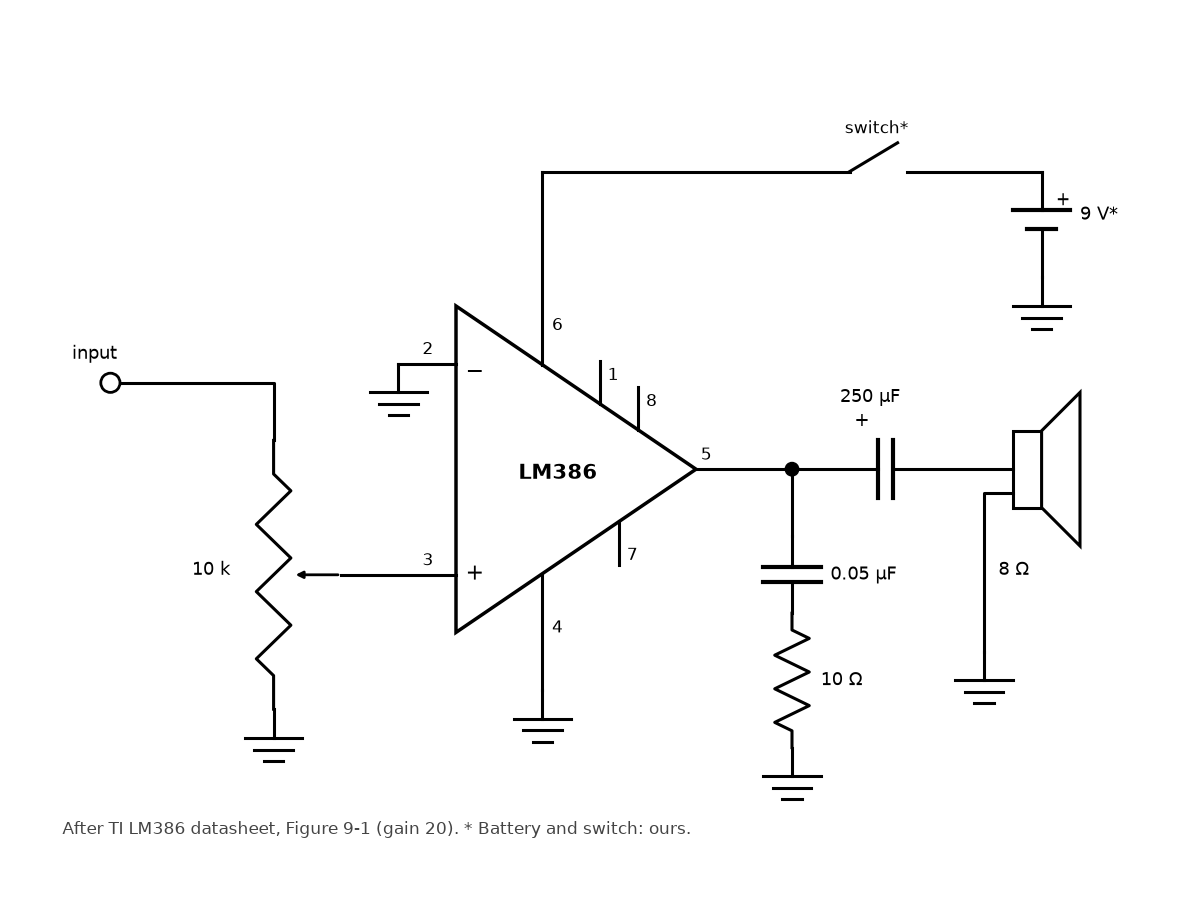
From the TI datasheet, Figure 9-1: the input goes across a 10 k potentiometer whose wiper feeds pin 3; pins 2 and 4 go to ground and pin 6 to the supply. Pin 5 drives the speaker through a 250 uF capacitor, with 0.05 uF and 10 ohm in series from pin 5 to ground. Pins 1, 7 and 8 stay open: "its gain is internally set to 20". The battery and switch are ours.
3
3
Bass, gain and battery
Bass, gain and battery
Jupyter ཚང་དེབ་མངོན་གསལ་འབད་དོ་…
4
4
Build it on stripboard
Build it on stripboard
Place the chip across the middle of a small piece of stripboard and cut the copper strips between its two rows of pins with a drill bit turned by hand. Solder the chip, then the 10 ohm resistor and 0.05 uF capacitor (47 nF is the nearest stock value) in series from pin 5 to a ground strip, and the 250 uF capacitor (220 uF is the nearest stock value) from pin 5 with its + lead at pin 5. Link pins 2 and 4 to ground. Use an LM386N-3 for a 9 V battery.
གོམ་པ་འདིའི་རྫས་རིགས:
 Audio Power Amplifier IC1 piece (LM386N-3)
 འགོག་ཤུགས།1 piece (10 ohm)
 རྫ་མཁན་གྱི་ཀོན་ཌེན་སར་ཆ་ཚན།1 piece (0.05 uF / 47 nF)
 གློག་ཞུན་ ཀེ་པེ་སི་ཊར།1 piece (250 uF / 220 uF, 16 V or more)
 ཐག་རིས་ཅན་གྱི་གློག་ལེབ1 piece (about 10 x 10 holes)
 ཞ་སྦྱར་རྫས་ཀྱི་སྐུད་པ1 m
ལག་ཆས་དགོས་མཁོ:
 ཞ་བཏབ་ནིའི་ལྕགས།
 སྐུད་གཏུབ་ཆས།
 ཕུག་མགོའི་ཚོགས་ཆས།
5
5
Wire the controls, speaker and battery
Wire the controls, speaker and battery
Wire the input jack's tip to one end of the 10 k potentiometer and its sleeve to the other end and to ground; the wiper goes to pin 3. Wire the speaker from the 250 uF capacitor's free lead to ground. Wire the battery's + lead through the switch to pin 6 and its - lead to ground.
གོམ་པ་འདིའི་རྫས་རིགས:
 པོ་ཊེན་ཤོ་མི་ཊར།1 piece (10 k)
 སྒྲའི་བཙུགས་ཁུང་།1 piece (3.5 mm)
 སྒྲ་སྐྱེད་འཕྲུལ་ཆས།1 piece (8 ohm)
 འཕར་སྒུལ་སྒོ་ལྕགས།1 དུམ་བུ།
 བ་རེལ་མཐུད་ཆས་ཅན་གྱི་ཝོལཊ་༩ གློག་མེ།1 དུམ་བུ།
 མཐུད་སྦྱོར་གློག་ཐག1 m
ལག་ཆས་དགོས་མཁོ:
ཞ་བཏབ་ནིའི་ལྕགས། ལྕགས་སྐུད་ཀྱི་ཤུབས་བཤུས་ཆས།སྐུད་གཏུབ་ཆས།
6
6
Test it
Test it
With the volume down, switch on and measure pin 5 to ground: the datasheet says the output "automatically biases to one-half the supply voltage", so expect about 4.5 V from a fresh 9 V battery. Plug in a phone, start quietly and turn the volume up.
ལག་ཆས་དགོས་མཁོ:
 ཌི་ཇི་ཊཱལ་མཱལ་ཊི་མི་ཊར — རང་བཞིན་ཁྱབ་ཚད། ངོ་མའི་ RMS
7
7
Troubleshooting
Troubleshooting
Amplifier problems and fixes.
Flow
Loading...
8
8
History and honest limits
History and honest limits
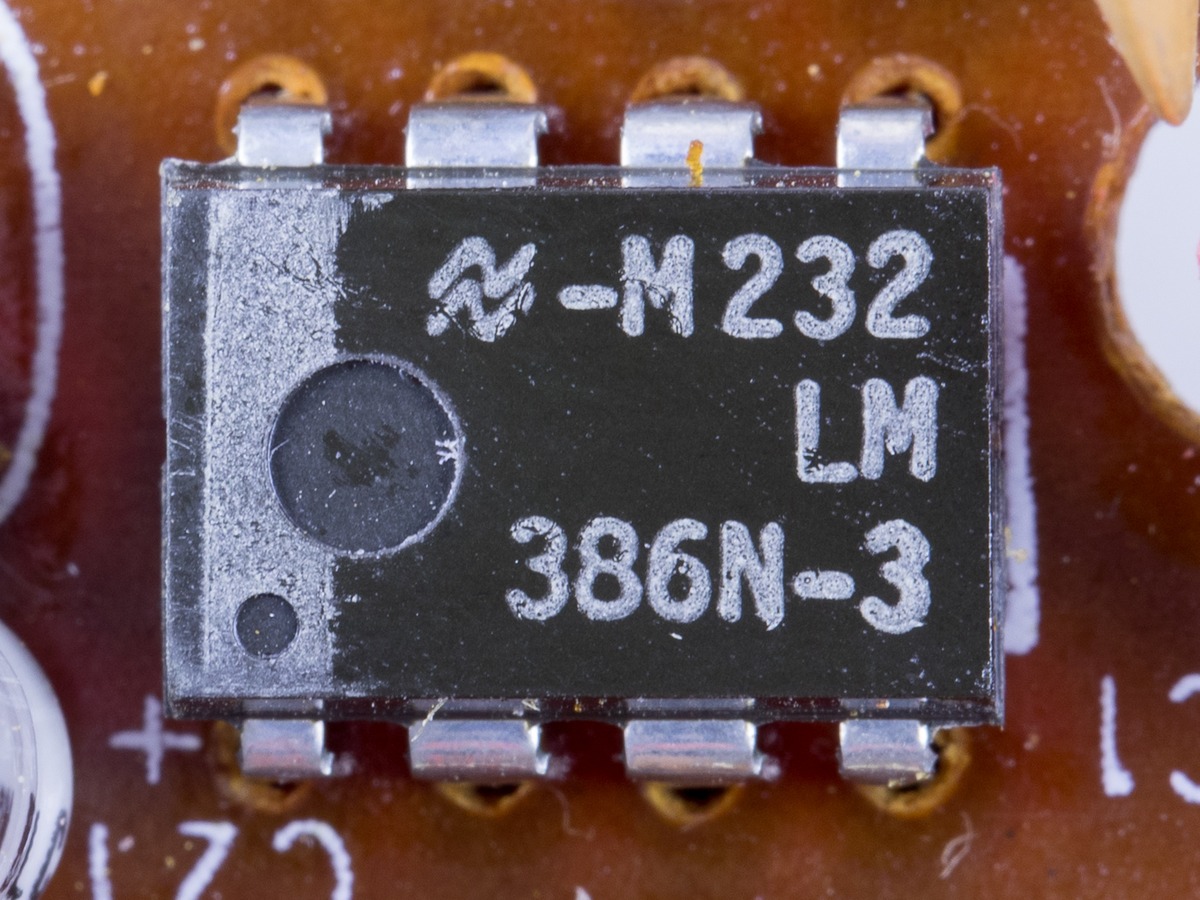
The LM386 is a low-voltage audio power amplifier, sold today by Texas Instruments (the chip on the cover carries National Semiconductor's logo); this is its datasheet's minimum part circuit (SNAS545D, Figure 9-1). The battery, switch, stripboard layout and stock values are ours. The datasheet gives 700 mW typical for the LM386N-3 at 9 V into 8 ohm at 10 % distortion: enough for a room, not a hall. Keep to 4-12 V. The cover photo shows an LM386N on a board (Raimond Spekking, CC BY-SA 4.0, Wikimedia Commons). Not made by us yet.
རྫས་རིགས
12- 1 piece (LM386N-3)ས་ཆ་འཛིན
- 1 piece (10 ohm)ས་ཆ་འཛིན
- 1 piece (0.05 uF / 47 nF)ས་ཆ་འཛིན
- 1 piece (250 uF / 220 uF, 16 V or more)ས་ཆ་འཛིན
- 1 piece (about 10 x 10 holes)ས་ཆ་འཛིན
- ས་ཆ་འཛིན
- ས་ཆ་འཛིན
- ས་ཆ་འཛིན
- ས་ཆ་འཛིན
- ས་ཆ་འཛིན
- 1 དུམ་བུ།ས་ཆ་འཛིན
- ས་ཆ་འཛིན
ལག་ཆས་དགོས་མཁོ
5- 2 vendors sell this, none ship to you yetས་ཆ་འཛིན
- ས་ཆ་འཛིན
- ས་ཆ་འཛིན
- ས་ཆ་འཛིན
བིལུ་པིརིན་ཊི་འདི་གིས་བཟོ་མི
CC0 སྤྱི་དབང
བིལུ་པིརིན་ཊི་འདི་CC0 འོག་བཀྲམས་ཡོད། ཁྱེད་རང་གིས་ཆོག་མཆན་མ་བཞེས་པར་ཕབ་ལེན་དང་བཟོ་བཅོས། བགོ་བཤའ། དགོས་མཁོ་གང་ལའང་བཀོལ་སྤྱོད་བྱས་ཆོག
བཟོ་མཁན་ལ་རྒྱབ་སྐྱོར་བྱེད་པའི་ཆེད་ཁོང་ཚོའི་བིལུ་པིརིན་ཊི་བརྒྱུད་ཐོན་སྐྱེད་ཉོ། བཟོ་མཁན་གྱིས བཟོ་མཁན་གྱི་ཁེ་ཕོགས ཚོང་པས་གཏན་འཁེལ་བྱས་པ། ཡང་ན་བིལུ་པིརིན་ཊི་འདིའི་པར་གསར་བཟོས་ཏེ་ཁྱེད་རང་གི་བིལུ་པིརིན་ཊི་ནང་མཐུད་སྦྲེལ་བྱས་ཏེ་ཡོང་སྒོ་བགོ་བཤའ་བྱེད།