སྒྱུ་རྩལ
མཛེས་སྡུག་དང་བདེ་ཐང
བཟོ་རིག
རིག་གནས་དང་ལོ་རྒྱུས
དགའ་སྟོན
ཁོར་ཡུག
ཟས་དང་བཏུང་རྫས
ཕྱིར་འཕྲུལ་རིག
ཚན་རིག
རྩེད་འགྲན
རིག་རྩལ
གྱོན་རུང
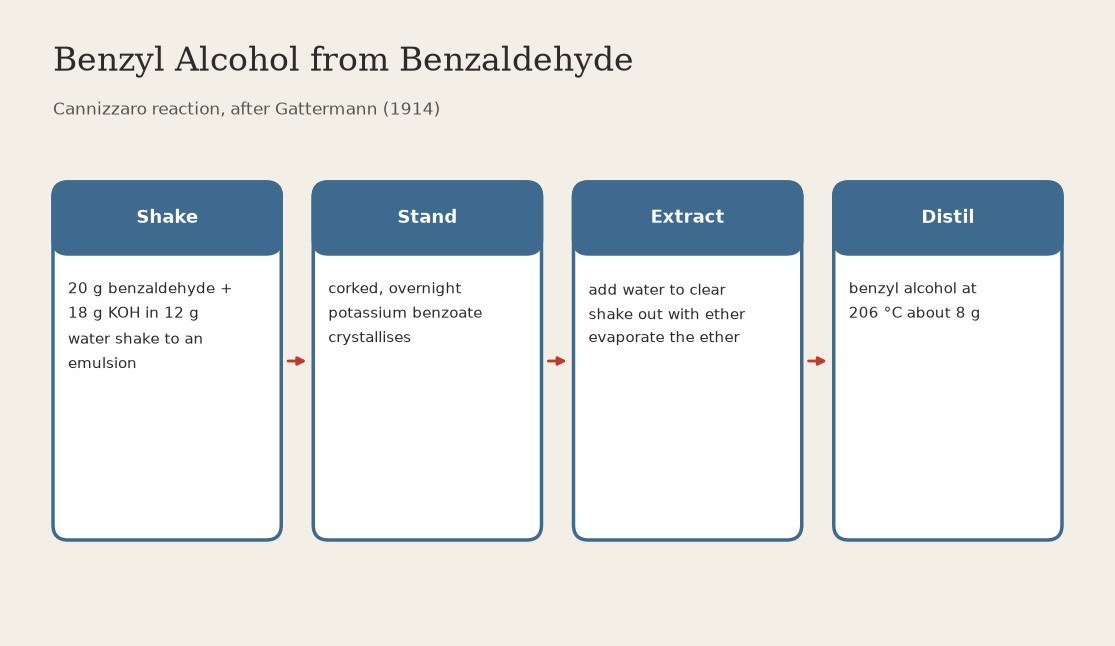


Benzyl Alcohol and Benzoic Acid from Benzaldehyde and Strong Potash (Cannizzaro, Gattermann 1914)
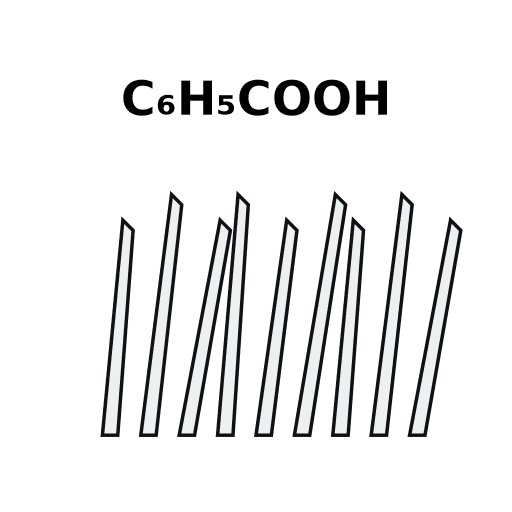
Strong potash splits benzaldehyde in two: half is reduced to benzyl alcohol, half oxidised to benzoic acid (as potassium benzoate). 20 g of benzaldehyde gives about 8 g of benzyl alcohol, boiling at 206 °C; the benzoic acid is thrown down with hydrochloric acid.
Not given: the volumes of water and ether, the amount of hydrochloric acid and the benzoic acid yield.
Source: L. Gattermann, Practical Methods of Organic Chemistry (1914 ed.), Reaction 25, pp. 303-304. Picture: our drawing.
བར་མ
1 night plus a few hours
ལམ་སྟོན
1
1
Shake with strong potash
Shake with strong potash
Dissolve 18 g of potassium hydroxide in 12 g of water and let it cool. Put 20 g of benzaldehyde in a stoppered cylinder or other thick-walled vessel, add the cold potash and shake until a lasting emulsion forms.
གོམ་པ་འདིའི་རྫས་རིགས:
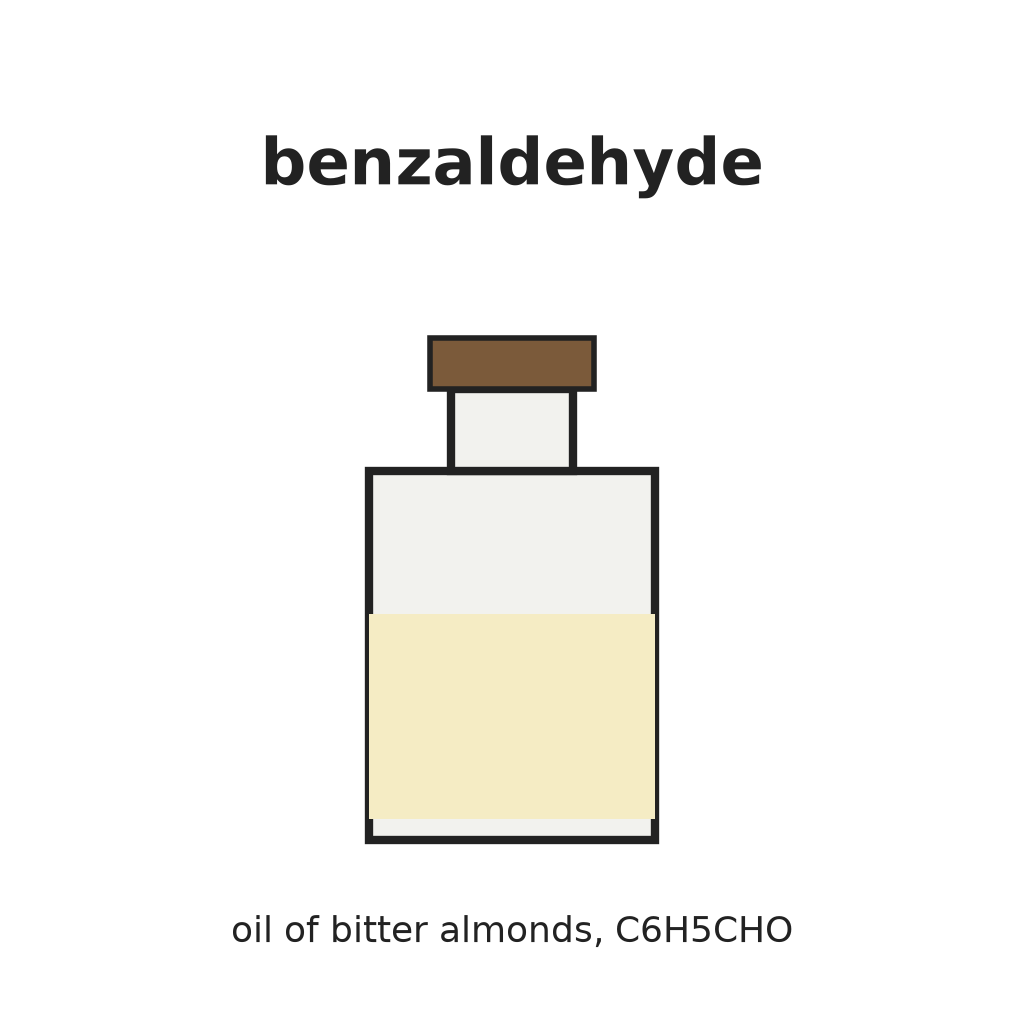 བེན་ཛལ་ཌི་ཧའིཌ་1 20 g
 པོ་ཊ་སིཡམ་ཧའིཌོག་སའིཌི།1 18 g
 ཆུ།1 12 g
ལག་ཆས་དགོས་མཁོ:
 ལྗིད་ཚད་སྲང་།
 ཚད་འཇལ་སི་ལིན་ཌར།
 ཤིང་ཤུན་གྱི་ཁ་རྒྱབ།
2
2
Stand overnight
Stand overnight
Close the vessel with a cork, not a glass stopper (a glass stopper can stick fast), and let it stand overnight. A crystalline paste of potassium benzoate separates.
ལག་ཆས་དགོས་མཁོ:
ཚད་འཇལ་སི་ལིན་ཌར།ཤིང་ཤུན་གྱི་ཁ་རྒྱབ།3
3
Extract with ether
Extract with ether
Add water until the paste dissolves to a clear solution. Shake it out several times with ether to take up the benzyl alcohol, keeping the watery alkaline layer for the benzoic acid.
གོམ་པ་འདིའི་རྫས་རིགས:
ཆུ།1 amount not given ཌའི་ཨེ་ཐིལ་ཨི་ཐར།1 amount not given
ལག་ཆས་དགོས་མཁོ:
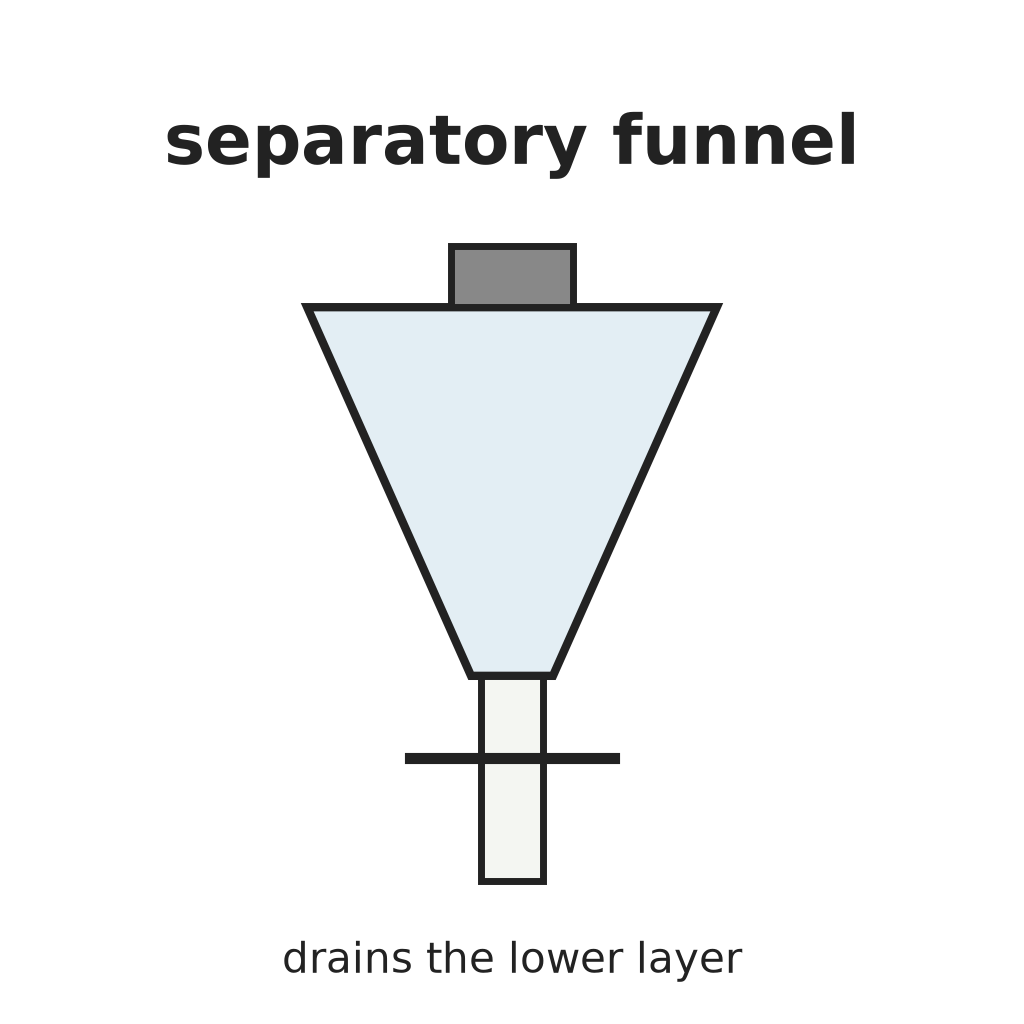 དབྱེ་བའི་ཁྱུག་མ
 ཤེལ་གྱི་བི་ཀར།
4
4
Distil the benzyl alcohol
Distil the benzyl alcohol
Evaporate the ether and distil the residue. Benzyl alcohol passes over at 206 °C. Yield: about 8 g.
ལག་ཆས་དགོས་མཁོ:
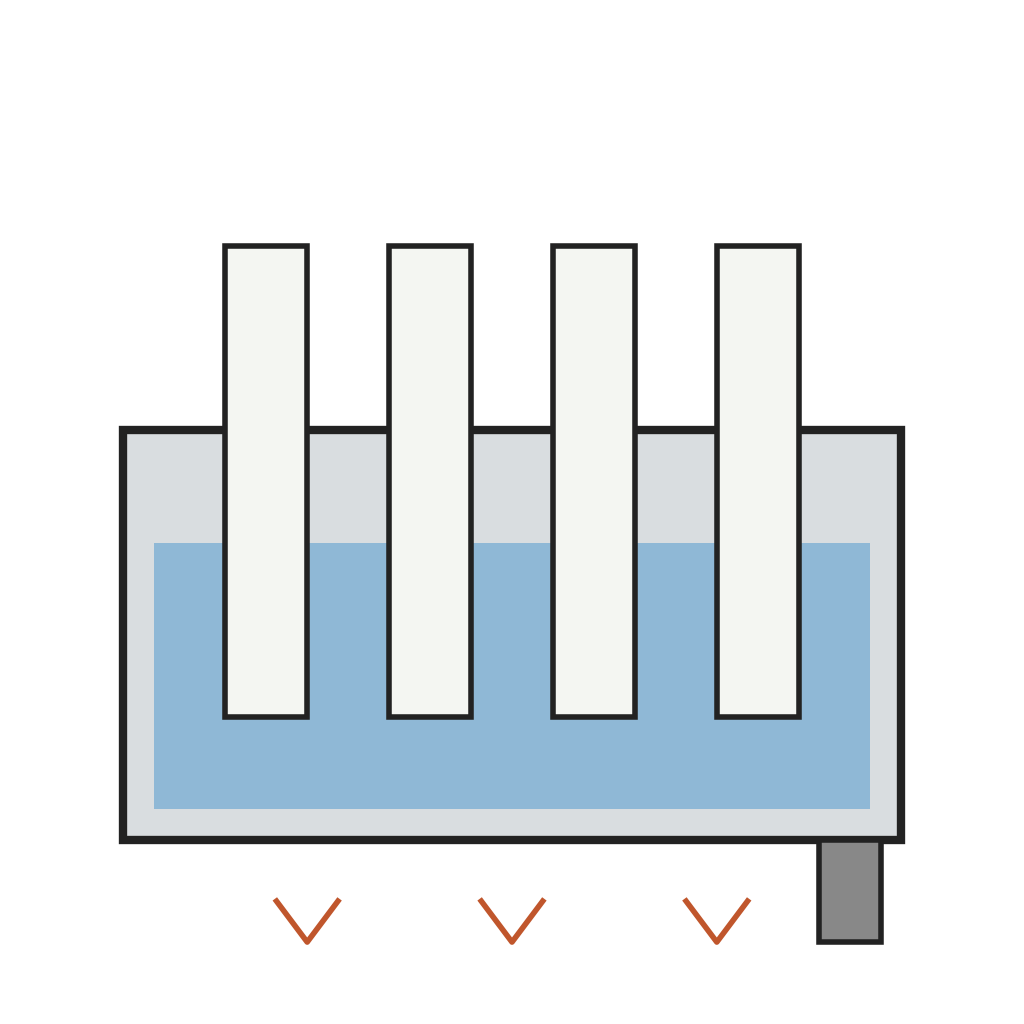 ཆུ་རྫིང
 ཤེལ་གྱི་བཙོ་བཏོན་ཤེལ་དམ།
 ཆུ་གིས་ གྲང་བཟོ་བའི་ ཁུ་སྐྱོར་འཕྲུལ་ཆས།
 ཚ་ཚད་འཇལ་ཆས།
 བུན་སེན་གྱི་མེ་ཐབ།
5
5
Precipitate the benzoic acid
Precipitate the benzoic acid
Acidify the alkaline solution with hydrochloric acid; benzoic acid is thrown down. Filter it off.
གོམ་པ་འདིའི་རྫས་རིགས:
 ཧའི་ཌོ་རོ་ཀོ་ལོ་རིག་སྐྱུར་རྫས།1 amount not given
ལག་ཆས་དགོས་མཁོ:
ཤེལ་གྱི་བི་ཀར། ཤེལ་གྱི་ཟླུམ་ཅན — རྐང་ཡོད།
 འཚག་ཤོག
རྫས་རིགས
5- 1 20 gས་ཆ་འཛིན
- 1 18 gས་ཆ་འཛིན
- 1 amount not givenས་ཆ་འཛིན
- 1 amount not givenས་ཆ་འཛིན
- 1 amount not givenས་ཆ་འཛིན
ལག་ཆས་དགོས་མཁོ
12- ས་ཆ་འཛིན
- ས་ཆ་འཛིན
- ས་ཆ་འཛིན
- ས་ཆ་འཛིན
- ས་ཆ་འཛིན
- ས་ཆ་འཛིན
- ས་ཆ་འཛིན
- ས་ཆ་འཛིན
- ས་ཆ་འཛིན
- ས་ཆ་འཛིན
- ས་ཆ་འཛིན
བིལུ་པིརིན་ཊི་འདི་གིས་བཟོ་མི
CC0 སྤྱི་དབང
བིལུ་པིརིན་ཊི་འདི་CC0 འོག་བཀྲམས་ཡོད། ཁྱེད་རང་གིས་ཆོག་མཆན་མ་བཞེས་པར་ཕབ་ལེན་དང་བཟོ་བཅོས། བགོ་བཤའ། དགོས་མཁོ་གང་ལའང་བཀོལ་སྤྱོད་བྱས་ཆོག
བཟོ་མཁན་ལ་རྒྱབ་སྐྱོར་བྱེད་པའི་ཆེད་ཁོང་ཚོའི་བིལུ་པིརིན་ཊི་བརྒྱུད་ཐོན་སྐྱེད་ཉོ། བཟོ་མཁན་གྱིས བཟོ་མཁན་གྱི་ཁེ་ཕོགས ཚོང་པས་གཏན་འཁེལ་བྱས་པ། ཡང་ན་བིལུ་པིརིན་ཊི་འདིའི་པར་གསར་བཟོས་ཏེ་ཁྱེད་རང་གི་བིལུ་པིརིན་ཊི་ནང་མཐུད་སྦྲེལ་བྱས་ཏེ་ཡོང་སྒོ་བགོ་བཤའ་བྱེད།