སྒྱུ་རྩལ
མཛེས་སྡུག་དང་བདེ་ཐང
བཟོ་རིག
རིག་གནས་དང་ལོ་རྒྱུས
དགའ་སྟོན
ཁོར་ཡུག
ཟས་དང་བཏུང་རྫས
ཕྱིར་འཕྲུལ་རིག
ཚན་རིག
རྩེད་འགྲན
རིག་རྩལ
གྱོན་རུང
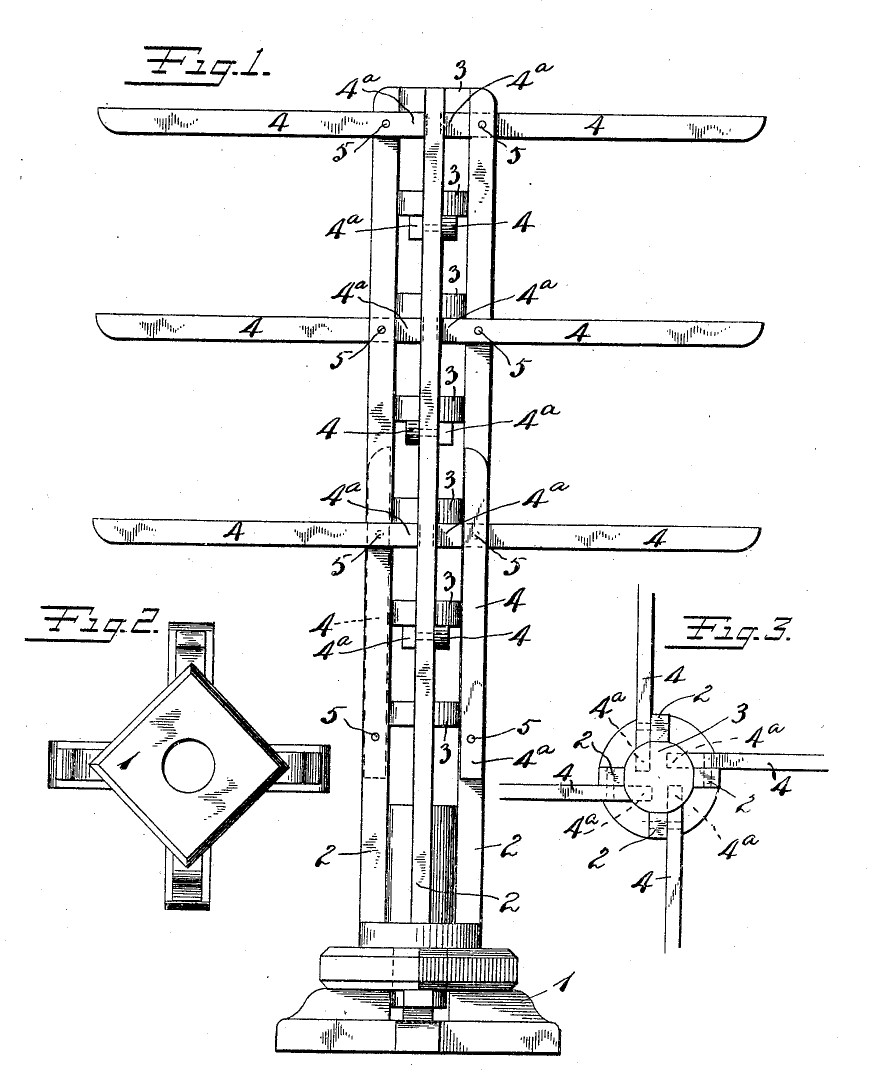


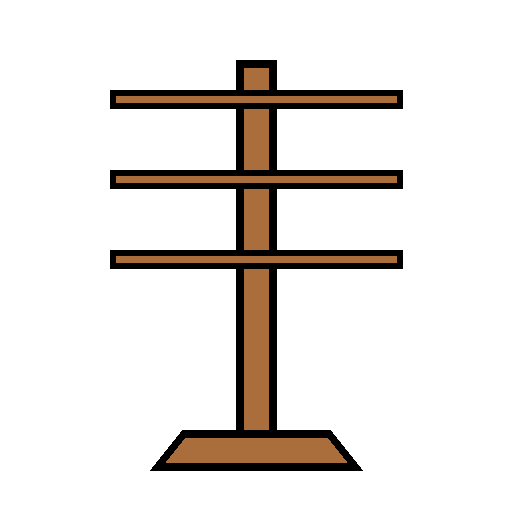
Folding Clothes Tree: Arms Pivoted Between Spaced Uprights, Held Level by Stop-Blocks (Bidwell, 1905)
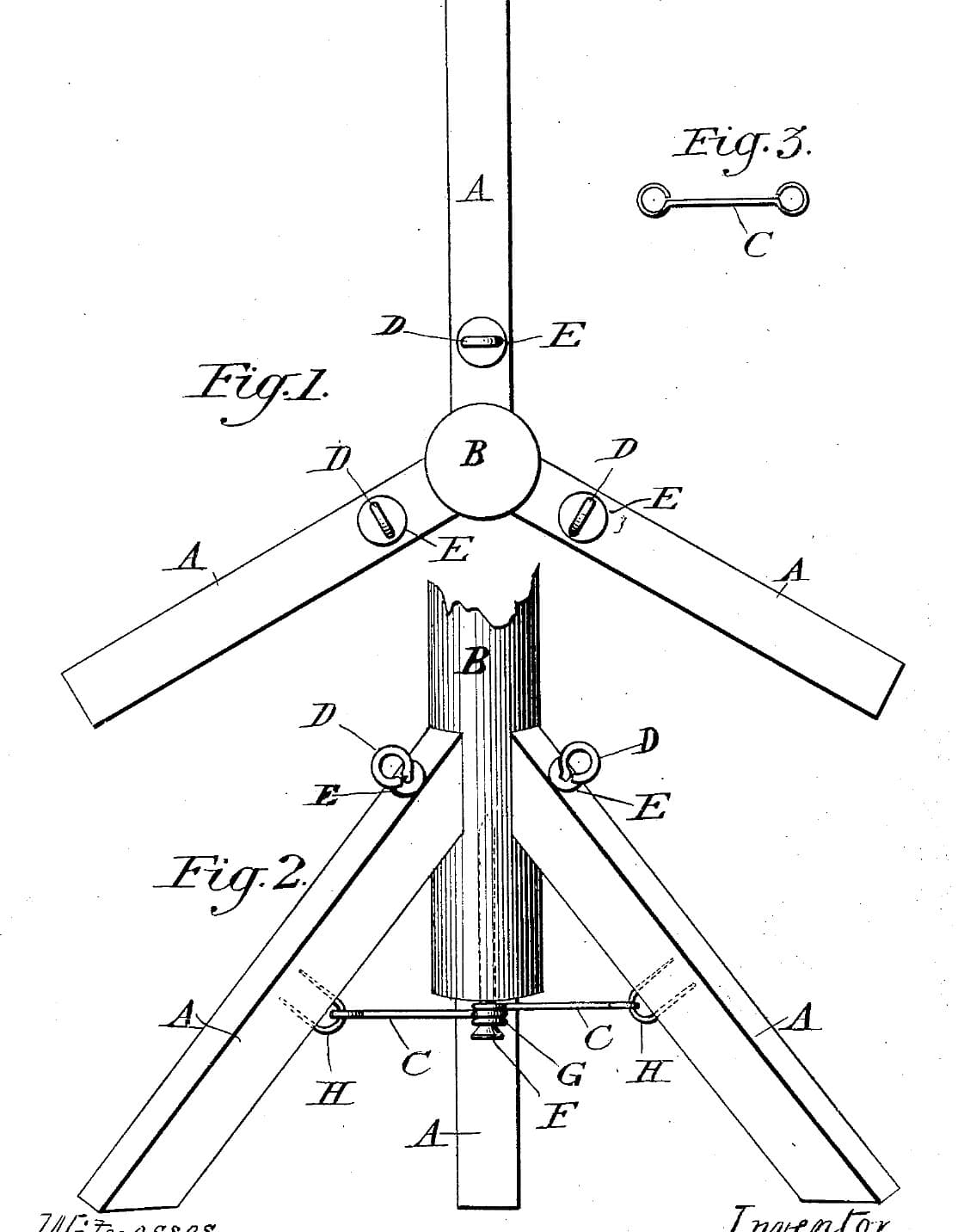
Moses Bidwell of Brooklyn received US 805,051, dated 21 November 1905, for a clothes tree that folds flat. Separate uprights, spaced apart by blocks, make a light, strong open column; arms pivoted between them swing out level to hang clothes, held up by a short tail that catches under a block, and swing down along the column to store.
We make it from hardwood. All sizes are ours.
འགོ་བཙུགས
About 5 hours
ལམ་སྟོན
1
1
Arm and pivot
Arm and pivot
Jupyter ཚང་དེབ་མངོན་གསལ་འབད་དོ་…
2
2
Read US 805,051
Read US 805,051
"The upright portion is, when completed, of truss or bridge like construction; hence, though light, is very strong."
3
3
Make the column
Make the column
Cut four hardwood uprights (his 2) to the height wanted. Join them into a square open column with short stop-blocks (his 3) glued and screwed between them at intervals, leaving a gap between each pair of uprights wide enough for an arm to swing in.
གོམ་པ་འདིའི་རྫས་རིགས:
 སྲ་བའི་ཤིང་གི་ཐག་ལེབ1 དུམ་བུ།
 ཤིང་སྲ་བའི་པང་ལེབ།1 དུམ་བུ།
 ཤིང་གི་སྤྱིན།1 དུམ་བུ།
 ཤིང་གི་སྒྲོག1 དུམ་བུ།
ལག་ཆས་དགོས་མཁོ:
 འཇལ་ཐག
 ལག་སོག་ལེ།
 ལག་འཕྲུལ་ཁུང་བཏོན
 སྒྲོག་བསྐོར་ཆས་ཆ་ཚང་།
4
4
Make and hang the arms
Make and hang the arms
Cut the arms (his 4) from hardwood strip and round their outer ends. Bore each near its inner end and hang it on a bolt through the pair of uprights, his pivot 5, so the short tail below the pivot (his 4a) catches under the stop-block above it when the arm is swung out level. Place the arms so they balance one another round the column.
གོམ་པ་འདིའི་རྫས་རིགས:
སྲ་བའི་ཤིང་གི་ཐག་ལེབ1 དུམ་བུ། མགོ་ཟླུམ་གྱི་བོལ་ཊུ།1 དུམ་བུ།
ལག་ཆས་དགོས་མཁོ:
ལག་སོག་ལེ། ལག་པ་གིས་འཁོར་བའི་སྦུབས་ཆས་དང་མགོ།
 བྱེ་མའི་ཤོག་ཀུ
 ཚད་བསྒྱུར་ཚུགས་པའི་མཐེབ་ལྕགས།
5
5
Make the base
Make the base
Make a cross base of hardwood (his base 1, "of any suitable form") and fix the column upright in its centre.
གོམ་པ་འདིའི་རྫས་རིགས:
ཤིང་སྲ་བའི་པང་ལེབ།1 དུམ་བུ།ཤིང་གི་སྤྱིན།1 དུམ་བུ།ཤིང་གི་སྒྲོག1 དུམ་བུ།ལག་ཆས་དགོས་མཁོ:
ལག་སོག་ལེ།ལག་པ་གིས་འཁོར་བའི་སྦུབས་ཆས་དང་མགོ།སྒྲོག་བསྐོར་ཆས་ཆ་ཚང་།6
6
Use and fold it
Use and fold it
Swing the arms out until their tails stop under the blocks; hang coats and hats. Lift each arm and swing it down along the column to fold the tree away.
7
7
Troubleshooting
Troubleshooting
Clothes tree troubleshooting.
Flow
Loading...
8
8
History and honest limits
History and honest limits
**Moses Bidwell** of Brooklyn, US 805,051, dated 21 November 1905, filed 11 April 1905. He claimed "a clothes-tree comprising a skeleton-like body composed of a plurality of separate upright members, stop-blocks at frequent intervals between said members spacing them apart and rigidly connecting the same, swinging arms pivoted near their ends to said upright members adjacent to said stop-blocks". He gives no sizes or wood: the hardwood, four uprights, all sizes, bolts and the cross base are ours.
རྫས་རིགས
5- 1 དུམ་བུ།ས་ཆ་འཛིན
- 1 དུམ་བུ།ས་ཆ་འཛིན
- 2 དུམ་བུ།ས་ཆ་འཛིན
- 2 དུམ་བུ།ས་ཆ་འཛིན
- 1 དུམ་བུ།ས་ཆ་འཛིན
ལག་ཆས་དགོས་མཁོ
7- 1 vendor sell this, none ship to you yetས་ཆ་འཛིན
- ས་ཆ་འཛིན
- ས་ཆ་འཛིན
- ས་ཆ་འཛིན
- ས་ཆ་འཛིན
- ས་ཆ་འཛིན
བིལུ་པིརིན་ཊི་འདི་གིས་བཟོ་མི
འབྲེལ་ཡོད་བིལུ་པིརིན་ཊི
བིལུ་པིརིན་ཊི་འདི་ཚུ་ཐབས་ལམ་དང་རྫས་རིགས། སྤྱི་ཆོས་བགོ་བཤའ་བྱེད
CC0 སྤྱི་དབང
བིལུ་པིརིན་ཊི་འདི་CC0 འོག་བཀྲམས་ཡོད། ཁྱེད་རང་གིས་ཆོག་མཆན་མ་བཞེས་པར་ཕབ་ལེན་དང་བཟོ་བཅོས། བགོ་བཤའ། དགོས་མཁོ་གང་ལའང་བཀོལ་སྤྱོད་བྱས་ཆོག
བཟོ་མཁན་ལ་རྒྱབ་སྐྱོར་བྱེད་པའི་ཆེད་ཁོང་ཚོའི་བིལུ་པིརིན་ཊི་བརྒྱུད་ཐོན་སྐྱེད་ཉོ། བཟོ་མཁན་གྱིས བཟོ་མཁན་གྱི་ཁེ་ཕོགས ཚོང་པས་གཏན་འཁེལ་བྱས་པ། ཡང་ན་བིལུ་པིརིན་ཊི་འདིའི་པར་གསར་བཟོས་ཏེ་ཁྱེད་རང་གི་བིལུ་པིརིན་ཊི་ནང་མཐུད་སྦྲེལ་བྱས་ཏེ་ཡོང་སྒོ་བགོ་བཤའ་བྱེད།