སྒྱུ་རྩལ
མཛེས་སྡུག་དང་བདེ་ཐང
བཟོ་རིག
རིག་གནས་དང་ལོ་རྒྱུས
དགའ་སྟོན
ཁོར་ཡུག
ཟས་དང་བཏུང་རྫས
ཕྱིར་འཕྲུལ་རིག
ཚན་རིག
རྩེད་འགྲན
རིག་རྩལ
གྱོན་རུང
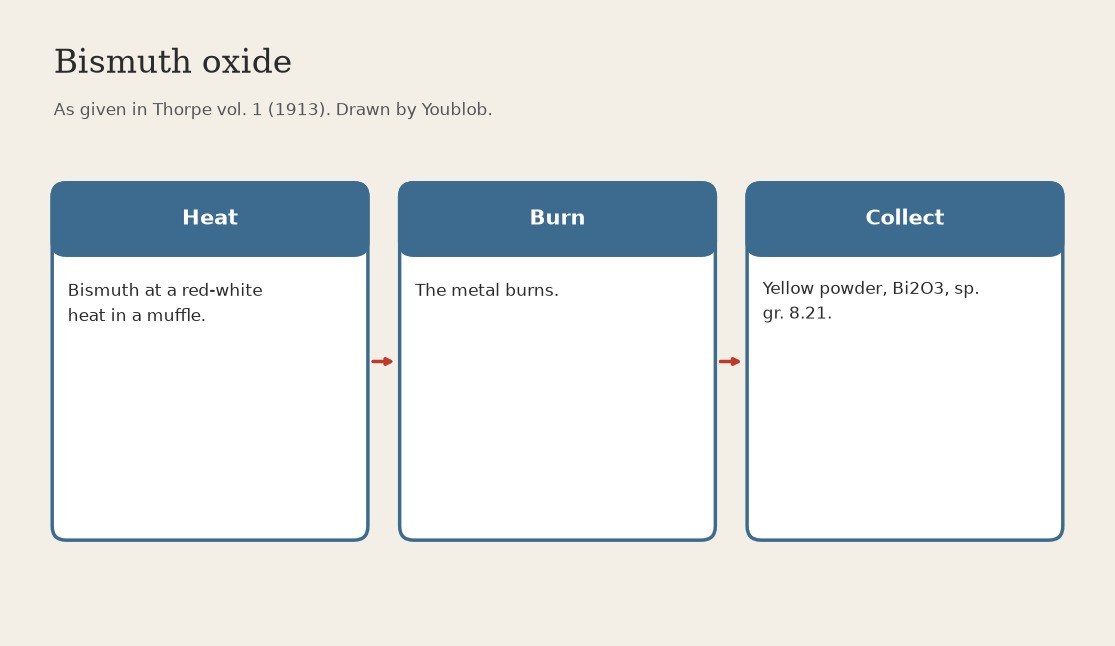


Bismuth Oxide: Bismuth Burned at a Red-White Heat in a Muffle (Thorpe 1913)
Heated to a red-white heat in a muffle, bismuth burns and its oxide condenses as a yellow powder. Bismuth trioxide, Bi2O3, has sp. gr. 8.21, contains 89.66 % bismuth, and melts at a red heat to a glass without losing weight.
Source: Thorpe, Dictionary of Applied Chemistry vol. 1 (1913), Bismuth. The porcelain dish and collecting the powder are ours. Picture drawn by Youblob.
བར་མ
half a day
ལམ་སྟོན
1
1
Heat bismuth to a red-white heat in a muffle
Heat bismuth to a red-white heat in a muffle
Put bismuth metal in the muffle (ours: in a porcelain dish) and raise it to a red-white heat. The metal burns. Ours: a dust respirator for the fume.
གོམ་པ་འདིའི་རྫས་རིགས:
 བིསི་མཐ་1 as required
ལག་ཆས་དགོས་མཁོ:
 མཱཕལ་ཐབ
 ཁ་གཡོགས་ཡོད་པའི་ཞུ་སྣོད། (པོར་སི་ལིན།)
 བཞུ་སྣོད་ཀྱི་གཟེར་ཆས།
 ཚ་བཟོད་ཀྱི་ལག་ཤུབས།
 P100 དབུགས་སྲུང་།
2
2
Collect the yellow oxide
Collect the yellow oxide
The oxide condenses as a yellow powder. Let the muffle cool and collect it.
ལག་ཆས་དགོས་མཁོ:
བཞུ་སྣོད་ཀྱི་གཟེར་ཆས།P100 དབུགས་སྲུང་།ལག་ཆས་དགོས་མཁོ
5- ས་ཆ་འཛིན
- ས་ཆ་འཛིན
- ས་ཆ་འཛིན
- ས་ཆ་འཛིན
བིལུ་པིརིན་ཊི་འདི་གིས་བཟོ་མི

འབྲེལ་ཡོད་བིལུ་པིརིན་ཊི
བིལུ་པིརིན་ཊི་འདི་ཚུ་ཐབས་ལམ་དང་རྫས་རིགས། སྤྱི་ཆོས་བགོ་བཤའ་བྱེད

CC0 སྤྱི་དབང
བིལུ་པིརིན་ཊི་འདི་CC0 འོག་བཀྲམས་ཡོད། ཁྱེད་རང་གིས་ཆོག་མཆན་མ་བཞེས་པར་ཕབ་ལེན་དང་བཟོ་བཅོས། བགོ་བཤའ། དགོས་མཁོ་གང་ལའང་བཀོལ་སྤྱོད་བྱས་ཆོག
བཟོ་མཁན་ལ་རྒྱབ་སྐྱོར་བྱེད་པའི་ཆེད་ཁོང་ཚོའི་བིལུ་པིརིན་ཊི་བརྒྱུད་ཐོན་སྐྱེད་ཉོ། བཟོ་མཁན་གྱིས བཟོ་མཁན་གྱི་ཁེ་ཕོགས ཚོང་པས་གཏན་འཁེལ་བྱས་པ། ཡང་ན་བིལུ་པིརིན་ཊི་འདིའི་པར་གསར་བཟོས་ཏེ་ཁྱེད་རང་གི་བིལུ་པིརིན་ཊི་ནང་མཐུད་སྦྲེལ་བྱས་ཏེ་ཡོང་སྒོ་བགོ་བཤའ་བྱེད།