སྒྱུ་རྩལ
མཛེས་སྡུག་དང་བདེ་ཐང
བཟོ་རིག
རིག་གནས་དང་ལོ་རྒྱུས
དགའ་སྟོན
ཁོར་ཡུག
ཟས་དང་བཏུང་རྫས
ཕྱིར་འཕྲུལ་རིག
ཚན་རིག
རྩེད་འགྲན
རིག་རྩལ
གྱོན་རུང
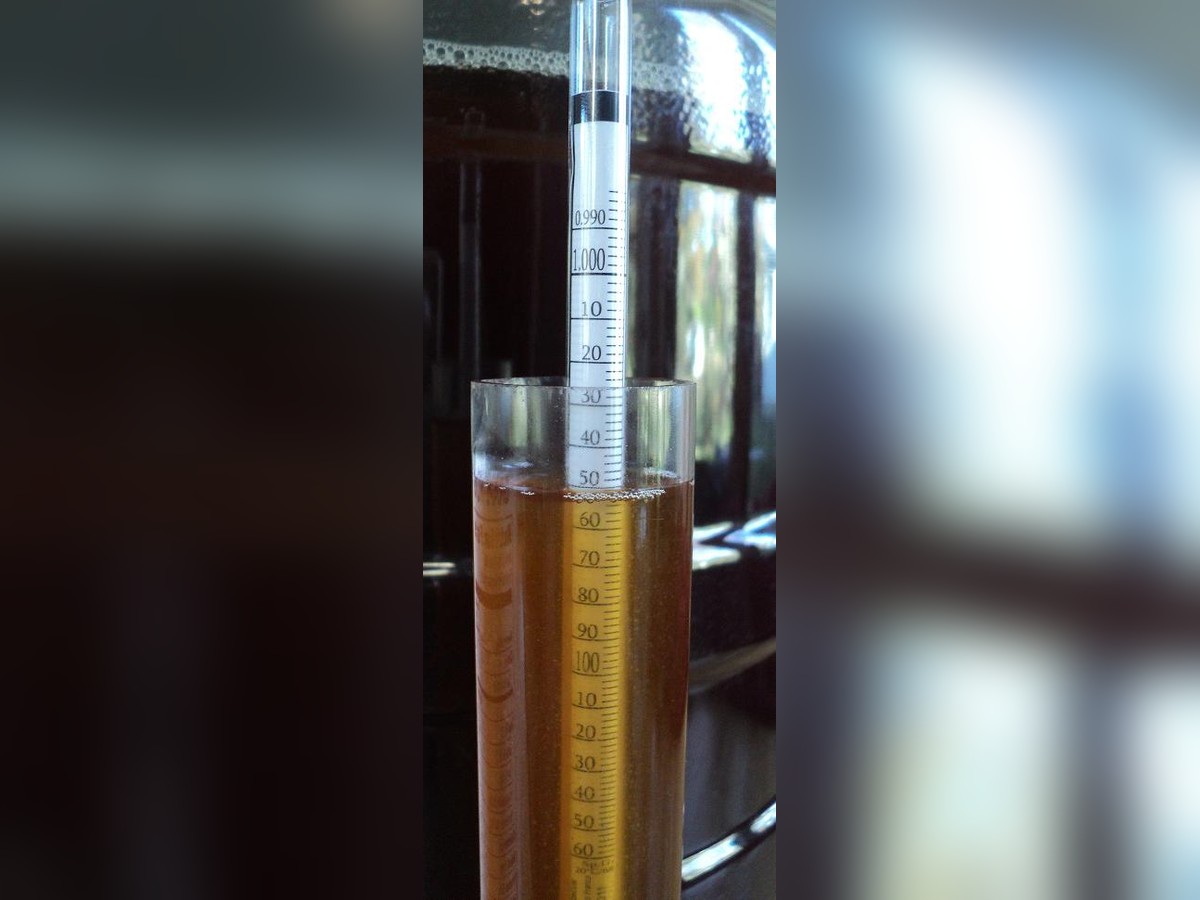


Brewing Hydrometer and Test Jar from Two Test Tubes (Boy Mechanic, 1915)
A hydrometer for reading the gravity of wort, must and wine, with its test jar, made from two test tubes: the small one weighted at the bottom and sealed so it floats upright, the large one standing in a wooden block. It is marked with a file in pure water and against liquids of known gravity. From The Boy Mechanic, Book 2 (1915).
འགོ་བཙུགས
About 2 hours, plus a day for the plaster
ལམ་སྟོན
1
1
How a brewing hydrometer is read
How a brewing hydrometer is read
Using a hydrometer in a test jar to read gravity (Home Brewing Co.).
2
2
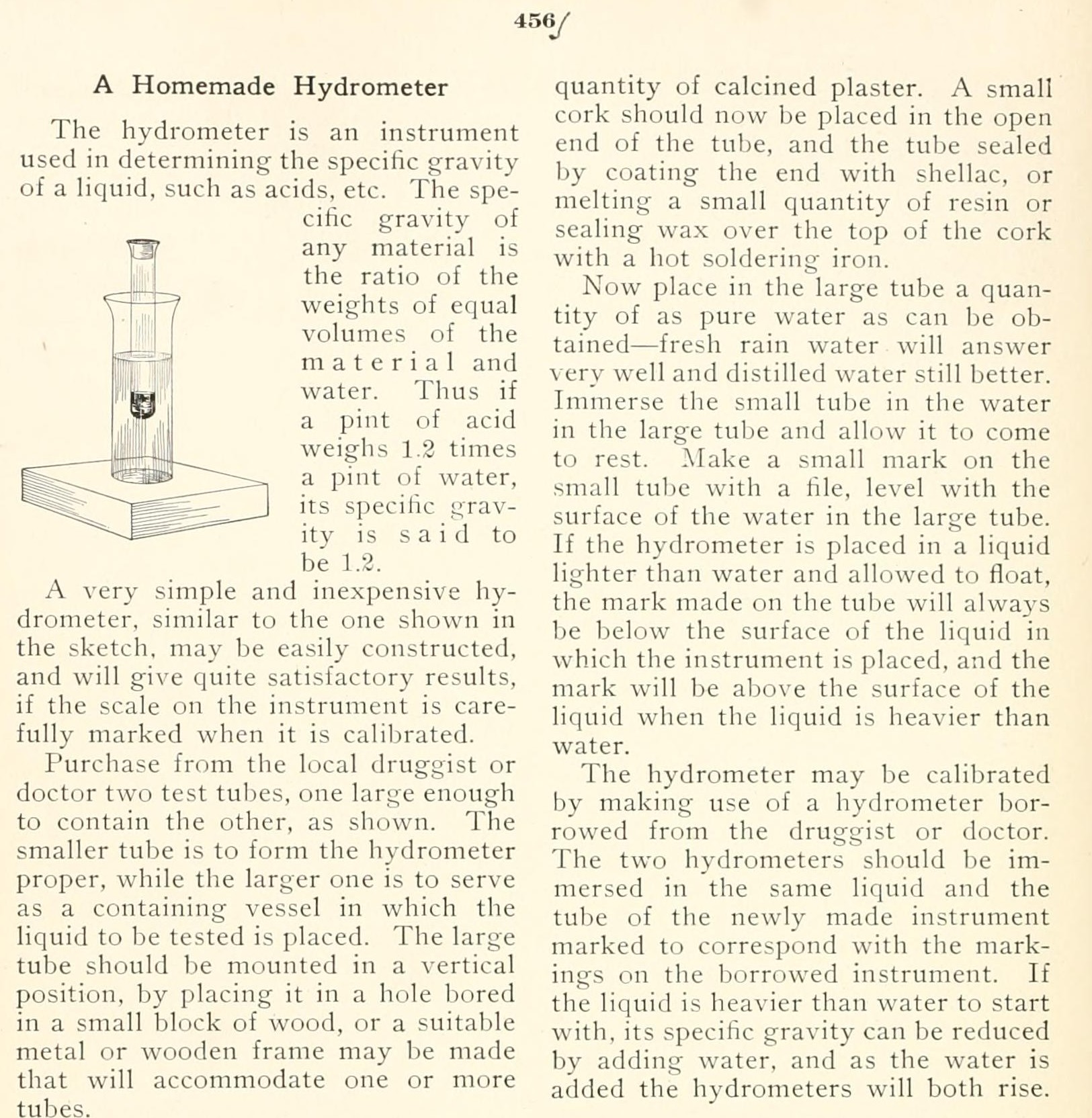
The homemade hydrometer, 1915
The homemade hydrometer, 1915
The Boy Mechanic (p. 456): "two test tubes, one large enough to contain the other". The small tube is loaded with "shot, or other heavy metal"; for liquids heavier than water it should be "almost entirely immersed when placed in water". Specific gravity is "the ratio of the weights of equal volumes of the material and water".
3
3
Make the test jar
Make the test jar
Bore a hole in a small block of wood to take the large test tube upright, and stand the tube in it.
གོམ་པ་འདིའི་རྫས་རིགས:
 ཚོད་ལྟའི་ཤེལ་སྦུག1 piece (the large one)
 སྲ་བའི་ཤིང་གི་སྒོ་རྡོག1 དུམ་བུ།
ལག་ཆས་དགོས་མཁོ:
 ཐག་མེད་ཕུག་འཕྲུལ།
 ཁེབ་ལེབ་ཀྱི་སོའི་ཆ་ཚང་
4
4
Load and seal the small tube
Load and seal the small tube
Drop small steel nuts (ours, for the book's "other heavy metal") into the small tube until it floats almost entirely under in pure water in the jar. Fix them in place with a little calcined plaster mixed with water and let it set. Push a small cork into the open end and seal it with shellac.
གོམ་པ་འདིའི་རྫས་རིགས:
ཚོད་ལྟའི་ཤེལ་སྦུག1 piece (the small one) ཟུར་དྲུག་གི་ནཊ།10 piece (M3, steel)
 པེ་རིསི་ཀྱི་ཞལ་ཐང་།10 g
 ཤིང་ཤུན་གྱི་ཁ་རྒྱབ།1 དུམ་བུ།
 ཤེལ་ལཱཀ5 g
ལག་ཆས་དགོས་མཁོ:
 བཙོ་བཏོན་ཆུ།
5
5
Mark the water line
Mark the water line
Fill the jar with distilled water, float the small tube and let it settle. File a small mark on it level with the water: that is 1.000.
ལག་ཆས་དགོས་མཁོ:
བཙོ་བཏོན་ཆུ། ཁབ་ཀྱི་སོ་ཐག།
6
6
Calibration liquids by weighing
Calibration liquids by weighing
Jupyter ཚང་དེབ་མངོན་གསལ་འབད་དོ་…
ལག་ཆས་དགོས་མཁོ:
 ལག་པ་འདྲ་མཉམ་གྱི་སྲང་།
 ཚད་རྟགས་ཅན་གྱི་སི་ལིན་ཌར།
7
7
Mark the scale
Mark the scale
Make three or four sugar solutions of rising strength. Find the gravity of each with the notebook, float the tube in each in turn and file a mark at the surface, noting its value on a card (ours). If you can borrow a hydrometer, float both in the same liquid and copy its marks, as the book does, diluting with water to step down.
ལག་ཆས་དགོས་མཁོ:
 ཀ་ར་འབྲུ་མབཙོ་བཏོན་ཆུ།ལག་པ་འདྲ་མཉམ་གྱི་སྲང་།ཚད་རྟགས་ཅན་གྱི་སི་ལིན་ཌར།ཁབ་ཀྱི་སོ་ཐག།
8
8
Troubleshooting
Troubleshooting
Hydrometer problems and fixes.
Flow
Loading...
9
9
History and honest limits
History and honest limits
The Boy Mechanic, Book 2 (Popular Mechanics, Chicago, 1915), p. 456, "A Homemade Hydrometer". Steel nuts for the load and calibration by weighing are ours. Read it at the temperature you calibrated at, as warm liquid reads light (ours). The cover shows a bought hydrometer in a test jar of wort (Schlemazl, CC BY-SA 3.0, Wikimedia Commons). Not made by us yet.
རྫས་རིགས
6- 1 piece (the small one)ས་ཆ་འཛིན
- 1 དུམ་བུ།ས་ཆ་འཛིན
- 10 piece (M3, steel)ས་ཆ་འཛིན
- ས་ཆ་འཛིན
- 1 དུམ་བུ།ས་ཆ་འཛིན
- 5 gས་ཆ་འཛིན
ལག་ཆས་དགོས་མཁོ
7- 1 vendor sell this, none ship to you yetས་ཆ་འཛིན
- ས་ཆ་འཛིན
- ས་ཆ་འཛིན
- ས་ཆ་འཛིན
- ས་ཆ་འཛིན
- ས་ཆ་འཛིན
- ས་ཆ་འཛིན
བིལུ་པིརིན་ཊི་འདི་གིས་བཟོ་མི

CC0 སྤྱི་དབང
བིལུ་པིརིན་ཊི་འདི་CC0 འོག་བཀྲམས་ཡོད། ཁྱེད་རང་གིས་ཆོག་མཆན་མ་བཞེས་པར་ཕབ་ལེན་དང་བཟོ་བཅོས། བགོ་བཤའ། དགོས་མཁོ་གང་ལའང་བཀོལ་སྤྱོད་བྱས་ཆོག
བཟོ་མཁན་ལ་རྒྱབ་སྐྱོར་བྱེད་པའི་ཆེད་ཁོང་ཚོའི་བིལུ་པིརིན་ཊི་བརྒྱུད་ཐོན་སྐྱེད་ཉོ། བཟོ་མཁན་གྱིས བཟོ་མཁན་གྱི་ཁེ་ཕོགས ཚོང་པས་གཏན་འཁེལ་བྱས་པ། ཡང་ན་བིལུ་པིརིན་ཊི་འདིའི་པར་གསར་བཟོས་ཏེ་ཁྱེད་རང་གི་བིལུ་པིརིན་ཊི་ནང་མཐུད་སྦྲེལ་བྱས་ཏེ་ཡོང་སྒོ་བགོ་བཤའ་བྱེད།