སྒྱུ་རྩལ
མཛེས་སྡུག་དང་བདེ་ཐང
བཟོ་རིག
རིག་གནས་དང་ལོ་རྒྱུས
དགའ་སྟོན
ཁོར་ཡུག
ཟས་དང་བཏུང་རྫས
ཕྱིར་འཕྲུལ་རིག
ཚན་རིག
རྩེད་འགྲན
རིག་རྩལ
གྱོན་རུང
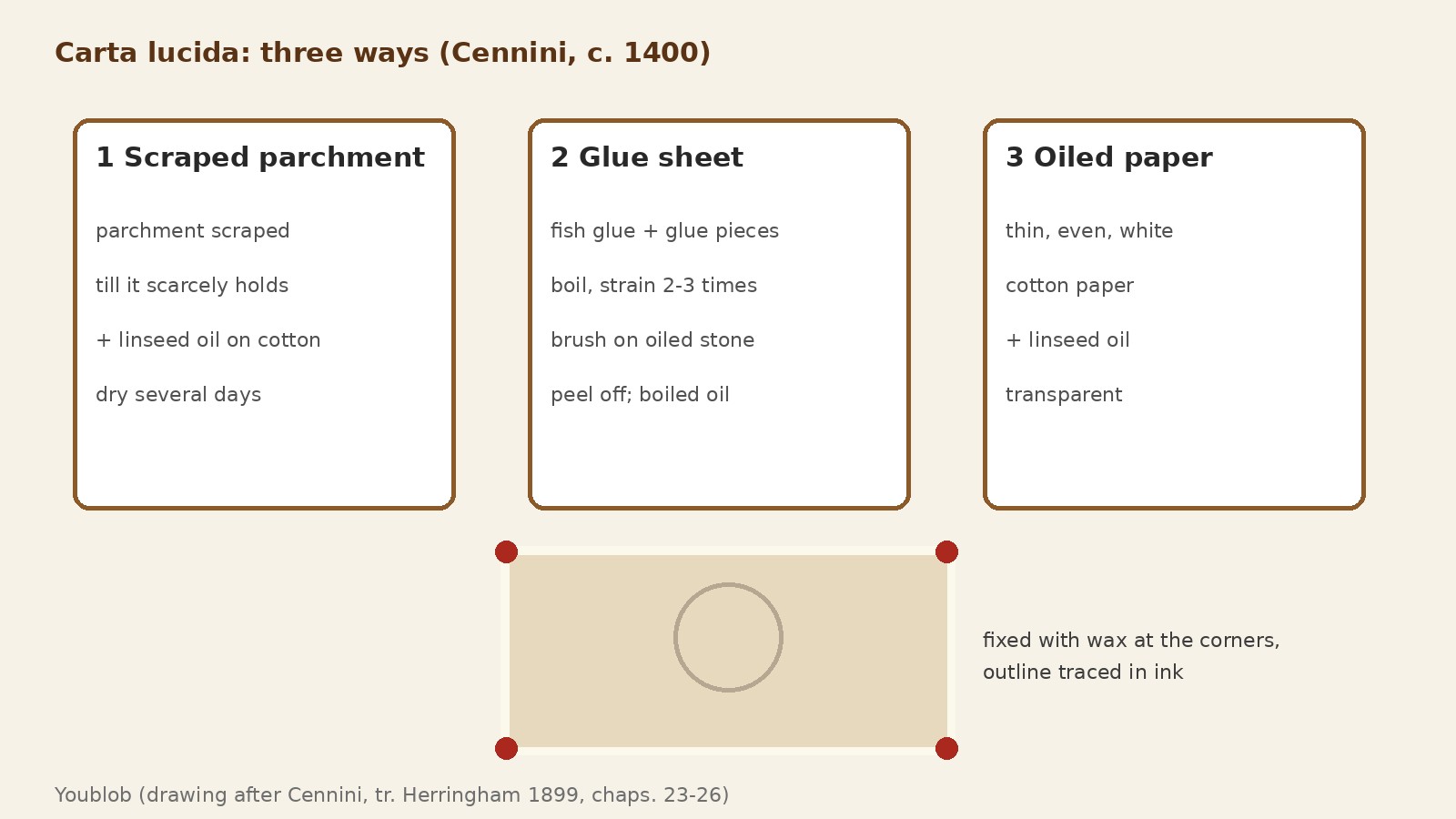


Carta Lucida: Three Ways to Make Transparent Tracing Paper (Cennini, c. 1400)
Cennino Cennini's carta lucida, the painter's see-through paper for copying a master's outlines: parchment scraped almost to nothing and oiled, a thin sheet of glue cast on a greased stone, or thin white paper soaked with linseed oil.
འགོ་བཙུགས
One hour of work, then 2 to several days drying
ལམ་སྟོན
1
1
The three modes
The three modes
Jupyter ཚང་དེབ་མངོན་གསལ་འབད་དོ་…
2
2
Read the Book of the Art
Read the Book of the Art
"If you need this transparent paper, and cannot find it ready made, make it in the following manner."
3
3
Mode 1: scraped parchment
Mode 1: scraped parchment
Have a parchment skin scraped evenly until it scarcely holds together; it is transparent by itself. For more clarity rub it over with very clear, fine linseed oil on a piece of cotton and let it dry for several days.
གོམ་པ་འདིའི་རྫས་རིགས:
 ཀོ་ཤོག1 དུམ་བུ།
 ལིན་སིཊ་སྣུམ།1 དུམ་བུ།
 རས་བལ་གཙང་མ།1 དུམ་བུ།
ལག་ཆས་དགོས་མཁོ:
 གྲི།
4
4
Mode 2: boil the glue
Mode 2: boil the glue
Soften fish glue and pieces of glue in clean water, a porringer of clean water to six pieces. Boil it, then strain it two or three times.
གོམ་པ་འདིའི་རྫས་རིགས:
 Fish Glue1 དུམ་བུ།
 པགས་ཀོའི་སྤྱིན།1 དུམ་བུ།
ལག་ཆས་དགོས་མཁོ:
 གྱང་མཐོ་བའི་ཧོད།
 རས་ཆས (འཚག་ནིའི་དོན་ལུ)
5
5
Mode 2: cast the sheet
Mode 2: cast the sheet
Grease a clean, well-polished stone slab (he used marble or porphyry) with olive oil. When the glue is cool, brush it all over the slab. When dry, lift an edge with a knife point and peel the skin off by hand like a sheet of paper. For a very clear sheet, before lifting go over it once with boiled linseed oil and a soft brush and let it dry two or three days.
གོམ་པ་འདིའི་རྫས་རིགས:
 ཨོ་ལིབ་སྣུམ།1 དུམ་བུ།
 བསྐོལ་བའི་ལིན་སིཊ་སྣུམ།1 དུམ་བུ།
ལག་ཆས་དགོས་མཁོ:
 རྡོ་ལེབ་ཏོག་ཏོ།
 སྤྱིན་གྱི་ཕྱགས་མ།གྲི།
 ཕྱགས་མ་འཇམ་ཏོང་ཏོ།
6
6
Mode 3: oiled paper
Mode 3: oiled paper
Take thin, even, very white cotton paper and oil it with linseed oil as in mode 1. It will be transparent.
གོམ་པ་འདིའི་རྫས་རིགས:
 ཤོག་ཀུ1 དུམ་བུ།ལིན་སིཊ་སྣུམ།1 དུམ་བུ།རས་བལ་གཙང་མ།1 དུམ་བུ།
7
7
Use it
Use it
Lay the transparent paper over the figure, fix it lightly at the four corners with a little red or green wax, and trace the outlines with ink and a fine pen or a small squirrel-hair brush. Lift it off and touch in lights and shadows as you like.
གོམ་པ་འདིའི་རྫས་རིགས:
 སྦྲང་ཞུན།1 དུམ་བུ།
ལག་ཆས་དགོས་མཁོ:
ཕྱགས་མ་འཇམ་ཏོང་ཏོ།8
8
Troubleshooting
Troubleshooting
Tracing paper troubleshooting.
Flow
Loading...
9
9
History and honest limits
History and honest limits
From Cennino Cennini, **Il Libro dell'Arte** (c. 1400), tr. Christiana J. Herringham, **The Book of the Art of Cennino Cennini** (1899), chaps. 23-26 (checked on the archive.org scan bookartcenninoc01herrgoog, pp. 19-21). He gives no glue weights beyond six pieces to a porringer; the tool heads are ours.
རྫས་རིགས
9- 1 དུམ་བུ།ས་ཆ་འཛིན
- 2 དུམ་བུ།ས་ཆ་འཛིན
- 2 དུམ་བུ།ས་ཆ་འཛིན
- 1 དུམ་བུ།ས་ཆ་འཛིན
- 1 དུམ་བུ།ས་ཆ་འཛིན
- 1 དུམ་བུ།ས་ཆ་འཛིན
- 1 དུམ་བུ།ས་ཆ་འཛིན
- 1 དུམ་བུ།ས་ཆ་འཛིན
- 1 དུམ་བུ།ས་ཆ་འཛིན
ལག་ཆས་དགོས་མཁོ
6- ས་ཆ་འཛིན
- ས་ཆ་འཛིན
- ས་ཆ་འཛིན
- ས་ཆ་འཛིན
- ས་ཆ་འཛིན
- ས་ཆ་འཛིན
བིལུ་པིརིན་ཊི་འདི་གིས་བཟོ་མི
འབྲེལ་ཡོད་བིལུ་པིརིན་ཊི
བིལུ་པིརིན་ཊི་འདི་ཚུ་ཐབས་ལམ་དང་རྫས་རིགས། སྤྱི་ཆོས་བགོ་བཤའ་བྱེད

CC0 སྤྱི་དབང
བིལུ་པིརིན་ཊི་འདི་CC0 འོག་བཀྲམས་ཡོད། ཁྱེད་རང་གིས་ཆོག་མཆན་མ་བཞེས་པར་ཕབ་ལེན་དང་བཟོ་བཅོས། བགོ་བཤའ། དགོས་མཁོ་གང་ལའང་བཀོལ་སྤྱོད་བྱས་ཆོག
བཟོ་མཁན་ལ་རྒྱབ་སྐྱོར་བྱེད་པའི་ཆེད་ཁོང་ཚོའི་བིལུ་པིརིན་ཊི་བརྒྱུད་ཐོན་སྐྱེད་ཉོ། བཟོ་མཁན་གྱིས བཟོ་མཁན་གྱི་ཁེ་ཕོགས ཚོང་པས་གཏན་འཁེལ་བྱས་པ། ཡང་ན་བིལུ་པིརིན་ཊི་འདིའི་པར་གསར་བཟོས་ཏེ་ཁྱེད་རང་གི་བིལུ་པིརིན་ཊི་ནང་མཐུད་སྦྲེལ་བྱས་ཏེ་ཡོང་སྒོ་བགོ་བཤའ་བྱེད།