སྒྱུ་རྩལ
མཛེས་སྡུག་དང་བདེ་ཐང
བཟོ་རིག
རིག་གནས་དང་ལོ་རྒྱུས
དགའ་སྟོན
ཁོར་ཡུག
ཟས་དང་བཏུང་རྫས
ཕྱིར་འཕྲུལ་རིག
ཚན་རིག
རྩེད་འགྲན
རིག་རྩལ
གྱོན་རུང
ཉེན་ཁ་ཅན།


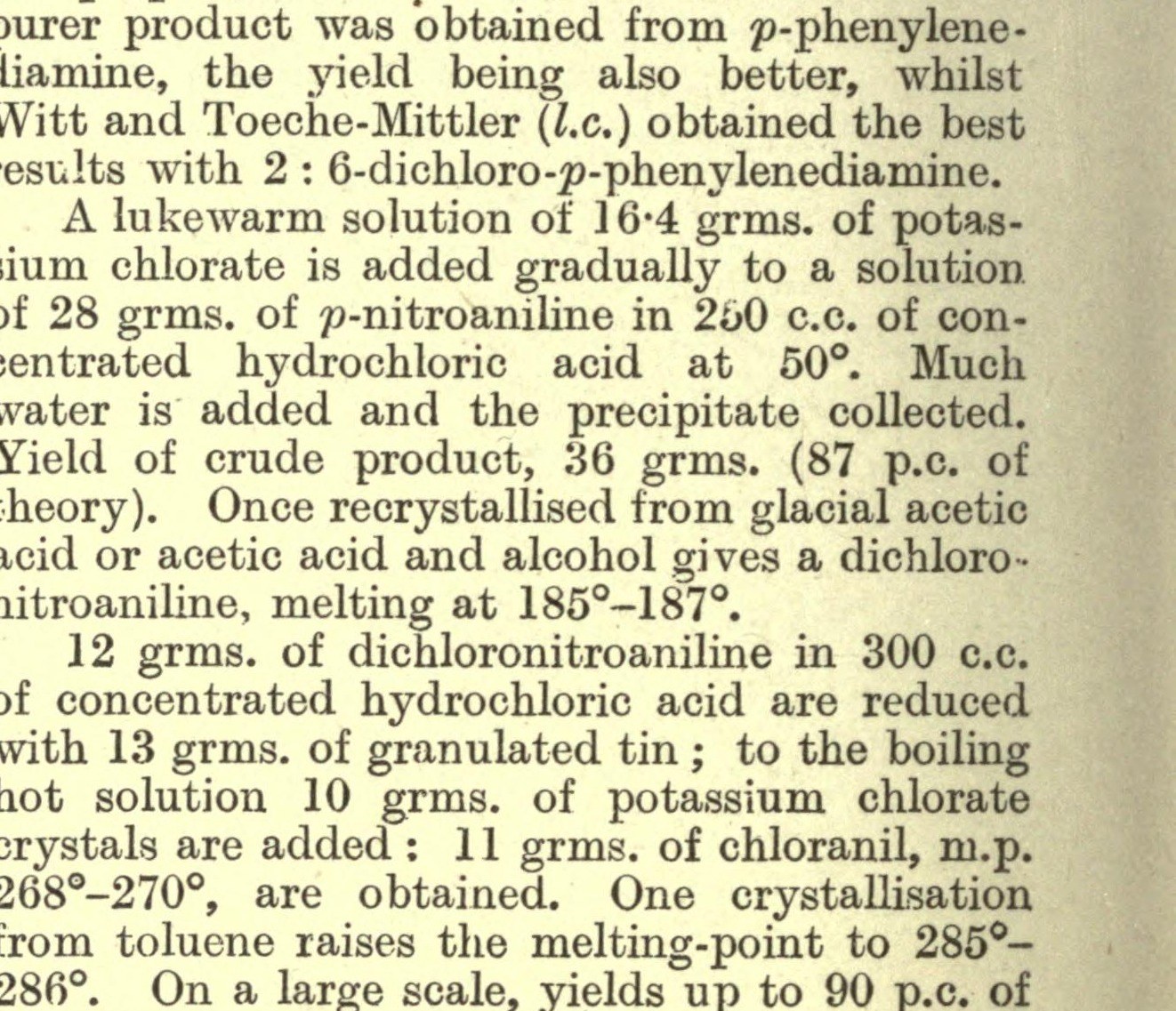
Chloranil: p-Nitroaniline Chlorinated, Reduced with Tin and Oxidised with Chlorate (Thorpe 1913)
Chloranil, tetrachloro-p-benzoquinone, is a quinone carrying four chlorine atoms, used to oxidise colourless leuco bases into dyes.
Thorpe's Dictionary of Applied Chemistry (1913) gives Witt and Toeche-Mittler's method, which gave the best results: chlorinate p-nitroaniline with potassium chlorate in hydrochloric acid to a dichloronitroaniline, then reduce it with tin in boiling hydrochloric acid and oxidise it with more chlorate to chloranil, 11 g from 12 g.
The glassware, the water for the chlorate and the filtering are ours.
Source: Thorpe, Dictionary of Applied Chemistry vol. IV (1913), QUINONES, p. 494. Picture: that page.
མཐོ་རིམ
A day
ཉེན་ཁ་ཅན་ནང་དོན
བིལུ་པིརིན་ཊི་འདིའི་ནང་ཉེན་ཁ་ཅན་ལག་ལེན་ཡོད། གོམ་པ་རེ་རེའི་ལམ་སྟོན་བལྟ་ནིའི་ཆེད་ནང་འཛུལ་གནང་ཞིང་ཉེན་ཁ་ཅན་ནང་དོན་ལྕོགས་གནང།
ནང་བསྐྱོད་འབད།བིལུ་པིརིན་ཊི་འདི་གིས་བཟོ་མི
CC0 སྤྱི་དབང
བིལུ་པིརིན་ཊི་འདི་CC0 འོག་བཀྲམས་ཡོད། ཁྱེད་རང་གིས་ཆོག་མཆན་མ་བཞེས་པར་ཕབ་ལེན་དང་བཟོ་བཅོས། བགོ་བཤའ། དགོས་མཁོ་གང་ལའང་བཀོལ་སྤྱོད་བྱས་ཆོག
བཟོ་མཁན་ལ་རྒྱབ་སྐྱོར་བྱེད་པའི་ཆེད་ཁོང་ཚོའི་བིལུ་པིརིན་ཊི་བརྒྱུད་ཐོན་སྐྱེད་ཉོ། བཟོ་མཁན་གྱིས བཟོ་མཁན་གྱི་ཁེ་ཕོགས ཚོང་པས་གཏན་འཁེལ་བྱས་པ། ཡང་ན་བིལུ་པིརིན་ཊི་འདིའི་པར་གསར་བཟོས་ཏེ་ཁྱེད་རང་གི་བིལུ་པིརིན་ཊི་ནང་མཐུད་སྦྲེལ་བྱས་ཏེ་ཡོང་སྒོ་བགོ་བཤའ་བྱེད།