སྒྱུ་རྩལ
མཛེས་སྡུག་དང་བདེ་ཐང
བཟོ་རིག
རིག་གནས་དང་ལོ་རྒྱུས
དགའ་སྟོན
ཁོར་ཡུག
ཟས་དང་བཏུང་རྫས
ཕྱིར་འཕྲུལ་རིག
ཚན་རིག
རྩེད་འགྲན
རིག་རྩལ
གྱོན་རུང
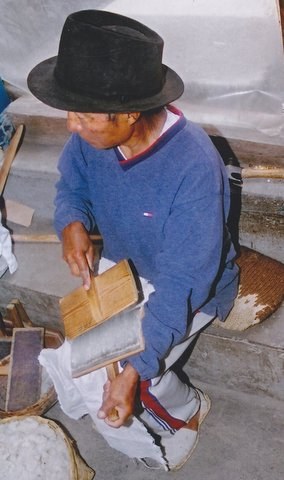


Cotton Roving by Hand: Carded, Drawn and Lightly Twisted
Roving is cotton made ready to spin: the fibres combed parallel, drawn into a long strand and given just enough twist to hold together. Mills did it with carding engines, drawing frames and roving frames; Andrew Ure (1839) explains them by the hand cards they copied. This is the hand version, from ginned lint.
The picture: carding with a pair of hand cards in Ecuador.
འགོ་བཙུགས
An afternoon
ལམ་སྟོན
1
1
Load and card
Load and card
Spread a thin layer of lint on one hand card. Brush the other card across it, teeth against teeth, again and again until the fibres lie parallel.
གོམ་པ་འདིའི་རྫས་རིགས:
 སོན་མེད་རས་བལ།100 g
ལག་ཆས་དགོས་མཁོ:
 བལ་ཀྱི་སྐྲ་ཤད།
2
2
Strip the card
Strip the card
Turn one card round so its teeth face the other way and draw it across: it lifts the whole layer off in one web (Ure's stripping position).
ལག་ཆས་དགོས་མཁོ:
བལ་ཀྱི་སྐྲ་ཤད།3
3
Roll off a sliver
Roll off a sliver
Roll the stripped web off the card into a loose, untwisted rope: a sliver. Card the rest of the lint the same way.
ལག་ཆས་དགོས་མཁོ:
བལ་ཀྱི་སྐྲ་ཤད།4
4
Double, draw and add a little twist
Double, draw and add a little twist
Lay two or three slivers together and draw them out to the length of one; repeat a few times to even out thick and thin places, as the mills' drawing frames did. Draw the strand to about pencil thickness. It now pulls apart easily, so give it a little twist with a slowly turning spindle and wind it on loosely. That twist is what makes it roving.
ལག་ཆས་དགོས་མཁོ:
 ལག་པའི་འཁོར་ལོ།
རྫས་རིགས
1- 100 gས་ཆ་འཛིན
ལག་ཆས་དགོས་མཁོ
2- ས་ཆ་འཛིན
- ས་ཆ་འཛིན
བིལུ་པིརིན་ཊི་འདི་གིས་བཟོ་མི

འབྲེལ་ཡོད་བིལུ་པིརིན་ཊི
བིལུ་པིརིན་ཊི་འདི་ཚུ་ཐབས་ལམ་དང་རྫས་རིགས། སྤྱི་ཆོས་བགོ་བཤའ་བྱེད
CC0 སྤྱི་དབང
བིལུ་པིརིན་ཊི་འདི་CC0 འོག་བཀྲམས་ཡོད། ཁྱེད་རང་གིས་ཆོག་མཆན་མ་བཞེས་པར་ཕབ་ལེན་དང་བཟོ་བཅོས། བགོ་བཤའ། དགོས་མཁོ་གང་ལའང་བཀོལ་སྤྱོད་བྱས་ཆོག
བཟོ་མཁན་ལ་རྒྱབ་སྐྱོར་བྱེད་པའི་ཆེད་ཁོང་ཚོའི་བིལུ་པིརིན་ཊི་བརྒྱུད་ཐོན་སྐྱེད་ཉོ། བཟོ་མཁན་གྱིས བཟོ་མཁན་གྱི་ཁེ་ཕོགས ཚོང་པས་གཏན་འཁེལ་བྱས་པ། ཡང་ན་བིལུ་པིརིན་ཊི་འདིའི་པར་གསར་བཟོས་ཏེ་ཁྱེད་རང་གི་བིལུ་པིརིན་ཊི་ནང་མཐུད་སྦྲེལ་བྱས་ཏེ་ཡོང་སྒོ་བགོ་བཤའ་བྱེད།