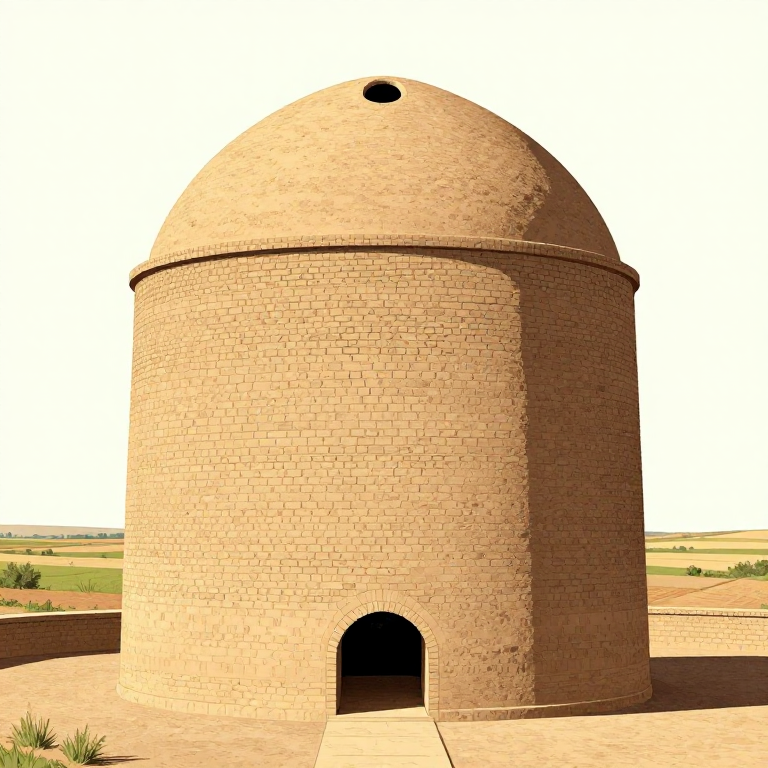


Egyptian Grain Silo — Constructing a Beehive-Shaped Grain Silo
ལམ་སྟོན
Prepare the Foundation and Base
Prepare the Foundation and Base
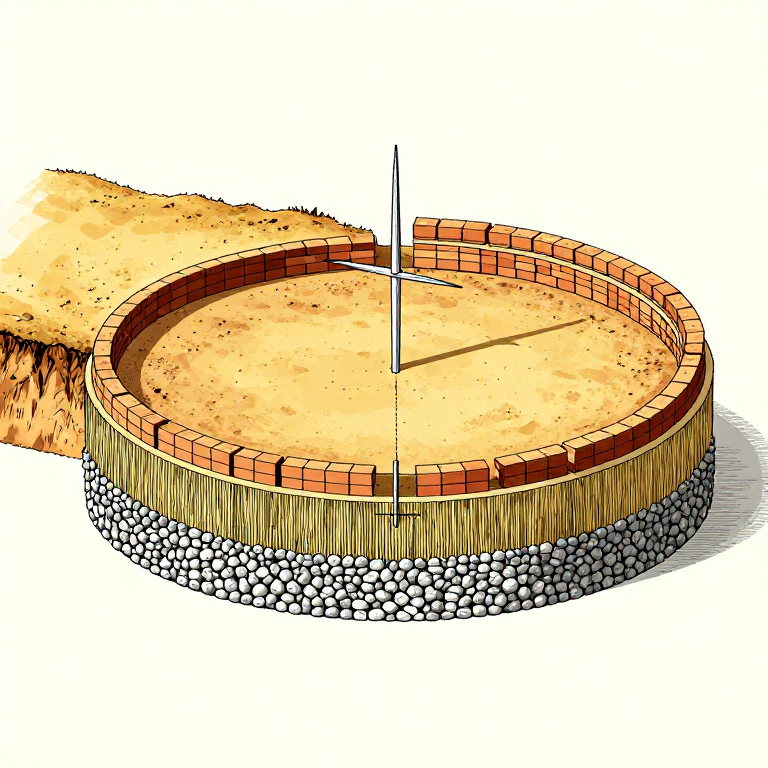
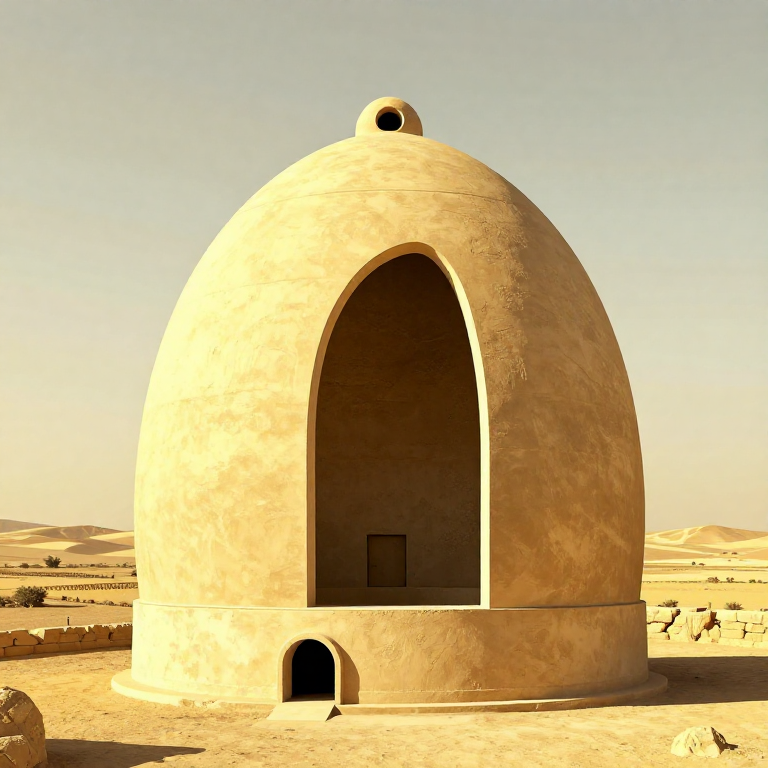
Select a dry, elevated location to minimize moisture contact with stored grain. Mark a circle on the ground using a stake and string compass — typical Egyptian farm silos ranged from 1.5 to 3 meters in diameter. Excavate the foundation circle to 15-20 cm depth and fill with tamped rubble, gravel, or broken pottery to create a drainage base preventing ground moisture from wicking into the grain. Lay a mat of straw or reeds over the drainage layer as additional moisture barrier. Ancient Egyptian silos at the Ramesseum were substantial structures up to 5 meters in diameter and 5 meters tall, capable of storing tons of grain for temple redistribution.
གོམ་པ་འདིའི་རྫས་རིགས:
 ཉིམ་ལུ་བསྐམས་པའི་འཇིམ་པའི་ས་ཕག་ཚུ200-400 bricks depending on size དུམ་བུ།
 ས་ཡི་ཨར་གཅལsufficient for all courses དུམ་བུ།
 རང་བཞིན་གྱི་འདྲེས་རྫས།1-2 square meters དུམ་བུ།
 ས་ཡི་ཞལ་བྱུགས20-30 kg kg
ལག་ཆས་དགོས་མཁོ:
 ལག་པའི་སྐྱོགས་མ།
 ཐིག་ཞགས
 སྒྲོམ་གཟུགས་ཀྱི་ཐད་སྙོམས་འཇལ་ཆས།
Lay the Circular Mud-Brick Walls
Lay the Circular Mud-Brick Walls
Begin laying mud bricks in a circular pattern on the foundation, using mud mortar between each brick. The wall should be one brick thick (approximately 15 cm) for small silos up to 2 meters in diameter, or two bricks for larger structures. Stagger joints between courses by offsetting each row half a brick length for strong bonding. Use a plumb line to keep walls vertical and check each course with a level. Build walls to approximately 1.5-2 meters height. Near the base, leave a small opening approximately 20x20 cm as the grain discharge port — sealed with a mud plug after filling and opened to withdraw grain as needed.
Corbel the Dome Roof
Corbel the Dome Roof
At the top of the cylindrical wall, begin corbelling the dome by laying each successive course slightly inward (toward the center), reducing the circle diameter by approximately 3-5 cm per course. Each brick overhangs the one below by just enough to be stable without tipping. This inward lean creates a dome shape that closes over the silo. Corbelling does not require temporary support (centering) unlike a true arch, making it well-suited for mud brick construction. Leave a small opening (30-40 cm wide) at the apex for filling the silo from above. Tomb models and archaeological remains confirm this beehive dome shape was standard for Egyptian grain silos.
Plaster the Interior and Exterior
Plaster the Interior and Exterior
Allow mortar to dry for several days, then apply smooth mud plaster to both interior and exterior surfaces. The interior plaster should be as smooth as possible to prevent grain from catching in crevices where insects could breed. Some Egyptian silos show traces of limewash (calcium hydroxide) over the interior plaster, acting as a mild insecticide and antifungal. The exterior plaster protects mud bricks from erosion. Apply in two coats: a rough base coat to fill gaps, then a smooth finish coat. The exterior can be whitewashed with limestone plaster for weather protection and to reflect heat, keeping the interior cooler.
Fill and Seal the Silo
Fill and Seal the Silo
Once plaster is fully dry, pour dried, winnowed grain through the top opening, shaking or tapping walls periodically to settle contents and eliminate air pockets. Fill to approximately 90% capacity, leaving space below the dome. Seal the top opening with a fitted clay cap or flat stone mortared in place. Seal the base discharge port with a mud plug. The sealed silo creates an airtight environment where the grain's own respiration gradually depletes oxygen and elevates carbon dioxide, suppressing insect activity and mold growth — a principle the Egyptians discovered empirically thousands of years before modern controlled atmosphere storage was scientifically developed. Grain can be stored safely for months or even years under these conditions.
རྫས་རིགས
6- 1-2 square meters དུམ་བུ།ས་ཆ་འཛིན
- 200-400 bricks depending on size དུམ་བུ།ས་ཆ་འཛིན
- sufficient for all courses དུམ་བུ།ས་ཆ་འཛིན
- 1-2 square meters དུམ་བུ།ས་ཆ་འཛིན
- 20-30 kg དུམ་བུ།ས་ཆ་འཛིན
- 400 དུམ་བུ།ས་ཆ་འཛིན
ལག་ཆས་དགོས་མཁོ
9- ས་ཆ་འཛིན
- String and stake for marking circle
- ས་ཆ་འཛིན
- ས་ཆ་འཛིན
- ས་ཆ་འཛིན
- ས་ཆ་འཛིན
- ས་ཆ་འཛིན
- ས་ཆ་འཛིན
- ས་ཆ་འཛིན
བིལུ་པིརིན་ཊི་འདི་གིས་བཟོ་མི
CC0 སྤྱི་དབང
བིལུ་པིརིན་ཊི་འདི་CC0 འོག་བཀྲམས་ཡོད། ཁྱེད་རང་གིས་ཆོག་མཆན་མ་བཞེས་པར་ཕབ་ལེན་དང་བཟོ་བཅོས། བགོ་བཤའ། དགོས་མཁོ་གང་ལའང་བཀོལ་སྤྱོད་བྱས་ཆོག
བཟོ་མཁན་ལ་རྒྱབ་སྐྱོར་བྱེད་པའི་ཆེད་ཁོང་ཚོའི་བིལུ་པིརིན་ཊི་བརྒྱུད་ཐོན་སྐྱེད་ཉོ། བཟོ་མཁན་གྱིས བཟོ་མཁན་གྱི་ཁེ་ཕོགས ཚོང་པས་གཏན་འཁེལ་བྱས་པ། ཡང་ན་བིལུ་པིརིན་ཊི་འདིའི་པར་གསར་བཟོས་ཏེ་ཁྱེད་རང་གི་བིལུ་པིརིན་ཊི་ནང་མཐུད་སྦྲེལ་བྱས་ཏེ་ཡོང་སྒོ་བགོ་བཤའ་བྱེད།