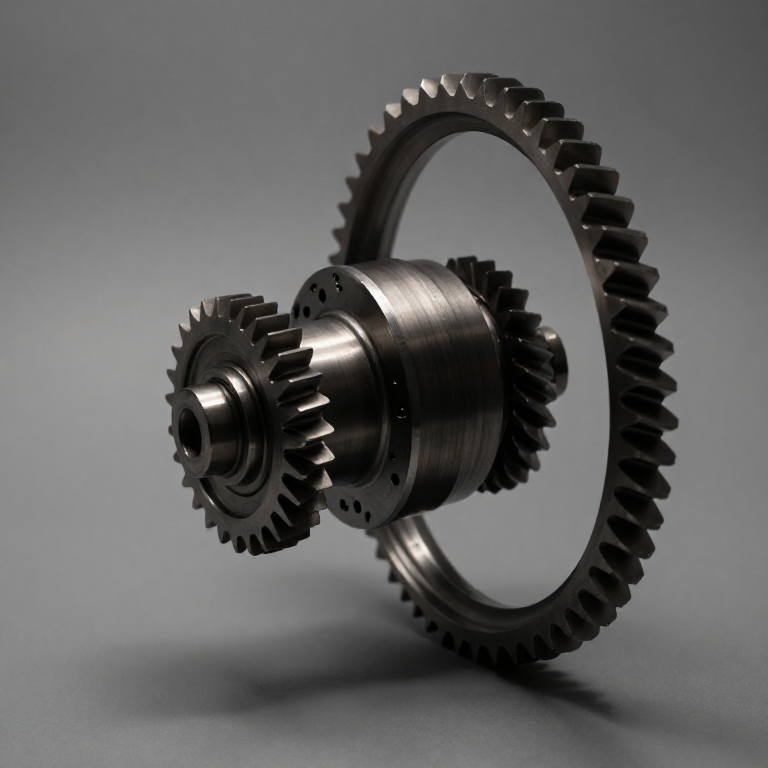


Epicyclic Gear Train
An ordinary gear pair has one input and one output, and one ratio. An epicyclic — planetary — train has three connected members: a central sun, several planets on a rotating carrier, and an outer internally-toothed ring. Hold any one still, drive another, take output from the third, and you get a different ratio. The same three castings give several gears depending only on which member you restrain.
The behaviour is captured by one equation, and it is worth having:
(Z_r + Z_s) × ω_carrier = Z_s × ω_sun + Z_r × ω_ring
where Z is tooth count and ω is angular velocity. Fix ω_ring = 0 and it rearranges to the familiar 1 + Z_r/Z_s reduction. Every planetary ratio anyone quotes is that one relation with a different term set to zero.
Three further properties follow from the geometry rather than from clever design. Input and output are coaxial, so the gearbox is a cylinder in line with the shaft. Load is shared across several planets at once, so the train carries far more torque for its size than a single pair. And the radial forces from equally-spaced planets cancel, so the bearings see torque but almost no side load.
It also predates almost everything else here: James Watt's sun-and-planet gear of 1781 used epicyclic gearing to turn reciprocating motion into rotation while avoiding a rival's crank patent.
ལམ་སྟོན
Identify the three members and count teeth
Identify the three members and count teeth
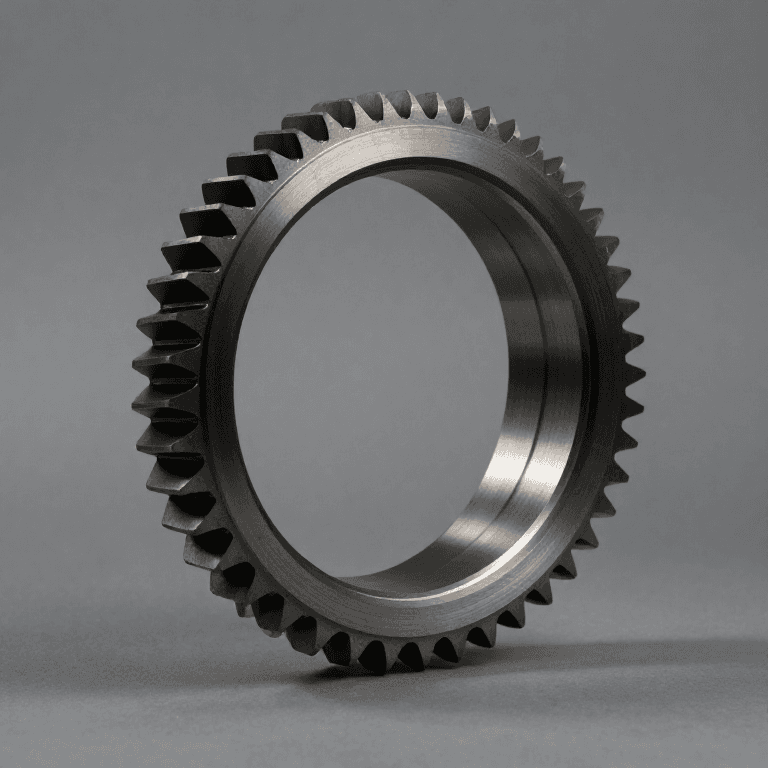
Take a planetary set and identify sun, planets, carrier and ring.
Count teeth on the sun (Z_s) and the ring (Z_r). Check the geometry holds: Z_r = Z_s + 2 × Z_planet.
If that identity fails, the parts do not belong together — the planets cannot sit between sun and ring.
གོམ་པ་འདིའི་རྫས་རིགས:
 Planetary Gear Set (Steel)1 དུམ་བུ།
Ratio one — hold the ring
Ratio one — hold the ring
Clamp the ring. Drive the sun, take output from the carrier.
Predict first: ratio = 1 + Z_r/Z_s. With Z_s = 24 and Z_r = 72, that is 4:1.
Now turn the sun four times and confirm the carrier turns once. Same direction as input.
ལག་ཆས་དགོས་མཁོ:
 Bench Vise
Ratio two — hold the carrier and watch it reverse
Ratio two — hold the carrier and watch it reverse
Now clamp the carrier instead. Drive the sun, take output from the ring.
Predict: ratio = −Z_r/Z_s = −3:1 for the same set.
Confirm the magnitude, and note the minus sign is real — the ring turns backwards. The planets are now simple idlers reversing direction, and you have obtained a reverse gear by changing which member is held, not by adding any parts.
That is exactly how an automatic gearbox produces reverse.
Ratio three — lock any two together
Ratio three — lock any two together
Clamp any two members to each other — sun to carrier, say — and drive the assembly.
Expect the whole train to rotate as one lump: 1:1, direct drive.
Three configurations, three ratios including a reverse and a direct, from one set of castings. Stack two such sets and you have the four to six ratios of a conventional automatic gearbox.
Feel the load sharing
Feel the load sharing
Load the output and note how many planets are transmitting: all of them, simultaneously.
Three planets means roughly a third of the tooth force on each mesh, so the same torque needs teeth about a third the width of a single pair.
Then check the shaft: with planets equally spaced, their radial reactions cancel, so there is almost no side load on the bearings. A single spur pair pushes its shafts apart hard and needs bearings sized for it. This is why planetary gearboxes are so compact — it is not clever teeth, it is symmetry.
History & Context
History & Context
Older than the industrial revolution's machinery, and used to dodge a patent. James Watt's sun-and-planet gear (1781) converted his beam engine's reciprocating motion to rotation using epicyclic gearing. The straightforward solution was a crank — patented by James Pickard — so Watt's engineer William Murdoch worked around it. One of the clearest cases in engineering history of a patent forcing an alternative into existence, and it is generally credited to Murdoch rather than Watt.
The Antikythera mechanism. The 2nd-century BC Greek device is now widely held to contain epicyclic gearing used to model the Moon's variable motion. That interpretation rests on reconstruction from a heavily corroded object and is not universally settled — worth stating as the well-supported reading it is, not as plain fact.
Why automatics are built this way. A planetary set changes ratio by restraining a member, which a brake band or clutch can do smoothly while everything is turning. A conventional gearbox changes ratio by sliding gears in and out of mesh, which cannot be done under load. That difference — not the torque converter — is why automatic gearboxes are planetary.
Where else it hides. Hub gears in bicycles, cordless drill reduction stages, wind-turbine gearboxes, aircraft turbofan reduction drives. Anywhere torque density and coaxial shafts matter more than efficiency.
The honest limitation. More meshes than a simple pair means more losses — a planetary stage typically runs 95–98% against 97–99% for a good spur pair. And it demands accurate concentricity: if the ring, sun and carrier are not truly coaxial the planets share load unequally, and the whole advantage in step 5 evaporates.
རྫས་རིགས
1- 1 དུམ་བུ།ས་ཆ་འཛིན
ལག་ཆས་དགོས་མཁོ
1- ས་ཆ་འཛིན
མཐུད་སྦྲེལ་བིལུ་པིརིན་ཊི་རྫས་རིགས

འབྲེལ་ཡོད་བིལུ་པིརིན་ཊི
བིལུ་པིརིན་ཊི་འདི་ཚུ་ཐབས་ལམ་དང་རྫས་རིགས། སྤྱི་ཆོས་བགོ་བཤའ་བྱེད
CC0 སྤྱི་དབང
བིལུ་པིརིན་ཊི་འདི་CC0 འོག་བཀྲམས་ཡོད། ཁྱེད་རང་གིས་ཆོག་མཆན་མ་བཞེས་པར་ཕབ་ལེན་དང་བཟོ་བཅོས། བགོ་བཤའ། དགོས་མཁོ་གང་ལའང་བཀོལ་སྤྱོད་བྱས་ཆོག
བཟོ་མཁན་ལ་རྒྱབ་སྐྱོར་བྱེད་པའི་ཆེད་ཁོང་ཚོའི་བིལུ་པིརིན་ཊི་བརྒྱུད་ཐོན་སྐྱེད་ཉོ། བཟོ་མཁན་གྱིས བཟོ་མཁན་གྱི་ཁེ་ཕོགས ཚོང་པས་གཏན་འཁེལ་བྱས་པ། ཡང་ན་བིལུ་པིརིན་ཊི་འདིའི་པར་གསར་བཟོས་ཏེ་ཁྱེད་རང་གི་བིལུ་པིརིན་ཊི་ནང་མཐུད་སྦྲེལ་བྱས་ཏེ་ཡོང་སྒོ་བགོ་བཤའ་བྱེད།