སྒྱུ་རྩལ
མཛེས་སྡུག་དང་བདེ་ཐང
བཟོ་རིག
རིག་གནས་དང་ལོ་རྒྱུས
དགའ་སྟོན
ཁོར་ཡུག
ཟས་དང་བཏུང་རྫས
ཕྱིར་འཕྲུལ་རིག
ཚན་རིག
རྩེད་འགྲན
རིག་རྩལ
གྱོན་རུང
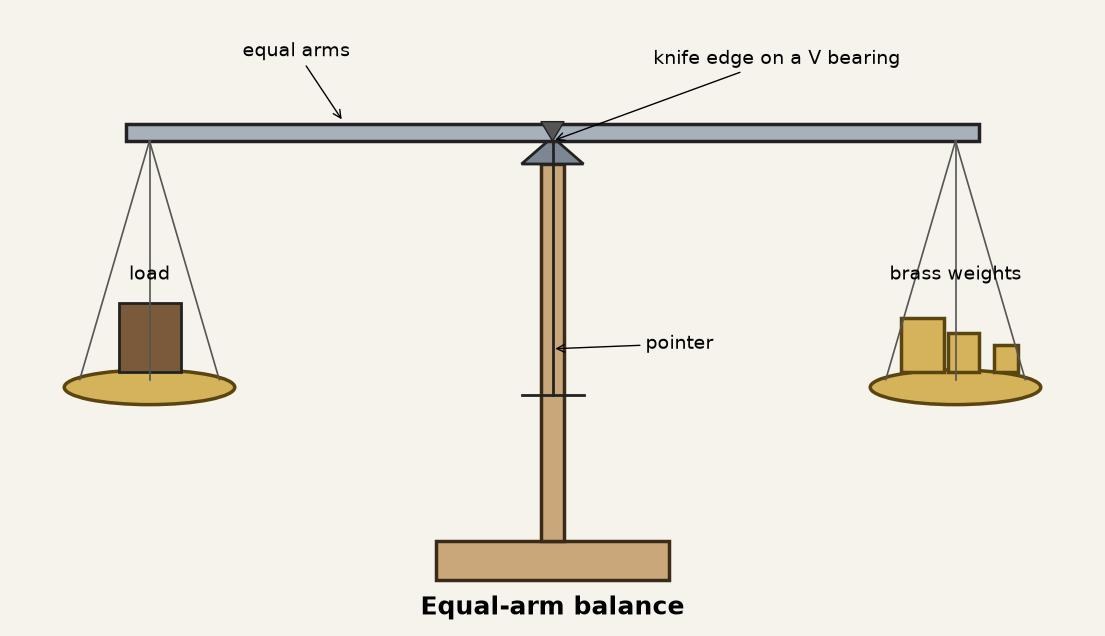


Equal-Arm Balance on a Knife Edge, with a Set of Brass Weights
The oldest weighing machine is a beam with equal arms balanced on a pivot, a pan hanging from each end: put the load in one pan and known weights in the other until the beam lies level. Balances go back to the Fourth Dynasty of Egypt. A hardened knife edge makes it sensitive and a long pointer shows the smallest tilt; the weights are cast in brass and adjusted against each other.
The picture: our diagram of the balance, its knife edge, pointer, pans and weights.
བར་མ
Two to three days
ལམ་སྟོན
1
1
Beam and knife edge
Beam and knife edge
File a straight beam from flat tool steel with a hole exactly in the middle and one near each end, the two end holes equally far from the centre. Forge and file a short steel knife edge, harden and temper it, and fit it through the centre hole, edge down. File a long pointer onto the beam.
གོམ་པ་འདིའི་རྫས་རིགས:
 ལག་ཆས་ལྕགས་ཁར་གྱི་ཡུ་བ་ལེབ་ཏེ།1 དུམ་བུ།
ལག་ཆས་དགོས་མཁོ:
 ལྕགས་ཀྱི་དར་མ།
 ལག་འཕྲུལ་ཁུང་བཏོན
 ཨང་རྟགས་ཚད་འཇལ་ཆས་ ཨིནཅི 6
 མགར་བའི་ཐབ་ཁུང་།
 སྲ་བཟོའི་ཆུ་སྣོད།
 ཉེན་སྲུང་མིག་ཤེལ།
2
2
Stand and bearing
Stand and bearing
Make an upright stand of hardwood with a hardened steel V-block on top, shallower than the knife edge, so the beam rocks freely. Mark a zero line behind the pointer.
གོམ་པ་འདིའི་རྫས་རིགས:
 སྲ་བའི་ཤིང་གི་ཐག་ལེབ2 དུམ་བུ།
 ལྕགས་འཇམ་གྱི་དབྱུག་ཟླུམ།0.3 m
ལག་ཆས་དགོས་མཁོ:
ལྕགས་ཀྱི་དར་མ།མགར་བའི་ཐབ་ཁུང་།སྲ་བཟོའི་ཆུ་སྣོད།3
3
Pans
Pans
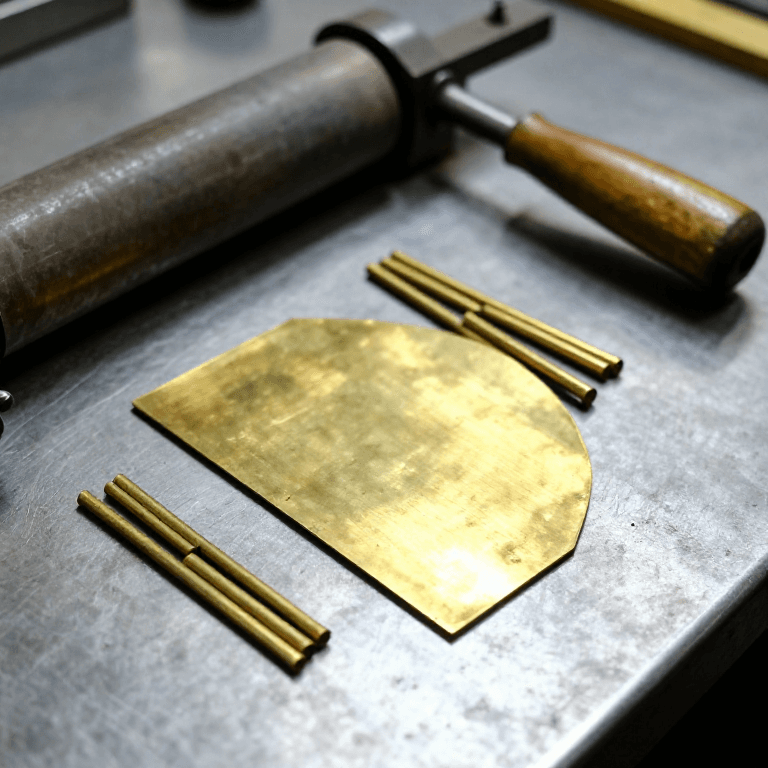
Cut two equal brass discs, dish them slightly, drill three holes in each rim and hang each from an end hole on three equal cords.
གོམ་པ་འདིའི་རྫས་རིགས:
 རག་གི་ལེབ་ཤོག1 དུམ་བུ།
 ཤིང་ཞུན་བྱུགས་པའི་ལི་ནེན་སྐུད་པ།3 m
ལག་ཆས་དགོས་མཁོ:
 ལྕགས་ལེབ་གཏུབ་ནིའི་ཇེམ་ཙི།ལག་འཕྲུལ་ཁུང་བཏོནལྕགས་ཀྱི་དར་མ།
4
4
Trim to level
Trim to level
With both pans empty, file the heavier side until the pointer rests on zero. Swap the pans and check again: if the pointer moves, the arms are unequal and the end holes need moving.
ལག་ཆས་དགོས་མཁོ:
ལྕགས་ཀྱི་དར་མ།5
5
Cast the weights
Cast the weights
Melt brass and cast a row of plain cylinders a little heavy in green sand.
གོམ་པ་འདིའི་རྫས་རིགས:
 ཟངས་སེར་གྱི་གོང་བུ།2 kg
 སོལ་བ།1 as required
 བླུགས་གཞོང་གི་བྱེ་མ།5 kg
ལག་ཆས་དགོས་མཁོ:
མགར་བའི་ཐབ་ཁུང་། འཇིམ་གྱི་ཞུན་སྣོད — མེ་བཟོད།
 བཞུ་སྣོད་ཀྱི་གཟེར་ཆས།
 བླུགས་བཟོའི་སྒྲོམ། (ཡར་དང་མར།)
 ཚག་གི་ལག་ཤུབས།
6
6
Adjust the weights
Adjust the weights
Balance the largest weight against a litre of water measured in the cylinder (one kilogram, our reference), filing it down until the beam is level. Make the smaller ones by balancing pairs against a larger one and against each other, filing each to level.
གོམ་པ་འདིའི་རྫས་རིགས:
 ཆུ།1 ལི་ཊར།
ལག་ཆས་དགོས་མཁོ:
 ཚད་རྟགས་ཅན་གྱི་སི་ལིན་ཌར།ལྕགས་ཀྱི་དར་མ།
7
7
A binary set of weights
A binary set of weights
Jupyter ཚང་དེབ་མངོན་གསལ་འབད་དོ་…
8
8
Limits
Limits
The balance's form and use are as Wikipedia describes; the sizes and the water reference are ours. Water's density changes a little with temperature, so the reference is good to a few parts in a thousand.
རྫས་རིགས
9- 1 དུམ་བུ།ས་ཆ་འཛིན
- 2 དུམ་བུ།ས་ཆ་འཛིན
- ས་ཆ་འཛིན
- 1 དུམ་བུ།ས་ཆ་འཛིན
- ས་ཆ་འཛིན
- ས་ཆ་འཛིན
- 1 as requiredས་ཆ་འཛིན
- ས་ཆ་འཛིན
- 1 ལི་ཊར།ས་ཆ་འཛིན
ལག་ཆས་དགོས་མཁོ
12- ས་ཆ་འཛིན
- ས་ཆ་འཛིན
- ས་ཆ་འཛིན
- ས་ཆ་འཛིན
- ས་ཆ་འཛིན
- ས་ཆ་འཛིན
- ས་ཆ་འཛིན
- ས་ཆ་འཛིན
- ས་ཆ་འཛིན
- ས་ཆ་འཛིན
- ས་ཆ་འཛིན
- ས་ཆ་འཛིན
བིལུ་པིརིན་ཊི་འདི་གིས་བཟོ་མི
འབྲེལ་ཡོད་བིལུ་པིརིན་ཊི
བིལུ་པིརིན་ཊི་འདི་ཚུ་ཐབས་ལམ་དང་རྫས་རིགས། སྤྱི་ཆོས་བགོ་བཤའ་བྱེད


CC0 སྤྱི་དབང
བིལུ་པིརིན་ཊི་འདི་CC0 འོག་བཀྲམས་ཡོད། ཁྱེད་རང་གིས་ཆོག་མཆན་མ་བཞེས་པར་ཕབ་ལེན་དང་བཟོ་བཅོས། བགོ་བཤའ། དགོས་མཁོ་གང་ལའང་བཀོལ་སྤྱོད་བྱས་ཆོག
བཟོ་མཁན་ལ་རྒྱབ་སྐྱོར་བྱེད་པའི་ཆེད་ཁོང་ཚོའི་བིལུ་པིརིན་ཊི་བརྒྱུད་ཐོན་སྐྱེད་ཉོ། བཟོ་མཁན་གྱིས བཟོ་མཁན་གྱི་ཁེ་ཕོགས ཚོང་པས་གཏན་འཁེལ་བྱས་པ། ཡང་ན་བིལུ་པིརིན་ཊི་འདིའི་པར་གསར་བཟོས་ཏེ་ཁྱེད་རང་གི་བིལུ་པིརིན་ཊི་ནང་མཐུད་སྦྲེལ་བྱས་ཏེ་ཡོང་སྒོ་བགོ་བཤའ་བྱེད།