སྒྱུ་རྩལ
མཛེས་སྡུག་དང་བདེ་ཐང
བཟོ་རིག
རིག་གནས་དང་ལོ་རྒྱུས
དགའ་སྟོན
ཁོར་ཡུག
ཟས་དང་བཏུང་རྫས
ཕྱིར་འཕྲུལ་རིག
ཚན་རིག
རྩེད་འགྲན
རིག་རྩལ
གྱོན་རུང
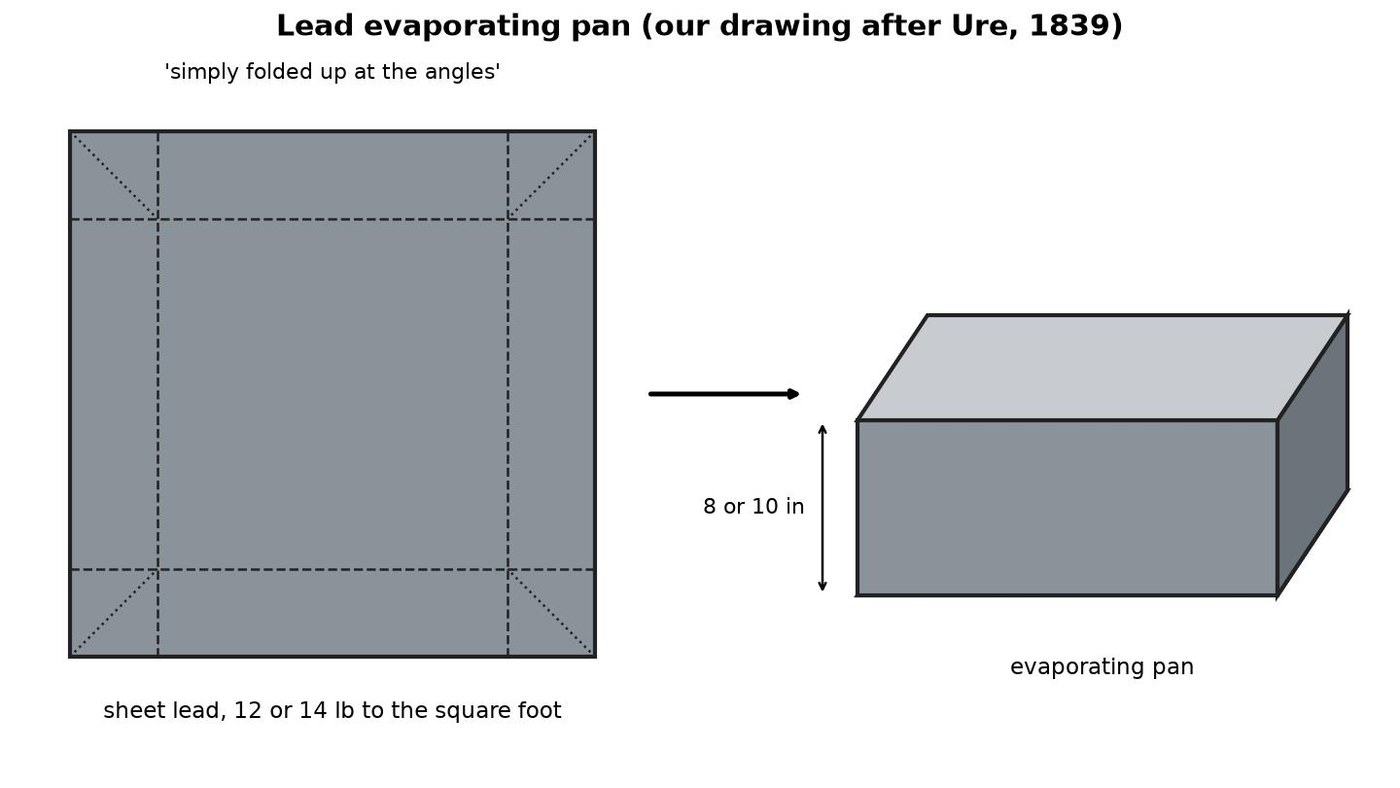


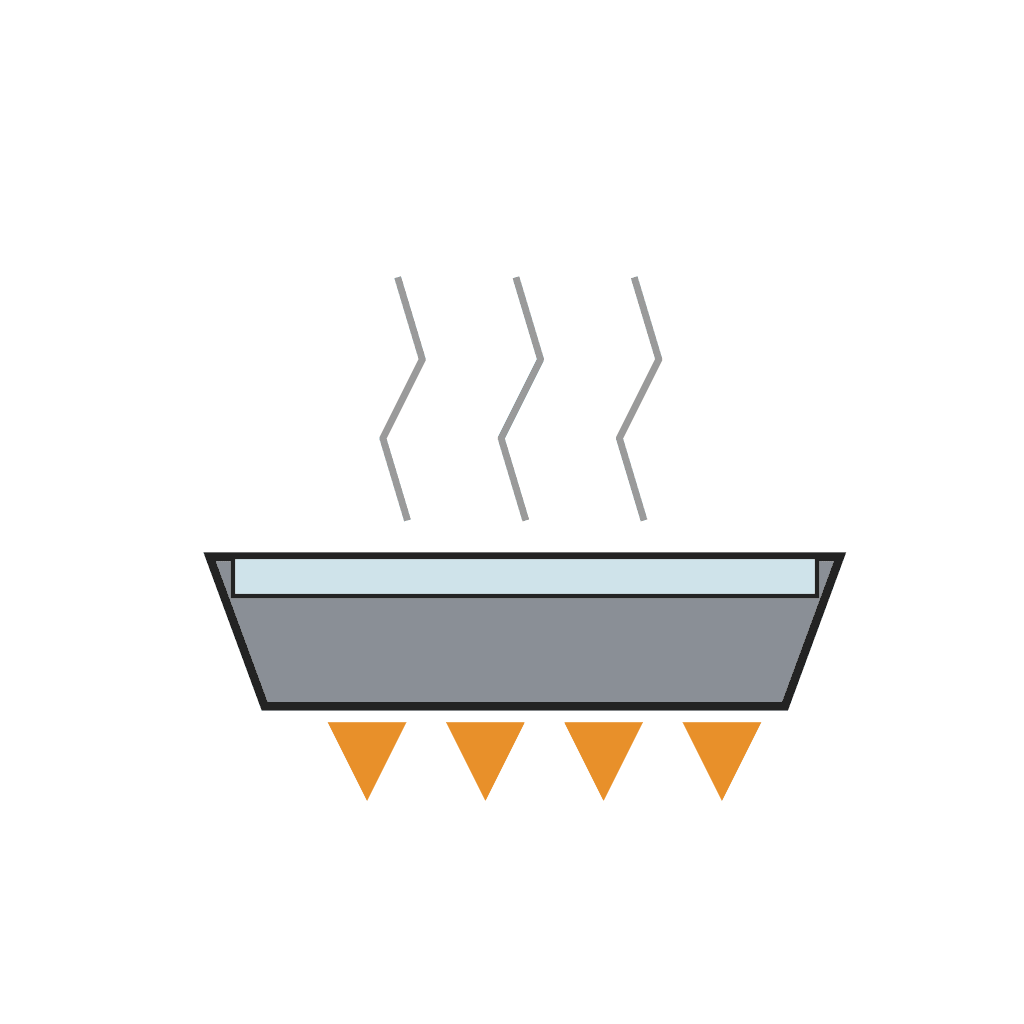
Evaporating Pan: Sheet Lead Folded Up at the Angles (Ure, 1839)
The acid-works evaporator of Ure's day: a rectangular pan made from one large sheet of lead, 12 or 14 lb to the square foot, simply folded up at the angles to a depth of 8 or 10 inches, and set on a grate of strong wrought-iron bars over a furnace.
Lead pans stand weak sulphuric acid; Ure takes the acid out at sp. gr. 1.650, or 1.700 at most, because stronger acid begins to eat the lead.
Not given: length and breadth.
Source: A. Ure, Dictionary of Arts, Manufactures, and Mines (1839), Acid, Sulphuric. Picture: our drawing.
འགོ་བཙུགས
Unknown
ལམ་སྟོན
1
1
Fold the sheet into a pan
Fold the sheet into a pan
Take a large sheet of lead weighing 12 or 14 lb to the square foot. Simply fold it up at the angles into a rectangular pan 8 or 10 inches deep. Ours: a straightedge and a mallet for the folds.
གོམ་པ་འདིའི་རྫས་རིགས:
 ཞའི་ཤོག་ལེབ།1 12 or 14 lb per sq ft
 མ་ཤེས་པའི་ཚད།1 དུམ་བུ།
ལག་ཆས་དགོས་མཁོ:
 ཟུར་དྲང་པོ།
 ཤིང་གི་ཐོ་བ།
2
2
Set it over the fire
Set it over the fire
Rest the pan on a grate of a close row of strong wrought-iron bars, with the furnace flame playing underneath. Do not concentrate sulphuric acid in it beyond sp. gr. 1.700: stronger acid begins to corrode the lead.
ལག་ཆས་དགོས་མཁོ:
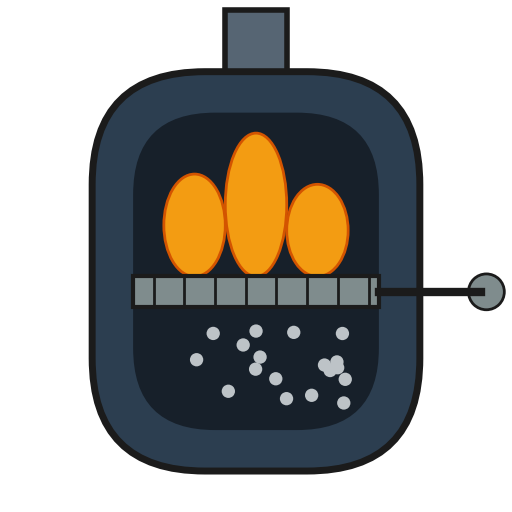 ཐབ་ཀྱི་དྲྭ་མིག
རྫས་རིགས
2- 1 12 or 14 lb per sq ftས་ཆ་འཛིན
- 1 དུམ་བུ།ས་ཆ་འཛིན
ལག་ཆས་དགོས་མཁོ
3- ས་ཆ་འཛིན
- ས་ཆ་འཛིན
- ས་ཆ་འཛིན
བིལུ་པིརིན་ཊི་འདི་གིས་བཟོ་མི
CC0 སྤྱི་དབང
བིལུ་པིརིན་ཊི་འདི་CC0 འོག་བཀྲམས་ཡོད། ཁྱེད་རང་གིས་ཆོག་མཆན་མ་བཞེས་པར་ཕབ་ལེན་དང་བཟོ་བཅོས། བགོ་བཤའ། དགོས་མཁོ་གང་ལའང་བཀོལ་སྤྱོད་བྱས་ཆོག
བཟོ་མཁན་ལ་རྒྱབ་སྐྱོར་བྱེད་པའི་ཆེད་ཁོང་ཚོའི་བིལུ་པིརིན་ཊི་བརྒྱུད་ཐོན་སྐྱེད་ཉོ། བཟོ་མཁན་གྱིས བཟོ་མཁན་གྱི་ཁེ་ཕོགས ཚོང་པས་གཏན་འཁེལ་བྱས་པ། ཡང་ན་བིལུ་པིརིན་ཊི་འདིའི་པར་གསར་བཟོས་ཏེ་ཁྱེད་རང་གི་བིལུ་པིརིན་ཊི་ནང་མཐུད་སྦྲེལ་བྱས་ཏེ་ཡོང་སྒོ་བགོ་བཤའ་བྱེད།