
Extracting Nickel from Pentlandite — The Devil's Copper That Wouldn't Behave
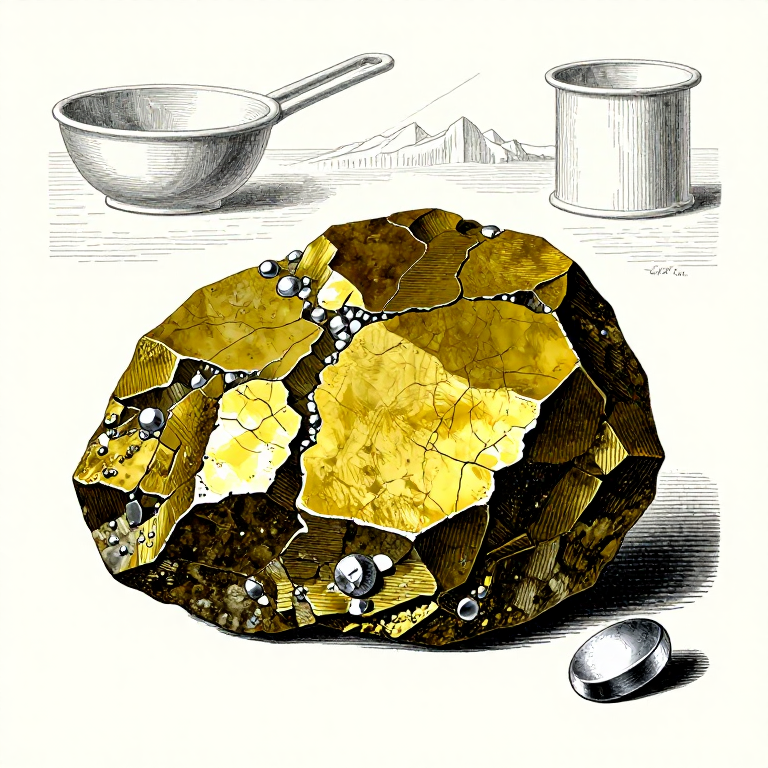
Nickel (Ni, element 28) gets its name from the German Kupfernickel — 'Old Nick's copper' or 'the Devil's copper.' Saxonian miners in the Erzgebirge encountered a reddish-brown ore (now called nickeline, NiAs) that resembled copper ore but yielded no copper when smelted. They blamed the mischievous sprite Nickel (a diminutive of Nicholas, used as a name for a troublesome goblin) for bewitching the copper. Swedish mineralogist Axel Fredrik Cronstedt isolated metallic nickel in 1751 by heating nickeline with charcoal, proving it was a distinct metal.
Pentlandite ((Fe,Ni)₉S₈) is the world's primary nickel ore mineral, typically containing 22–42% nickel. It occurs almost exclusively in magmatic sulfide deposits — massive concentrations of metal sulfides that crystallized from sulfide-rich magma deep in the Earth's crust. The two largest deposits on Earth, Sudbury (Ontario, Canada) and Norilsk (Siberia, Russia), together supply a large fraction of the world's nickel.
The extraction of nickel from pentlandite follows a roast-reduce sequence: roasting converts the sulfide to nickel oxide (NiO), and carbon reduction at high temperature produces metallic nickel. The process is complicated by the iron content — pentlandite contains both iron and nickel, and separating them requires careful control of roasting conditions or a matte-smelting step.
HAZARD: Nickel compounds are classified as Group 1 carcinogens (confirmed human carcinogens) by IARC. Nickel dust and nickel oxide dust cause lung and nasal cancer with chronic exposure. Nickel is also one of the most common contact allergens — approximately 10–20% of women and 1–3% of men are sensitized. All work must use respiratory protection and gloves. Roasting produces sulfur dioxide (SO₂), a toxic, choking gas — work outdoors only.
ཉེན་ཁ་ཅན་ནང་དོན
བིལུ་པིརིན་ཊི་འདིའི་ནང་ཉེན་ཁ་ཅན་ལག་ལེན་ཡོད། གོམ་པ་རེ་རེའི་ལམ་སྟོན་བལྟ་ནིའི་ཆེད་ནང་འཛུལ་གནང་ཞིང་ཉེན་ཁ་ཅན་ནང་དོན་ལྕོགས་གནང།
ནང་བསྐྱོད་འབད།བིལུ་པིརིན་ཊི་འདི་གིས་བཟོ་མི
CC0 སྤྱི་དབང
བིལུ་པིརིན་ཊི་འདི་CC0 འོག་བཀྲམས་ཡོད། ཁྱེད་རང་གིས་ཆོག་མཆན་མ་བཞེས་པར་ཕབ་ལེན་དང་བཟོ་བཅོས། བགོ་བཤའ། དགོས་མཁོ་གང་ལའང་བཀོལ་སྤྱོད་བྱས་ཆོག
བཟོ་མཁན་ལ་རྒྱབ་སྐྱོར་བྱེད་པའི་ཆེད་ཁོང་ཚོའི་བིལུ་པིརིན་ཊི་བརྒྱུད་ཐོན་སྐྱེད་ཉོ། བཟོ་མཁན་གྱིས བཟོ་མཁན་གྱི་ཁེ་ཕོགས ཚོང་པས་གཏན་འཁེལ་བྱས་པ། ཡང་ན་བིལུ་པིརིན་ཊི་འདིའི་པར་གསར་བཟོས་ཏེ་ཁྱེད་རང་གི་བིལུ་པིརིན་ཊི་ནང་མཐུད་སྦྲེལ་བྱས་ཏེ་ཡོང་སྒོ་བགོ་བཤའ་བྱེད།