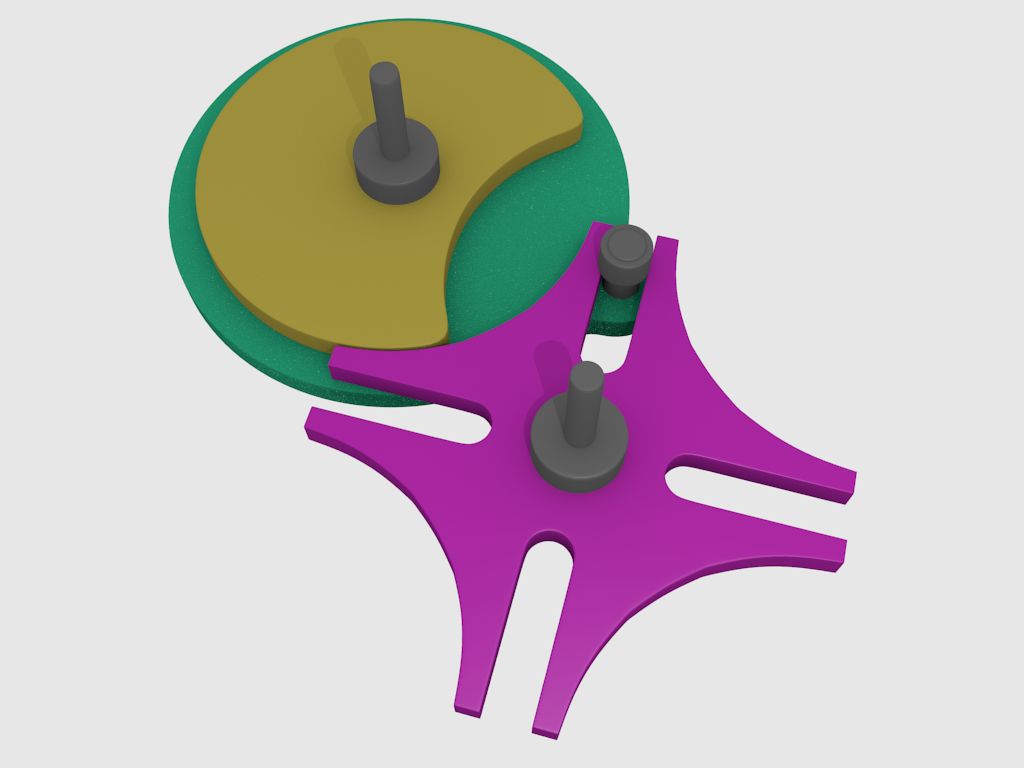


Geneva Drive
ལམ་སྟོན
Cut the slotted wheel
Cut the slotted wheel
The driven wheel does all the geometry.
- Mark a disc with four radial slots at 90 degrees.
- Cut the slots open at the rim, wide enough for a pin to enter freely.
- Cut concave arcs between the slots on the rim.
གོམ་པ་འདིའི་རྫས་རིགས:
 བཱལ་ཊིཀ་བིརཆ་ཤིང་ལེབ།1 སྒྲིལ་ཐུམ།
 ཟུར་ཚད་འཇལ་ཆས།1 དུམ་བུ།
Make the driver with its pin and lock
Make the driver with its pin and lock
The driver is a disc with a pin and a matching convex face.
- Fit a pin near the rim of a second disc.
- Cut a convex arc on that disc to match the driven wheel's concave arcs.
- Relieve the convex face where the pin sits so the slot can pass.
གོམ་པ་འདིའི་རྫས་རིགས:
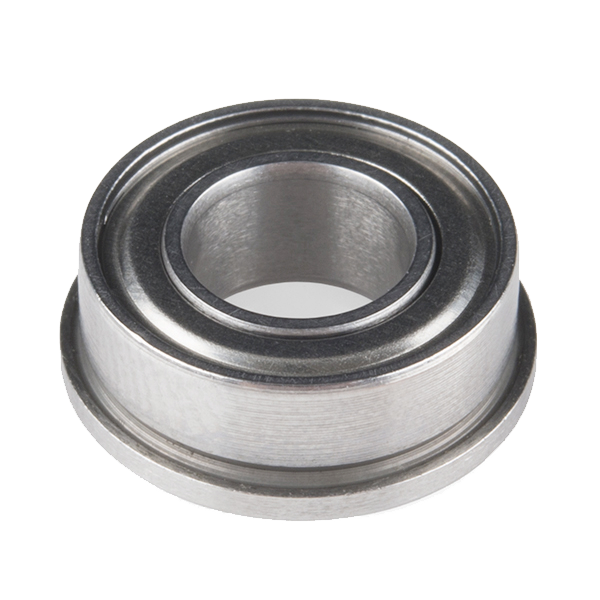 Ball Bearing - Flanged (6,35 mm Bore, 1,27 cm OD)2 དུམ་བུ།
 རག་གི་དབྱུག་པ།1 length
Assemble and set the centres
Assemble and set the centres
Centre distance is not adjustable — it is determined by the geometry.
- Mount both wheels so the pin enters a slot cleanly and radially.
- Turn the driver slowly by hand through a full revolution.
- Confirm one step of exactly 90 degrees, then a dead stop.
Measure the duty cycle
Measure the duty cycle
Quantify the pause, which is what the mechanism is bought for.
- Turn the driver at a steady speed.
- Measure what fraction of a revolution the driven wheel is moving.
- The rest is dwell.
གོམ་པ་འདིའི་རྫས་རིགས:
 ཆུ་ཚོད་བཀག་ཆས།1 དུམ་བུ།
History and context
History and context
The mechanism is called Geneva after Swiss watchmaking, and Maltese cross after the shape of the slotted wheel. Its original clockmaking use was as a Geneva stop: a version with one slot blocked, fitted to a mainspring barrel so the spring could only be wound through a set number of turns and never over-wound into its strongest, least even part of travel.
Cinema is where it became indispensable. Film must be absolutely stationary while a frame is projected and then advance to the next in a small fraction of a second, twenty-four times a second, without tearing. A Geneva movement does precisely that, mechanically and identically every time, and it drove projectors for a century. Intermittent motion is the whole problem of cinema mechanics, and this is the standard solution.
Elsewhere: indexing tables on machine tools, automatic bottle-filling and capping machines, rotary tool changers, and the mechanism that steps some watch date displays over at midnight. Anywhere you want to move something to one of a fixed set of positions and hold it firmly, this beats a motor and a controller because there is nothing to calibrate and nothing to lose count.
Its honest limits: the acceleration at entry and exit is abrupt, so it is noisy and hard on parts at high speed, and the step size cannot be changed without cutting a new wheel. Modern machines mostly use servo motors, which are adjustable and quiet — and which need power, feedback and software to do what a Geneva wheel does with two pieces of shaped metal.
རྫས་རིགས
5- 1 སྒྲིལ་ཐུམ།ས་ཆ་འཛིན
- 1 དུམ་བུ།ས་ཆ་འཛིན
- 2 དུམ་བུ།$2.43
- 1 lengthས་ཆ་འཛིན
- 1 དུམ་བུ།ས་ཆ་འཛིན
འབྲེལ་ཡོད་བིལུ་པིརིན་ཊི
བིལུ་པིརིན་ཊི་འདི་ཚུ་ཐབས་ལམ་དང་རྫས་རིགས། སྤྱི་ཆོས་བགོ་བཤའ་བྱེད

CC0 སྤྱི་དབང
བིལུ་པིརིན་ཊི་འདི་CC0 འོག་བཀྲམས་ཡོད། ཁྱེད་རང་གིས་ཆོག་མཆན་མ་བཞེས་པར་ཕབ་ལེན་དང་བཟོ་བཅོས། བགོ་བཤའ། དགོས་མཁོ་གང་ལའང་བཀོལ་སྤྱོད་བྱས་ཆོག
བཟོ་མཁན་ལ་རྒྱབ་སྐྱོར་བྱེད་པའི་ཆེད་ཁོང་ཚོའི་བིལུ་པིརིན་ཊི་བརྒྱུད་ཐོན་སྐྱེད་ཉོ། བཟོ་མཁན་གྱིས བཟོ་མཁན་གྱི་ཁེ་ཕོགས ཚོང་པས་གཏན་འཁེལ་བྱས་པ། ཡང་ན་བིལུ་པིརིན་ཊི་འདིའི་པར་གསར་བཟོས་ཏེ་ཁྱེད་རང་གི་བིལུ་པིརིན་ཊི་ནང་མཐུད་སྦྲེལ་བྱས་ཏེ་ཡོང་སྒོ་བགོ་བཤའ་བྱེད།