སྒྱུ་རྩལ
མཛེས་སྡུག་དང་བདེ་ཐང
བཟོ་རིག
རིག་གནས་དང་ལོ་རྒྱུས
དགའ་སྟོན
ཁོར་ཡུག
ཟས་དང་བཏུང་རྫས
ཕྱིར་འཕྲུལ་རིག
ཚན་རིག
རྩེད་འགྲན
རིག་རྩལ
གྱོན་རུང
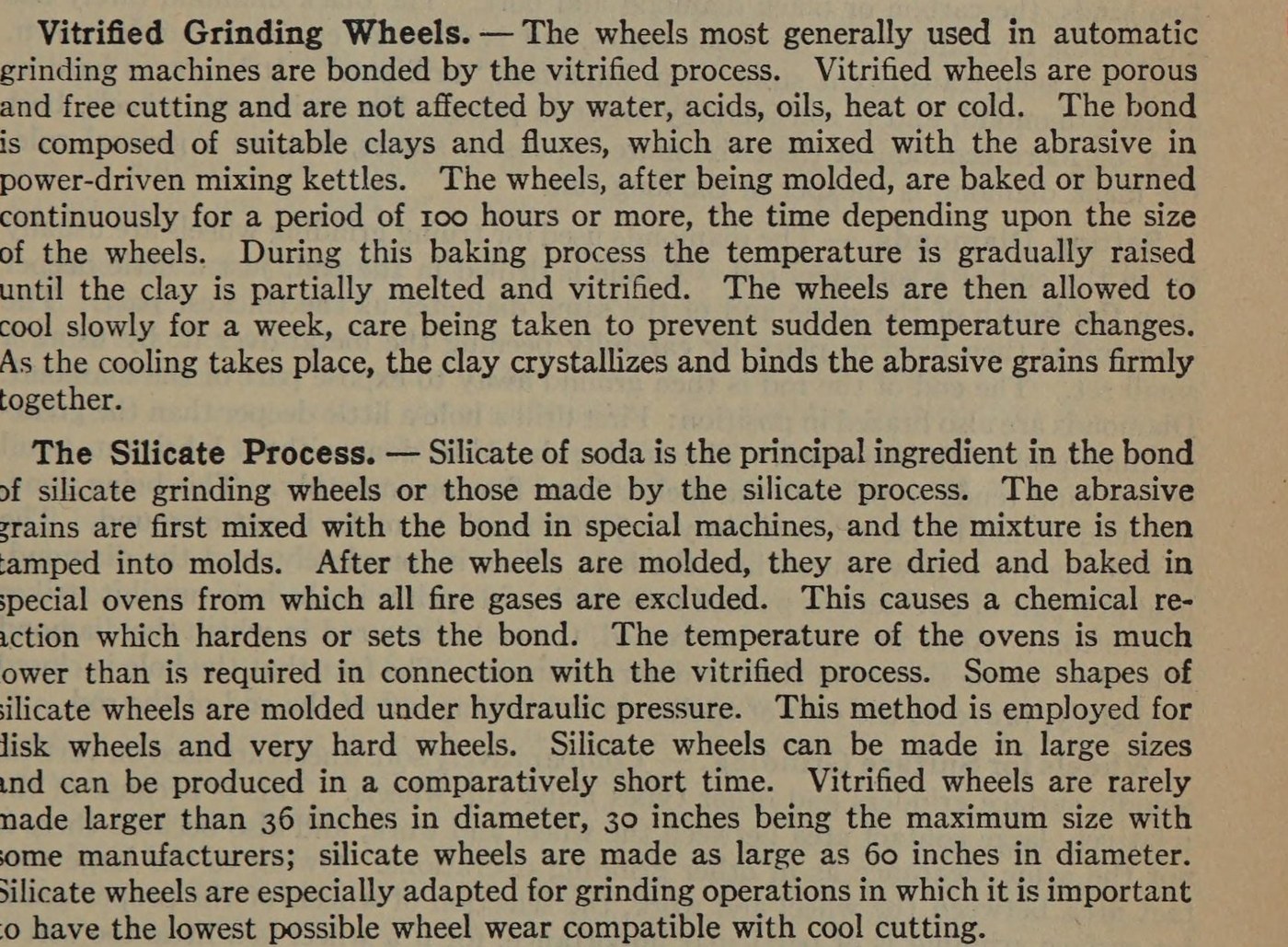

Grinding Wheel: Vitrified, Clay-Bonded (Machinery's Handbook, 1924)
The common machine-shop wheel: abrasive grains held in a bond of clay and fluxes, moulded and fired until the clay partly melts and vitrifies. Porous and free-cutting, unaffected by water, acids, oils, heat or cold.
Source: Machinery's Handbook (1924), pp. 1101-1102. Unknown: proportions and temperatures. Picture: the handbook's text.
མཐོ་རིམ
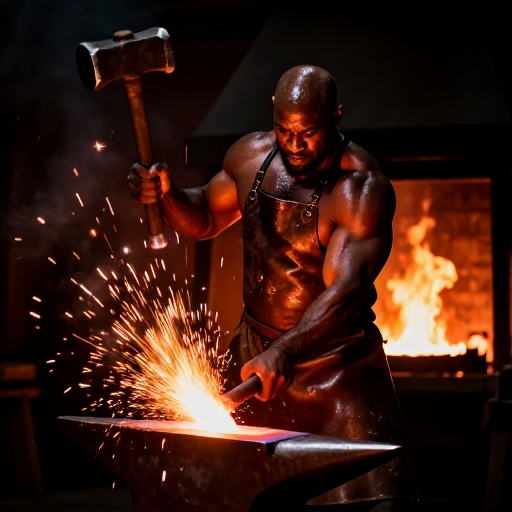
100+ hours firing, a week cooling
ལམ་སྟོན
1
1
Mix and mould
Mix and mould
Mix suitable clays and fluxes with the abrasive grain and mould the wheels. Not given: proportions.
གོམ་པ་འདིའི་རྫས་རིགས:
 ཨེ་ལུ་མི་ནིཡམ་ཨོག་སའིཌ་ཀྱི་འབྱུད་རྡུལ།1 དུམ་བུ།
 བོལ་ཀི་ལེ (ས་འཇིམ་མཉེན་པ)1 དུམ་བུ།
 ཕེལ་སི་པར་གྱི་རྡོ་གོང་།1 flux
 ཆུ།1 དུམ་བུ།
ལག་ཆས་དགོས་མཁོ:
 སྦྱོར་གཞོང་གི་ཆ་ཚན།
 བཟོ་སྣོད
 ཤིང་གི་ཐོ་བ།
2
2
Fire and cool
Fire and cool
Burn the wheels continuously for 100 hours or more, longer for bigger wheels, raising the heat gradually until the clay partly melts and vitrifies. Cool slowly for a week, guarding against sudden temperature changes; as it cools the clay binds the grains.
ལག་ཆས་དགོས་མཁོ:
 ཐབ།
རྫས་རིགས
4- ས་ཆ་འཛིན
- 1 དུམ་བུ།ས་ཆ་འཛིན
- 1 fluxས་ཆ་འཛིན
- 1 དུམ་བུ།ས་ཆ་འཛིན
བིལུ་པིརིན་ཊི་འདི་གིས་བཟོ་མི

CC0 སྤྱི་དབང
བིལུ་པིརིན་ཊི་འདི་CC0 འོག་བཀྲམས་ཡོད། ཁྱེད་རང་གིས་ཆོག་མཆན་མ་བཞེས་པར་ཕབ་ལེན་དང་བཟོ་བཅོས། བགོ་བཤའ། དགོས་མཁོ་གང་ལའང་བཀོལ་སྤྱོད་བྱས་ཆོག
བཟོ་མཁན་ལ་རྒྱབ་སྐྱོར་བྱེད་པའི་ཆེད་ཁོང་ཚོའི་བིལུ་པིརིན་ཊི་བརྒྱུད་ཐོན་སྐྱེད་ཉོ། བཟོ་མཁན་གྱིས བཟོ་མཁན་གྱི་ཁེ་ཕོགས ཚོང་པས་གཏན་འཁེལ་བྱས་པ། ཡང་ན་བིལུ་པིརིན་ཊི་འདིའི་པར་གསར་བཟོས་ཏེ་ཁྱེད་རང་གི་བིལུ་པིརིན་ཊི་ནང་མཐུད་སྦྲེལ་བྱས་ཏེ་ཡོང་སྒོ་བགོ་བཤའ་བྱེད།