སྒྱུ་རྩལ
མཛེས་སྡུག་དང་བདེ་ཐང
བཟོ་རིག
རིག་གནས་དང་ལོ་རྒྱུས
དགའ་སྟོན
ཁོར་ཡུག
ཟས་དང་བཏུང་རྫས
ཕྱིར་འཕྲུལ་རིག
ཚན་རིག
རྩེད་འགྲན
རིག་རྩལ
གྱོན་རུང
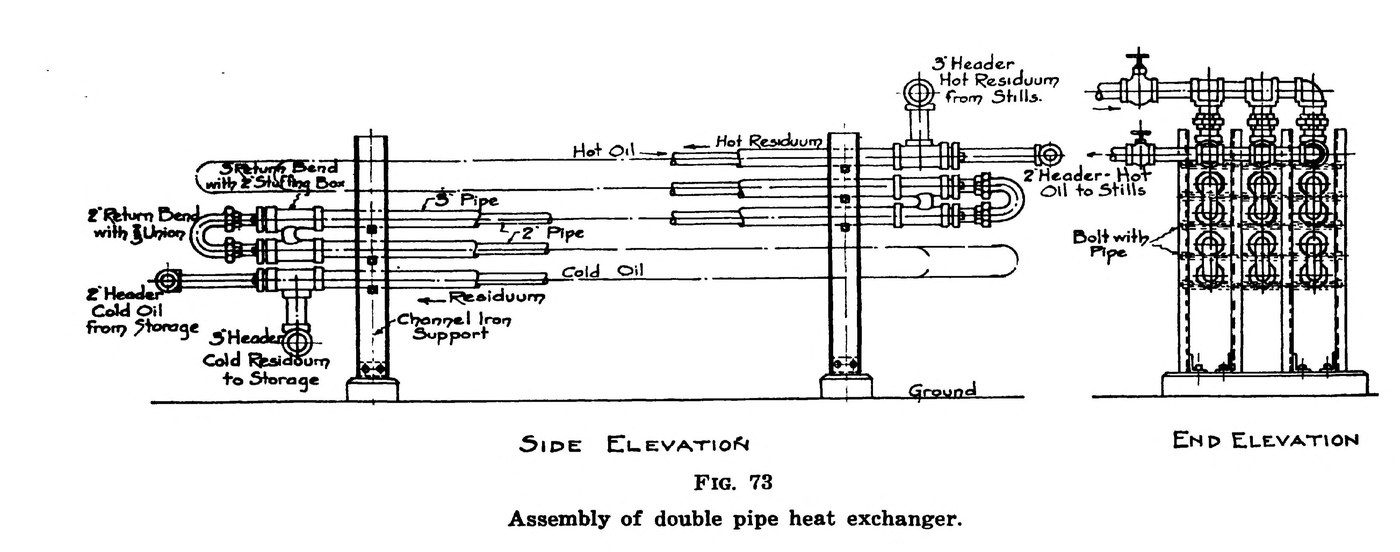


Heat Exchanger: the Double-Pipe Residual Exchanger (Bell, 1923)
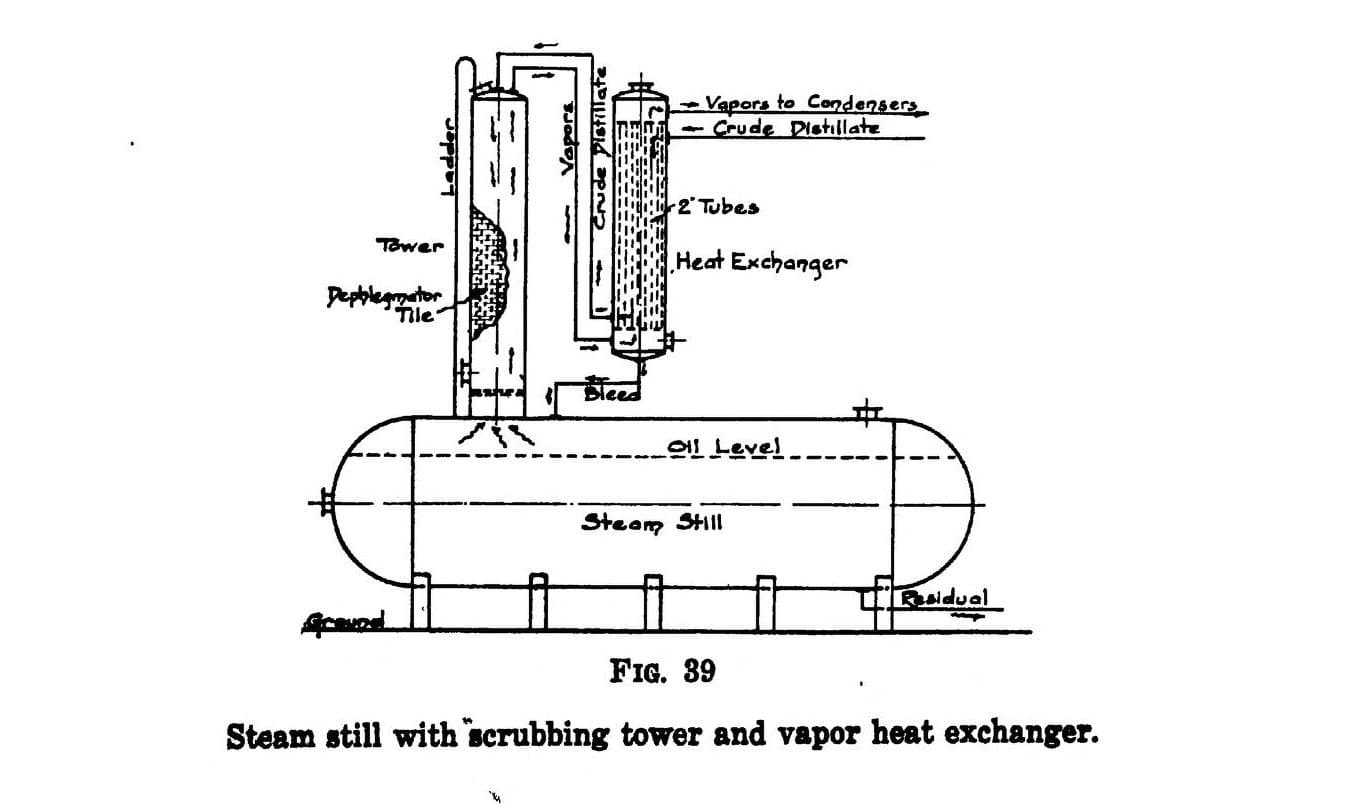
A heat exchanger built from stock pipe: runs of one pipe inside another, joined by return bends. Hot residuum from the stills flows one way in the outer pipe while cold crude flows the other way in the inner one, so the crude reaches the stills already warm.
Variable: 2 in within 3 in, or 3 in within 4 in, and the number of runs (Bell's Fig. 73 has 16). Expect a transfer rate of 14 to 18 B.t.u.
Source: H. S. Bell, American Petroleum Refining (1923), pp. 156-162. Unknown: run length, packing. Picture: Fig. 73 of the book.
མཐོ་རིམ
Unknown
ལམ་སྟོན
1
1
Choose the pipe pair
Choose the pipe pair
Use 2 in pipe inside 3 in, or 3 in inside 4 in. Plan the number of runs (Fig. 73: 16 runs of 2 in in 3 in). Not given: run length.
ལག་ཆས་དགོས་མཁོ:
 མ་ཤེས་པའི་ཚད།
2
2
Put up the supports
Put up the supports
Stand up channel-iron supports and bolt the runs to them, stacked so the bends line up at each end (Fig. 73).
གོམ་པ་འདིའི་རྫས་རིགས:
 U བཟོ་རྣམ་གྱི་ལྕགས1 supports
 ཟུར་དྲུག་མགུ་ཡོད་པའི་བོལ་ཊི - རིམ་པ་ 8.81 དུམ་བུ།
ལག་ཆས་དགོས་མཁོ:
 དོང་ཆུའི་ཤིང་སྒམ།
3
3
Assemble the runs
Assemble the runs
Slide each inner pipe into its outer pipe. At one end join the outer pipes with 3 in return bends whose stuffing boxes the 2 in pipe passes through; make the boxes extra deep, because hot oil penetrates. Join the inner pipes with 2 in return bends with unions. Use heavy fittings; steel ones on the first runs where the oil is 460 °F or hotter.
གོམ་པ་འདིའི་རྫས་རིགས:
 ལྕགས་ཀྱི་ཕྱི་ལམ (གྱང་སྟུག་ཏོག་ཏོ། མཇུག་ལུ་སྐུད་རིས་ཡོད་མི)1 2 in and 3 in runs
 སྐུད་རིས་ཅན་གྱི་དོང་ཆུའི་མཐུད་ཆས།1 return bends, unions, stuffing boxes
 མ་ཤེས་པའི་བཀག་ཆས།1 stuffing boxes
ལག་ཆས་དགོས་མཁོ:
དོང་ཆུའི་ཤིང་སྒམ།4
4
Connect the headers
Connect the headers
Run counter-current: hot residuum from the stills enters the outer pipes from a 3 in header and leaves cold to storage by another; cold oil from storage enters the inner pipes from a 2 in header and leaves hot to the stills. Valve the headers.
གོམ་པ་འདིའི་རྫས་རིགས:
ལྕགས་ཀྱི་ཕྱི་ལམ (གྱང་སྟུག་ཏོག་ཏོ། མཇུག་ལུ་སྐུད་རིས་ཡོད་མི)1 headers སྒོ་ཡི་ཝཱལ།2 དུམ་བུ།
ལག་ཆས་དགོས་མཁོ:
དོང་ཆུའི་ཤིང་སྒམ།རྫས་རིགས
6- 1 supportsས་ཆ་འཛིན
- ས་ཆ་འཛིན
- ས་ཆ་འཛིན
- 1 return bends, unions, stuffing boxesས་ཆ་འཛིན
- 1 stuffing boxesས་ཆ་འཛིན
- 2 དུམ་བུ།ས་ཆ་འཛིན
ལག་ཆས་དགོས་མཁོ
2- ས་ཆ་འཛིན
- ས་ཆ་འཛིན
མཐུད་སྦྲེལ་བིལུ་པིརིན་ཊི་རྫས་རིགས
བིལུ་པིརིན་ཊི་འདི་གིས་བཟོ་མི
CC0 སྤྱི་དབང
བིལུ་པིརིན་ཊི་འདི་CC0 འོག་བཀྲམས་ཡོད། ཁྱེད་རང་གིས་ཆོག་མཆན་མ་བཞེས་པར་ཕབ་ལེན་དང་བཟོ་བཅོས། བགོ་བཤའ། དགོས་མཁོ་གང་ལའང་བཀོལ་སྤྱོད་བྱས་ཆོག
བཟོ་མཁན་ལ་རྒྱབ་སྐྱོར་བྱེད་པའི་ཆེད་ཁོང་ཚོའི་བིལུ་པིརིན་ཊི་བརྒྱུད་ཐོན་སྐྱེད་ཉོ། བཟོ་མཁན་གྱིས བཟོ་མཁན་གྱི་ཁེ་ཕོགས ཚོང་པས་གཏན་འཁེལ་བྱས་པ། ཡང་ན་བིལུ་པིརིན་ཊི་འདིའི་པར་གསར་བཟོས་ཏེ་ཁྱེད་རང་གི་བིལུ་པིརིན་ཊི་ནང་མཐུད་སྦྲེལ་བྱས་ཏེ་ཡོང་སྒོ་བགོ་བཤའ་བྱེད།