སྒྱུ་རྩལ
མཛེས་སྡུག་དང་བདེ་ཐང
བཟོ་རིག
རིག་གནས་དང་ལོ་རྒྱུས
དགའ་སྟོན
ཁོར་ཡུག
ཟས་དང་བཏུང་རྫས
ཕྱིར་འཕྲུལ་རིག
ཚན་རིག
རྩེད་འགྲན
རིག་རྩལ
གྱོན་རུང


Horsemint Flowers and Leaves: Pale Wild Bergamot Cut in Flower, Hung Top Downward to Dry (Densmore, 1928; Britton & Brown, 1913)
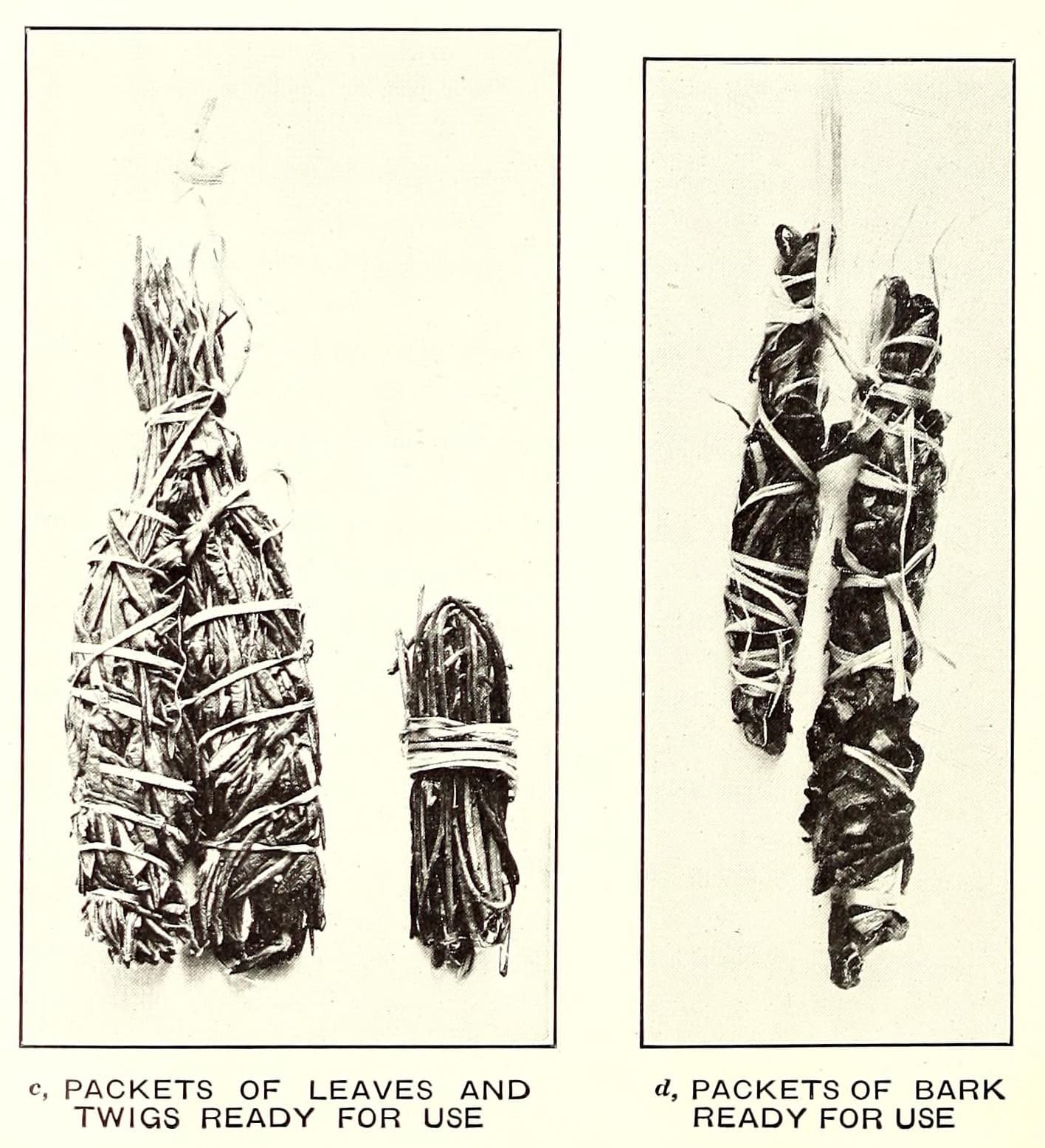
The flowers and leaves of the plant Densmore called horsemint, Monarda mollis (today a variety of wild bergamot, Monarda fistulosa), as the Chippewa kept them: cut in flower, hung top downward to dry, kept clean and wrapped. Densmore records them steeped as a wash for eruptions, and dried and powdered for burns and scalds.
འགོ་བཙུགས
An hour to cut, one to two weeks to dry
ལམ་སྟོན
1
1
Wild bergamot
Wild bergamot
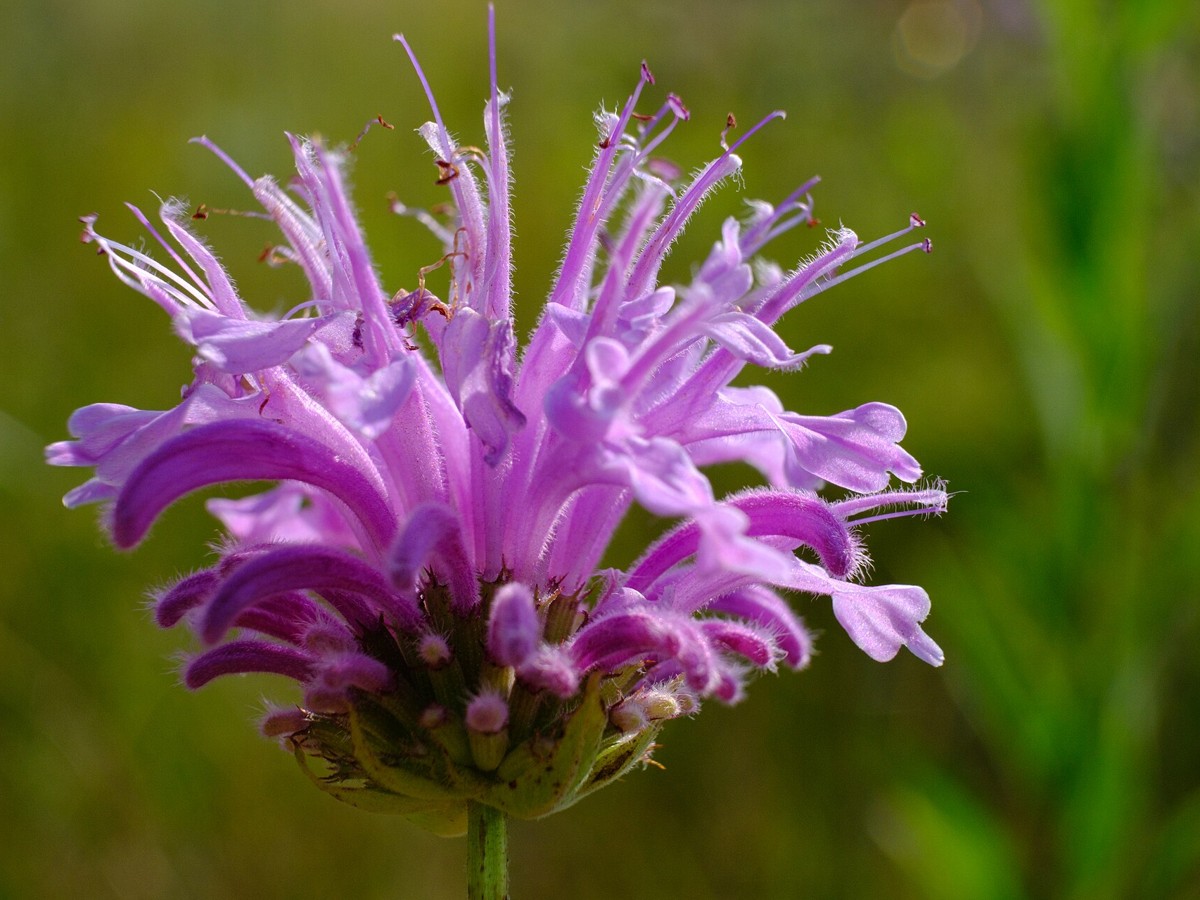
Wild bergamot, Monarda fistulosa (U.S. Fish & Wildlife Service).
2
2
Know the plant
Know the plant
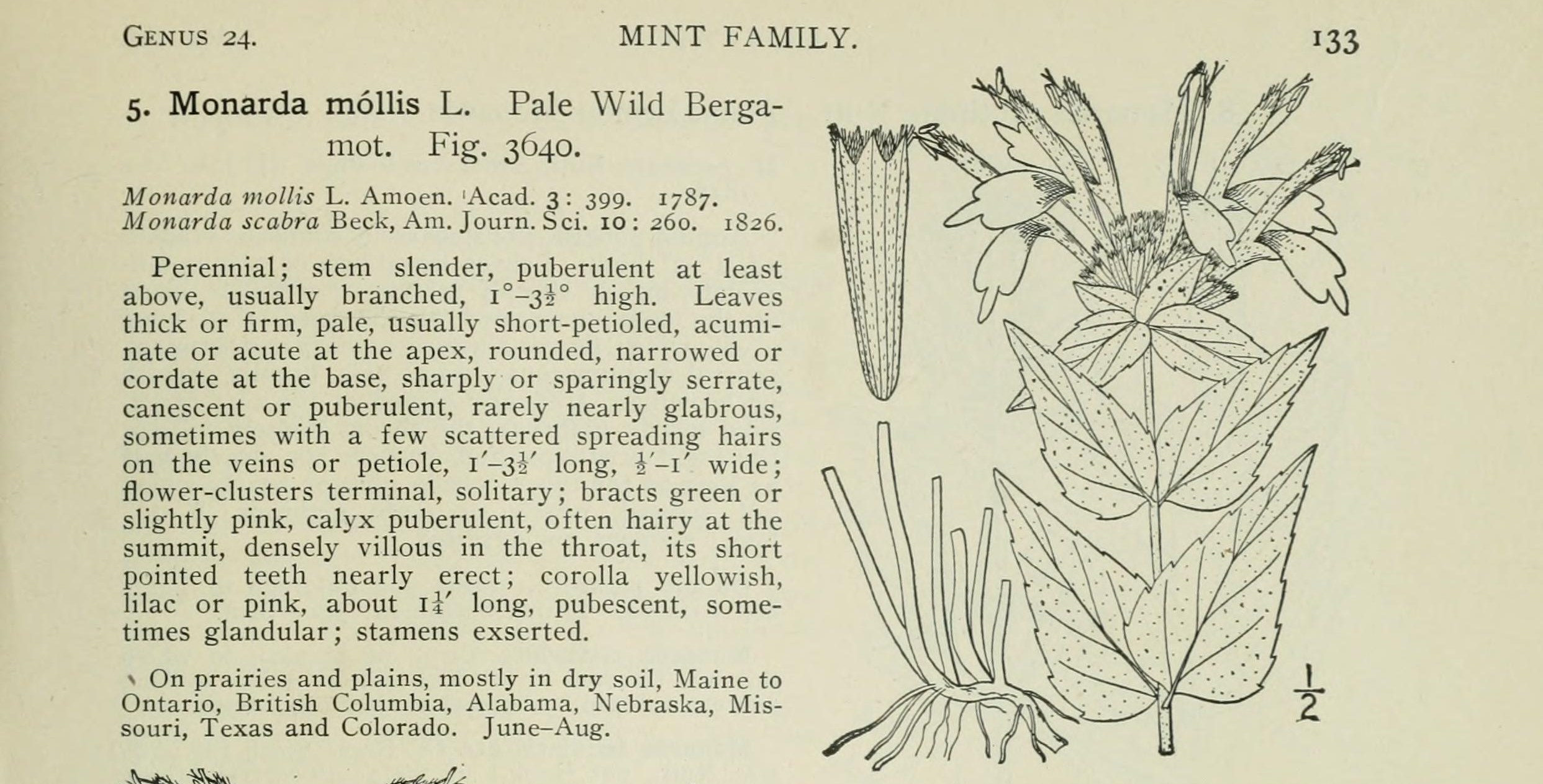
Britton and Brown (1913, vol. III, p. 133), Monarda mollis, Pale Wild Bergamot (Britton and Brown give the name "Horse-mint" to a different plant, Monarda punctata): perennial, the stem slender and branched, 1 to 3½ feet; leaves firm, pale, toothed, 1 to 3½ inches long; one flower cluster at each tip, the flowers yellowish, lilac or pink with the stamens sticking out; on prairies and plains, mostly in dry soil, June-August. USDA lists it as Monarda fistulosa var. mollis.
3
3
What it is for
What it is for
Densmore (1928, pp. 350-351), for eruptions: horsemint "Flowers and leaves", "Steeped. 'Bathe child with the tea and then rub it with tallow, venison tallow if possible.'" Used especially for children.

4
4
For burns
For burns
Densmore (pp. 354-355), for burns: "Dried, powdered in the hand, moistened with water and applied to burn." "Especially good for a scald."

5
5
Cut the tops
Cut the tops
Cut the leafy stems with their flower heads in June-August, when in flower (Britton and Brown), above the lowest leaves (ours).
ལག་ཆས་དགོས་མཁོ:
 གྲི།
6
6
Hang top downward to dry
Hang top downward to dry
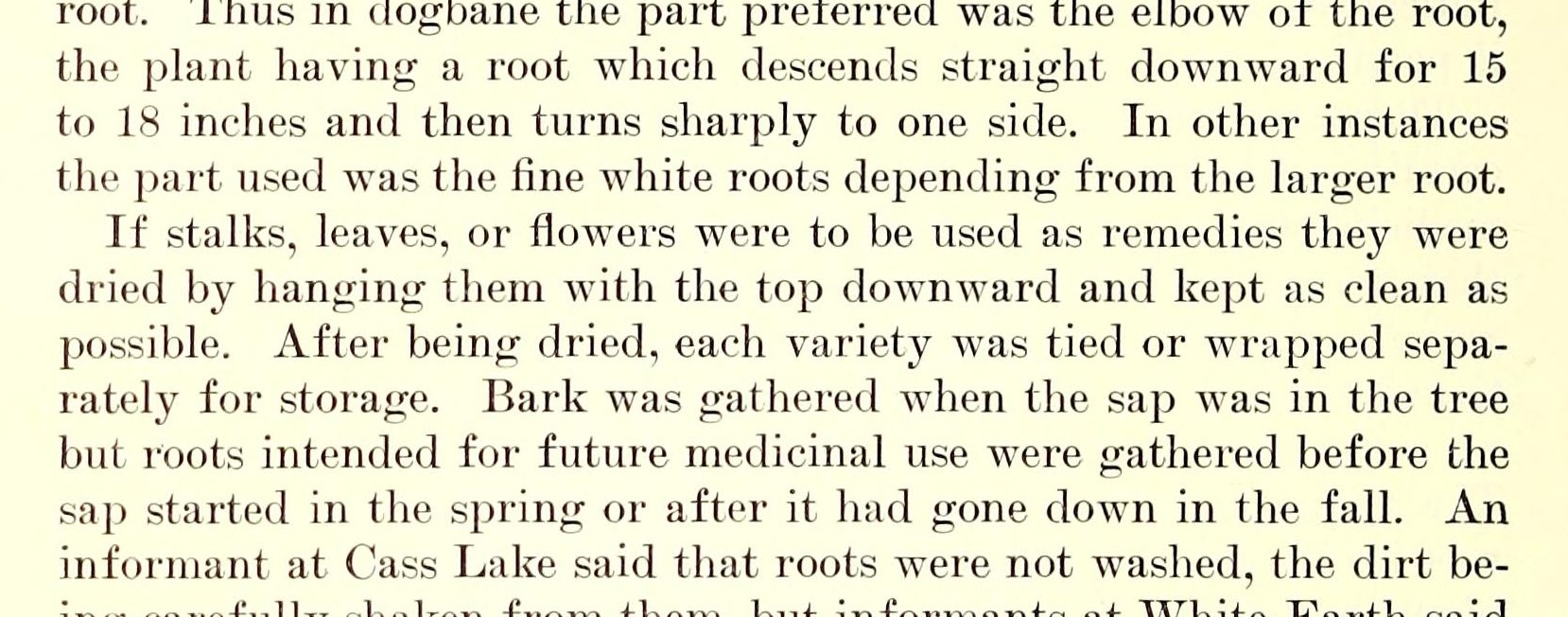
Densmore (p. 326): stalks, leaves and flowers "were dried by hanging them with the top downward and kept as clean as possible." Tie small bunches and hang them in a dry, airy place (ours).
ལག་ཆས་དགོས་མཁོ:
 རས་བལ་གྱི་ཐག་ཁུ།
7
7
Wrap separately and bag
Wrap separately and bag
"After being dried, each variety was tied or wrapped separately for storage" (p. 326). Keep the bundles in a bag.
ལག་ཆས་དགོས་མཁོ:
རས་བལ་གྱི་ཐག་ཁུ། ལི་ནེན་གྱི་ཁུག་མ།
8
8
Prepare for use
Prepare for use
Densmore (p. 328): "Stalks, leaves, and flowers were usually pulverized" like roots; a mortar works too (ours).
ལག་ཆས་དགོས་མཁོ:
 གཏུན་ཁུང་དང་གཏུན་ཤིང་།
9
9
Troubleshooting
Troubleshooting
Problems and fixes.
Flow
Loading...
10
10
Sources and honest limits
Sources and honest limits
Frances Densmore, Uses of Plants by the Chippewa Indians (1928), pp. 326, 328, 350-351 and 354-355; N. L. Britton and A. Brown, An Illustrated Flora of the Northern United States, vol. III (1913), p. 133; USDA ARS, Monarda fistulosa var. mollis. The knife, drying screen, twine and mortar are ours. Be sure of the plant before cutting, and take only where it is plentiful and allowed. The cover shows a wild bergamot flower head (Jasper Shide, CC0, Wikimedia Commons). Not made by us yet.
ལག་ཆས་དགོས་མཁོ
4- ས་ཆ་འཛིན
- ས་ཆ་འཛིན
- ས་ཆ་འཛིན
- ས་ཆ་འཛིན
མཐུད་སྦྲེལ་བིལུ་པིརིན་ཊི་རྫས་རིགས
བིལུ་པིརིན་ཊི་འདི་གིས་བཟོ་མི
CC0 སྤྱི་དབང
བིལུ་པིརིན་ཊི་འདི་CC0 འོག་བཀྲམས་ཡོད། ཁྱེད་རང་གིས་ཆོག་མཆན་མ་བཞེས་པར་ཕབ་ལེན་དང་བཟོ་བཅོས། བགོ་བཤའ། དགོས་མཁོ་གང་ལའང་བཀོལ་སྤྱོད་བྱས་ཆོག
བཟོ་མཁན་ལ་རྒྱབ་སྐྱོར་བྱེད་པའི་ཆེད་ཁོང་ཚོའི་བིལུ་པིརིན་ཊི་བརྒྱུད་ཐོན་སྐྱེད་ཉོ། བཟོ་མཁན་གྱིས བཟོ་མཁན་གྱི་ཁེ་ཕོགས ཚོང་པས་གཏན་འཁེལ་བྱས་པ། ཡང་ན་བིལུ་པིརིན་ཊི་འདིའི་པར་གསར་བཟོས་ཏེ་ཁྱེད་རང་གི་བིལུ་པིརིན་ཊི་ནང་མཐུད་སྦྲེལ་བྱས་ཏེ་ཡོང་སྒོ་བགོ་བཤའ་བྱེད།