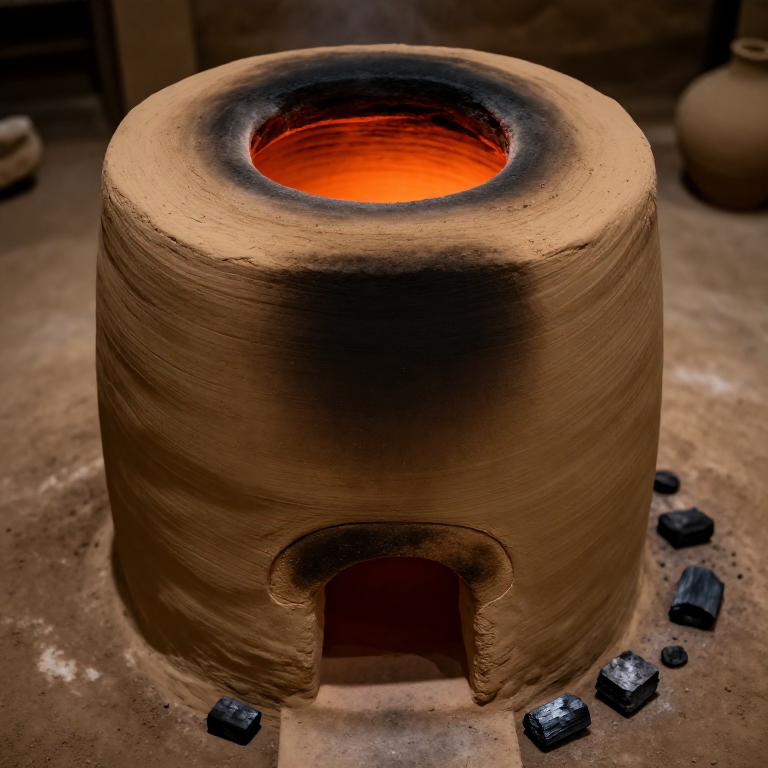


Building a Clay Kiln — The First Furnace
ལམ་སྟོན
Prerequisite: Making Charcoal
Prerequisite: Making Charcoal
You need charcoal for kiln curing and temperature testing. Complete this blueprint first:
སྔོན་འགྲོ་བིལུ་པིརིན་ཊི
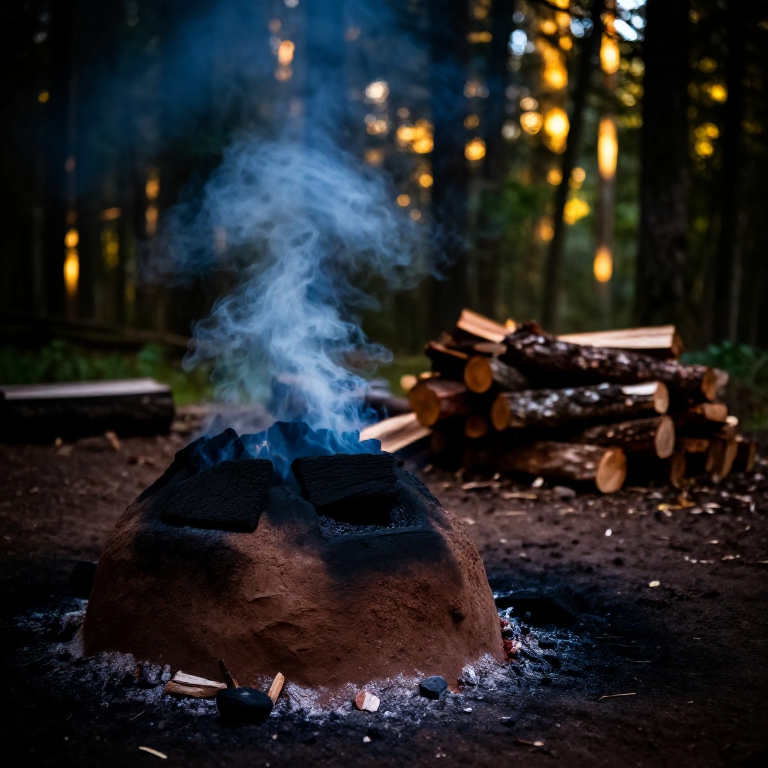
Making Charcoal — The First Chemical Process
གོམ་པ་འདིའི་རྫས་རིགས:
 ནུས་ལྡན་སོལ་བའི་ཕྱེ་མ།10 kg
ལག་ཆས་དགོས་མཁོ:
 རྐོ་ཆས (རྡོ། རྭ་ཅོ་ཡང་ན་ཤིང་།)
 རྡོ་ལེབ (སྐྱོགས་མ / དབྱིབས་བཟོའི་ལག་ཆས)
 རླུང་བུག་བཟོ་ཤིང་།
 རླུང་སྦུད་ཆས།
Kiln Design — The Updraft Principle
Kiln Design — The Updraft Principle
How a Kiln Works
A kiln is an insulated chamber with controlled airflow. The key principles:
- Insulation: Thick clay walls retain heat instead of radiating it into the air
- Updraft: Hot air rises. Cold air enters at the bottom (tuyère), hot exhaust exits at the top
- Forced air: Bellows or blowpipe through the tuyère increases oxygen supply, raising temperature
Design Specifications
We're building a simple updraft kiln — the oldest furnace design, dating to ~6000 BCE:
- Internal diameter: 30-40cm (enough for a crucible)
- Wall thickness: 8-12cm (thicker = better insulation)
- Height: 50-60cm
- Tuyère hole: 3-5cm diameter, positioned 5cm above the floor, angled slightly downward
- Top opening: 15-20cm diameter (partially sealed during operation)
གོམ་པ་འདིའི་རྫས་རིགས:
 འདམ།30 kg
Building the Kiln
Building the Kiln
Preparing the Clay Body
- Mix clay and sand in a 3:1 ratio (by volume). Too much clay = cracks. Too much sand = crumbles.
- Add chopped straw (~5% by volume). Knead thoroughly until uniform.
- The mix should hold its shape when squeezed but not stick excessively to your hands.
- Let the mix rest overnight (improves workability).
Construction Method: Coil Building
- Foundation: Create a flat clay disc, 50cm diameter, 5cm thick. This is the kiln floor.
- First course: Roll clay into coils (5cm diameter). Layer the first ring on the edge of the floor disc, 30cm inside diameter.
- Build up: Add coils one at a time, smoothing each into the one below. Overlap joints for strength.
- Tuyère: At the 3rd course (~5cm above floor), insert a stick horizontally to form the air inlet hole. Remove after clay firms up.
- Taper inward: From 30cm at the bottom, narrow gradually to 15-20cm at the top over 50cm height.
- Smooth interior: The inside surface should be as smooth as possible — rough surfaces waste heat.
Drying
Critical: Let the kiln dry slowly over 3-5 days in shade. Rapid drying causes cracks. If cracks appear, patch with wet clay.
གོམ་པ་འདིའི་རྫས་རིགས:
 བྱེ་མ་སྦོམ (བཟོ་བསྐྲུན/རྫ་མཁན)10 kg
 རང་བཞིན་གྱི་འདྲེས་རྫས།2 kgཚ་དྲོད་དམའ་བའི་རྫ་ས།30 kg
 མེ་ཐེག་སོ་ཕག20 pc
First Firing — Curing the Kiln
First Firing — Curing the Kiln
The Curing Process
A new clay kiln must be cured with progressively hotter fires. Jumping straight to full temperature will crack it.
- Day 1 — Warm fire: Small wood fire inside. Target ~200°C. Maintain for 2 hours. This drives out remaining moisture.
- Day 2 — Medium fire: Larger wood fire. Target ~500°C. Maintain for 2 hours. The straw burns out, creating insulating air pockets.
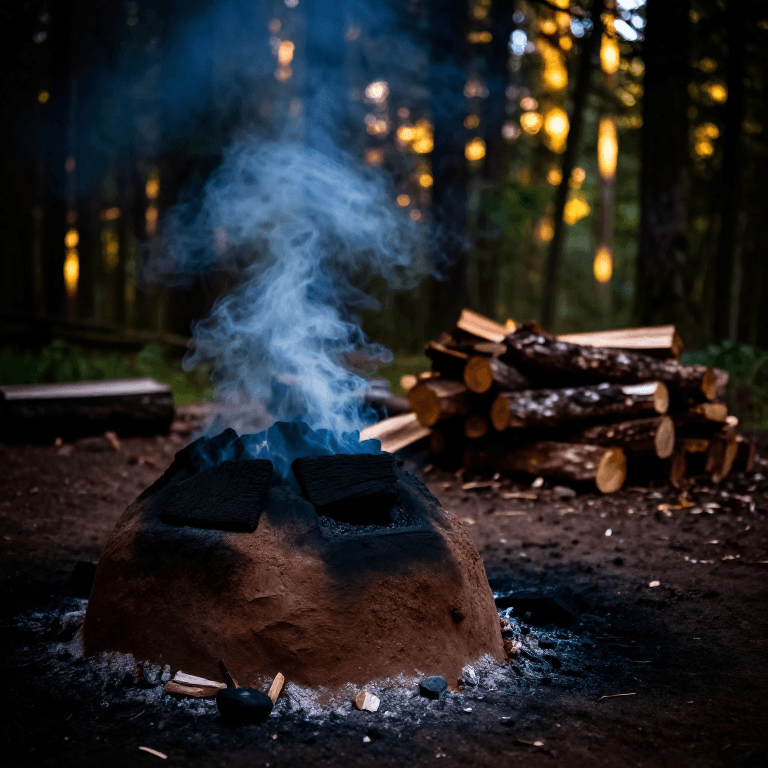
- Day 3 — Full fire: Switch to charcoal. Use bellows through the tuyère. Target 900-1000°C. The clay vitrifies (partially melts and hardens). The kiln is now a permanent structure.
Temperature Indicators (No Thermometer Needed)
| Temperature | Visual Indicator |
|---|---|
| ~400°C | Dull red glow barely visible in darkness |
| ~600°C | Dark cherry red, visible in shade |
| ~800°C | Cherry red, clearly visible |
| ~1000°C | Bright orange |
| ~1100°C | Yellow-orange (copper smelting range) |
Your Kiln is Ready
After curing, your kiln can reach 1100°C+ with charcoal and bellows. This unlocks:
- Pottery firing (900°C)
- Copper smelting from ore (1085°C)
- Bronze casting (~950°C)
- And eventually, with modifications, iron smelting (~1250°C)
གོམ་པ་འདིའི་རྫས་རིགས:
ནུས་ལྡན་སོལ་བའི་ཕྱེ་མ།10 kgརང་བཞིན་གྱི་འདྲེས་རྫས།2 kgཚ་དྲོད་དམའ་བའི་རྫ་ས།30 kgརྫས་རིགས
6- 30 kgས་ཆ་འཛིན
- ས་ཆ་འཛིན
- ས་ཆ་འཛིན
- 20 དུམ་བུ།ས་ཆ་འཛིན
- ས་ཆ་འཛིན
- 10 kgས་ཆ་འཛིན
ལག་ཆས་དགོས་མཁོ
4- ས་ཆ་འཛིན
- ས་ཆ་འཛིན
- ས་ཆ་འཛིན
མཐུད་སྦྲེལ་བིལུ་པིརིན་ཊི་རྫས་རིགས


CC0 སྤྱི་དབང
བིལུ་པིརིན་ཊི་འདི་CC0 འོག་བཀྲམས་ཡོད། ཁྱེད་རང་གིས་ཆོག་མཆན་མ་བཞེས་པར་ཕབ་ལེན་དང་བཟོ་བཅོས། བགོ་བཤའ། དགོས་མཁོ་གང་ལའང་བཀོལ་སྤྱོད་བྱས་ཆོག
བཟོ་མཁན་ལ་རྒྱབ་སྐྱོར་བྱེད་པའི་ཆེད་ཁོང་ཚོའི་བིལུ་པིརིན་ཊི་བརྒྱུད་ཐོན་སྐྱེད་ཉོ། བཟོ་མཁན་གྱིས བཟོ་མཁན་གྱི་ཁེ་ཕོགས ཚོང་པས་གཏན་འཁེལ་བྱས་པ། ཡང་ན་བིལུ་པིརིན་ཊི་འདིའི་པར་གསར་བཟོས་ཏེ་ཁྱེད་རང་གི་བིལུ་པིརིན་ཊི་ནང་མཐུད་སྦྲེལ་བྱས་ཏེ་ཡོང་སྒོ་བགོ་བཤའ་བྱེད།