

Slinky
A steel spring stores energy when you stretch or squeeze it and gives it back when you let go. Wind that spring long and loose enough, from soft flat wire, and something surprising happens: it becomes a toy that walks down stairs by itself, tumbling end over end in a mesmerising flow.
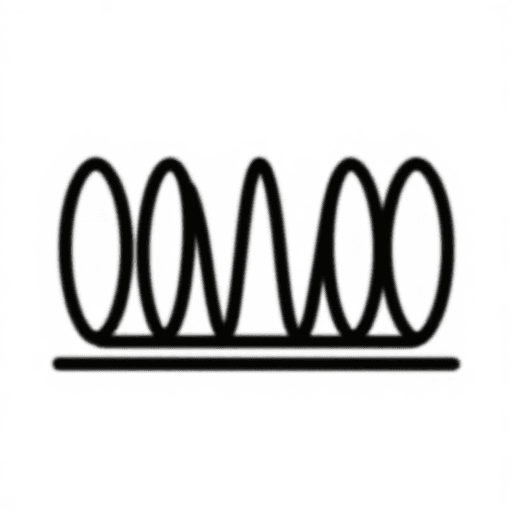
Richard James's toy is simply a long, loose helical spring — but the loose winding is what makes it walk. Tip the top coils over an edge and their weight, pulled by gravity, drags through the spring; the tension flips the whole coil over onto the next step, and then again, and again — each step lending the spring just enough energy to make the next flip.
Beyond the walk, that same loose spring is one of the best ways to SEE a wave. Flick one end and you can watch a pulse of compression, or a sideways ripple, travel visibly down its length, bounce off the far end, and come back — physics you can hold in your hand.
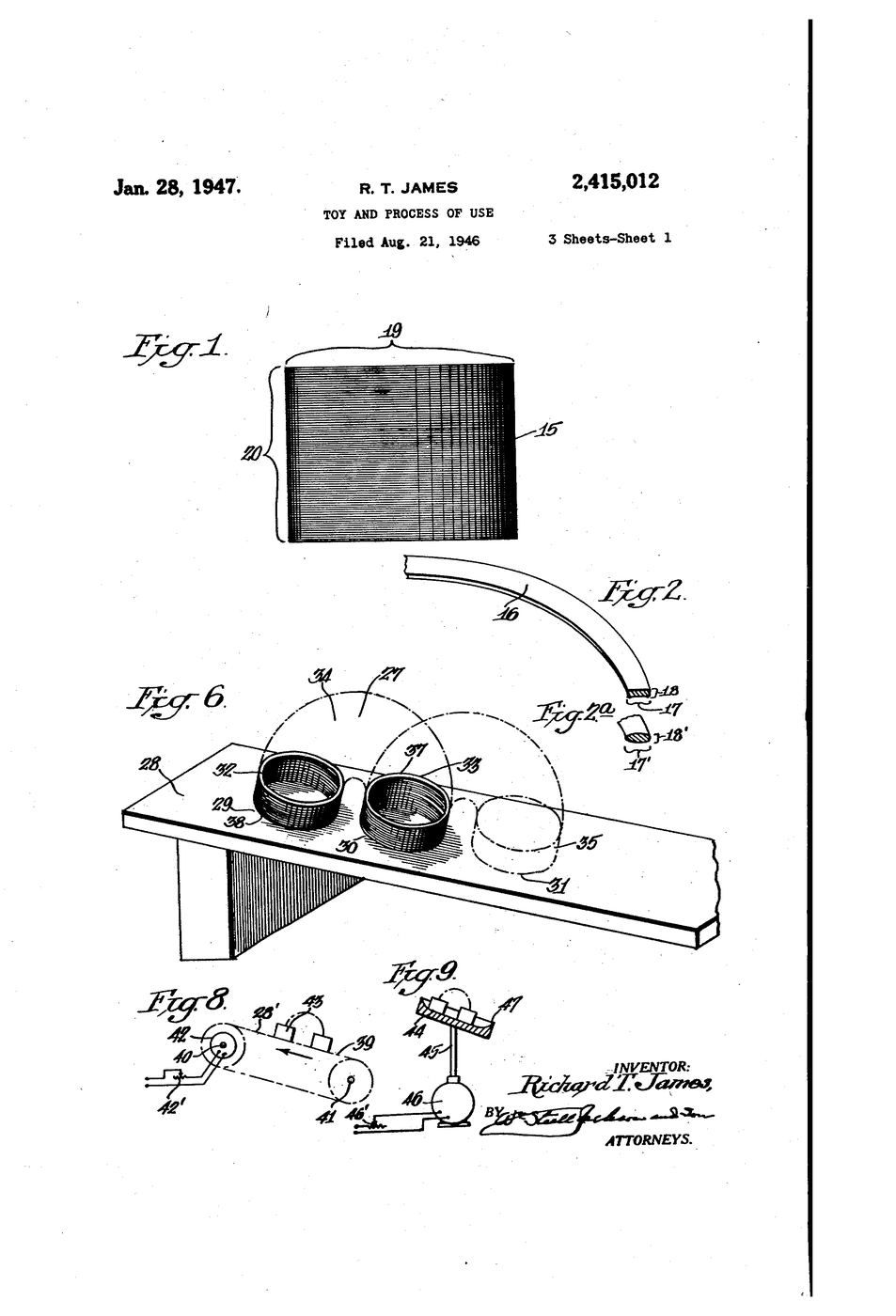
US Patent 2,415,012, "Toy and Process of Use", granted 28 January 1947 to Richard T. James, who discovered it when a tension spring fell off a shelf and 'walked' across the floor.
ལམ་སྟོན
Read the claim: a loose helical spring that walks
Read the claim: a loose helical spring that walks
James claims a long, loosely wound helical spring and a way of using it — set it toppling and it walks down steps on its own. Note: the LOOSE winding is essential.
Wind a long, loose coil
Wind a long, loose coil
Wind flat spring-steel wire in many close turns around a tube, then slide it off. You want many soft coils, barely holding their own weight — not a tight, stiff spring.
གོམ་པ་འདིའི་རྫས་རིགས:
 སྤིང་ལྕགས་ཀྱི་སྐུད་པ།3 མི་ཊར།
ལག་ཆས་དགོས་མཁོ:
 ཤིང་གི་གཟེར་ཤིང་།
Feel the spring store energy
Feel the spring store energy
Stretch the coil and let go: it springs back. Pull twice as far, feel twice the force — a spring stores energy in proportion to how far you stretch it (Hooke's law).
ལག་ཆས་དགོས་མཁོ:
 ཤུགས་འཇལ་ཆས་ (སི་པིརིང་སྲང)
Stand it at the top of a step
Stand it at the top of a step
Stand the coil upright at the edge of a step and tip its top coils over onto the step below. Let go.
Watch it walk
Watch it walk
The toppled coils pull the rest after them and the spring flips over onto the lower step — then does it again, walking down step after step. Watch a few full cycles.
Understand the walk
Understand the walk
Each flip works because gravity pulls the leading coils down and the spring's tension drags the trailing coils after them, arching the whole spring over its own front end — an energy hand-off, step by step. Write down the cycle.
Send a compression wave
Send a compression wave
Lay the spring long on a smooth floor, hold both ends, and push one end sharply in and out. A squeeze — a band of bunched coils — travels down the spring to the far end. That is a longitudinal wave, like sound.
Send a sideways wave
Send a sideways wave
Now flick one end sideways. A side-to-side ripple travels along instead — a transverse wave, like light or a wave on a rope. Same spring, two kinds of wave.
Watch the wave reflect
Watch the wave reflect
Send a single pulse and watch it hit the far (held) end and bounce back, flipped over. Waves reflect off boundaries — the spring makes it visible and slow enough to see.
Change the tension, change the speed
Change the tension, change the speed
Stretch the spring tighter and send the pulse again: it travels faster. A tauter medium carries waves quicker — the same reason a tight guitar string sounds a higher note.
Break the walk on purpose
Break the walk on purpose
Try walking a stiff, tightly wound spring down the step: it won't — it is too rigid to flip. Only a loose, floppy coil has the gentle, heavy droop the walk needs. This proves why the winding matters.
Find the right slope
Find the right slope
Try shallow and steep steps. Too shallow and it stalls; too steep and it falls in a heap. There is a sweet range of step height where each flip hands on just enough energy for the next — the toy's whole trick.
History & Context — the spring that walked off a shelf
History & Context — the spring that walked off a shelf
The patent. US 2,415,012, "Toy and Process of Use", granted 28 January 1947 to Richard T. James. James was a US Navy engineer working on springs to steady instruments on rolling ships. In 1943 a tension spring fell off a shelf and, instead of clattering to the floor, tumbled end over end down a stack of books and kept going. He spent two years finding the exact wire, coil count and tension that made a spring walk reliably; his wife Betty named it Slinky. It launched in 1945 and sold hundreds of millions.
The physics is two lessons in one toy. The walk is a gravity-and-tension energy hand-off: the front coils droop over the edge, their weight pulls the trailing coils through the spring, and the whole thing arches over its own leading end onto the next step, arriving with just enough energy to repeat — a self-sustaining flip that only works for a very loose, soft coil (steps 6, 11) on a slope in a narrow sweet spot (step 12). The waves are even more useful: a loose long spring is the classic classroom demonstrator of wave motion — you can send a visible compression pulse (a longitudinal wave, like sound, step 7) or a sideways ripple (a transverse wave, like light, step 8), watch it reflect off the far end (step 9), and see it speed up under tension (step 10). What a physicist usually draws on a board, the Slinky lets you hold and watch in slow motion.
Where it sits. Beyond the toy shelf, Slinkys have flown on the Space Shuttle to study springs in weightlessness, served as makeshift radio antennas, and appeared in a thousand physics classrooms as the friendliest wave machine ever made. It is a rare invention that is at once a beloved toy and a genuine scientific instrument — and it all came from noticing how a spring fell off a shelf.
རྫས་རིགས
1- 3 མི་ཊར།ས་ཆ་འཛིན
ལག་ཆས་དགོས་མཁོ
2- ས་ཆ་འཛིན
- ས་ཆ་འཛིན
བིལུ་པིརིན་ཊི་འདི་གིས་བཟོ་མི
CC0 སྤྱི་དབང
བིལུ་པིརིན་ཊི་འདི་CC0 འོག་བཀྲམས་ཡོད། ཁྱེད་རང་གིས་ཆོག་མཆན་མ་བཞེས་པར་ཕབ་ལེན་དང་བཟོ་བཅོས། བགོ་བཤའ། དགོས་མཁོ་གང་ལའང་བཀོལ་སྤྱོད་བྱས་ཆོག
བཟོ་མཁན་ལ་རྒྱབ་སྐྱོར་བྱེད་པའི་ཆེད་ཁོང་ཚོའི་བིལུ་པིརིན་ཊི་བརྒྱུད་ཐོན་སྐྱེད་ཉོ། བཟོ་མཁན་གྱིས བཟོ་མཁན་གྱི་ཁེ་ཕོགས ཚོང་པས་གཏན་འཁེལ་བྱས་པ། ཡང་ན་བིལུ་པིརིན་ཊི་འདིའི་པར་གསར་བཟོས་ཏེ་ཁྱེད་རང་གི་བིལུ་པིརིན་ཊི་ནང་མཐུད་སྦྲེལ་བྱས་ཏེ་ཡོང་སྒོ་བགོ་བཤའ་བྱེད།