སྒྱུ་རྩལ
མཛེས་སྡུག་དང་བདེ་ཐང
བཟོ་རིག
རིག་གནས་དང་ལོ་རྒྱུས
དགའ་སྟོན
ཁོར་ཡུག
ཟས་དང་བཏུང་རྫས
ཕྱིར་འཕྲུལ་རིག
ཚན་རིག
རྩེད་འགྲན
རིག་རྩལ
གྱོན་རུང
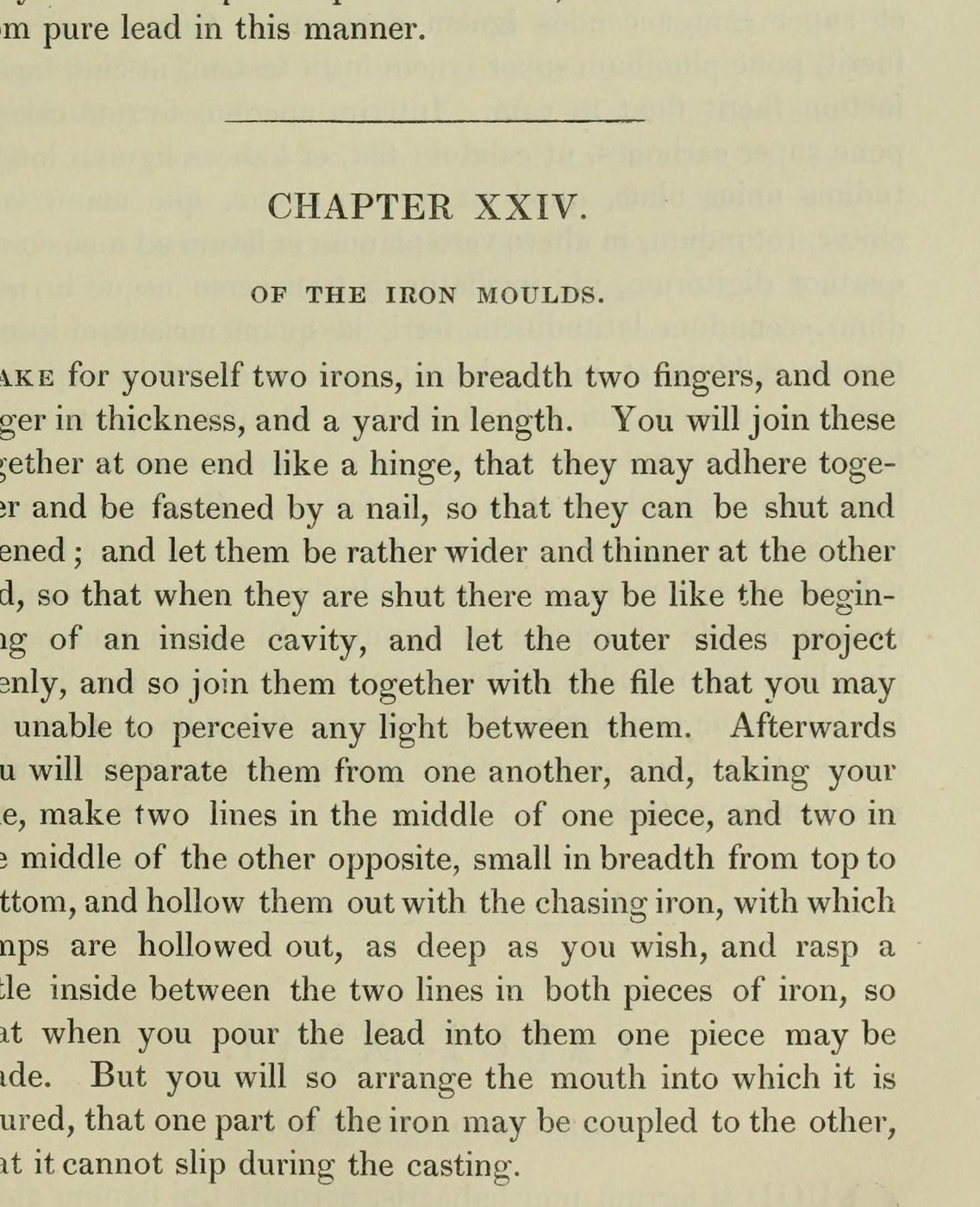


Lead Came Mould: Two Hinged Grooved Irons (Theophilus, tr. Hendrie 1847)
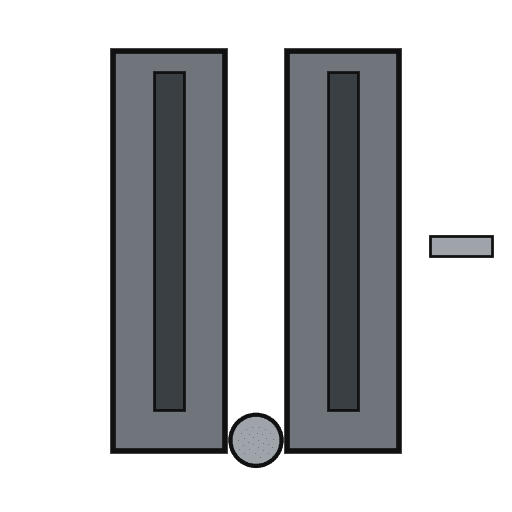
The iron mould in which Theophilus cast the lead rods of glass windows: two irons a yard long, hinged at one end with a nail, filed to close without a chink of light, with a matching groove hollowed down the middle of each so the lead poured in makes one rod.
The free ends are made a little wider and thinner to form a pouring mouth, and the two halves are keyed so they cannot slip while casting.
Source: Theophilus, De Diversis Artibus, Book II, ch. XXIV, tr. R. Hendrie (1847), p. 147. Picture: the chapter.
བར་མ
Unknown
ལམ་སྟོན
1
1
Hinge the irons
Hinge the irons
Take two irons two fingers broad, one finger thick and a yard long. Join them at one end like a hinge, fastened by a nail, so they open and shut. Make the other ends a little wider and thinner, so that when shut they form the start of a cavity (the pouring mouth). Not given: how the hinge is formed.
གོམ་པ་འདིའི་རྫས་རིགས:
 བརྡུངས་ལྕགས་ཀྱི་ཕྲང2 2 fingers x 1 finger x 1 yard
 གཟེར་བུ1 hinge pin
ལག་ཆས་དགོས་མཁོ:
 ཐོ་བ།
2
2
Fit the faces
Fit the faces
Let the outer sides lie even, and file the two faces together until no light shows between them when closed.
ལག་ཆས་དགོས་མཁོ:
 ལྕགས་ཀྱི་དར་མ།
3
3
Cut the grooves
Cut the grooves
Open the irons. With a rule, draw two narrow lines down the middle of each piece, facing each other, from top to bottom. Hollow out between them with the chasing iron used for hollowing lamps, as deep as you wish, and rasp a little inside so the lead poured in makes one piece. Key the mouth so one half cannot slip on the other while casting.
ལག་ཆས་དགོས་མཁོ:
 ཐིག་ཤིང་།
 ལྕགས་ཀྱི་སོ་རྩུབ།
བིལུ་པིརིན་ཊི་འདི་གིས་བཟོ་མི
CC0 སྤྱི་དབང
བིལུ་པིརིན་ཊི་འདི་CC0 འོག་བཀྲམས་ཡོད། ཁྱེད་རང་གིས་ཆོག་མཆན་མ་བཞེས་པར་ཕབ་ལེན་དང་བཟོ་བཅོས། བགོ་བཤའ། དགོས་མཁོ་གང་ལའང་བཀོལ་སྤྱོད་བྱས་ཆོག
བཟོ་མཁན་ལ་རྒྱབ་སྐྱོར་བྱེད་པའི་ཆེད་ཁོང་ཚོའི་བིལུ་པིརིན་ཊི་བརྒྱུད་ཐོན་སྐྱེད་ཉོ། བཟོ་མཁན་གྱིས བཟོ་མཁན་གྱི་ཁེ་ཕོགས ཚོང་པས་གཏན་འཁེལ་བྱས་པ། ཡང་ན་བིལུ་པིརིན་ཊི་འདིའི་པར་གསར་བཟོས་ཏེ་ཁྱེད་རང་གི་བིལུ་པིརིན་ཊི་ནང་མཐུད་སྦྲེལ་བྱས་ཏེ་ཡོང་སྒོ་བགོ་བཤའ་བྱེད།