སྒྱུ་རྩལ
མཛེས་སྡུག་དང་བདེ་ཐང
བཟོ་རིག
རིག་གནས་དང་ལོ་རྒྱུས
དགའ་སྟོན
ཁོར་ཡུག
ཟས་དང་བཏུང་རྫས
ཕྱིར་འཕྲུལ་རིག
ཚན་རིག
རྩེད་འགྲན
རིག་རྩལ
གྱོན་རུང
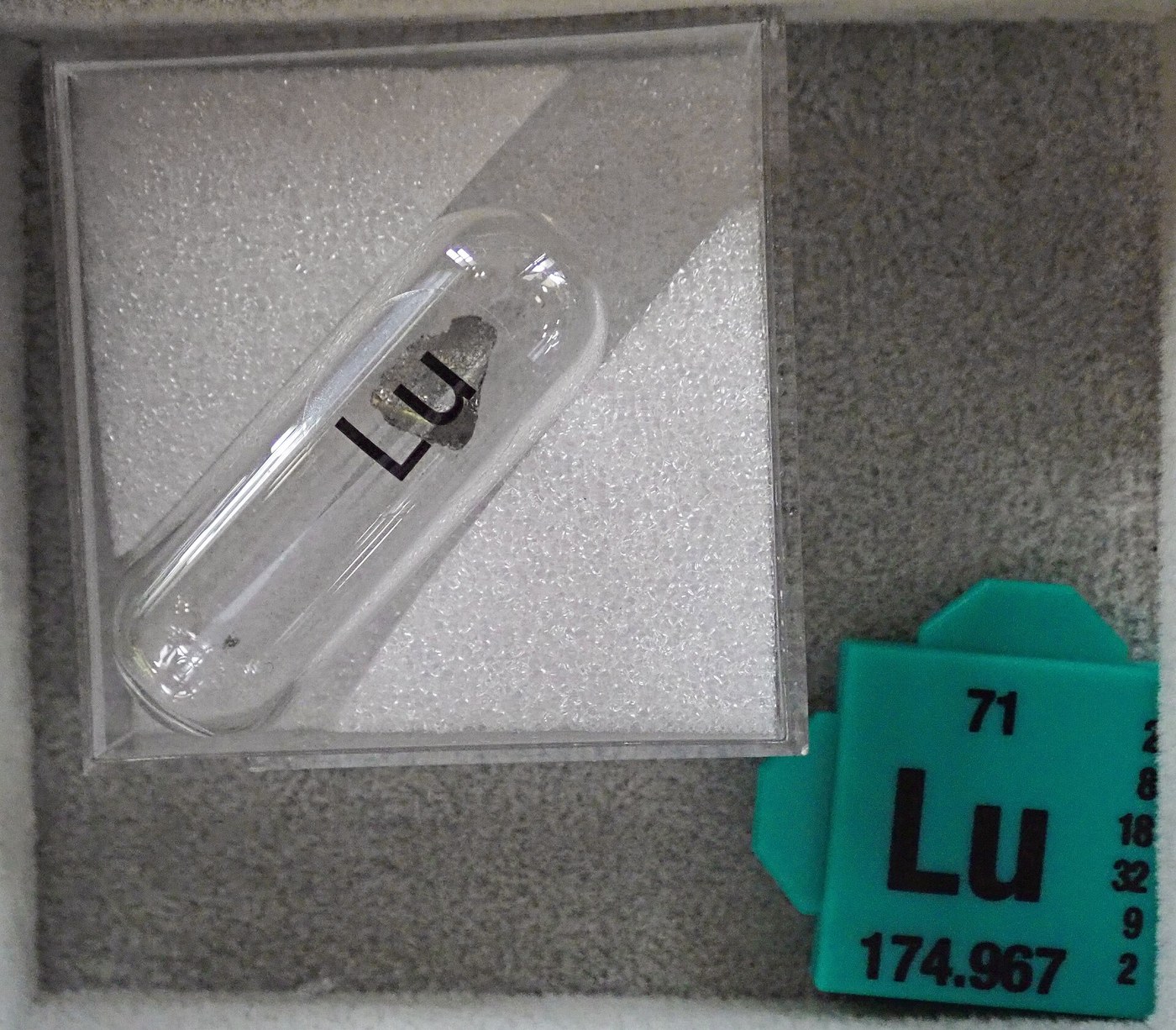

Lutetium: Fluoride Reduced by Calcium in Tantalum under Argon, Remelted under Half an Atmosphere of Argon (Spedding and Daane, 1954)
How Ames Laboratory first made lutetium metal. Calcium takes the fluorine from lutetium fluoride at high heat in a tantalum crucible under argon, leaving the metal under a slag of calcium fluoride. It is then remelted to drive off the leftover calcium, under half an atmosphere of argon because lutetium itself evaporates at its melting point.
Result: lutetium metal holding less than 150 ppm calcium. The paper puts lutetium's melting point at about 1650-1750 °C.
Source: F. H. Spedding and A. H. Daane, The Rare Earth Metals, Journal of Metals 6 (1954), pp. 504-507: lutetium was reduced under the same conditions the paper gives for yttrium. Not given: the lutetium charge and calcium excess, heating times, and how the 1550 °C of the yttrium run was matched to lutetium's higher melting point. Picture: Wikimedia Commons.
མཐོ་རིམ
1 day
ལམ་སྟོན
1
1
Charge the crucible
Charge the crucible
Put anhydrous lutetium fluoride and calcium into a tantalum crucible. Ames made its crucibles from tantalum sheet 2.0 or 2.5 mils thick, welded under helium. Not given: how much calcium.
གོམ་པ་འདིའི་རྫས་རིགས:
 ལུ་ཊི་ཤི་ཡམ་ ཕལོ་རའིཌ།1 as required
ལག་ཆས་དགོས་མཁོ:
 ཀེལ་སིཡམ་
 ཊེན་ཊ་ལམ་ཞུ་སྣོད།
2
2
Reduce under argon
Reduce under argon
Heat the charge in an argon atmosphere to the yttrium conditions, 1550 °C; the paper reports lutetium fluoride reduced this way 'with the same results', a well-fused mass of metal under the slag. In the yttrium run there was no boiling, only a light wisp of fumes, and the metal held under 2 % calcium. Ours: an induction furnace, as the same paper uses for open tantalum crucibles.
ལག་ཆས་དགོས་མཁོ:
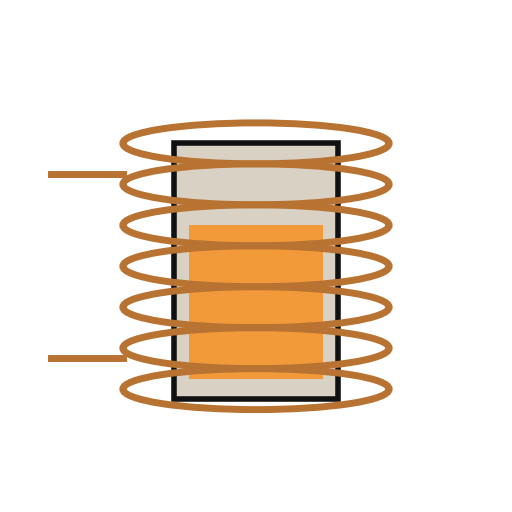 ཨིན་ཌག་ཤཱན་ཐབ།
 ཨར་གཱོན།ཊེན་ཊ་ལམ་ཞུ་སྣོད།
3
3
Remelt under half an atmosphere of argon
Remelt under half an atmosphere of argon
Remelt the metal to boil off the calcium. Lutetium has an appreciable vapour pressure at its melting point, so keep a partial pressure of one-half an atmosphere of argon in the system to stop it distilling out of the crucible. At these temperatures the calcium still escapes: under 150 ppm stays in the metal.
ལག་ཆས་དགོས་མཁོ:
ཨིན་ཌག་ཤཱན་ཐབ། རླུང་འཐེན་འཕྲུལ་ཆས།ཨར་གཱོན།ཊེན་ཊ་ལམ་ཞུ་སྣོད།
རྫས་རིགས
1- 1 as requiredས་ཆ་འཛིན
བིལུ་པིརིན་ཊི་འདི་གིས་བཟོ་མི

འབྲེལ་ཡོད་བིལུ་པིརིན་ཊི
བིལུ་པིརིན་ཊི་འདི་ཚུ་ཐབས་ལམ་དང་རྫས་རིགས། སྤྱི་ཆོས་བགོ་བཤའ་བྱེད
ཉེན་ཁ་ཅན།
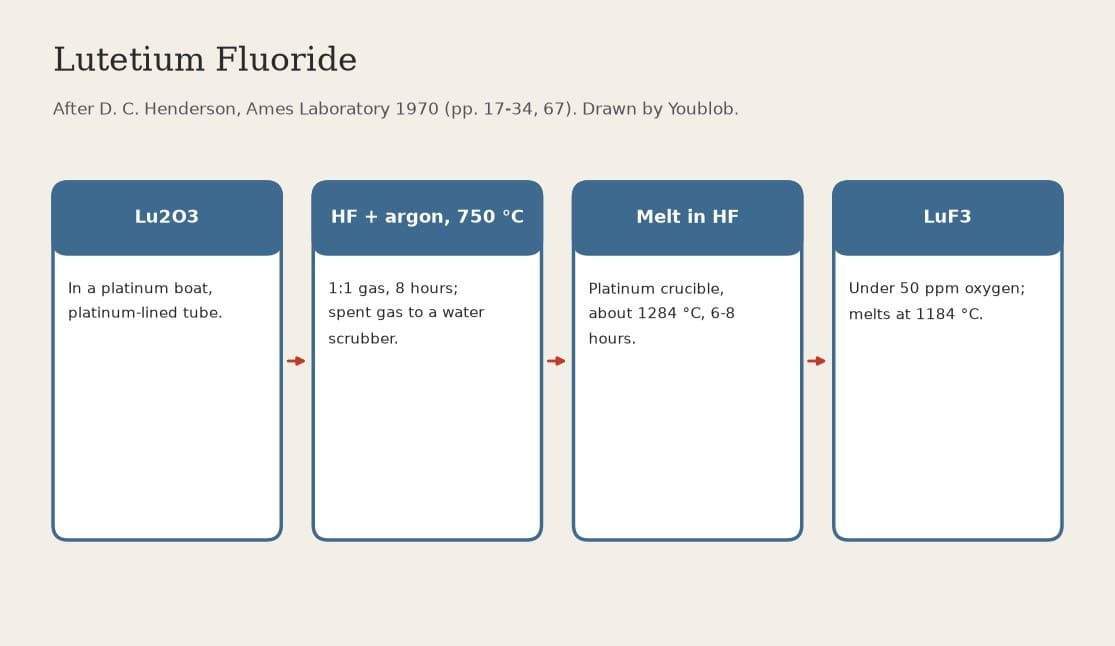
Lutetium Fluoride: Oxide Converted in HF and Argon at 750 °C, then Melted in HF to Remove the Last Oxygen (Henderson, Ames 1970)
Charlie གྱིས
སྲོག་མེད
༡
༠
༠
༠
༠
༠
ཉེན་ཁ་ཅན།
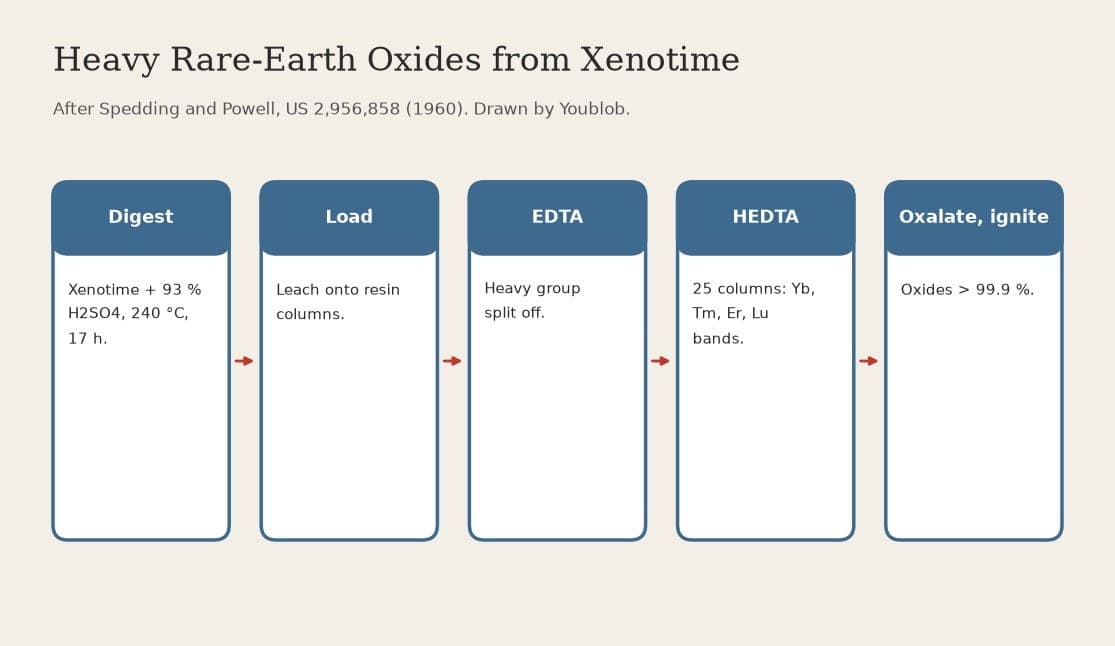
Erbium, Ytterbium, Thulium and Lutetium Oxides: Xenotime Separated on Ion Exchange Columns with EDTA and HEDTA (Spedding and Powell, US 2,956,858)
Charlie གྱིས
སྲོག་མེད
༢
༠
༠
༠
༠
༠
ཉེན་ཁ་ཅན།
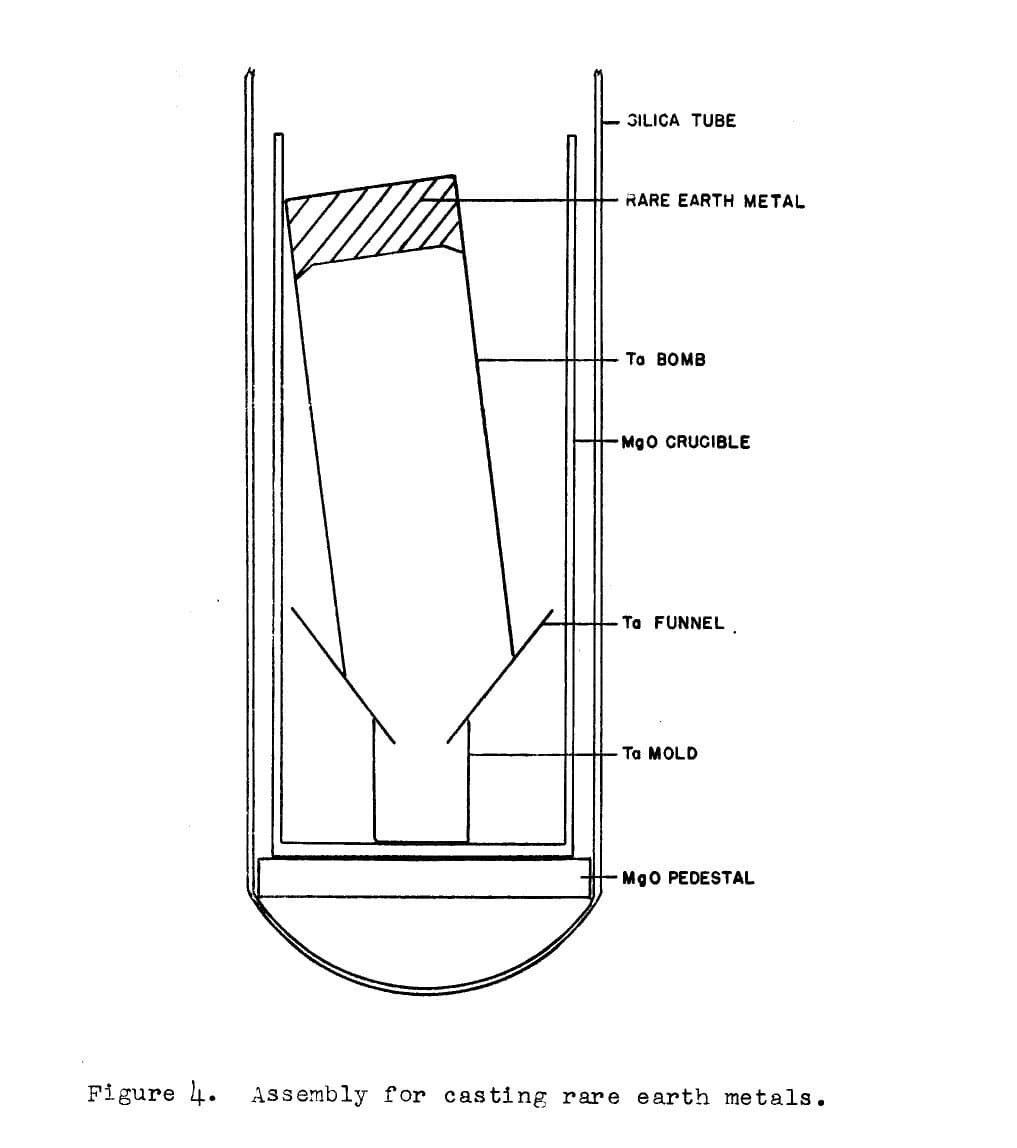
Lanthanum: Anhydrous Chloride Reduced with Calcium in a Tantalum Bomb under Argon, then Vacuum Cast (Daane, Ames 1950)
Charlie གྱིས
སྲོག་མེད
༡
༠
༠
༠
༠
༠
CC0 སྤྱི་དབང
བིལུ་པིརིན་ཊི་འདི་CC0 འོག་བཀྲམས་ཡོད། ཁྱེད་རང་གིས་ཆོག་མཆན་མ་བཞེས་པར་ཕབ་ལེན་དང་བཟོ་བཅོས། བགོ་བཤའ། དགོས་མཁོ་གང་ལའང་བཀོལ་སྤྱོད་བྱས་ཆོག
བཟོ་མཁན་ལ་རྒྱབ་སྐྱོར་བྱེད་པའི་ཆེད་ཁོང་ཚོའི་བིལུ་པིརིན་ཊི་བརྒྱུད་ཐོན་སྐྱེད་ཉོ། བཟོ་མཁན་གྱིས བཟོ་མཁན་གྱི་ཁེ་ཕོགས ཚོང་པས་གཏན་འཁེལ་བྱས་པ། ཡང་ན་བིལུ་པིརིན་ཊི་འདིའི་པར་གསར་བཟོས་ཏེ་ཁྱེད་རང་གི་བིལུ་པིརིན་ཊི་ནང་མཐུད་སྦྲེལ་བྱས་ཏེ་ཡོང་སྒོ་བགོ་བཤའ་བྱེད།