སྒྱུ་རྩལ
མཛེས་སྡུག་དང་བདེ་ཐང
བཟོ་རིག
རིག་གནས་དང་ལོ་རྒྱུས
དགའ་སྟོན
ཁོར་ཡུག
ཟས་དང་བཏུང་རྫས
ཕྱིར་འཕྲུལ་རིག
ཚན་རིག
རྩེད་འགྲན
རིག་རྩལ
གྱོན་རུང
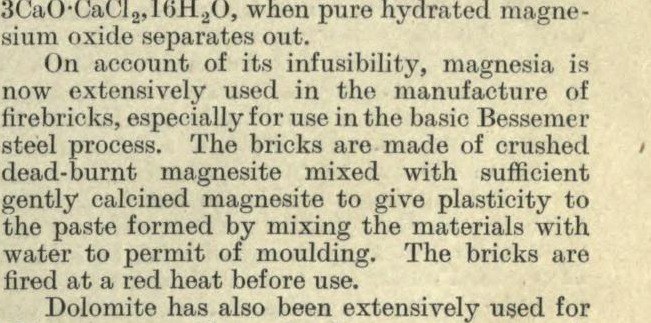


Magnesite Blocks: Dead-Burnt and Gently Calcined Magnesite Moulded and Fired at a Red Heat (Thorpe 1912)
Magnesite blocks are refractory bricks of burnt magnesia, which hardly melts; they lined basic Bessemer converters and electric steel furnaces.
Thorpe's Dictionary of Applied Chemistry (1912) gives the method in one sentence: crushed dead-burnt magnesite, mixed with enough gently calcined magnesite to make the paste plastic, wetted, moulded and fired at a red heat.
He gives no heat for dead-burning, no proportions and no brick size; those are unknown here.
Source: Thorpe, Dictionary of Applied Chemistry vol. III (1912), MAGNESIUM, p. 371. Picture: that passage.
བར་མ
Several days with firing
ལམ་སྟོན
1
1
Read Thorpe
Read Thorpe
"The bricks are made of crushed dead-burnt magnesite mixed with sufficient gently calcined magnesite to give plasticity to the paste formed by mixing the materials with water to permit of moulding. The bricks are fired at a red heat before use."
2
2
Burn two lots of magnesite
Burn two lots of magnesite
Burn most of the magnesite hard, until it is dead-burnt; Thorpe gives no temperature for this (unknown). Calcine a smaller lot gently: he describes commercial magnesia as made by gentle but prolonged heating of the carbonate.
གོམ་པ་འདིའི་རྫས་རིགས:
 མེག་ནི་སཱའིཊ་1 as required
ལག་ཆས་དགོས་མཁོ:
 ཐབ།
 ཚ་བཟོད་ཀྱི་ལག་ཤུབས།
3
3
Crush and mix
Crush and mix
Crush the dead-burnt magnesite. Mix it with just enough of the gently calcined magnesite to make the paste plastic, and work in water until it can be moulded. The proportions are not given.
གོམ་པ་འདིའི་རྫས་རིགས:
 ཆུ།1 to a mouldable paste
ལག་ཆས་དགོས་མཁོ:
 གཏུན་དང་གཏུན་ཤིང་།
 ཐལ་བའི་ཁ་རས།
4
4
Mould the blocks
Mould the blocks
Press the paste into a brick mould and turn out the blocks. The size of the blocks is not given (unknown).
ལག་ཆས་དགོས་མཁོ:
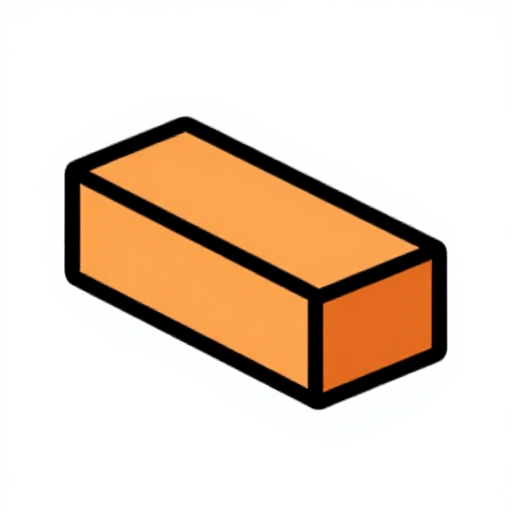 ཤིང་གི་སོ་ཕག་དཔེ་གཟུགས
 མ་ཤེས་པའི་ཚད།
5
5
Fire at a red heat
Fire at a red heat
Fire the blocks at a red heat before use; the firing time is not given.
ལག་ཆས་དགོས་མཁོ:
ཐབ།ཚ་བཟོད་ཀྱི་ལག་ཤུབས།6
6
History and honest limits
History and honest limits
Thorpe notes that magnesia melts only in the oxyhydrogen blowpipe flame, which is why it took over the lining of basic steel furnaces, and that dolomite was also used for the purpose. Magnesia made in the wet way from by-products was, he quotes Wedding, too dear for bricks.
He gives the recipe in principle only: the dead-burning heat, the proportions, the block size and the firing time are not given; the tools are ours.
ལག་ཆས་དགོས་མཁོ
6- ས་ཆ་འཛིན
- ས་ཆ་འཛིན
- ས་ཆ་འཛིན
- ས་ཆ་འཛིན
- ས་ཆ་འཛིན
- ས་ཆ་འཛིན
བིལུ་པིརིན་ཊི་འདི་གིས་བཟོ་མི
CC0 སྤྱི་དབང
བིལུ་པིརིན་ཊི་འདི་CC0 འོག་བཀྲམས་ཡོད། ཁྱེད་རང་གིས་ཆོག་མཆན་མ་བཞེས་པར་ཕབ་ལེན་དང་བཟོ་བཅོས། བགོ་བཤའ། དགོས་མཁོ་གང་ལའང་བཀོལ་སྤྱོད་བྱས་ཆོག
བཟོ་མཁན་ལ་རྒྱབ་སྐྱོར་བྱེད་པའི་ཆེད་ཁོང་ཚོའི་བིལུ་པིརིན་ཊི་བརྒྱུད་ཐོན་སྐྱེད་ཉོ། བཟོ་མཁན་གྱིས བཟོ་མཁན་གྱི་ཁེ་ཕོགས ཚོང་པས་གཏན་འཁེལ་བྱས་པ། ཡང་ན་བིལུ་པིརིན་ཊི་འདིའི་པར་གསར་བཟོས་ཏེ་ཁྱེད་རང་གི་བིལུ་པིརིན་ཊི་ནང་མཐུད་སྦྲེལ་བྱས་ཏེ་ཡོང་སྒོ་བགོ་བཤའ་བྱེད།