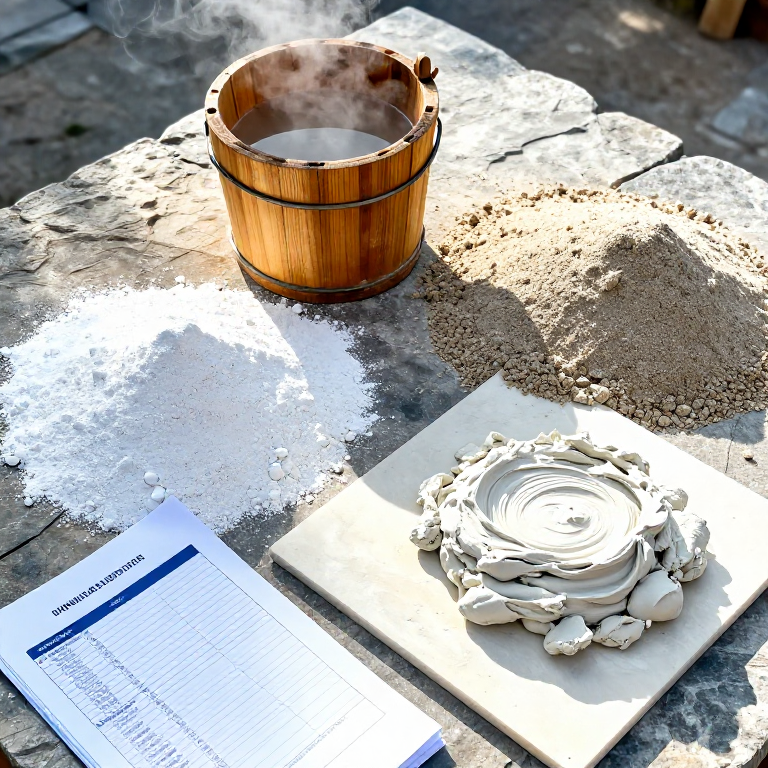


Slaking and Mixing Lime Mortar — Medieval Building Cement
ལམ་སྟོན
Slake the Quicklime
Slake the Quicklime
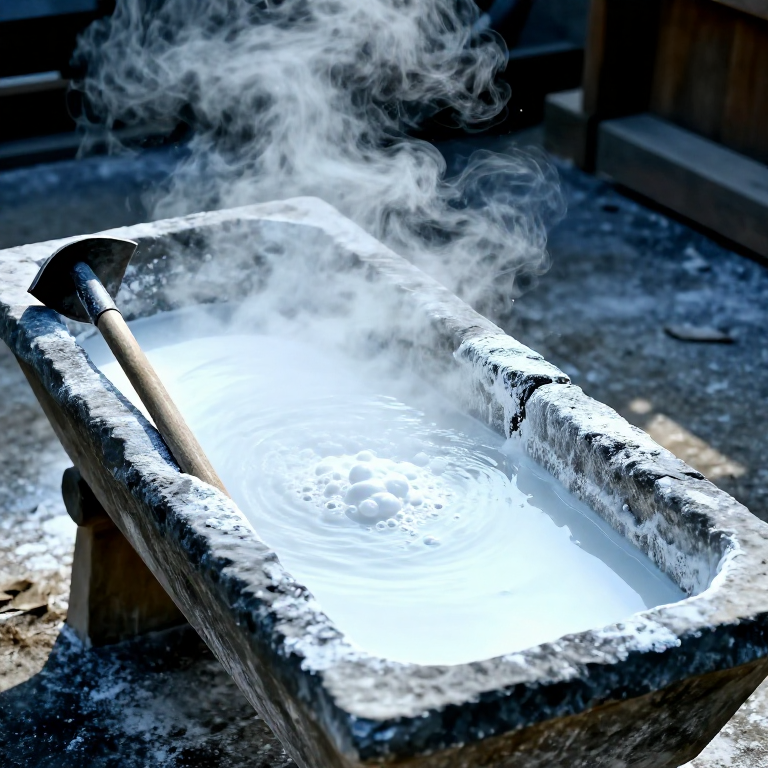
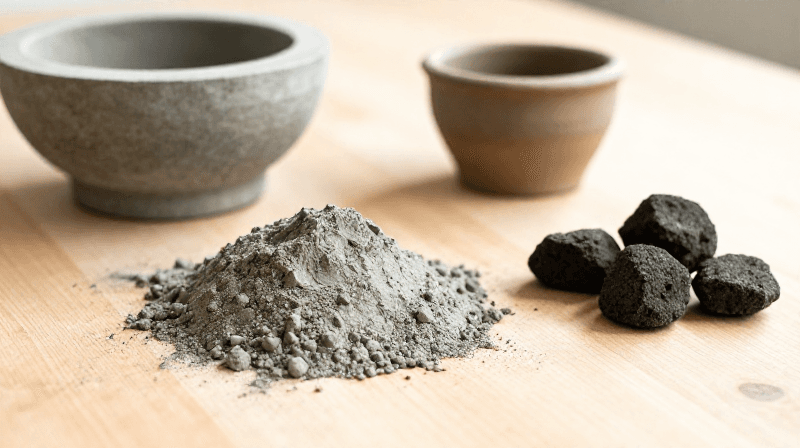
Place the quicklime lumps in a large stone or metal trough outdoors. Gradually add water while standing well back — the reaction between calcium oxide and water is violently exothermic, producing temperatures exceeding 150 degrees Celsius with vigorous boiling, steaming, and spattering. Add water in stages, stirring with a long-handled hoe between additions. The quicklime will swell, crack, and eventually dissolve into a thick, white paste of calcium hydroxide (slaked lime putty). Continue adding water and stirring until all lumps have dissolved and the mixture has the consistency of thick cream. Wear heavy gloves and eye protection at all times — both quicklime and slaked lime cause severe chemical burns on contact with skin and eyes. Medieval lime-burners and masons suffered frequent burns from this process.
གོམ་པ་འདིའི་རྫས་རིགས:
 ཆུ།large quantity (approximately 3 litres per kg of quicklime) དུམ་བུ།
 བྱེ་མ་ཞིབ་མོ།15-20 kg kg
ལག་ཆས་དགོས་མཁོ:
 རྡོ།
རྡོ། སྦྱོར་ནིའི་ཐོག་རྐོ།
 དྲ་ཕྲ་བའི་ཇའི་ཚག་མ།
 ཨར་གཅལ་སྦྱོར་ནིའི་ལེབ
Sieve and Age the Lime Putty
Sieve and Age the Lime Putty
Pass the slaked lime through a fine-mesh sieve to remove any unburned limestone fragments or impurities that could cause pitting in the mortar. The sieved lime putty should be smooth, white, and free of lumps. For the best quality mortar, store the putty submerged under a thin layer of water in a covered pit or container and age it for at least three months — medieval master masons specified aged lime, and some specified putty aged for years. During ageing, the calcium hydroxide crystals become progressively finer, producing a more workable and stronger mortar. The ageing pits at medieval cathedral construction sites were sometimes maintained for decades, with older lime drawn from the bottom as new lime was added at the top.
Mix the Mortar
Mix the Mortar
Combine the lime putty with sharp sand (angular, washed, well-graded) at a ratio of approximately 1 part lime putty to 2.5 to 3 parts sand by volume. Mix on a board or in a trough using a hoe, folding and chopping the mixture until the mortar is a uniform colour and consistency with no streaks of unmixed lime or pockets of dry sand. The sand provides bulk and aggregate strength, while the lime acts as the binder. The mortar should be stiff enough to hold its shape on a trowel without slumping, but soft enough to spread easily into joints. Add water sparingly if needed — too-wet mortar is weak when set. The sand must be sharp (angular) rather than round (beach sand), as angular grains interlock and bond with the lime more effectively.
Apply and Work the Mortar
Apply and Work the Mortar
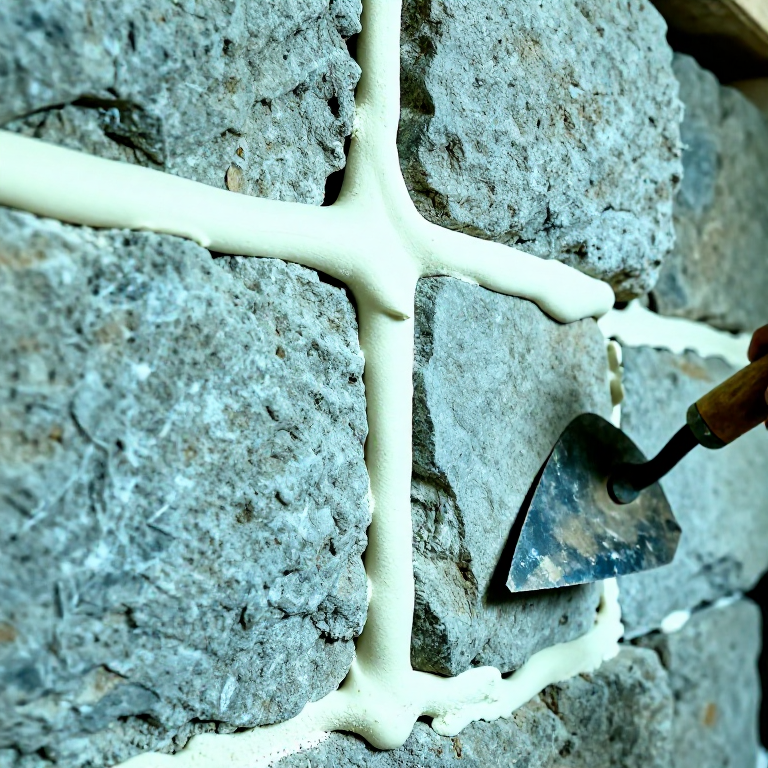
Spread the mortar into stone or brick joints using a trowel, filling each joint completely with no voids. Press each stone or brick firmly into the mortar bed and tap with a mallet to seat it. Scrape excess mortar from the joint face and re-use it. Lime mortar remains workable for several hours — much longer than modern cement-based mortars — which was advantageous for medieval masons working complex curved and carved stonework that required careful adjustment. The extended working time also means lime mortar is self-healing: minor cracks that form during settlement can re-seal as dissolved calcium hydroxide migrates into the crack and re-carbonates. This autogenous healing property is one reason medieval lime mortar buildings have survived so much longer than many modern Portland cement structures.
Curing by Carbonation
Curing by Carbonation
Lime mortar does not set by a chemical reaction with water (as Portland cement does); instead, it sets by carbonation — the calcium hydroxide slowly reacts with carbon dioxide from the atmosphere to form calcium carbonate (limestone), essentially returning to the same chemical composition as the original limestone that was burned to make the quicklime. This process is slow: the surface of a mortar joint may be firm within days, but full carbonation of a thick wall may take months or years, progressing gradually from the outside inward. Keep freshly mortared walls damp for the first week to prevent the surface from drying too fast, which causes cracking and weak carbonation. In cold weather, protect the mortar from freezing — ice crystals in uncarbonated mortar cause permanent damage. The long curing time of lime mortar is compensated by its exceptional longevity — medieval lime mortar in good conditions lasts for many centuries, remaining slightly flexible and self-healing throughout its life.
རྫས་རིགས
4- Quicklime (calcium oxide), freshly burned5 kg kg
- large quantity (approximately 3 litres per kg of quicklime) དུམ་བུ།ས་ཆ་འཛིན
- 15-20 kg kgས་ཆ་འཛིན
- 5 kg དུམ་བུ།ས་ཆ་འཛིན
ལག་ཆས་དགོས་མཁོ
9- ས་ཆ་འཛིན
- ས་ཆ་འཛིན
- Protective gloves and eye protection
- ས་ཆ་འཛིན
- ས་ཆ་འཛིན
- ས་ཆ་འཛིན
- ས་ཆ་འཛིན
- ས་ཆ་འཛིན
- ས་ཆ་འཛིན
མཐུད་སྦྲེལ་བིལུ་པིརིན་ཊི་རྫས་རིགས
བིལུ་པིརིན་ཊི་འདི་གིས་བཟོ་མི

འབྲེལ་ཡོད་བིལུ་པིརིན་ཊི
བིལུ་པིརིན་ཊི་འདི་ཚུ་ཐབས་ལམ་དང་རྫས་རིགས། སྤྱི་ཆོས་བགོ་བཤའ་བྱེད
CC0 སྤྱི་དབང
བིལུ་པིརིན་ཊི་འདི་CC0 འོག་བཀྲམས་ཡོད། ཁྱེད་རང་གིས་ཆོག་མཆན་མ་བཞེས་པར་ཕབ་ལེན་དང་བཟོ་བཅོས། བགོ་བཤའ། དགོས་མཁོ་གང་ལའང་བཀོལ་སྤྱོད་བྱས་ཆོག
བཟོ་མཁན་ལ་རྒྱབ་སྐྱོར་བྱེད་པའི་ཆེད་ཁོང་ཚོའི་བིལུ་པིརིན་ཊི་བརྒྱུད་ཐོན་སྐྱེད་ཉོ། བཟོ་མཁན་གྱིས བཟོ་མཁན་གྱི་ཁེ་ཕོགས ཚོང་པས་གཏན་འཁེལ་བྱས་པ། ཡང་ན་བིལུ་པིརིན་ཊི་འདིའི་པར་གསར་བཟོས་ཏེ་ཁྱེད་རང་གི་བིལུ་པིརིན་ཊི་ནང་མཐུད་སྦྲེལ་བྱས་ཏེ་ཡོང་སྒོ་བགོ་བཤའ་བྱེད།