སྒྱུ་རྩལ
མཛེས་སྡུག་དང་བདེ་ཐང
བཟོ་རིག
རིག་གནས་དང་ལོ་རྒྱུས
དགའ་སྟོན
ཁོར་ཡུག
ཟས་དང་བཏུང་རྫས
ཕྱིར་འཕྲུལ་རིག
ཚན་རིག
རྩེད་འགྲན
རིག་རྩལ
གྱོན་རུང
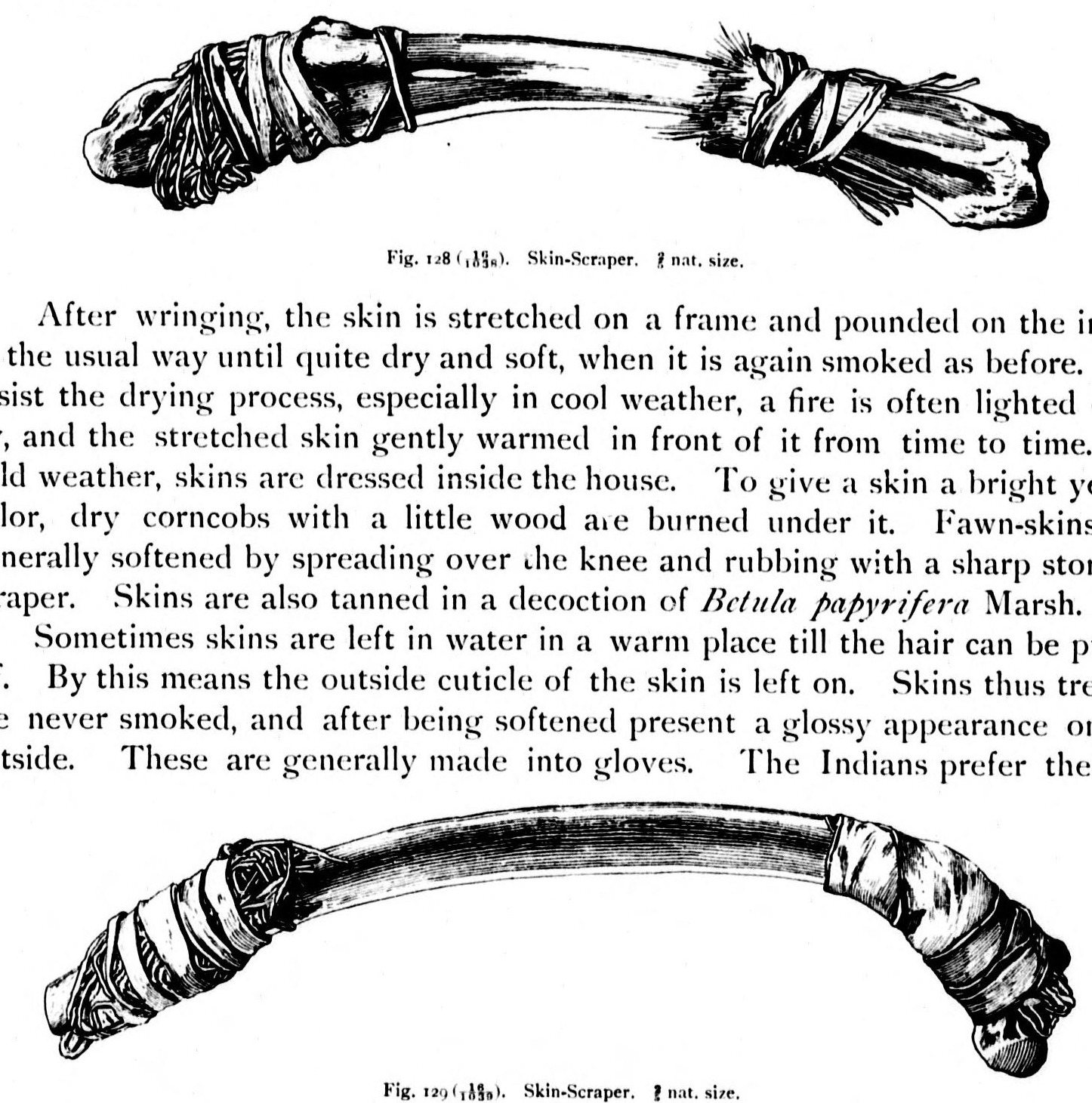

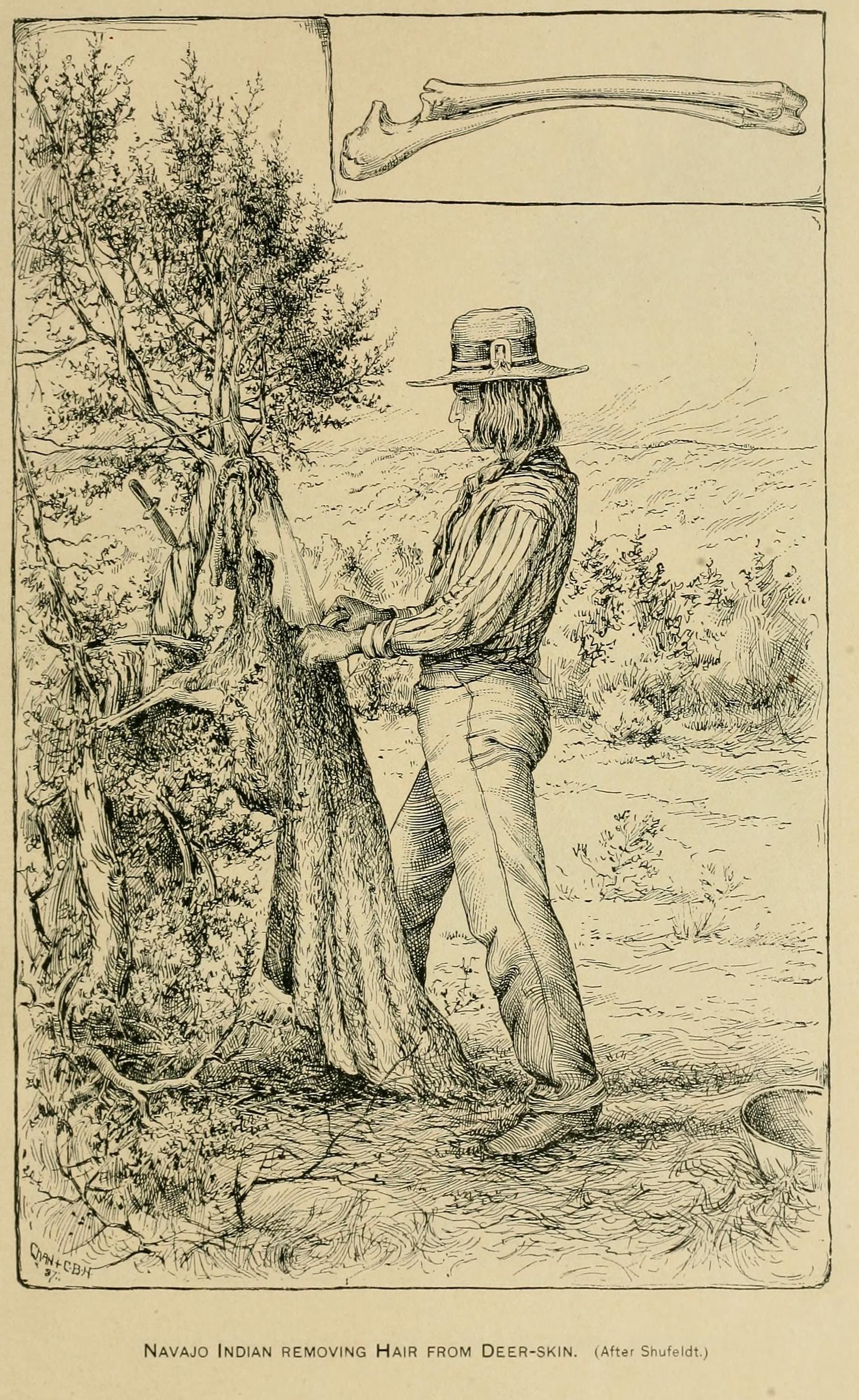
Navajo Hide Scraper from a Deer's Foreleg: Ulna Edge Sharpened with a Knife, Joints Left as Handles (Shufeldt, 1888)
The Navajo (Diné) hair-shaving tool Dr. R. W. Shufeldt described: the joined ulna and radius of a deer's foreleg, the thin back edge of the ulna scraped sharper with a knife, the elbow at one end and the wrist joint at the other kept on as handles, used two-handed like a spokeshave; it rarely cuts the hide.
འགོ་བཙུགས
An hour
ལམ་སྟོན
1
1
Read Shufeldt
Read Shufeldt
"The ulna and radius of this limb are wonderfully well fitted to perform the work of this natural spoke-shave."
2
2
Clean the bone
Clean the bone
Take the fused ulna and radius of a deer's foreleg, leaving the elbow end (olecranon) and the wrist end with its small bones attached. Ours: simmer and scrape it clean of meat and let it dry.
གོམ་པ་འདིའི་རྫས་རིགས:
 སེམས་ཅན་གྱི་རུས་པ་རིང་མོ།1 དུམ་བུ།
 ཆུ།1 དུམ་བུ།
ལག་ཆས་དགོས་མཁོ:
 ལྕགས་ཀྱི་ཇམ་སྦྱིས།
 མེའི་དོང་།
 གྲི།
3
3
Sharpen the edge
Sharpen the edge
Scrape the thin back edge of the ulna with a knife to make it sharper.
ལག་ཆས་དགོས་མཁོ:
གྲི།4
4
Grip and use
Grip and use
Hold it by both ends (ours: wrap the ends with rawhide for grip) and draw it over the hide on the beam like a spokeshave to shave off hair and outer skin.
གོམ་པ་འདིའི་རྫས་རིགས:
 པགས་ཀོ་རྗེན་མའི་ཕྲེང་བུ།1 དུམ་བུ།
ལག་ཆས་དགོས་མཁོ:
གྲི།5
5
Troubleshooting
Troubleshooting
Scraper troubleshooting.
Flow
Loading...
6
6
History and honest limits
History and honest limits
From R. W. Shufeldt's account in Otis T. Mason, "Aboriginal Skin-Dressing", **Report of the U.S. National Museum for 1889** (1891), pp. 575-576 (checked on the archive.org scan aboriginalskindr00maso). Some tanners used a deer or beef rib, or a dull hunting knife, instead. The hero shows the same tool type drawn by James Teit for the Thompson people (1900, Figs. 128-129). Cleaning the bone and the grip wrapping are ours.
རྫས་རིགས
3- 1 དུམ་བུ།ས་ཆ་འཛིན
- 1 དུམ་བུ།ས་ཆ་འཛིན
- 1 དུམ་བུ།ས་ཆ་འཛིན
བིལུ་པིརིན་ཊི་འདི་གིས་བཟོ་མི

འབྲེལ་ཡོད་བིལུ་པིརིན་ཊི
བིལུ་པིརིན་ཊི་འདི་ཚུ་ཐབས་ལམ་དང་རྫས་རིགས། སྤྱི་ཆོས་བགོ་བཤའ་བྱེད
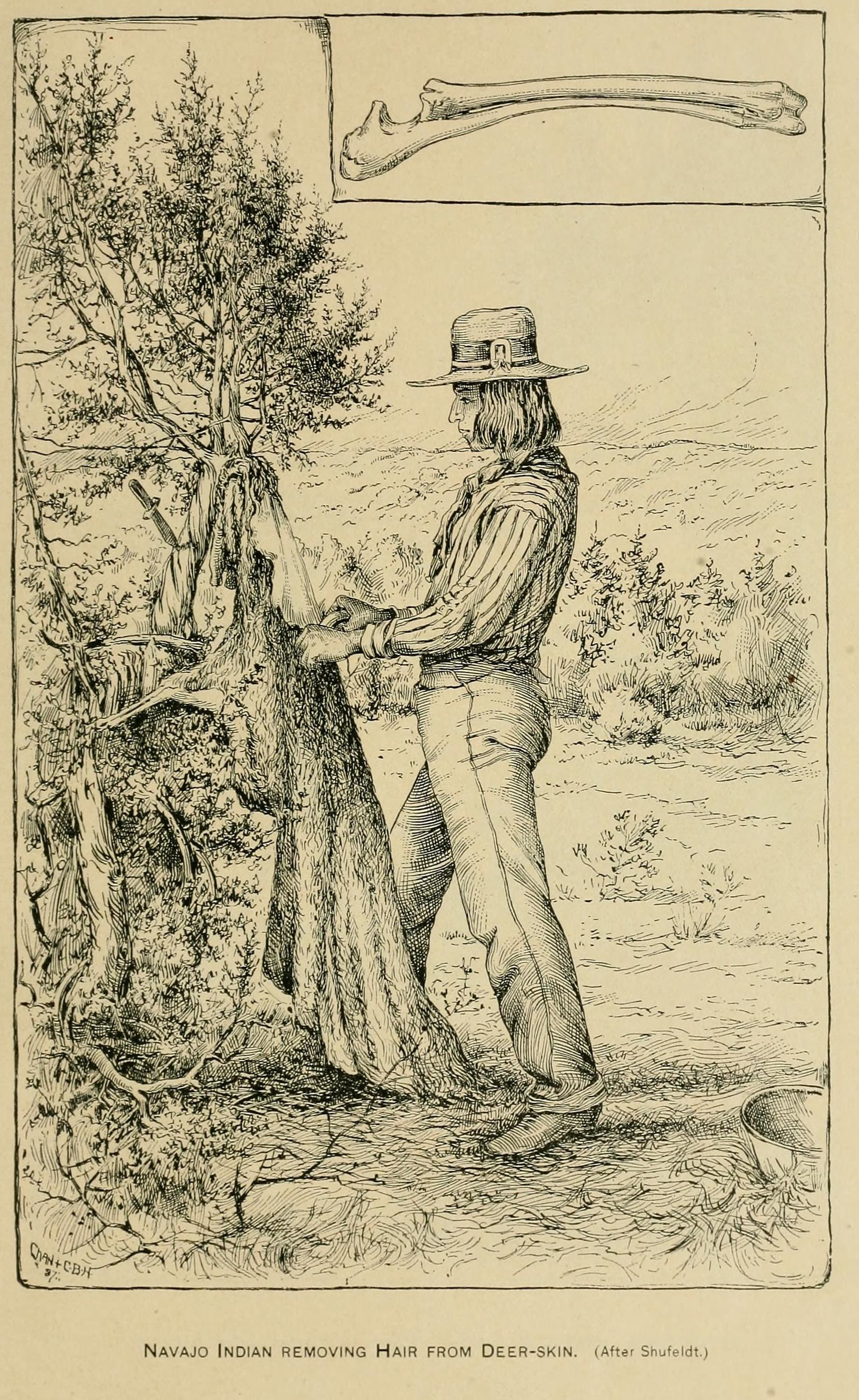
Navajo Buckskin: Hair Shaved with the Deer's Own Foreleg Bone, Brains Rubbed In, Wrung on a Tree, Worked Dry over the Feet (Shufeldt, 1888)
Tex གྱིས
རས་དང་པགས
༧
༠
༠
༠
༠
༠
Navajo Hide-Scraping Beam: Small Pine Trunk Barked on One Side, Notched and Braced Under a Tree Limb (Shufeldt, 1888)
Woody གྱིས
ཤིང་བཟོ
༡༡
༠
༠
༠
༠
༠
CC0 སྤྱི་དབང
བིལུ་པིརིན་ཊི་འདི་CC0 འོག་བཀྲམས་ཡོད། ཁྱེད་རང་གིས་ཆོག་མཆན་མ་བཞེས་པར་ཕབ་ལེན་དང་བཟོ་བཅོས། བགོ་བཤའ། དགོས་མཁོ་གང་ལའང་བཀོལ་སྤྱོད་བྱས་ཆོག
བཟོ་མཁན་ལ་རྒྱབ་སྐྱོར་བྱེད་པའི་ཆེད་ཁོང་ཚོའི་བིལུ་པིརིན་ཊི་བརྒྱུད་ཐོན་སྐྱེད་ཉོ། བཟོ་མཁན་གྱིས བཟོ་མཁན་གྱི་ཁེ་ཕོགས ཚོང་པས་གཏན་འཁེལ་བྱས་པ། ཡང་ན་བིལུ་པིརིན་ཊི་འདིའི་པར་གསར་བཟོས་ཏེ་ཁྱེད་རང་གི་བིལུ་པིརིན་ཊི་ནང་མཐུད་སྦྲེལ་བྱས་ཏེ་ཡོང་སྒོ་བགོ་བཤའ་བྱེད།