སྒྱུ་རྩལ
མཛེས་སྡུག་དང་བདེ་ཐང
བཟོ་རིག
རིག་གནས་དང་ལོ་རྒྱུས
དགའ་སྟོན
ཁོར་ཡུག
ཟས་དང་བཏུང་རྫས
ཕྱིར་འཕྲུལ་རིག
ཚན་རིག
རྩེད་འགྲན
རིག་རྩལ
གྱོན་རུང
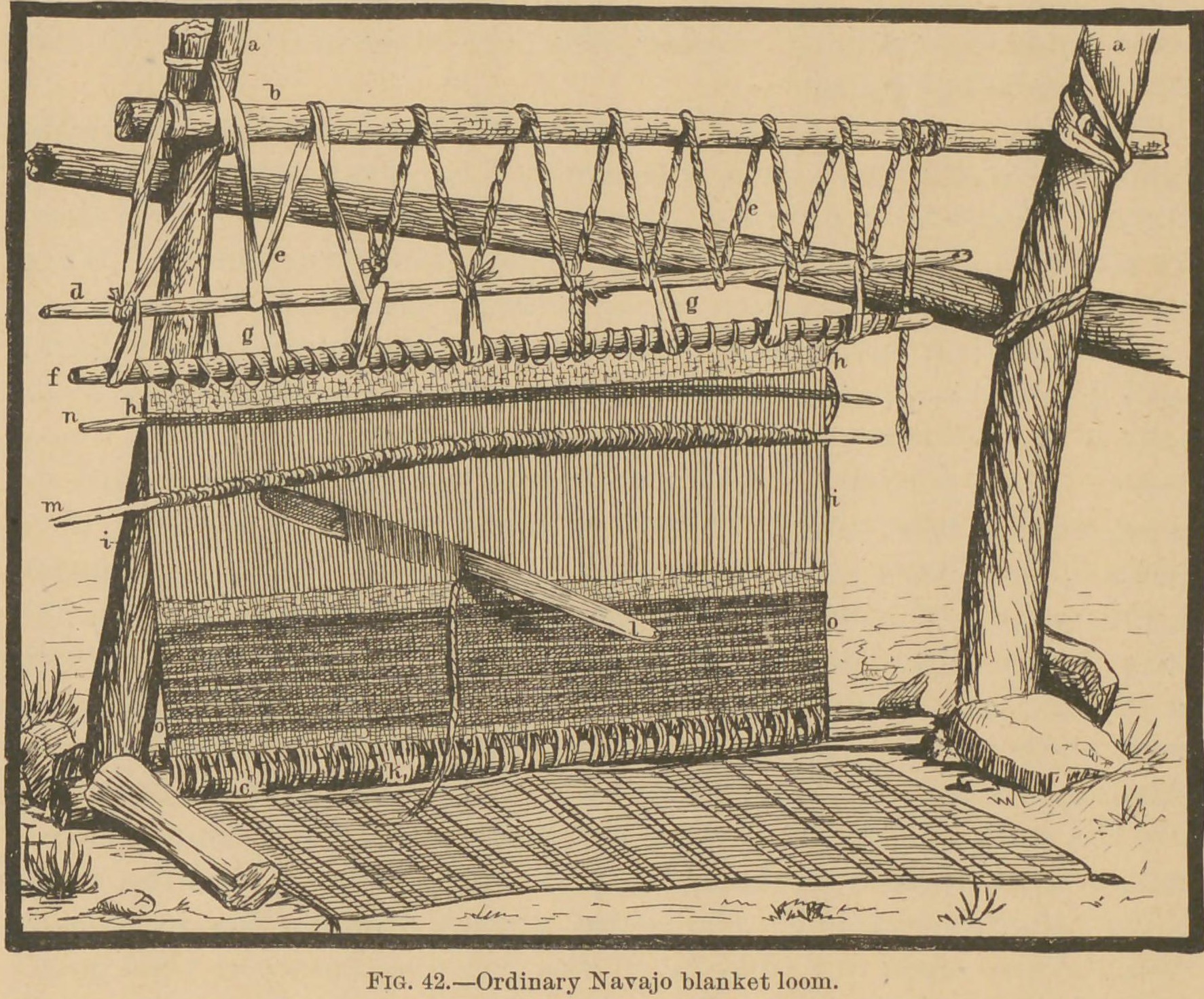


Navajo Blanket Loom: Two Posts, Lashed Braces, Hanging Yarn-Beam, Oak Batten, Heald-Rod and Shed-Rod (Matthews, 1884)
The ordinary Navajo (Diné) blanket loom as Washington Matthews drew it: two posts in the ground with lashed braces, a yarn-beam hung by loops from a pole roped spirally to the top brace so the warp can be tightened, a cloth-beam tied to the bottom brace, a broad thin oak batten, a heald-rod with cord healds for the lower shed and a plain shed-rod for the upper.
བར་མ
A day
ལམ་སྟོན
1
1
Read Matthews
Read Matthews
"The original distance between the two beams is the length of the blanket."
2
2
Set the frame
Set the frame
Set two posts firmly in the ground (or use two slender trees standing a convenient distance apart). Lash a brace across near the top and one near the bottom.
གོམ་པ་འདིའི་རྫས་རིགས:
 ཤིང་རློན་པའི་ཀ་བ།1 དུམ་བུ།
 ཐག་པ།1 དུམ་བུ།
ལག་ཆས་དགོས་མཁོ:
 ཀ་བའི་ཁོང་རྐོ་ནིའི་ལག་ཆས།
 སྟ་རེ།
3
3
Hang the beams
Hang the beams
Rope a horizontal pole (the supplementary yarn-beam) to the top brace with a rope wound spirally round both. Hang the yarn-beam parallel to it, about 2-3 in. (5-8 cm) below, by a row of loops. Tie the cloth-beam firmly to the bottom brace. Ours: winding the spiral rope tighter or looser sets the warp tension.
གོམ་པ་འདིའི་རྫས་རིགས:
ཤིང་རློན་པའི་ཀ་བ།1 དུམ་བུ།ཐག་པ།1 དུམ་བུ། ཐག་པ།1 དུམ་བུ།
ལག་ཆས་དགོས་མཁོ:
 གྲི།
4
4
Mount the warp
Mount the warp
Bind the warp's upper border cord to the yarn-beam with a spiral cord, and its lower border cord to the cloth-beam. The space between the beams is the length of the blanket.
གོམ་པ་འདིའི་རྫས་རིགས:
 ཚོས་གཞི་མ་བཏང་བའི་བལ་སྐུད1 དུམ་བུ།ཐག་པ།1 དུམ་བུ།
ལག་ཆས་དགོས་མཁོ:
གྲི།5
5
Make the batten and rods
Make the batten and rods
Shape a broad, thin oak stick as the batten (size ours: about 75 x 7 cm, edges rounded). Tie cord or yarn healds round alternate warp threads onto a heald-rod, for the lower shed; put a stout plain shed-rod through the other shed. A wooden fork serves as the reed.
གོམ་པ་འདིའི་རྫས་རིགས:
 བེ་ཤིང་དཀརཔོའི་ལེབ།1 དུམ་བུ།ཤིང་རློན་པའི་ཀ་བ།1 དུམ་བུ།ཐག་པ།1 དུམ་བུ།
ལག་ཆས་དགོས་མཁོ:
 ཡུ་བ་གཉིས་ཀྱི་བཤུས་གྲི།གྲི།
6
6
Troubleshooting
Troubleshooting
Loom troubleshooting.
Flow
Loading...
7
7
History and honest limits
History and honest limits
From Washington Matthews, "Navajo Weavers", **3rd Annual Report of the Bureau of Ethnology** (1884), pp. 377-378 and Fig. 42 (checked on the archive.org scan 101714660.nlm.nih.gov). The Navajo had no true shuttle: weft went through on a slender twig, or for fine patterns in small balls pushed with the finger. Post and pole sizes, the batten size and the tools are ours.
རྫས་རིགས
5- 1 དུམ་བུ།ས་ཆ་འཛིན
- 2 དུམ་བུ།ས་ཆ་འཛིན
- 3 དུམ་བུ།ས་ཆ་འཛིན
- 1 དུམ་བུ།ས་ཆ་འཛིན
- 1 དུམ་བུ།ས་ཆ་འཛིན
བིལུ་པིརིན་ཊི་འདི་གིས་བཟོ་མི

འབྲེལ་ཡོད་བིལུ་པིརིན་ཊི
བིལུ་པིརིན་ཊི་འདི་ཚུ་ཐབས་ལམ་དང་རྫས་རིགས། སྤྱི་ཆོས་བགོ་བཤའ་བྱེད



CC0 སྤྱི་དབང
བིལུ་པིརིན་ཊི་འདི་CC0 འོག་བཀྲམས་ཡོད། ཁྱེད་རང་གིས་ཆོག་མཆན་མ་བཞེས་པར་ཕབ་ལེན་དང་བཟོ་བཅོས། བགོ་བཤའ། དགོས་མཁོ་གང་ལའང་བཀོལ་སྤྱོད་བྱས་ཆོག
བཟོ་མཁན་ལ་རྒྱབ་སྐྱོར་བྱེད་པའི་ཆེད་ཁོང་ཚོའི་བིལུ་པིརིན་ཊི་བརྒྱུད་ཐོན་སྐྱེད་ཉོ། བཟོ་མཁན་གྱིས བཟོ་མཁན་གྱི་ཁེ་ཕོགས ཚོང་པས་གཏན་འཁེལ་བྱས་པ། ཡང་ན་བིལུ་པིརིན་ཊི་འདིའི་པར་གསར་བཟོས་ཏེ་ཁྱེད་རང་གི་བིལུ་པིརིན་ཊི་ནང་མཐུད་སྦྲེལ་བྱས་ཏེ་ཡོང་སྒོ་བགོ་བཤའ་བྱེད།