སྒྱུ་རྩལ
མཛེས་སྡུག་དང་བདེ་ཐང
བཟོ་རིག
རིག་གནས་དང་ལོ་རྒྱུས
དགའ་སྟོན
ཁོར་ཡུག
ཟས་དང་བཏུང་རྫས
ཕྱིར་འཕྲུལ་རིག
ཚན་རིག
རྩེད་འགྲན
རིག་རྩལ
གྱོན་རུང
Youblob · CC0


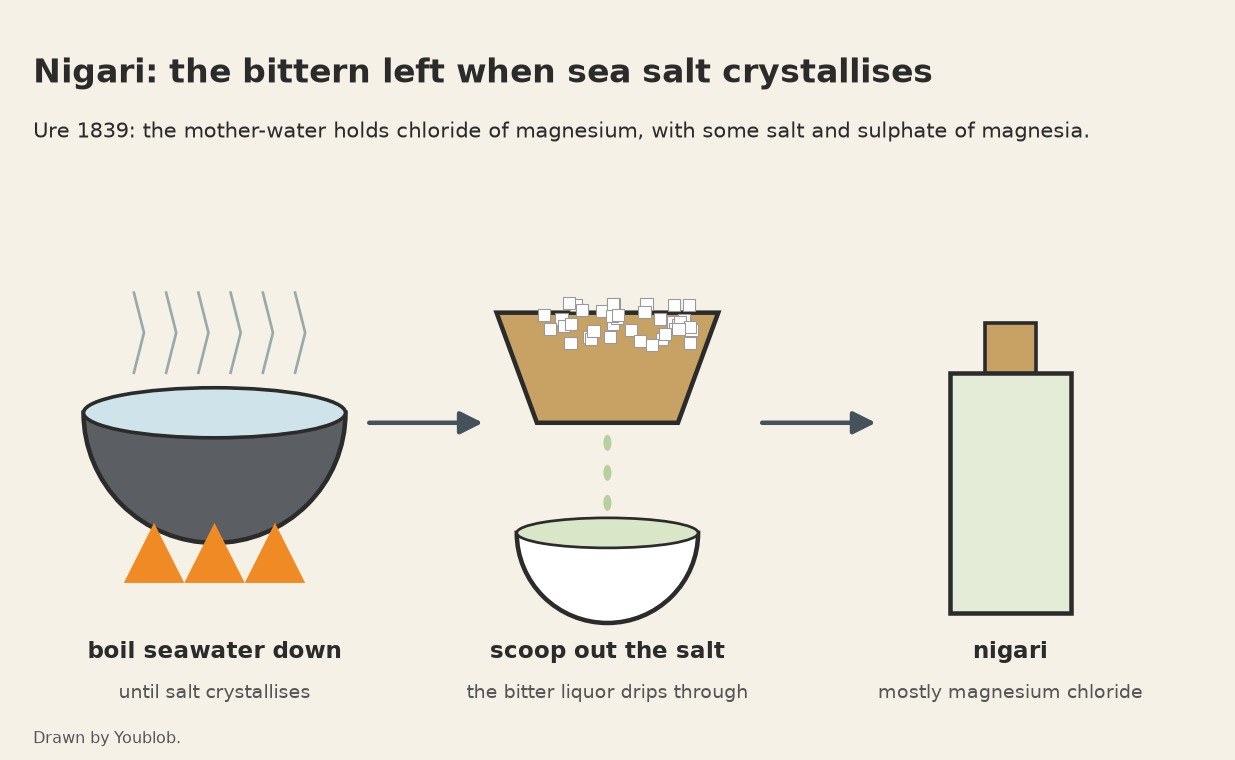
Nigari: the Bitter Liquor Left When Sea Salt Crystallises
Boil seawater down and common salt crystallises first; what stays behind is a bitter liquor, mostly magnesium chloride. Salt makers called it bittern and kept it out of the salt, Andrew Ure (1839) notes, because it spoils it. In Japan it is nigari, from the word for bitter, and it is what sets soy milk into tofu.
འགོ་བཙུགས
A day of boiling
ལམ་སྟོན
1
1
Boil the seawater down
Boil the seawater down
Boil clean seawater in an iron kettle over a wood fire, topping it up, until salt crystals start to form on the surface and fall.
གོམ་པ་འདིའི་རྫས་རིགས:
 མཚོའི་ཆུ།20 ལི་ཊར།
 མེ་ཤིང་།1 as required
ལག་ཆས་དགོས་མཁོ:
 ལྕགས་ཀྱི་ཇམ་སྦྱིས།
 མེའི་དོང་།
2
2
Rake out the salt
Rake out the salt
Keep it simmering and scoop the salt out as it crystallises into a draining basket over a bowl. Stop before the pan runs dry: the last liquor is the bittern.
ལག་ཆས་དགོས་མཁོ:
 ཤིང་གི་ཐུར་མ།
 ཆུ་འཛག་སློ་བུ།
 ཕོར་པ་ལྕགས་ཀྱི་ཇམ་སྦྱིས།
3
3
Collect the drips
Collect the drips
Let the salt drain for a day or two. Pour what drips into the bowl together with the liquor left in the kettle: that is nigari.
ལག་ཆས་དགོས་མཁོ:
ཆུ་འཛག་སློ་བུ།ཕོར་པ་4
4
Bottle it
Bottle it
Keep the liquid nigari in a stoppered bottle. It is very bitter; it is a coagulant, not a seasoning.
ལག་ཆས་དགོས་མཁོ:
 ཁ་བཙུམ་ཅན་གྱི་ཤེལ་དམ་ཚུ
ལག་ཆས་དགོས་མཁོ
6- ས་ཆ་འཛིན
- ས་ཆ་འཛིན
- ས་ཆ་འཛིན
- ས་ཆ་འཛིན
- ས་ཆ་འཛིན
- ས་ཆ་འཛིན
བིལུ་པིརིན་ཊི་འདི་གིས་བཟོ་མི
CC0 སྤྱི་དབང
བིལུ་པིརིན་ཊི་འདི་CC0 འོག་བཀྲམས་ཡོད། ཁྱེད་རང་གིས་ཆོག་མཆན་མ་བཞེས་པར་ཕབ་ལེན་དང་བཟོ་བཅོས། བགོ་བཤའ། དགོས་མཁོ་གང་ལའང་བཀོལ་སྤྱོད་བྱས་ཆོག
བཟོ་མཁན་ལ་རྒྱབ་སྐྱོར་བྱེད་པའི་ཆེད་ཁོང་ཚོའི་བིལུ་པིརིན་ཊི་བརྒྱུད་ཐོན་སྐྱེད་ཉོ། བཟོ་མཁན་གྱིས བཟོ་མཁན་གྱི་ཁེ་ཕོགས ཚོང་པས་གཏན་འཁེལ་བྱས་པ། ཡང་ན་བིལུ་པིརིན་ཊི་འདིའི་པར་གསར་བཟོས་ཏེ་ཁྱེད་རང་གི་བིལུ་པིརིན་ཊི་ནང་མཐུད་སྦྲེལ་བྱས་ཏེ་ཡོང་སྒོ་བགོ་བཤའ་བྱེད།