སྒྱུ་རྩལ
མཛེས་སྡུག་དང་བདེ་ཐང
བཟོ་རིག
རིག་གནས་དང་ལོ་རྒྱུས
དགའ་སྟོན
ཁོར་ཡུག
ཟས་དང་བཏུང་རྫས
ཕྱིར་འཕྲུལ་རིག
ཚན་རིག
རྩེད་འགྲན
རིག་རྩལ
གྱོན་རུང
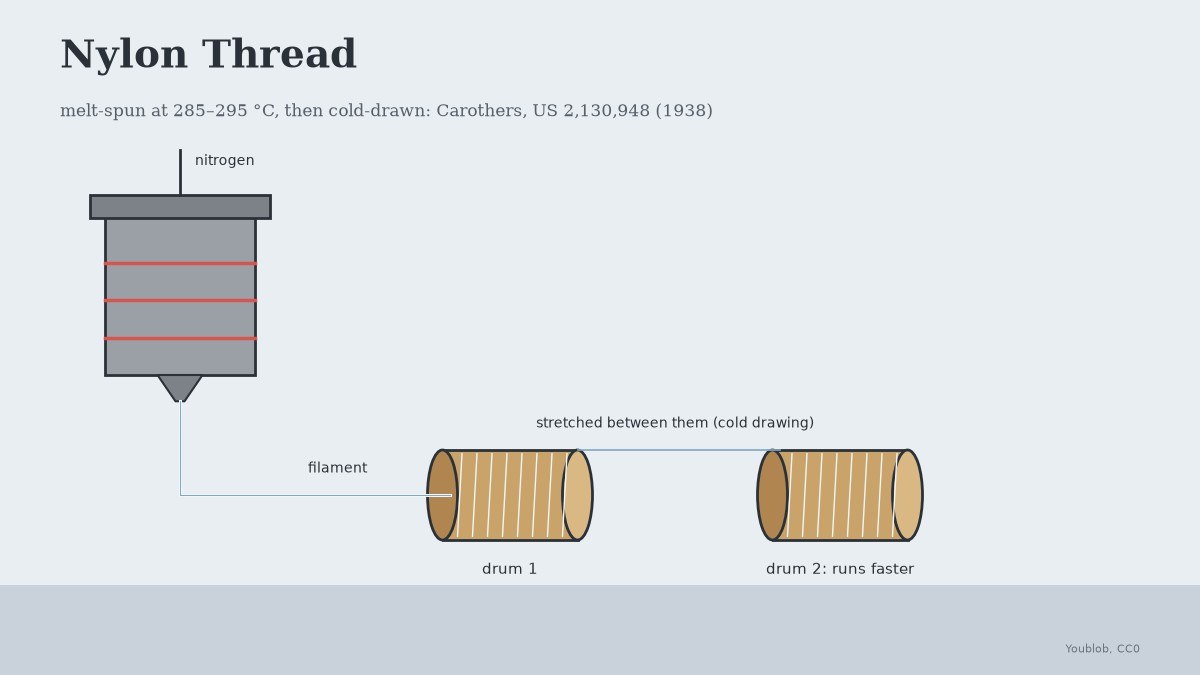


Nylon Thread: Melt-Spun Monofilament, Cold-Drawn Between Two Drums, Carothers
Nylon sewing thread is a single clear strand, a monofilament. Carothers' patent (1938) spins nylon 66 straight from the melt at 285–295 °C, with oxygen kept out, and catches the strand on a drum. A second, faster drum then stretches it (cold drawing), which makes it strong.
The picture: our own drawing.
མཐོ་རིམ
1 day
ལམ་སྟོན
1
1
Load the pot under nitrogen
Load the pot under nitrogen
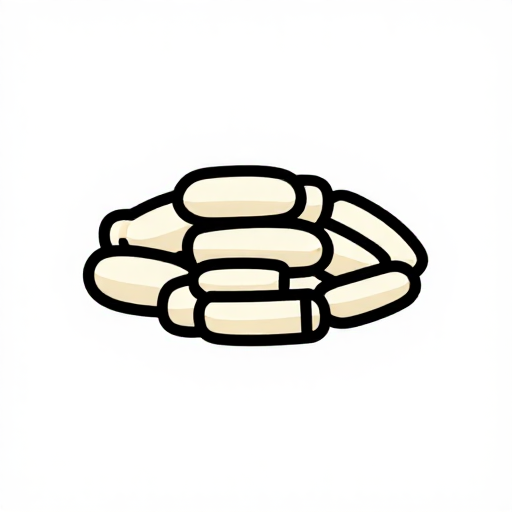
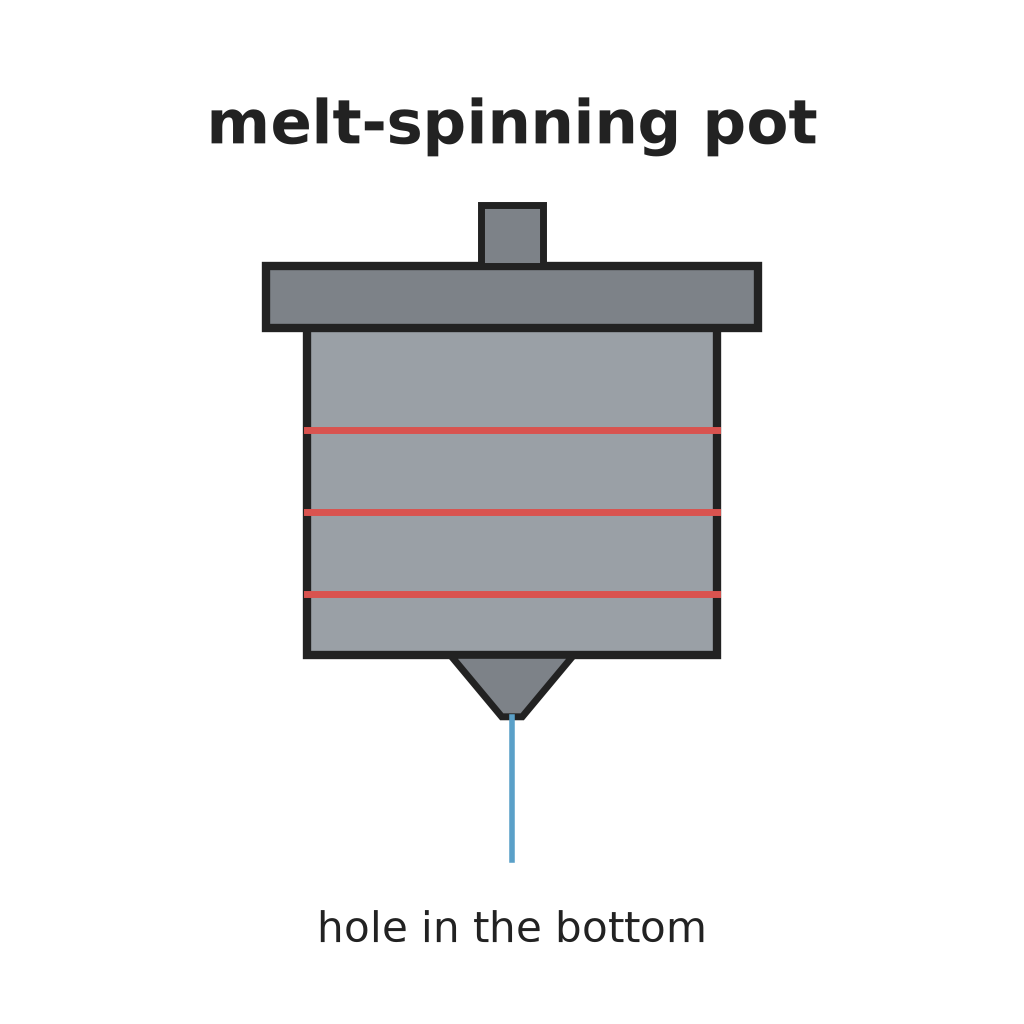
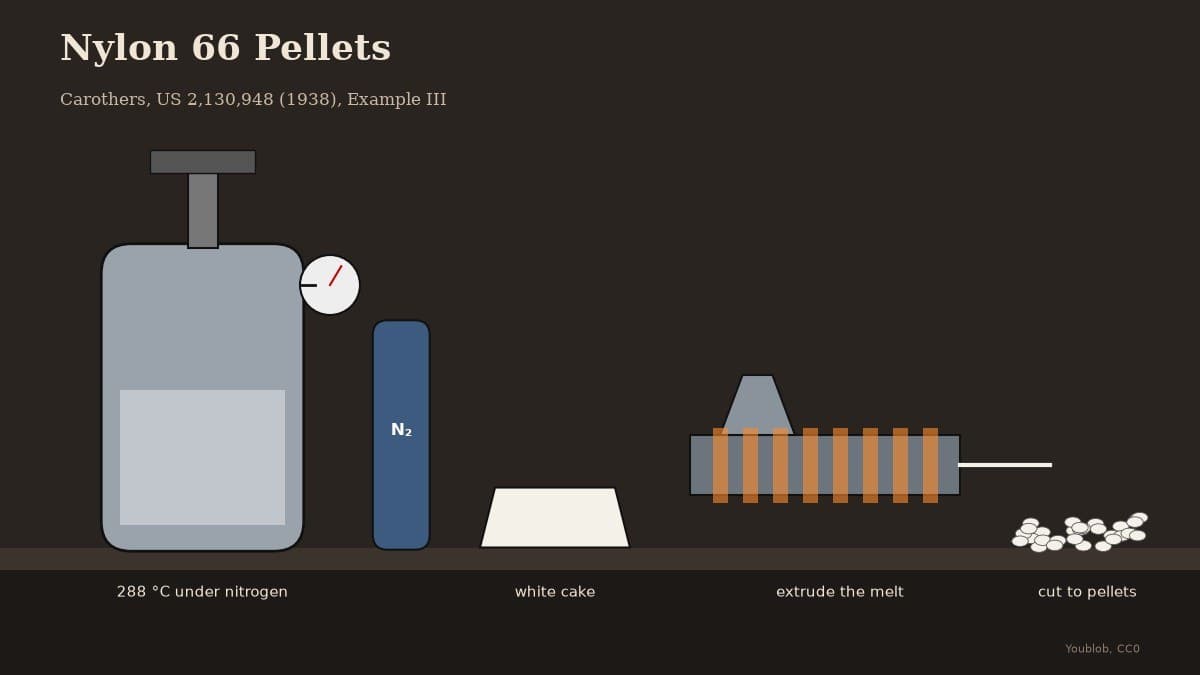
Fill the melt-spinning pot with dry nylon 66 pellets and close it. Flush it with nitrogen and keep it under nitrogen: oxygen must stay out of the molten polymer.
གོམ་པ་འདིའི་རྫས་རིགས:
 ནཱའི་ལཱོན་རིལ་བུ500 g
ལག་ཆས་དགོས་མཁོ:
 འཇུ་འཁོར་ཐག་འཕྲུལ་པུ།
 རླུང་རྫས
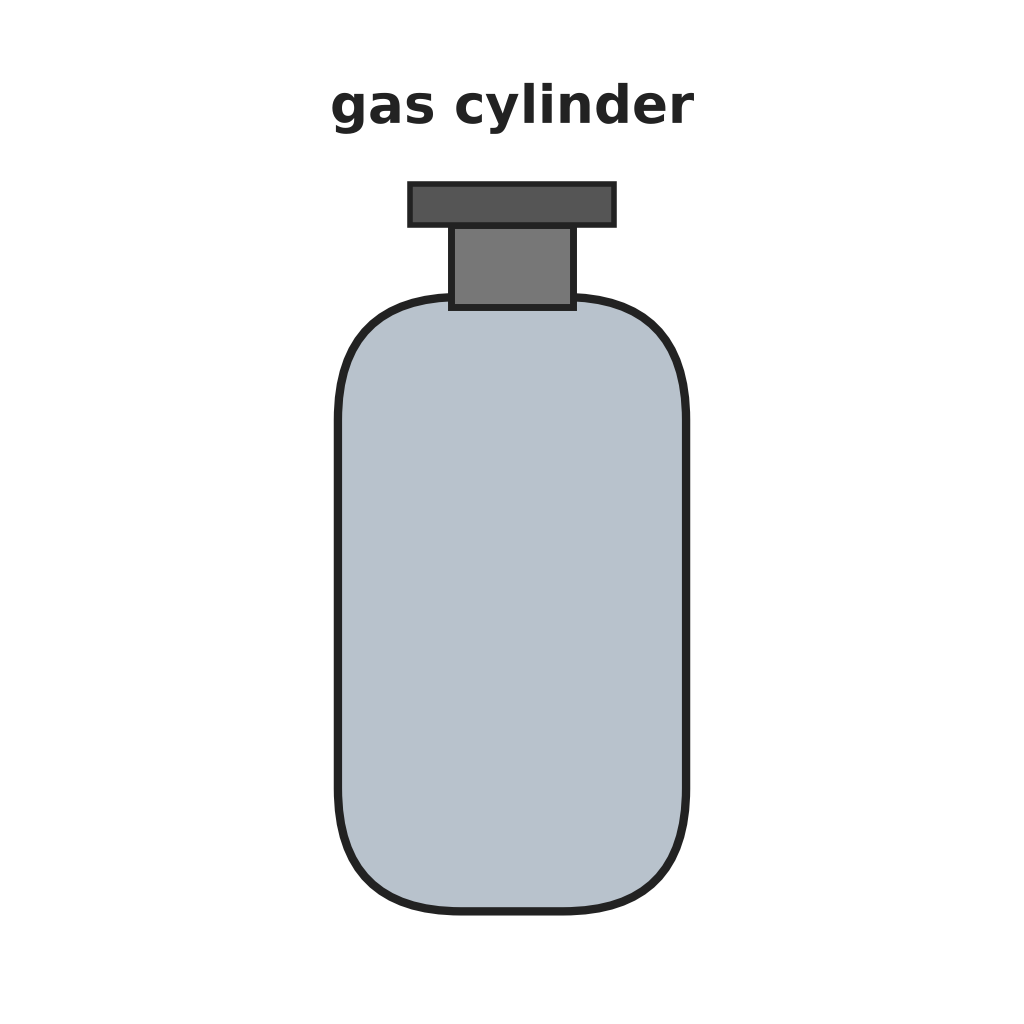 གནོན་ཤུགས་ཀྱི་རླུང་རྫས་སྣོད།
2
2
Melt at 285–295 °C
Melt at 285–295 °C
Heat to 285–295 °C, the best spinning heat for nylon 66. Cooler gives poorer filament; hotter makes it too runny, and it may break down.
ལག་ཆས་དགོས་མཁོ:
འཇུ་འཁོར་ཐག་འཕྲུལ་པུ། ལྷག་ཆས་ཡོད་པའི་ཐར་མོ་ཀཔཱལ།
3
3
Extrude and catch it
Extrude and catch it
Press the melt out through the hole with nitrogen pressure (Carothers' example used 50 lb/in²). Catch the strand on a motor-driven drum. A larger hole gives a thicker strand; hotter melt and faster winding give a finer one.
ལག་ཆས་དགོས་མཁོ:
རླུང་རྫསགནོན་ཤུགས་ཀྱི་རླུང་རྫས་སྣོད།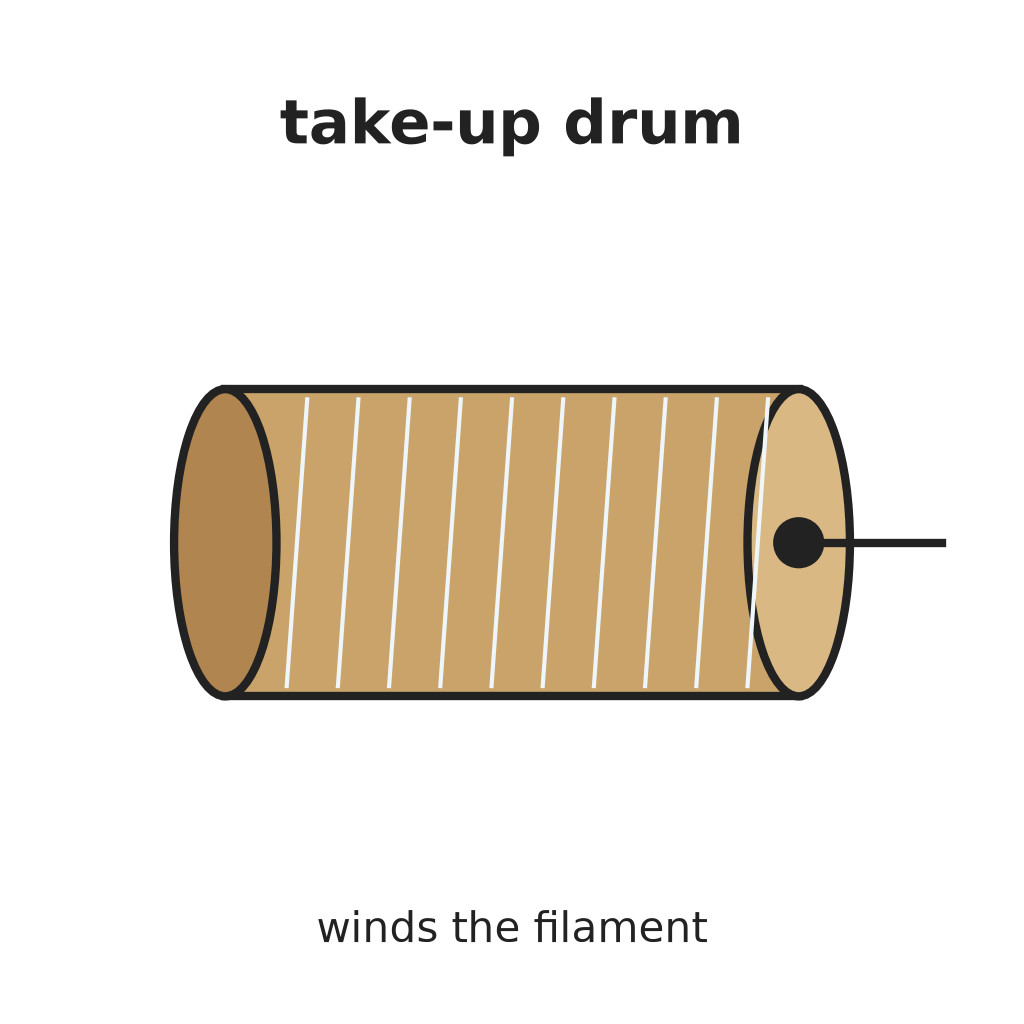 ཐག་ལེན་འཁོར་ལོ།
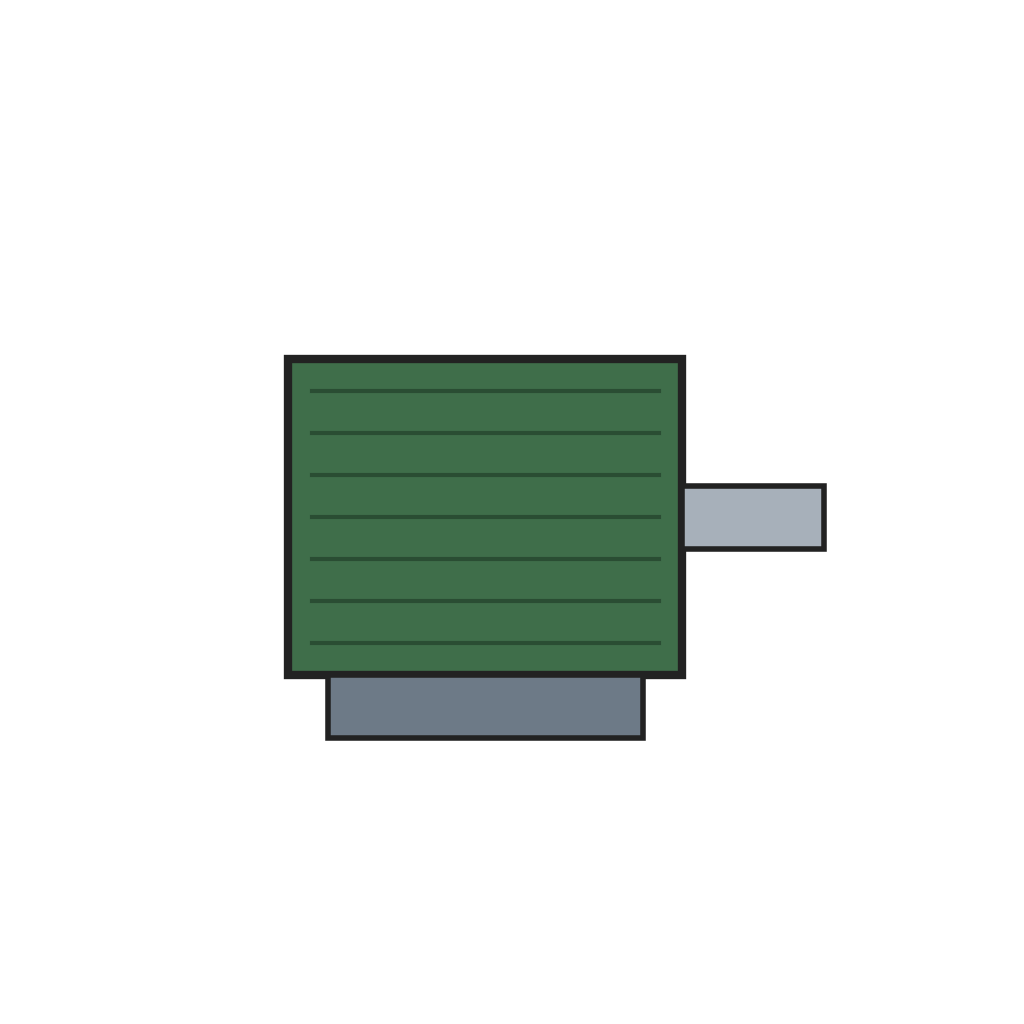 གློག་འཁོར།
4
4
Cold-draw onto a faster drum
Cold-draw onto a faster drum
Run the strand from the first drum onto a second drum turning faster, which stretches it. In Carothers' example the drums ran at 300 and 1020 ft/min. Keep the strand wet: wet filament draws better and holds no static.
ལག་ཆས་དགོས་མཁོ:
ཐག་ལེན་འཁོར་ལོ།གློག་འཁོར། ཆུ།
5
5
Help a thick strand
Help a thick strand
Thick strands are harder to draw. Soak them in water, or warm them to about 100 °C, before drawing.
ལག་ཆས་དགོས་མཁོ:
 གྱང་མཐོ་བའི་ཧོད།ཆུ།
རྫས་རིགས
1- 500 gས་ཆ་འཛིན
བིལུ་པིརིན་ཊི་འདི་གིས་བཟོ་མི

འབྲེལ་ཡོད་བིལུ་པིརིན་ཊི
བིལུ་པིརིན་ཊི་འདི་ཚུ་ཐབས་ལམ་དང་རྫས་རིགས། སྤྱི་ཆོས་བགོ་བཤའ་བྱེད

CC0 སྤྱི་དབང
བིལུ་པིརིན་ཊི་འདི་CC0 འོག་བཀྲམས་ཡོད། ཁྱེད་རང་གིས་ཆོག་མཆན་མ་བཞེས་པར་ཕབ་ལེན་དང་བཟོ་བཅོས། བགོ་བཤའ། དགོས་མཁོ་གང་ལའང་བཀོལ་སྤྱོད་བྱས་ཆོག
བཟོ་མཁན་ལ་རྒྱབ་སྐྱོར་བྱེད་པའི་ཆེད་ཁོང་ཚོའི་བིལུ་པིརིན་ཊི་བརྒྱུད་ཐོན་སྐྱེད་ཉོ། བཟོ་མཁན་གྱིས བཟོ་མཁན་གྱི་ཁེ་ཕོགས ཚོང་པས་གཏན་འཁེལ་བྱས་པ། ཡང་ན་བིལུ་པིརིན་ཊི་འདིའི་པར་གསར་བཟོས་ཏེ་ཁྱེད་རང་གི་བིལུ་པིརིན་ཊི་ནང་མཐུད་སྦྲེལ་བྱས་ཏེ་ཡོང་སྒོ་བགོ་བཤའ་བྱེད།