སྒྱུ་རྩལ
མཛེས་སྡུག་དང་བདེ་ཐང
བཟོ་རིག
རིག་གནས་དང་ལོ་རྒྱུས
དགའ་སྟོན
ཁོར་ཡུག
ཟས་དང་བཏུང་རྫས
ཕྱིར་འཕྲུལ་རིག
ཚན་རིག
རྩེད་འགྲན
རིག་རྩལ
གྱོན་རུང


Oblique-Blade Potato Masher: Press and Turn the Ring
A masher that only presses leaves lumps where it did not land.
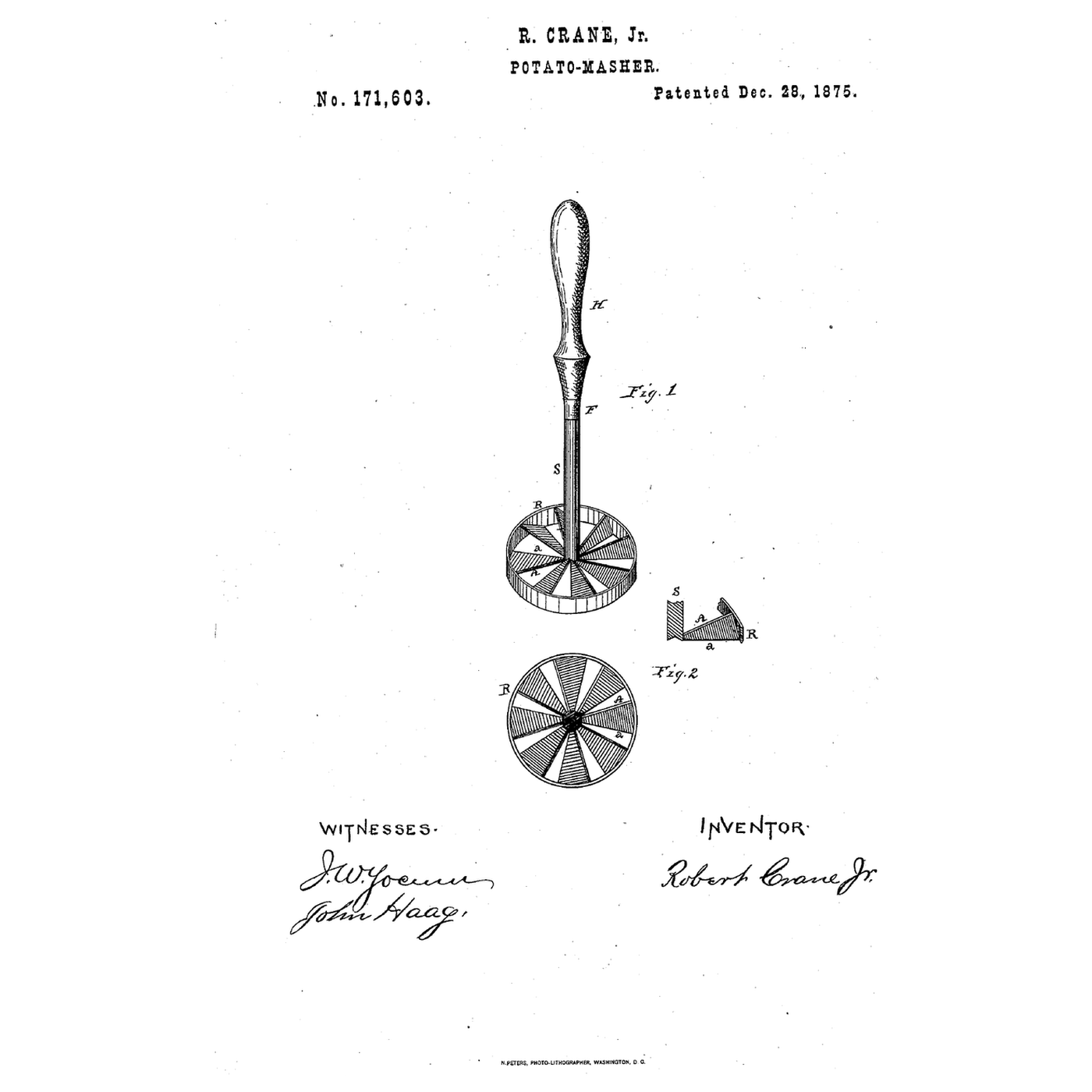
Robert Crane Jr. of Columbia, Pennsylvania, received US 171,603, dated 28 December 1875, for a potato masher: a ring joined to a central stem by six, eight or more wedge-shaped blades "inclined at angle of about twenty-five or thirty degrees," rigid with the handle so it can be "pressed vertically downward, and simultaneously revolved by the hand."
This rung works out how a turn drives the blades in, then prints the bladed ring, fits a stem and handle, and mashes a pan of potatoes.
འགོ་བཙུགས
About 1 hour, plus printing
ལམ་སྟོན
1
1
Pressing and turning
Pressing and turning
Jupyter ཚང་དེབ་མངོན་གསལ་འབད་དོ་…
2
2
A cutting masher before it
A cutting masher before it
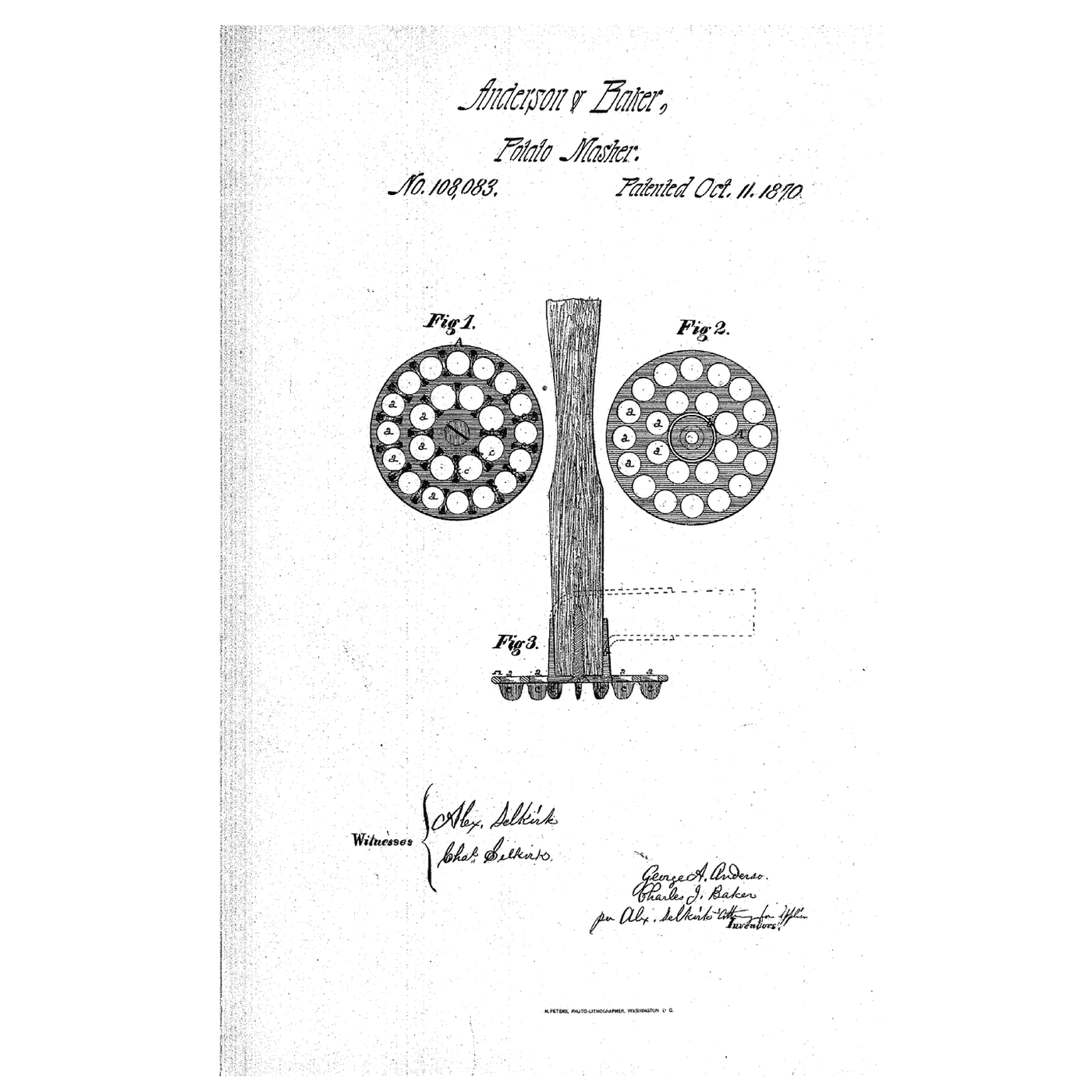
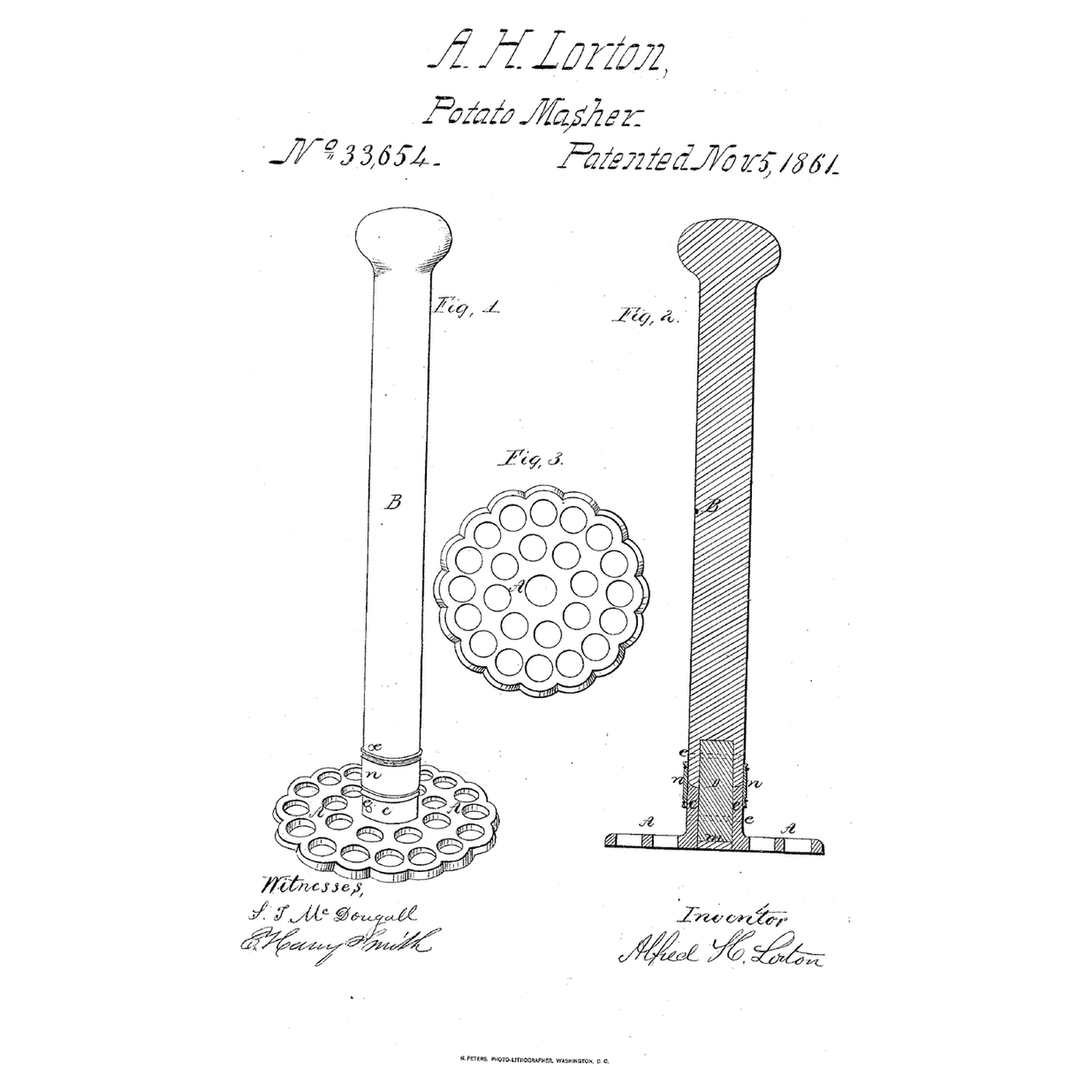
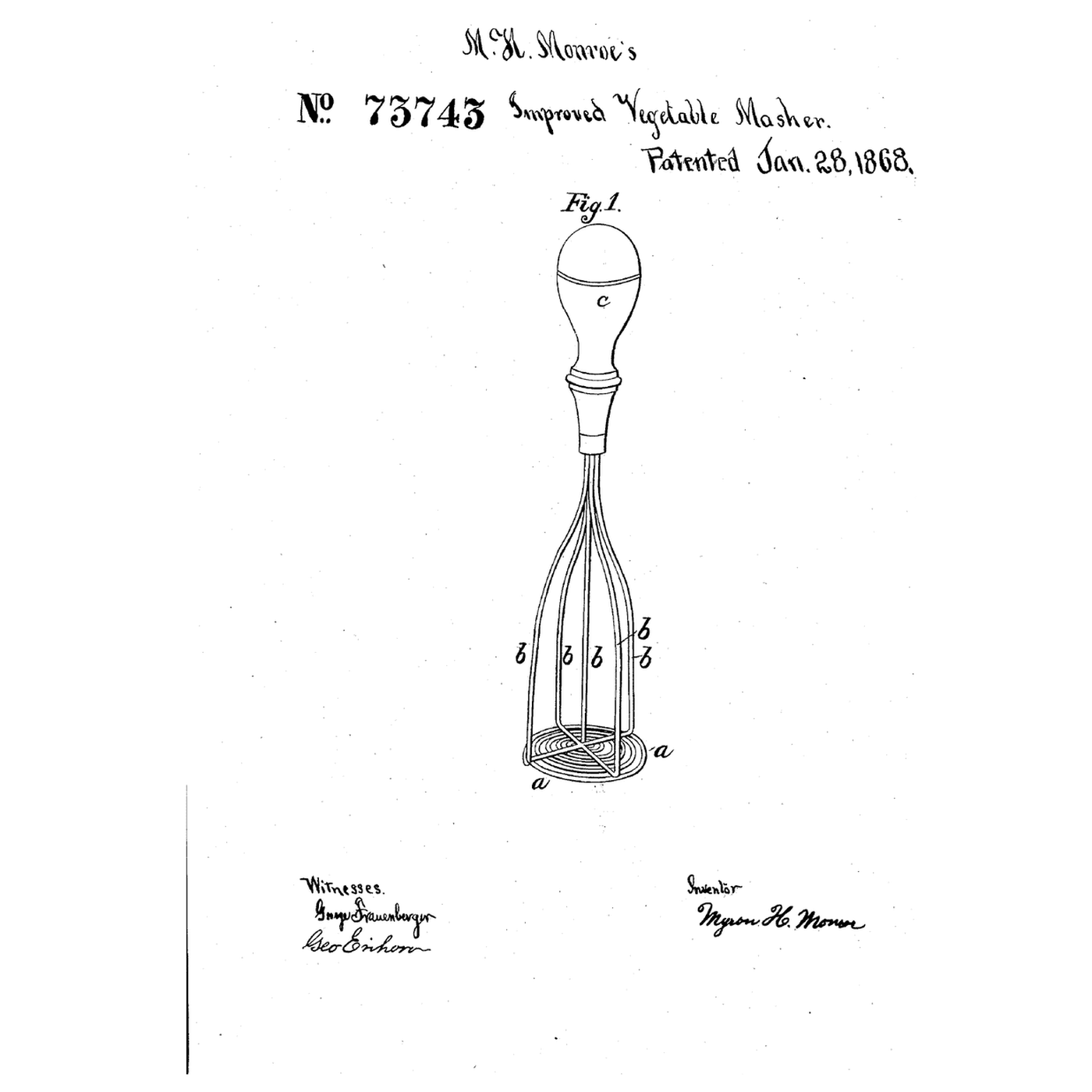
The embedded blueprint splits the potato with teeth on a disk. Crane makes the blades the whole face and inclines them so a turn drives them through.
3
3
Read US 171,603
Read US 171,603
"Just above its cutting-edge these blades widen radially outward, and unite with the vertical inner face of the ring in an oblique direction, inclined at angle of about twenty-five or thirty degrees. This oblique position gives the upper and lower edges of the blades a sharp angle or cutting-edge, and the narrower triangular and oblique spaces between the blades renders this implement of superior utility and efficiency."
4
4
Print the head
Print the head
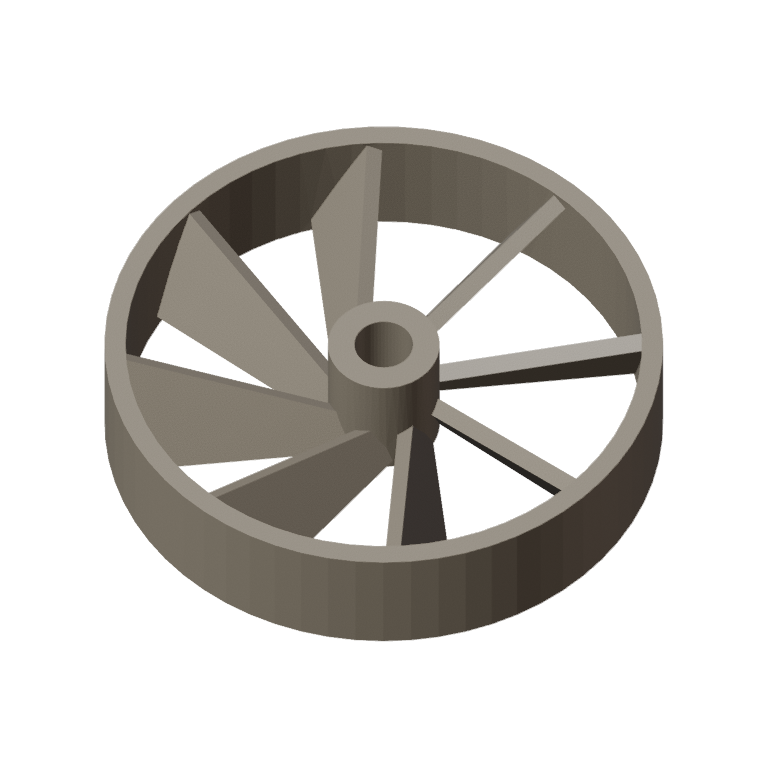
Print the ring with its eight inclined blades and hub (/uploads/blueprints/oblique-blade-potato-masher-head.stl). Print in PETG at 0.2 mm layers, 30 % infill, 4 walls; wash before first use.
གོམ་པ་འདིའི་རྫས་རིགས:
 PETG སྐུད་པ་1 དུམ་བུ།
ལག་ཆས་དགོས་མཁོ:
 FDM 3D པར་སྐྲུན་འཕྲུལ་ཆས།
5
5
Stem and handle
Stem and handle
Epoxy a 60 mm length of 8 mm steel rod into the hub as the stem, and a drilled hardwood handle on its top, so the whole is rigid.
གོམ་པ་འདིའི་རྫས་རིགས:
 ལྕགས་འཇམ་གྱི་དབྱུག་ཟླུམ།1 དུམ་བུ།
 ཤིང་སྲ་གི་ཕུར་པ།1 དུམ་བུ།
 ཆ་ཤས་གཉིས་ཀྱི་ཨི་པོག་སི1 དུམ་བུ།
ལག་ཆས་དགོས་མཁོ:
 ལྕགས་གཏུབ་སོག་ལེ།
 ཐག་མེད་ཕུག་འཕྲུལ།
 ཕུག་མགོའི་ཚོགས་ཆས།
6
6
The build in 3D
The build in 3D
FreeCAD model of this build, not of the patent: the 80 mm ring, eight blades inclined about 28° joining it to the hub, the steel stem, ferrule and handle.
7
7
Press and turn
Press and turn
Boil 500 g of potatoes, peeled and quartered, for about 20 minutes until a knife slides in; drain. Mash half by pressing and turning at once; mash the other half by pressing only. Time both to no lumps.
གོམ་པ་འདིའི་རྫས་རིགས:
 ཀེ་ཝ1 དུམ་བུ།
 ཆུ།1 དུམ་བུ།
ལག་ཆས་དགོས་མཁོ:
 གྱང་མཐོ་བའི་ཟངས།
 ཁ་ཟེ་མི་ཆགས་པའི་ལྕགས་ཀྱི་སྦྱོར་ཕོར་ཆེན
 ཆུ་ཚོད་བཀག་ཆས།
8
8
Blades that bend, a head that turns on the stem
Blades that bend, a head that turns on the stem
Oblique-blade potato masher troubleshooting.
Flow
Loading...
9
9
History and honest limits
History and honest limits
**Robert Crane Jr.** of Columbia, Pennsylvania, filed US 171,603 on 26 February 1875; it is dated 28 December 1875. The blades' upper edges rise outward to meet the ring's top, their lower edges are horizontal. He knew that a handle with oblique blades in a ring made a revolving churn dasher, and claimed only the potato masher of ring, blades and handle rigidly connected.
**Honest limits.** A printed head stands in for his metal one. FDM prints hold food in their layer lines, so wash well and replace when worn. Your times are the result.
རྫས་རིགས
6- 1 དུམ་བུ།ས་ཆ་འཛིན
- 1 དུམ་བུ།ས་ཆ་འཛིན
- 1 དུམ་བུ།ས་ཆ་འཛིན
- 1 དུམ་བུ།ས་ཆ་འཛིན
- 1 དུམ་བུ།ས་ཆ་འཛིན
- 1 དུམ་བུ།ས་ཆ་འཛིན
ལག་ཆས་དགོས་མཁོ
7- ས་ཆ་འཛིན
- ས་ཆ་འཛིན
- 1 vendor sell this, none ship to you yetས་ཆ་འཛིན
- ས་ཆ་འཛིན
- ས་ཆ་འཛིན
- ས་ཆ་འཛིན
བཟོ་བཀོད་ཡིག་སྣོད།
1བིལུ་པིརིན་ཊི་འདི་གིས་བཟོ་མི
འབྲེལ་ཡོད་བིལུ་པིརིན་ཊི
བིལུ་པིརིན་ཊི་འདི་ཚུ་ཐབས་ལམ་དང་རྫས་རིགས། སྤྱི་ཆོས་བགོ་བཤའ་བྱེད

CC0 སྤྱི་དབང
བིལུ་པིརིན་ཊི་འདི་CC0 འོག་བཀྲམས་ཡོད། ཁྱེད་རང་གིས་ཆོག་མཆན་མ་བཞེས་པར་ཕབ་ལེན་དང་བཟོ་བཅོས། བགོ་བཤའ། དགོས་མཁོ་གང་ལའང་བཀོལ་སྤྱོད་བྱས་ཆོག
བཟོ་མཁན་ལ་རྒྱབ་སྐྱོར་བྱེད་པའི་ཆེད་ཁོང་ཚོའི་བིལུ་པིརིན་ཊི་བརྒྱུད་ཐོན་སྐྱེད་ཉོ། བཟོ་མཁན་གྱིས བཟོ་མཁན་གྱི་ཁེ་ཕོགས ཚོང་པས་གཏན་འཁེལ་བྱས་པ། ཡང་ན་བིལུ་པིརིན་ཊི་འདིའི་པར་གསར་བཟོས་ཏེ་ཁྱེད་རང་གི་བིལུ་པིརིན་ཊི་ནང་མཐུད་སྦྲེལ་བྱས་ཏེ་ཡོང་སྒོ་བགོ་བཤའ་བྱེད།