སྒྱུ་རྩལ
མཛེས་སྡུག་དང་བདེ་ཐང
བཟོ་རིག
རིག་གནས་དང་ལོ་རྒྱུས
དགའ་སྟོན
ཁོར་ཡུག
ཟས་དང་བཏུང་རྫས
ཕྱིར་འཕྲུལ་རིག
ཚན་རིག
རྩེད་འགྲན
རིག་རྩལ
གྱོན་རུང
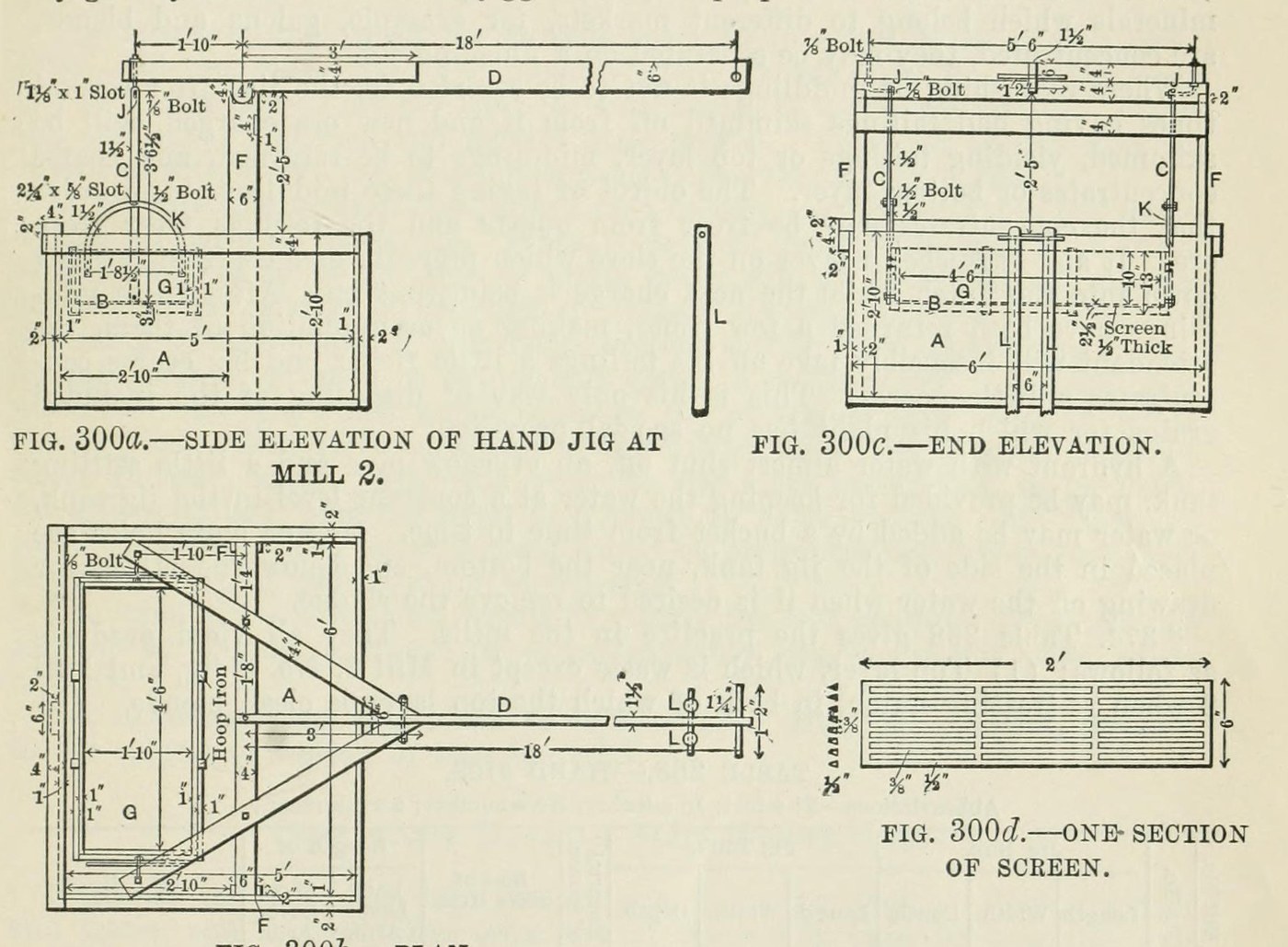


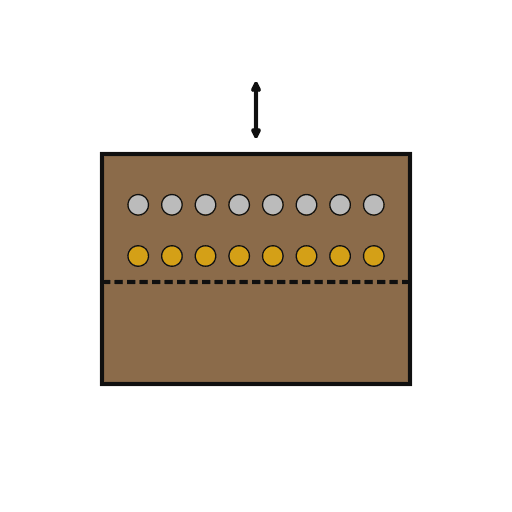
Ore Jig: a Power-Driven Movable-Sieve (Cornish) Jig at Mill 12 (Richards, 1903)
An ore jig sorts crushed ore by weight: a box with a screen bottom is jerked up and down in a tank of water, so the heavy mineral settles to the bottom of the bed and the light rock stays on top to be skimmed off.
Robert H. Richards' Ore Dressing (1903) gives the sizes of the movable-sieve Cornish jigs at his Mill 12: a box of 1-inch boards 22 by 46 inches with a 5-mesh screen, worked by a lever and an eccentric in a tank 7 feet deep, with 6-minute jigging charges skimmed by hand.
He does not say what the tank, lever and eccentric are made of; those are Unknown here.
Source: R. H. Richards, Ore Dressing vol. I (1903), § 383, p. 506. Picture: his Figs. 300a-300d, the hand jig at Mill 2.
བར་མ
Several days to build
ལམ་སྟོན
1
1
Read Richards
Read Richards
"These differ from the continuous, movable sieve jigs in that the feeders, the hydraulic water, the discharges for coarse concentrates, hutches and tailings, are all left out. They are practically hand jigs adapted to power."
2
2
Build the jigging box
Build the jigging box
Make the jigging box of 1-inch boards, 22 inches wide and 46 inches long, with a 5-mesh screen across it so that the box stands 7 inches deep above the screen and 3 inches below it.
གོམ་པ་འདིའི་རྫས་རིགས:
 ཤིང་ལེབ།1 1-inch boards
 དྲ་མིག་སྦོམ་པའི་ཚགས་མ།1 5-mesh
ལག་ཆས་དགོས་མཁོ:
 ཤིང་བཟོའི་སོག་ལེ
 ཐོ་བ།
 འཇལ་ཐག
3
3
Hang it in the tank on a lever
Hang it in the tank on a lever
Set up a tank 30 inches wide, 54 inches long and 7 feet deep, full of water. Hang the box in it from a jigging lever with a long arm of 4 feet 2 inches and a short arm of 10 inches, the box on the short arm, as in the hand jig of Figs. 300a-300c. Drive the long arm from an eccentric with a 5-inch throw, which gives the box a 1-inch stroke. Put a hitching post beside the jig to hold the sieve up out of the water. The materials of the tank, lever, eccentric and post are not given (unknown).
གོམ་པ་འདིའི་རྫས་རིགས:
 ངོ་མ་ཤེས་པའི་རྒྱུ་ཆ།1 tank, lever, eccentric, hitching post
ལག་ཆས་དགོས་མཁོ:
ཤིང་བཟོའི་སོག་ལེཐོ་བ།འཇལ་ཐག4
4
Jig a charge
Jig a charge
Feed ore crushed to 2 mesh and finer. Shovel it into the jigging box until the bed is 8 inches deep, connect the lever to the power and jig for 6 minutes. Then disconnect it, lift the sieve out of the water and hitch it to the post.
ལག་ཆས་དགོས་མཁོ:
 ཁེམ།
5
5
Skim by hand
Skim by hand
Skim the bed off in layers: the top skimmings are waste, the middlings go back to be jigged again, and the coarse concentrates at the bottom go to the smelter. What falls through the screen (the hutch) is left to collect in the tank and finally shoveled out for the next, finer jigs.
ལག་ཆས་དགོས་མཁོ:
ཁེམ།6
6
History and honest limits
History and honest limits
Richards was professor of mining engineering and metallurgy at the Massachusetts Institute of Technology. At Mill 12 four such jigs worked as No. 1 jigs, followed by two No. 2 and nine No. 3 jigs like them; at the Hartman mine in Pennsylvania a similar jig was worked on a 1-inch bed of coarse limestone tailings, adding 2-inch layers of ore.
He gives the sizes of the box, lever, eccentric and tank, but not their materials (except the 1-inch boards) or the fastenings; the tools are ours.
རྫས་རིགས
3- 1 1-inch boardsས་ཆ་འཛིན
- 1 5-meshས་ཆ་འཛིན
- 1 tank, lever, eccentric, hitching postས་ཆ་འཛིན
བིལུ་པིརིན་ཊི་འདི་གིས་བཟོ་མི
འབྲེལ་ཡོད་བིལུ་པིརིན་ཊི
བིལུ་པིརིན་ཊི་འདི་ཚུ་ཐབས་ལམ་དང་རྫས་རིགས། སྤྱི་ཆོས་བགོ་བཤའ་བྱེད

CC0 སྤྱི་དབང
བིལུ་པིརིན་ཊི་འདི་CC0 འོག་བཀྲམས་ཡོད། ཁྱེད་རང་གིས་ཆོག་མཆན་མ་བཞེས་པར་ཕབ་ལེན་དང་བཟོ་བཅོས། བགོ་བཤའ། དགོས་མཁོ་གང་ལའང་བཀོལ་སྤྱོད་བྱས་ཆོག
བཟོ་མཁན་ལ་རྒྱབ་སྐྱོར་བྱེད་པའི་ཆེད་ཁོང་ཚོའི་བིལུ་པིརིན་ཊི་བརྒྱུད་ཐོན་སྐྱེད་ཉོ། བཟོ་མཁན་གྱིས བཟོ་མཁན་གྱི་ཁེ་ཕོགས ཚོང་པས་གཏན་འཁེལ་བྱས་པ། ཡང་ན་བིལུ་པིརིན་ཊི་འདིའི་པར་གསར་བཟོས་ཏེ་ཁྱེད་རང་གི་བིལུ་པིརིན་ཊི་ནང་མཐུད་སྦྲེལ་བྱས་ཏེ་ཡོང་སྒོ་བགོ་བཤའ་བྱེད།