སྒྱུ་རྩལ
མཛེས་སྡུག་དང་བདེ་ཐང
བཟོ་རིག
རིག་གནས་དང་ལོ་རྒྱུས
དགའ་སྟོན
ཁོར་ཡུག
ཟས་དང་བཏུང་རྫས
ཕྱིར་འཕྲུལ་རིག
ཚན་རིག
རྩེད་འགྲན
རིག་རྩལ
གྱོན་རུང
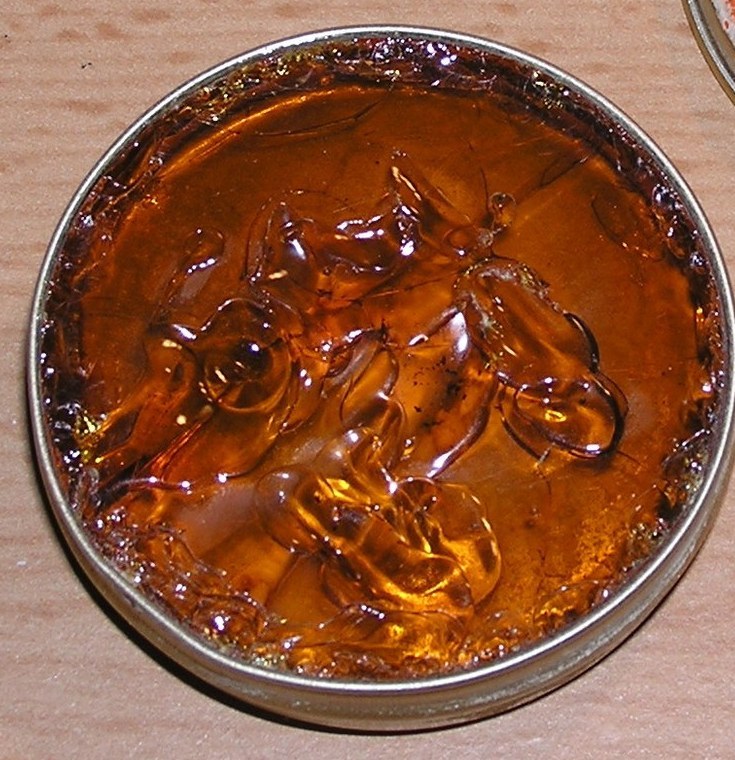


Plastic Rosin Flux: Ripley, 1929
Perry C. Ripley of Chicago, for the Kester Solder Company, patented this flux in 1929, US 1,724,680. In cored solder the heat releases the flux onto the surfaces to be joined. Rosin in the usual dry, powdered form cracks, lets in air and moisture and decomposes. Mixed with turpentine, rosin stays permanently plastic: it does not crystallise or crack, and it keeps air and moisture out. Ripley made it as the core of rosin-core solder.
འགོ་བཙུགས
Workshop process
ལམ་སྟོན
1
1
Melt the rosin
Melt the rosin
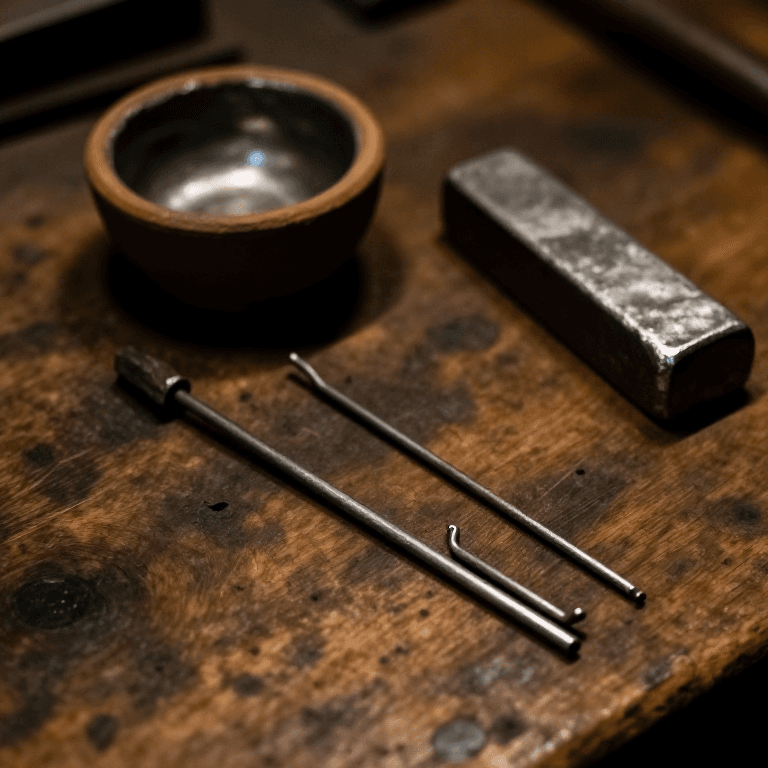
Melt the rosin in a suitable container until it is fluid.
གོམ་པ་འདིའི་རྫས་རིགས:
 ཐང་ཤིང་གི་རོ་ཛིན1 as required
ལག་ཆས་དགོས་མཁོ:
 ཟངས
ཟངས ཚ་བཟོའི་ལེབ།
2
2
Add the turpentine
Add the turpentine
Add turpentine as the plasticiser, from 2% to 50% by weight depending on the grade of rosin, since rosins contain varying amounts of fluids. It may also be added while the rosin is still melting. Ripley lists other solvents (kerosene, naphtha, alcohol, acetone and more), but chose turpentine: it is not very volatile at soldering temperatures and does not conduct electricity.
གོམ་པ་འདིའི་རྫས་རིགས:
 ཐང་སྣུམ1 as required
ལག་ཆས་དགོས་མཁོ:
 ལྗིད་ཚད་སྲང་།
3
3
Mix thoroughly
Mix thoroughly
Agitate the rosin and turpentine mechanically until the turpentine has penetrated the whole rosin mass. The result is a rosin flux in a substantially permanent plastic form.
ལག་ཆས་དགོས་མཁོ:
 དཀྲུག་ཤིང་།
ལག་ཆས་དགོས་མཁོ
4- ས་ཆ་འཛིན
- ས་ཆ་འཛིན
- ས་ཆ་འཛིན
- ས་ཆ་འཛིན
བིལུ་པིརིན་ཊི་འདི་གིས་བཟོ་མི


འབྲེལ་ཡོད་བིལུ་པིརིན་ཊི
བིལུ་པིརིན་ཊི་འདི་ཚུ་ཐབས་ལམ་དང་རྫས་རིགས། སྤྱི་ཆོས་བགོ་བཤའ་བྱེད

CC0 སྤྱི་དབང
བིལུ་པིརིན་ཊི་འདི་CC0 འོག་བཀྲམས་ཡོད། ཁྱེད་རང་གིས་ཆོག་མཆན་མ་བཞེས་པར་ཕབ་ལེན་དང་བཟོ་བཅོས། བགོ་བཤའ། དགོས་མཁོ་གང་ལའང་བཀོལ་སྤྱོད་བྱས་ཆོག
བཟོ་མཁན་ལ་རྒྱབ་སྐྱོར་བྱེད་པའི་ཆེད་ཁོང་ཚོའི་བིལུ་པིརིན་ཊི་བརྒྱུད་ཐོན་སྐྱེད་ཉོ། བཟོ་མཁན་གྱིས བཟོ་མཁན་གྱི་ཁེ་ཕོགས ཚོང་པས་གཏན་འཁེལ་བྱས་པ། ཡང་ན་བིལུ་པིརིན་ཊི་འདིའི་པར་གསར་བཟོས་ཏེ་ཁྱེད་རང་གི་བིལུ་པིརིན་ཊི་ནང་མཐུད་སྦྲེལ་བྱས་ཏེ་ཡོང་སྒོ་བགོ་བཤའ་བྱེད།