སྒྱུ་རྩལ
མཛེས་སྡུག་དང་བདེ་ཐང
བཟོ་རིག
རིག་གནས་དང་ལོ་རྒྱུས
དགའ་སྟོན
ཁོར་ཡུག
ཟས་དང་བཏུང་རྫས
ཕྱིར་འཕྲུལ་རིག
ཚན་རིག
རྩེད་འགྲན
རིག་རྩལ
གྱོན་རུང
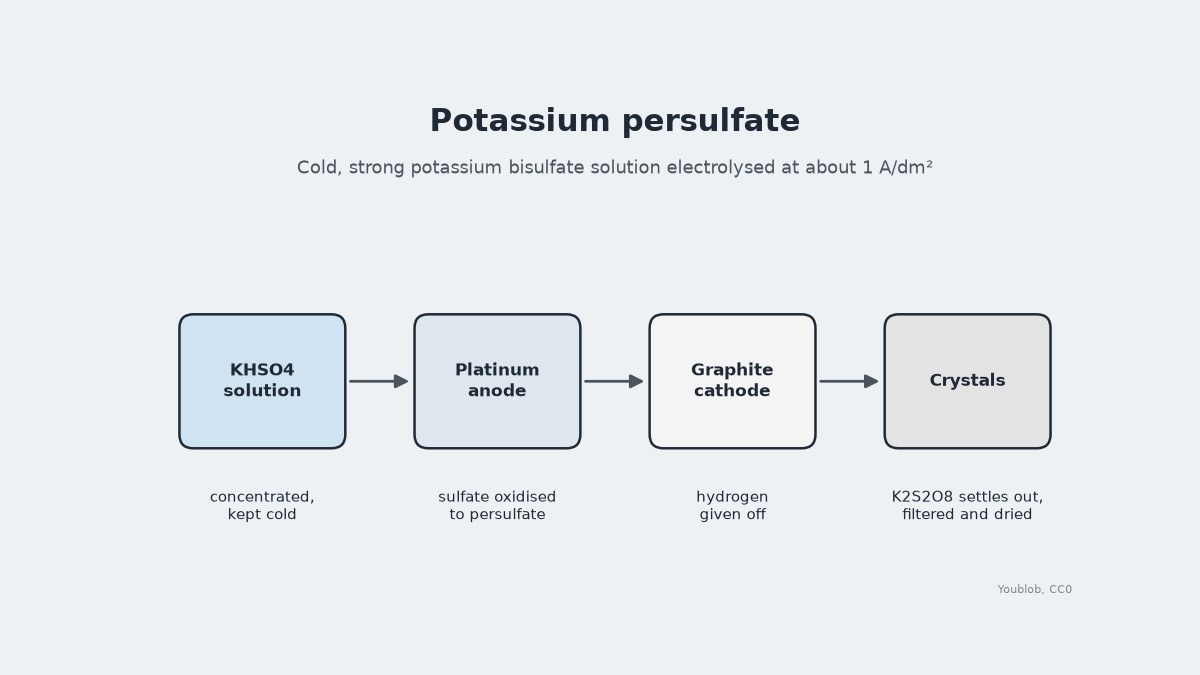


Potassium Persulfate by Electrolysis of Potassium Bisulfate
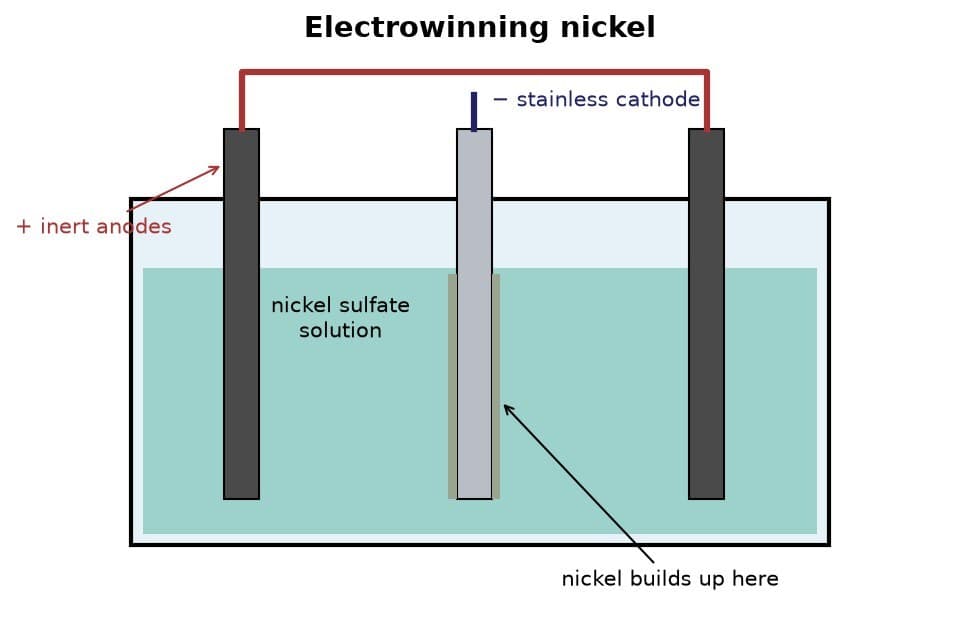
Potassium persulfate, the initiator that starts emulsion polymerisation (PVA glue), is made by electrolysing a cold, concentrated potassium bisulfate solution at about 1 A/dm² on a platinum anode with a graphite cathode. Sulfate is oxidised to persulfate at the anode, and the sparingly soluble salt crystallises out. It is a strong oxidant: keep it away from organic matter.
The picture: our diagram of the cell.
བར་མ
One to several days
ལམ་སྟོན
1
1
Make a strong, cold solution
Make a strong, cold solution
Dissolve the potassium bisulfate in distilled water to a concentrated solution and keep it cold. A dilute solution gives oxygen instead of persulfate.
གོམ་པ་འདིའི་རྫས་རིགས:
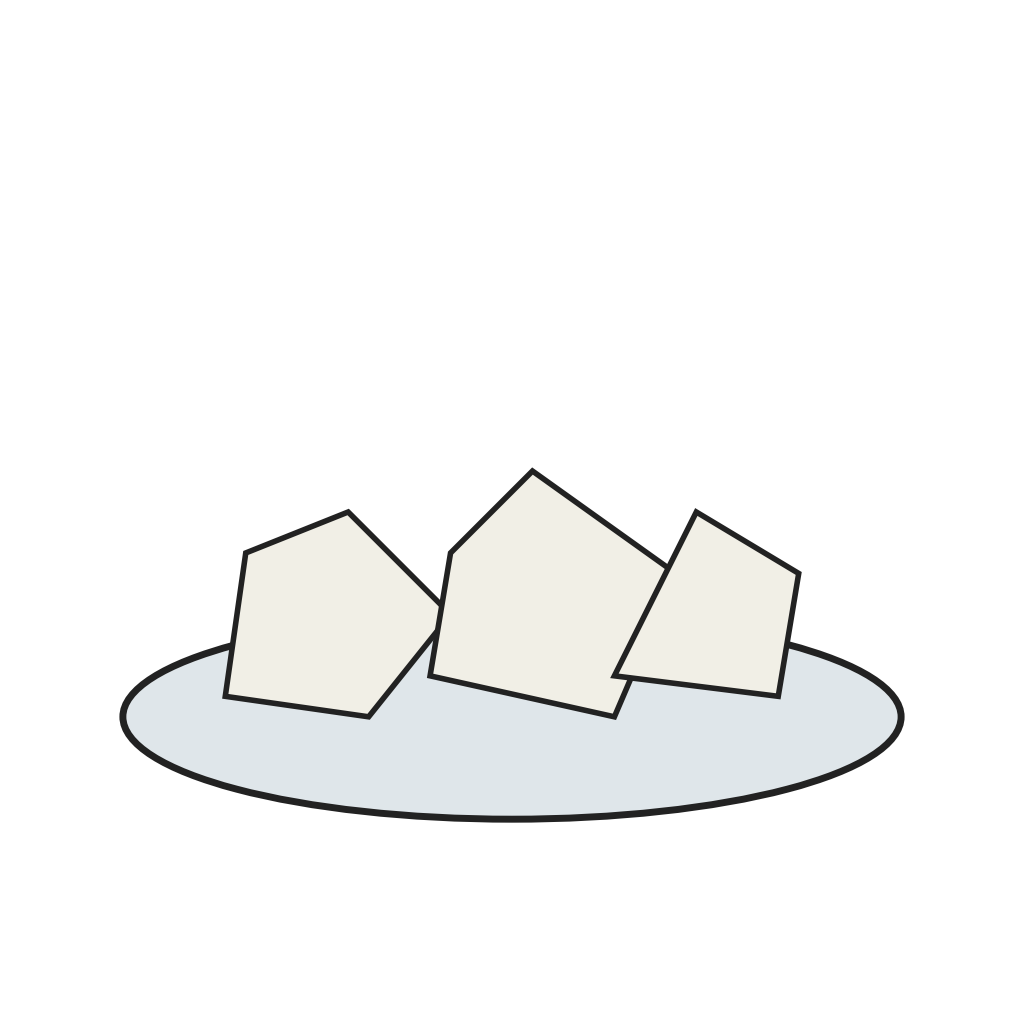 པོ་ཊེ་སི་ཡམ་བའི་སཱལ་ཕེཊ400 g
 བཙོ་བཏོན་ཆུ།1 ལི་ཊར།
ལག་ཆས་དགོས་མཁོ:
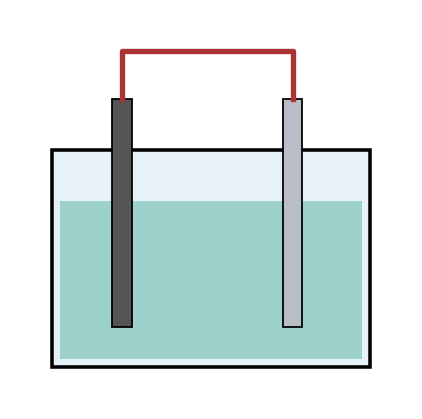 ཨེ་ལེག་ཊོ་ལའི་སིས་སྣོད།
 ཨང་རྟགས་ཐབ་ཚང་སྲང་།
 ཚ་ཚད་འཇལ་ཆས།
 རྫས་སྦྱོར་བཟོད་ཐུབ་པའི་ལག་ཤུབས།
 ཉེན་སྲུང་མིག་ཤེལ།
2
2
Electrolyse at high current density
Electrolyse at high current density
Use a platinum anode and a graphite cathode. Run about 1 A per dm² of anode; hydrogen comes off at the cathode.
ལག་ཆས་དགོས་མཁོ:
 པི་ལེ་ཊི་ནམ་ལྕགས་སྐུད།
 གྲ་ཕཱའིཊ་ཀྱི་ཨེ་ལེག་ཊོཌ།
 ཐད་རྒྱུན་གློག་ཁུངས།ཨེ་ལེག་ཊོ་ལའི་སིས་སྣོད།ཚ་ཚད་འཇལ་ཆས།
3
3
Collect the crystals
Collect the crystals
Potassium persulfate crystallises out as it forms. Filter it off, rinse with a little cold distilled water and dry it (our method).
ལག་ཆས་དགོས་མཁོ:
 བུཀ་ནར་གྱི་ཟླུམ་སྣོད། (རྫ་མཁན)
 འཚག་ཤོག
 ཁ་ཕྱེ་བའི་བསྐམ་སྡེརརྫས་སྦྱོར་བཟོད་ཐུབ་པའི་ལག་ཤུབས།
4
4
Use as initiator
Use as initiator
For emulsion polymerisation, about 0.1–0.5 % is used, usually at 75–95 °C. Store it apart from organic materials.
ལག་ཆས་དགོས་མཁོ:
ཨང་རྟགས་ཐབ་ཚང་སྲང་།5
5
Charge and time
Charge and time
Jupyter ཚང་དེབ་མངོན་གསལ་འབད་དོ་…
རྫས་རིགས
2- ས་ཆ་འཛིན
- 1 ལི་ཊར།ས་ཆ་འཛིན
ལག་ཆས་དགོས་མཁོ
11- ས་ཆ་འཛིན
- ས་ཆ་འཛིན
- ས་ཆ་འཛིན
- ས་ཆ་འཛིན
- ས་ཆ་འཛིན
- ས་ཆ་འཛིན
- ས་ཆ་འཛིན
- ས་ཆ་འཛིན
- ས་ཆ་འཛིན
- ས་ཆ་འཛིན
- ས་ཆ་འཛིན
བིལུ་པིརིན་ཊི་འདི་གིས་བཟོ་མི
འབྲེལ་ཡོད་བིལུ་པིརིན་ཊི
བིལུ་པིརིན་ཊི་འདི་ཚུ་ཐབས་ལམ་དང་རྫས་རིགས། སྤྱི་ཆོས་བགོ་བཤའ་བྱེད
CC0 སྤྱི་དབང
བིལུ་པིརིན་ཊི་འདི་CC0 འོག་བཀྲམས་ཡོད། ཁྱེད་རང་གིས་ཆོག་མཆན་མ་བཞེས་པར་ཕབ་ལེན་དང་བཟོ་བཅོས། བགོ་བཤའ། དགོས་མཁོ་གང་ལའང་བཀོལ་སྤྱོད་བྱས་ཆོག
བཟོ་མཁན་ལ་རྒྱབ་སྐྱོར་བྱེད་པའི་ཆེད་ཁོང་ཚོའི་བིལུ་པིརིན་ཊི་བརྒྱུད་ཐོན་སྐྱེད་ཉོ། བཟོ་མཁན་གྱིས བཟོ་མཁན་གྱི་ཁེ་ཕོགས ཚོང་པས་གཏན་འཁེལ་བྱས་པ། ཡང་ན་བིལུ་པིརིན་ཊི་འདིའི་པར་གསར་བཟོས་ཏེ་ཁྱེད་རང་གི་བིལུ་པིརིན་ཊི་ནང་མཐུད་སྦྲེལ་བྱས་ཏེ་ཡོང་སྒོ་བགོ་བཤའ་བྱེད།