སྒྱུ་རྩལ
མཛེས་སྡུག་དང་བདེ་ཐང
བཟོ་རིག
རིག་གནས་དང་ལོ་རྒྱུས
དགའ་སྟོན
ཁོར་ཡུག
ཟས་དང་བཏུང་རྫས
ཕྱིར་འཕྲུལ་རིག
ཚན་རིག
རྩེད་འགྲན
རིག་རྩལ
གྱོན་རུང


PTFE Fine Powder: a Dispersion Stirred Until It Curdles (Lontz 1952)
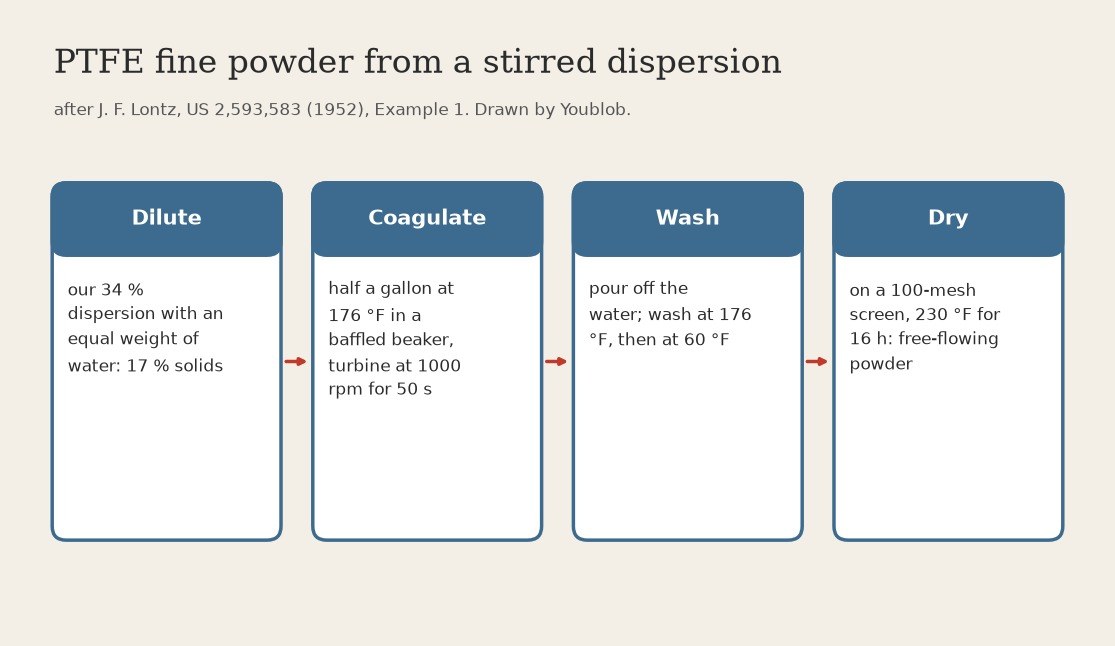
A PTFE dispersion is stable on the shelf, but stirred hard enough it curdles. Fifty seconds at 1000 rpm in a baffled beaker and the polymer floats up as a dry-looking, unwettable crumb. Washed and dried, it is a free-flowing powder for rolling into tape, or for cold lubricated extrusion.
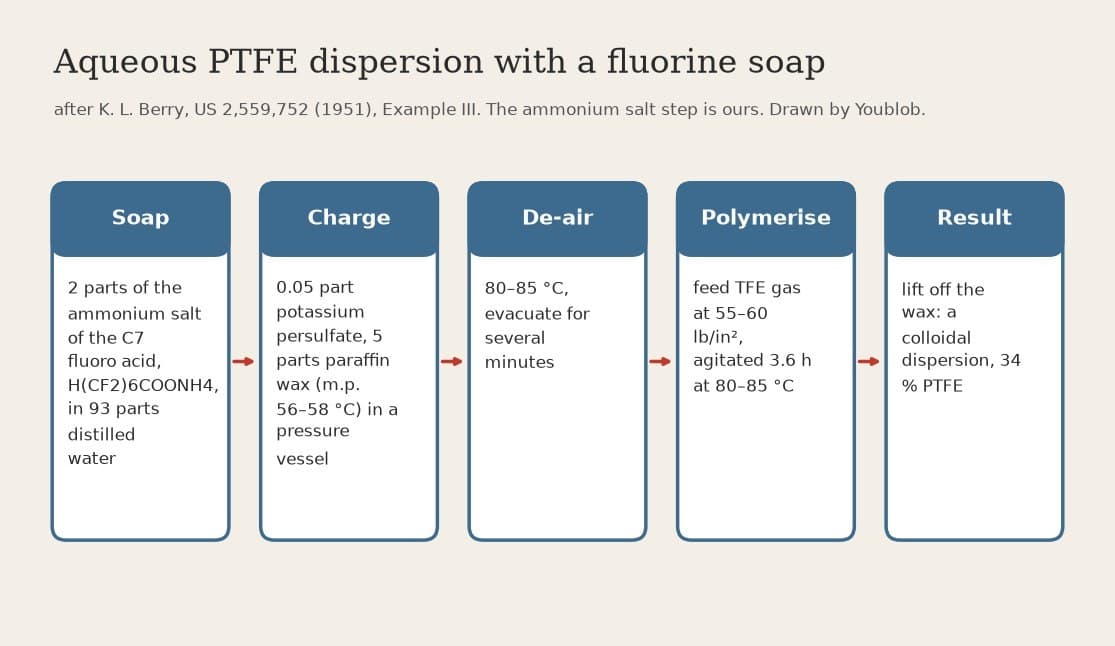
Source: J. F. Lontz (du Pont), US 2,593,583 (1952), Example 1. Lontz started from a dispersion made with disuccinic acid peroxide; ours is Berry's persulfate dispersion, diluted to his 17 %. Picture drawn by Youblob.
བར་མ
1 day
ལམ་སྟོན
1
1
Dilute the dispersion to 17 %
Dilute the dispersion to 17 %
Ours: stir the 34 % dispersion with an equal weight of distilled water to get 17 % solids, the strength Lontz used.
གོམ་པ་འདིའི་རྫས་རིགས:
 ཆུ་ནང་གི་ PTFE ཁྱབ་སྤེལ།1 part
 བཙོ་བཏོན་ཆུ།1 part
ལག་ཆས་དགོས་མཁོ:
 ལག་པ་འདྲ་མཉམ་གྱི་སྲང་།
 ཁ་བཅད་ཡོད་པའི་ཤེལ་སྣོད།
2
2
Set up the baffled beaker
Set up the baffled beaker
A 1-gallon stainless beaker, 6.5 in across and 7.5 in deep, with four baffles about ⅜ × 1 in hanging from the cover to within 3 in of the bottom. Stirrer: open turbine, 4 blades 1½ in high, 5 in across, reaching to within 1 in of the bottom.
ལག་ཆས་དགོས་མཁོ:
 བར་བཀག་ཡོད་པའི་ དཀྲུག་ནི་ཊེང་ཀི།
 དཀྲུག་ཆས་
3
3
Stir hard at 176 °F for 50 seconds
Stir hard at 176 °F for 50 seconds
Put in half a gallon of the 17 % dispersion and heat it to 176 °F (80 °C). Run the stirrer at 1000 rpm for 50 seconds (Lontz measured 0.72 hp per gallon). The polymer coagulates and floats, unwetted, on top.
ལག་ཆས་དགོས་མཁོ:
བར་བཀག་ཡོད་པའི་ དཀྲུག་ནི་ཊེང་ཀི།དཀྲུག་ཆས་ ཚ་བཟོའི་ལེབ།
 ཚ་ཚད་འཇལ་ཆས།
4
4
Wash hot, then cold
Wash hot, then cold
Pour off the water. Wash the polymer with hot water at 176 °F, then with cold water at 60 °F (16 °C), and drain.
ལག་ཆས་དགོས་མཁོ:
བར་བཀག་ཡོད་པའི་ དཀྲུག་ནི་ཊེང་ཀི།ཚ་ཚད་འཇལ་ཆས།5
5
Dry at 230 °F for 16 hours
Dry at 230 °F for 16 hours
Spread the wet polymer on a 100-mesh screen and dry it in an oven at 230 °F (110 °C) for 16 hours. It comes out a free-flowing granular powder that passes 6–8 mesh.
ལག་ཆས་དགོས་མཁོ:
 ལྕགས་སྐུད་ཞིབ་མོའི་ཚགས་མ།
 སྐམ་ནིའི་ཐབཁ་བཅད་ཡོད་པའི་ཤེལ་སྣོད།
རྫས་རིགས
2- 1 partས་ཆ་འཛིན
- 1 partས་ཆ་འཛིན
ལག་ཆས་དགོས་མཁོ
8- ས་ཆ་འཛིན
- ས་ཆ་འཛིན
- ས་ཆ་འཛིན
- ས་ཆ་འཛིན
- ས་ཆ་འཛིན
- ས་ཆ་འཛིན
- ས་ཆ་འཛིན
- ས་ཆ་འཛིན
བིལུ་པིརིན་ཊི་འདི་གིས་བཟོ་མི
འབྲེལ་ཡོད་བིལུ་པིརིན་ཊི
བིལུ་པིརིན་ཊི་འདི་ཚུ་ཐབས་ལམ་དང་རྫས་རིགས། སྤྱི་ཆོས་བགོ་བཤའ་བྱེད
CC0 སྤྱི་དབང
བིལུ་པིརིན་ཊི་འདི་CC0 འོག་བཀྲམས་ཡོད། ཁྱེད་རང་གིས་ཆོག་མཆན་མ་བཞེས་པར་ཕབ་ལེན་དང་བཟོ་བཅོས། བགོ་བཤའ། དགོས་མཁོ་གང་ལའང་བཀོལ་སྤྱོད་བྱས་ཆོག
བཟོ་མཁན་ལ་རྒྱབ་སྐྱོར་བྱེད་པའི་ཆེད་ཁོང་ཚོའི་བིལུ་པིརིན་ཊི་བརྒྱུད་ཐོན་སྐྱེད་ཉོ། བཟོ་མཁན་གྱིས བཟོ་མཁན་གྱི་ཁེ་ཕོགས ཚོང་པས་གཏན་འཁེལ་བྱས་པ། ཡང་ན་བིལུ་པིརིན་ཊི་འདིའི་པར་གསར་བཟོས་ཏེ་ཁྱེད་རང་གི་བིལུ་པིརིན་ཊི་ནང་མཐུད་སྦྲེལ་བྱས་ཏེ་ཡོང་སྒོ་བགོ་བཤའ་བྱེད།