སྒྱུ་རྩལ
མཛེས་སྡུག་དང་བདེ་ཐང
བཟོ་རིག
རིག་གནས་དང་ལོ་རྒྱུས
དགའ་སྟོན
ཁོར་ཡུག
ཟས་དང་བཏུང་རྫས
ཕྱིར་འཕྲུལ་རིག
ཚན་རིག
རྩེད་འགྲན
རིག་རྩལ
གྱོན་རུང
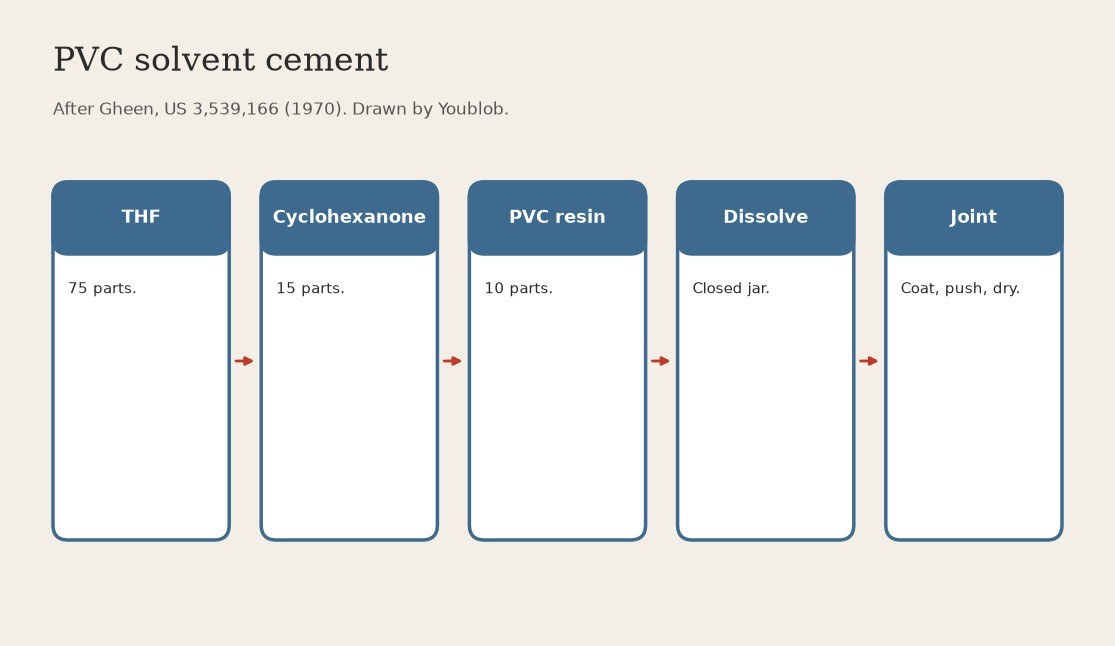


PVC Solvent Cement: Tetrahydrofuran, Cyclohexanone and PVC Resin (Gheen, US 3,539,166)
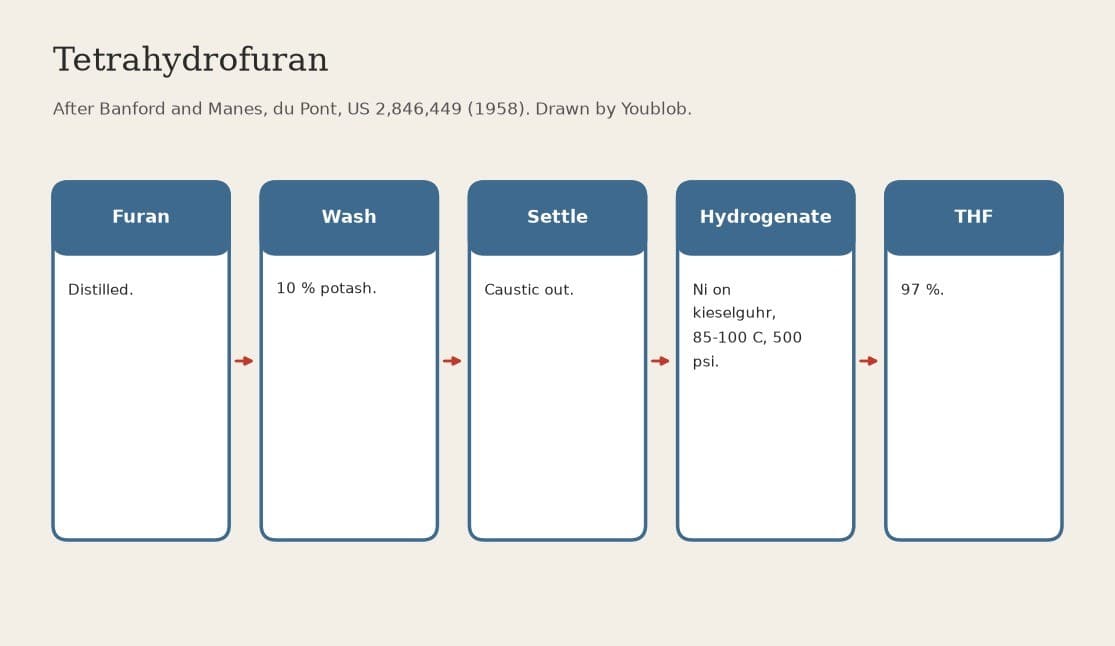
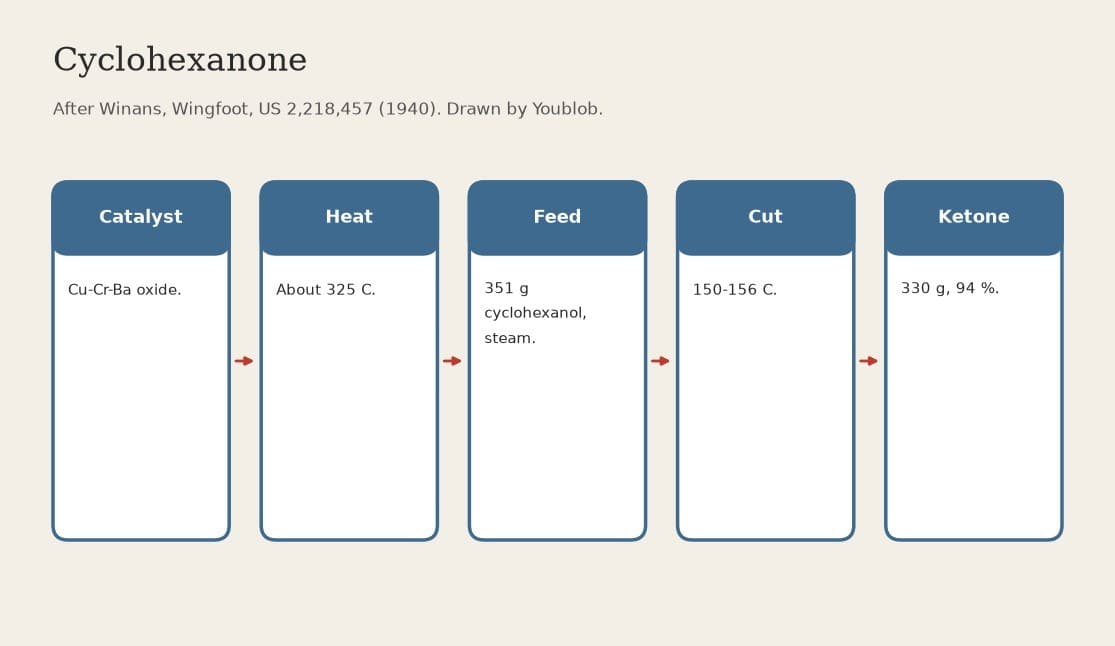
PVC pipe is not glued; it is welded by a solvent that softens both faces, which then dry as one. Gheen's cement is fast tetrahydrofuran, slow cyclohexanone and a little PVC resin for body.
Result: a solvent cement that bonds PVC pipe ends into their fittings.
Source: Gheen, US 3,539,166 (R. H. Pierce, 1970). Not given: how it is mixed. Picture drawn by Youblob.
འགོ་བཙུགས
1 hour
ལམ་སྟོན
1
1
Weigh the parts
Weigh the parts
Weigh 75 parts tetrahydrofuran, 15 parts cyclohexanone and 10 parts PVC suspension resin, by weight.
གོམ་པ་འདིའི་རྫས་རིགས:
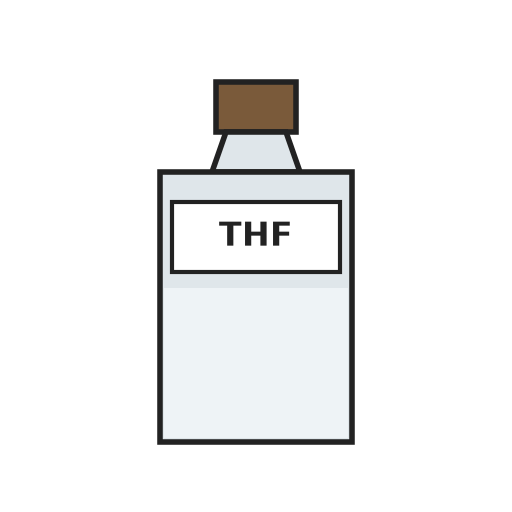 ཊེཊ་ར་ཧའི་ཌྲོ་ཕིའུ་རཱན།75 parts by weight
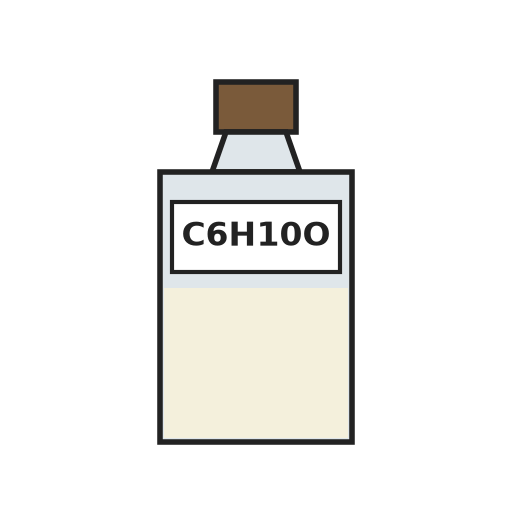 སའི་ཀ་ལོ་ཧེག་ས་ནོན།15 parts by weight
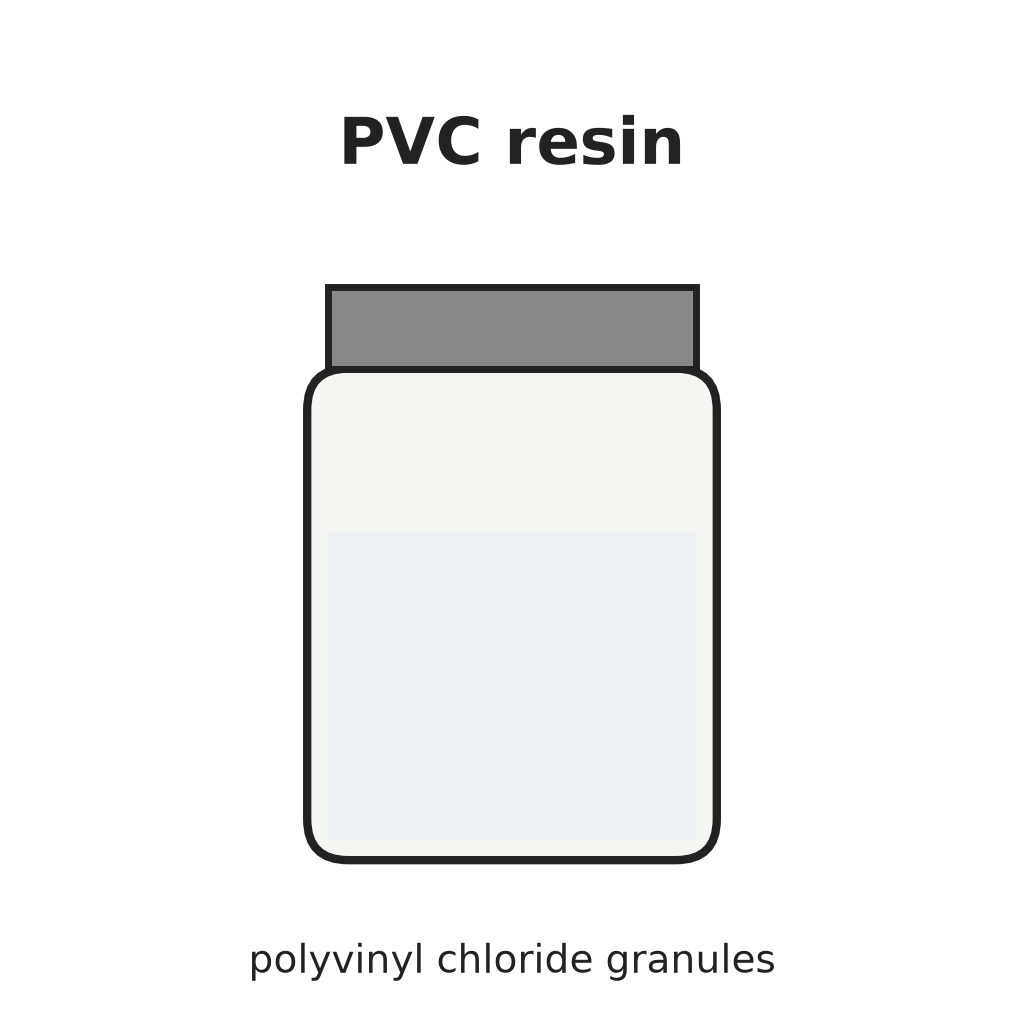 PVC རྒྱ་སྦྱར10 parts by weight
ལག་ཆས་དགོས་མཁོ:
 ལག་པ་འདྲ་མཉམ་གྱི་སྲང་།
2
2
Dissolve the resin
Dissolve the resin
Ours: stir the resin into the mixed solvents in a closed jar until clear, and keep it closed.
ལག་ཆས་དགོས་མཁོ:
 ཁ་བཅད་ཡོད་པའི་ཤེལ་སྣོད།
 དཀྲུག་ཤིང་།
3
3
Make a joint
Make a joint
Coat the inside of the socket and the outside of the pipe end, push the pipe home, and let the solvent evaporate. The faces stay bonded very strongly.
རྫས་རིགས
3- 75 parts by weightས་ཆ་འཛིན
- 15 parts by weightས་ཆ་འཛིན
- 10 parts by weightས་ཆ་འཛིན
ལག་ཆས་དགོས་མཁོ
3- ས་ཆ་འཛིན
- ས་ཆ་འཛིན
- ས་ཆ་འཛིན
བིལུ་པིརིན་ཊི་འདི་གིས་བཟོ་མི
འབྲེལ་ཡོད་བིལུ་པིརིན་ཊི
བིལུ་པིརིན་ཊི་འདི་ཚུ་ཐབས་ལམ་དང་རྫས་རིགས། སྤྱི་ཆོས་བགོ་བཤའ་བྱེད
CC0 སྤྱི་དབང
བིལུ་པིརིན་ཊི་འདི་CC0 འོག་བཀྲམས་ཡོད། ཁྱེད་རང་གིས་ཆོག་མཆན་མ་བཞེས་པར་ཕབ་ལེན་དང་བཟོ་བཅོས། བགོ་བཤའ། དགོས་མཁོ་གང་ལའང་བཀོལ་སྤྱོད་བྱས་ཆོག
བཟོ་མཁན་ལ་རྒྱབ་སྐྱོར་བྱེད་པའི་ཆེད་ཁོང་ཚོའི་བིལུ་པིརིན་ཊི་བརྒྱུད་ཐོན་སྐྱེད་ཉོ། བཟོ་མཁན་གྱིས བཟོ་མཁན་གྱི་ཁེ་ཕོགས ཚོང་པས་གཏན་འཁེལ་བྱས་པ། ཡང་ན་བིལུ་པིརིན་ཊི་འདིའི་པར་གསར་བཟོས་ཏེ་ཁྱེད་རང་གི་བིལུ་པིརིན་ཊི་ནང་མཐུད་སྦྲེལ་བྱས་ཏེ་ཡོང་སྒོ་བགོ་བཤའ་བྱེད།