སྒྱུ་རྩལ
མཛེས་སྡུག་དང་བདེ་ཐང
བཟོ་རིག
རིག་གནས་དང་ལོ་རྒྱུས
དགའ་སྟོན
ཁོར་ཡུག
ཟས་དང་བཏུང་རྫས
ཕྱིར་འཕྲུལ་རིག
ཚན་རིག
རྩེད་འགྲན
རིག་རྩལ
གྱོན་རུང
ཉེན་ཁ་ཅན།


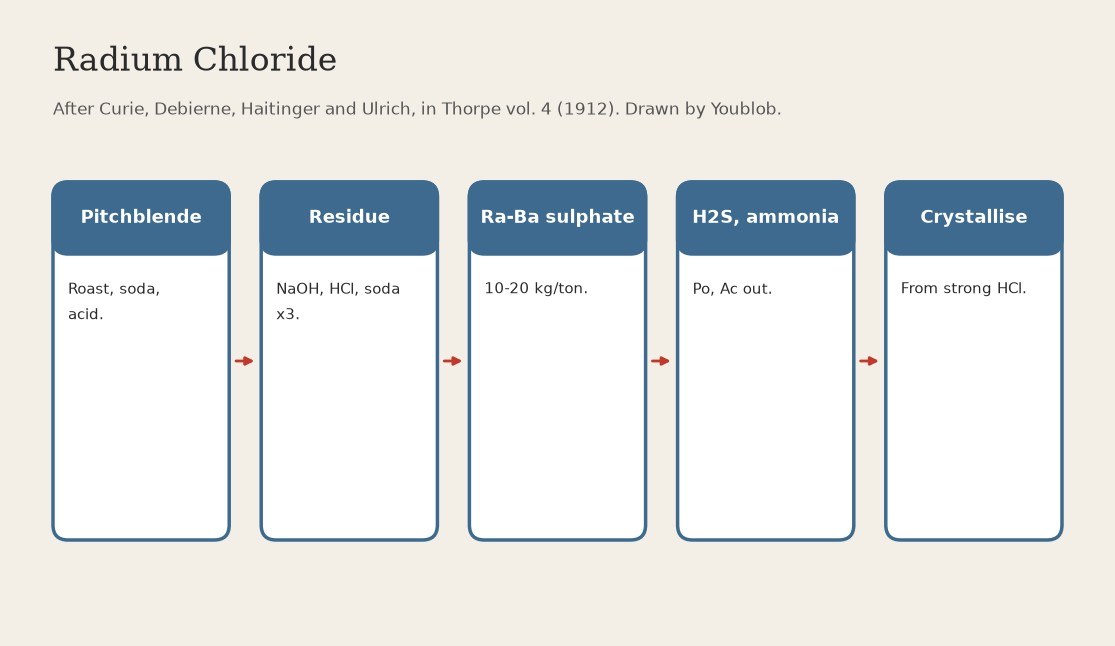
Radium Chloride: Pitchblende Residues Worked Up and the Chlorides Fractionally Crystallised from Hydrochloric Acid (Curie, Debierne, Haitinger and Ulrich, Thorpe 1912)
Radium hides in the residue left when uranium is leached out of pitchblende, together with barium. Boiling with soda and acids frees it as a radium-barium sulphate, and endless crystallisation of the chlorides from ever stronger hydrochloric acid slowly concentrates the less soluble radium chloride.
Result: radium chloride (a ton of residues gives 10-20 kg of crude barium-radium sulphate to start the crystallisations).
Source: Thorpe, Dictionary of Applied Chemistry vol. 4 (1912), RADIUM, pp. 544-545. Radium is intensely radioactive and a poison; hydrogen sulphide is a deadly gas. Picture drawn by Youblob.
མཐོ་རིམ
several months
ཉེན་ཁ་ཅན་ནང་དོན
བིལུ་པིརིན་ཊི་འདིའི་ནང་ཉེན་ཁ་ཅན་ལག་ལེན་ཡོད། གོམ་པ་རེ་རེའི་ལམ་སྟོན་བལྟ་ནིའི་ཆེད་ནང་འཛུལ་གནང་ཞིང་ཉེན་ཁ་ཅན་ནང་དོན་ལྕོགས་གནང།
ནང་བསྐྱོད་འབད།བིལུ་པིརིན་ཊི་འདི་གིས་བཟོ་མི
CC0 སྤྱི་དབང
བིལུ་པིརིན་ཊི་འདི་CC0 འོག་བཀྲམས་ཡོད། ཁྱེད་རང་གིས་ཆོག་མཆན་མ་བཞེས་པར་ཕབ་ལེན་དང་བཟོ་བཅོས། བགོ་བཤའ། དགོས་མཁོ་གང་ལའང་བཀོལ་སྤྱོད་བྱས་ཆོག
བཟོ་མཁན་ལ་རྒྱབ་སྐྱོར་བྱེད་པའི་ཆེད་ཁོང་ཚོའི་བིལུ་པིརིན་ཊི་བརྒྱུད་ཐོན་སྐྱེད་ཉོ། བཟོ་མཁན་གྱིས བཟོ་མཁན་གྱི་ཁེ་ཕོགས ཚོང་པས་གཏན་འཁེལ་བྱས་པ། ཡང་ན་བིལུ་པིརིན་ཊི་འདིའི་པར་གསར་བཟོས་ཏེ་ཁྱེད་རང་གི་བིལུ་པིརིན་ཊི་ནང་མཐུད་སྦྲེལ་བྱས་ཏེ་ཡོང་སྒོ་བགོ་བཤའ་བྱེད།