སྒྱུ་རྩལ
མཛེས་སྡུག་དང་བདེ་ཐང
བཟོ་རིག
རིག་གནས་དང་ལོ་རྒྱུས
དགའ་སྟོན
ཁོར་ཡུག
ཟས་དང་བཏུང་རྫས
ཕྱིར་འཕྲུལ་རིག
ཚན་རིག
རྩེད་འགྲན
རིག་རྩལ
གྱོན་རུང
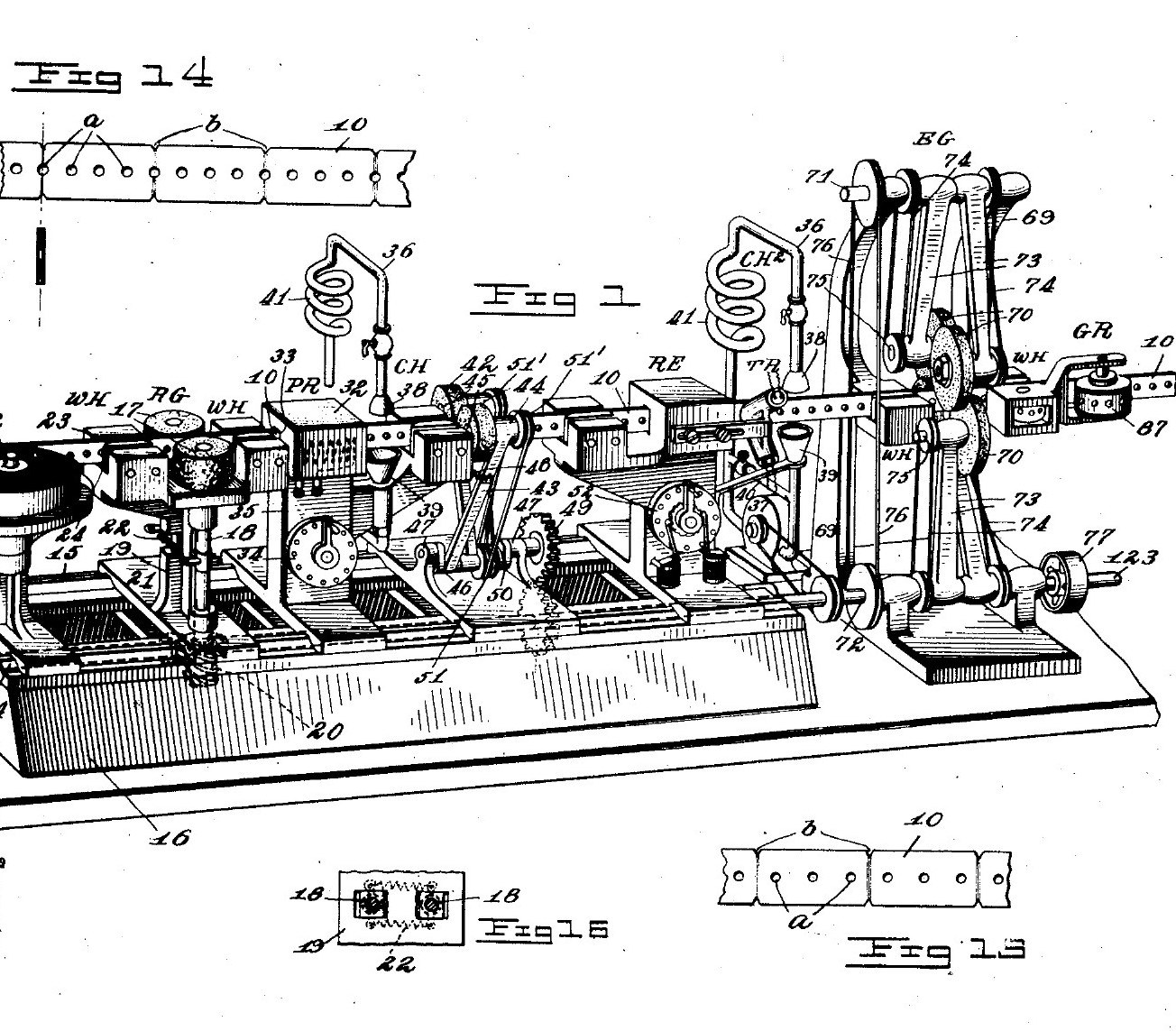
J. P. Tarbox · Public domain (US patent)


Razor Blades from a Continuous Steel Strip (Tarbox 1915)
Safety razor blades are made without ever cutting the steel into loose pieces first. A long strip, blade-wide and blade-thick, is punched and notched at every blade length. It then runs through grinding, hardening, tempering, edge grinding, stropping and wrapping, and only at the end is it snapped apart into blades. John Tarbox's machine even set the temper itself, with a selenium cell that watched the colour of the steel.
Source: J. P. Tarbox, US 1,165,037 (1915). The patent gives no temperatures, steel grade or blade sizes. Picture: Tarbox's drawing of the whole line.
མཐོ་རིམ
Continuous line
ལམ་སྟོན
1
1
Punch and weaken the strip
Punch and weaken the strip
Start from steel rolled into long strip as wide and as thick as the blade. Punch holes along it to suit the razor holder: a Gillette-type holder has three projections. At every blade length, weaken the strip by notching both edges, thinning it across, or punching a hole on the line.
གོམ་པ་འདིའི་རྫས་རིགས:
 སོལ་རྫས་ལྕགས་ཁར་གྱི་ལྕགས་ཐིག1 strip
ལག་ཆས་དགོས་མཁོ:
 ཐེལ་རྒྱབ་གནོན་འཕྲུལ།
2
2
Rough-grind the faces
Rough-grind the faces
Feed the strip by its holes between a pair of grinding wheels, one on each side, to remove the surface irregularities.
ལག་ཆས་དགོས་མཁོ:
 ཕྱི་ཆས་འཁོར་ལོ
3
3
Harden: heat and chill
Harden: heat and chill
Run it through an electric tunnel heater, then straight into a chilling bath of oil or water.
ལག་ཆས་དགོས་མཁོ:
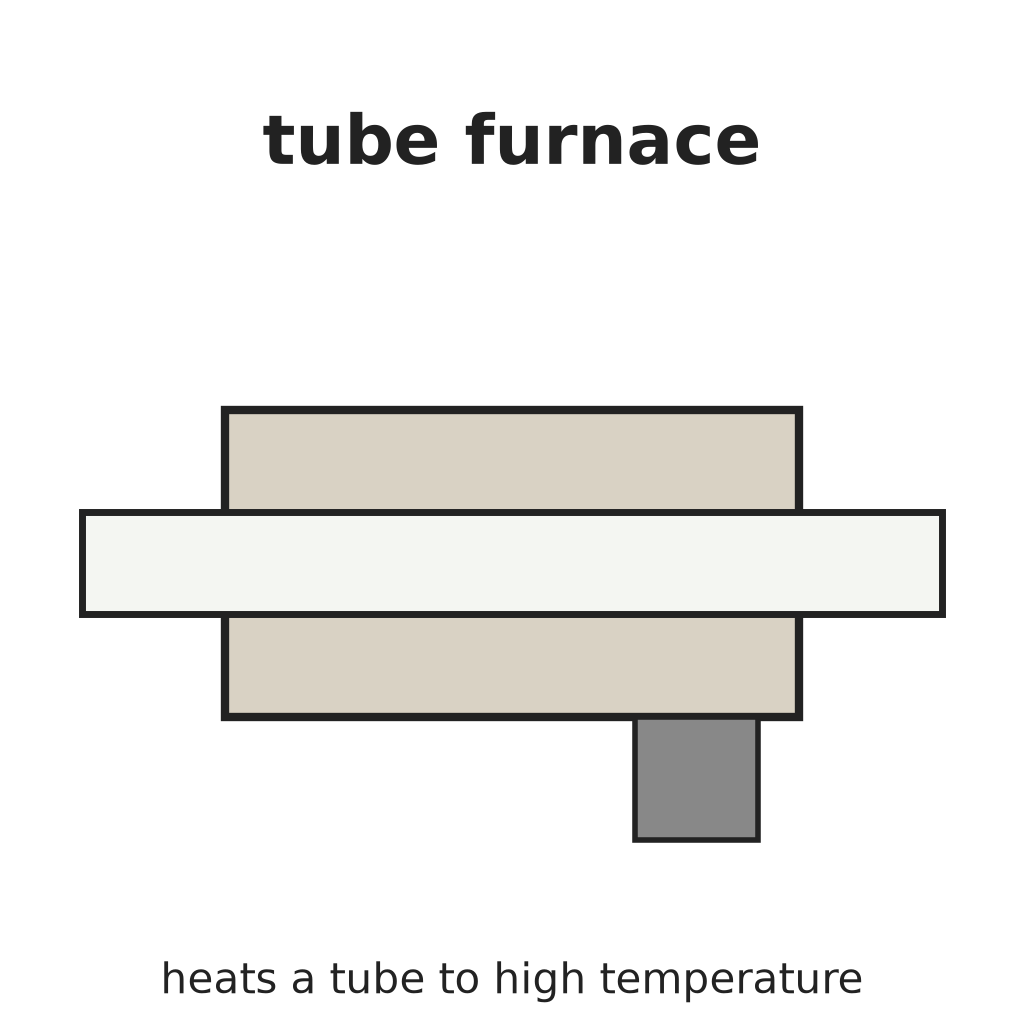 རྒྱུ་ཐིག་ཐབ
 སྣུམ་ཡོད་པའི་གྲང་བཟོའི་སྣོད
4
4
Rub off the oxide
Rub off the oxide
Pass it between emery wheels to rub the oxide off the chilled strip, so its temper colour can be seen when it is reheated.
ལག་ཆས་དགོས་མཁོ:
ཕྱི་ཆས་འཁོར་ལོ5
5
Temper to straw colour
Temper to straw colour
Reheat it in a second, smaller tunnel heater and chill it again. Tarbox held the colour at the temper wanted, for example straw, by letting a selenium cell compare the strip with a coloured standard disk and adjust the heater.
ལག་ཆས་དགོས་མཁོ:
རྒྱུ་ཐིག་ཐབསྣུམ་ཡོད་པའི་གྲང་བཟོའི་སྣོད6
6
Grind and strop the edges
Grind and strop the edges
Grind both edges at once between four grinding wheels, hone if wanted, then pass the strip between strop wheels faced with stropping material.
ལག་ཆས་དགོས་མཁོ:
ཕྱི་ཆས་འཁོར་ལོ པགས་ཀོའི་གཏུབ་སྐུད།
7
7
Wrap, break apart and pack
Wrap, break apart and pack
Wrap the strip spirally in paraffined paper. Then snap it at each weakened line over notched wheels, alternately from each side, and count and pack the blades.
ལག་ཆས་དགོས་མཁོ:
 སྤོས་བྱུགས་ཤོག་གུ
རྫས་རིགས
1- 1 stripས་ཆ་འཛིན
ལག་ཆས་དགོས་མཁོ
6- ས་ཆ་འཛིན
- ས་ཆ་འཛིན
- ས་ཆ་འཛིན
- ས་ཆ་འཛིན
- ས་ཆ་འཛིན
- ས་ཆ་འཛིན
བིལུ་པིརིན་ཊི་འདི་གིས་བཟོ་མི

འབྲེལ་ཡོད་བིལུ་པིརིན་ཊི
བིལུ་པིརིན་ཊི་འདི་ཚུ་ཐབས་ལམ་དང་རྫས་རིགས། སྤྱི་ཆོས་བགོ་བཤའ་བྱེད
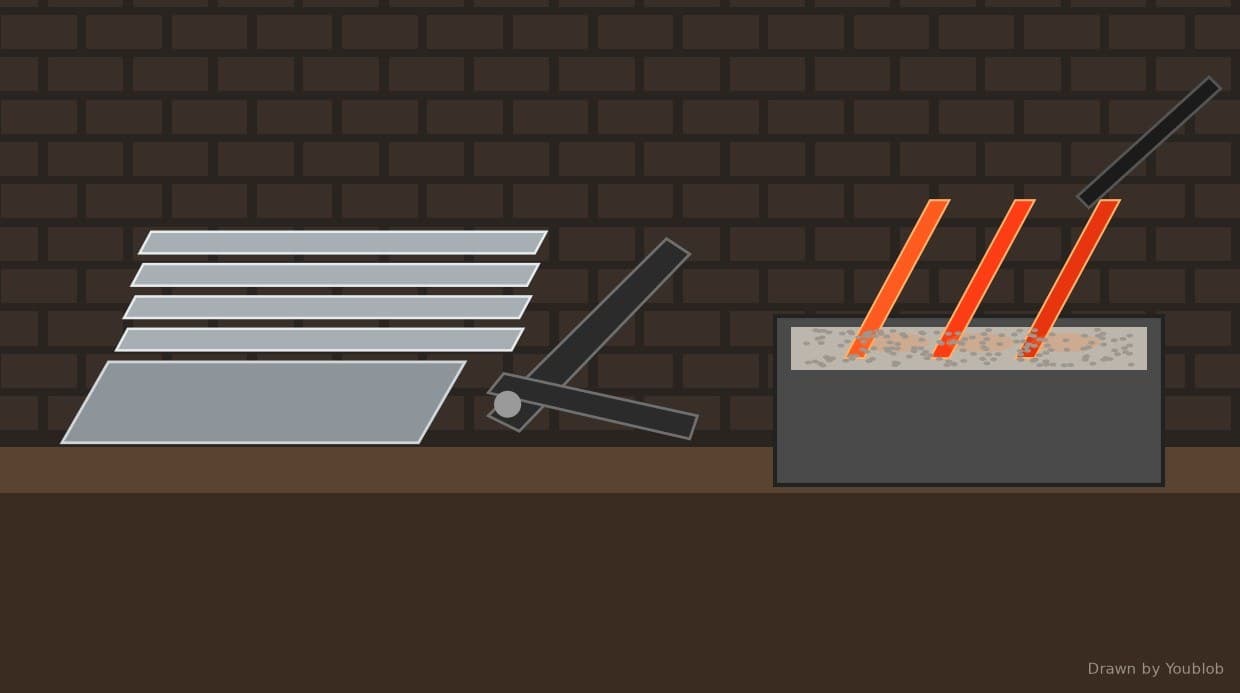
CC0 སྤྱི་དབང
བིལུ་པིརིན་ཊི་འདི་CC0 འོག་བཀྲམས་ཡོད། ཁྱེད་རང་གིས་ཆོག་མཆན་མ་བཞེས་པར་ཕབ་ལེན་དང་བཟོ་བཅོས། བགོ་བཤའ། དགོས་མཁོ་གང་ལའང་བཀོལ་སྤྱོད་བྱས་ཆོག
བཟོ་མཁན་ལ་རྒྱབ་སྐྱོར་བྱེད་པའི་ཆེད་ཁོང་ཚོའི་བིལུ་པིརིན་ཊི་བརྒྱུད་ཐོན་སྐྱེད་ཉོ། བཟོ་མཁན་གྱིས བཟོ་མཁན་གྱི་ཁེ་ཕོགས ཚོང་པས་གཏན་འཁེལ་བྱས་པ། ཡང་ན་བིལུ་པིརིན་ཊི་འདིའི་པར་གསར་བཟོས་ཏེ་ཁྱེད་རང་གི་བིལུ་པིརིན་ཊི་ནང་མཐུད་སྦྲེལ་བྱས་ཏེ་ཡོང་སྒོ་བགོ་བཤའ་བྱེད།