སྒྱུ་རྩལ
མཛེས་སྡུག་དང་བདེ་ཐང
བཟོ་རིག
རིག་གནས་དང་ལོ་རྒྱུས
དགའ་སྟོན
ཁོར་ཡུག
ཟས་དང་བཏུང་རྫས
ཕྱིར་འཕྲུལ་རིག
ཚན་རིག
རྩེད་འགྲན
རིག་རྩལ
གྱོན་རུང
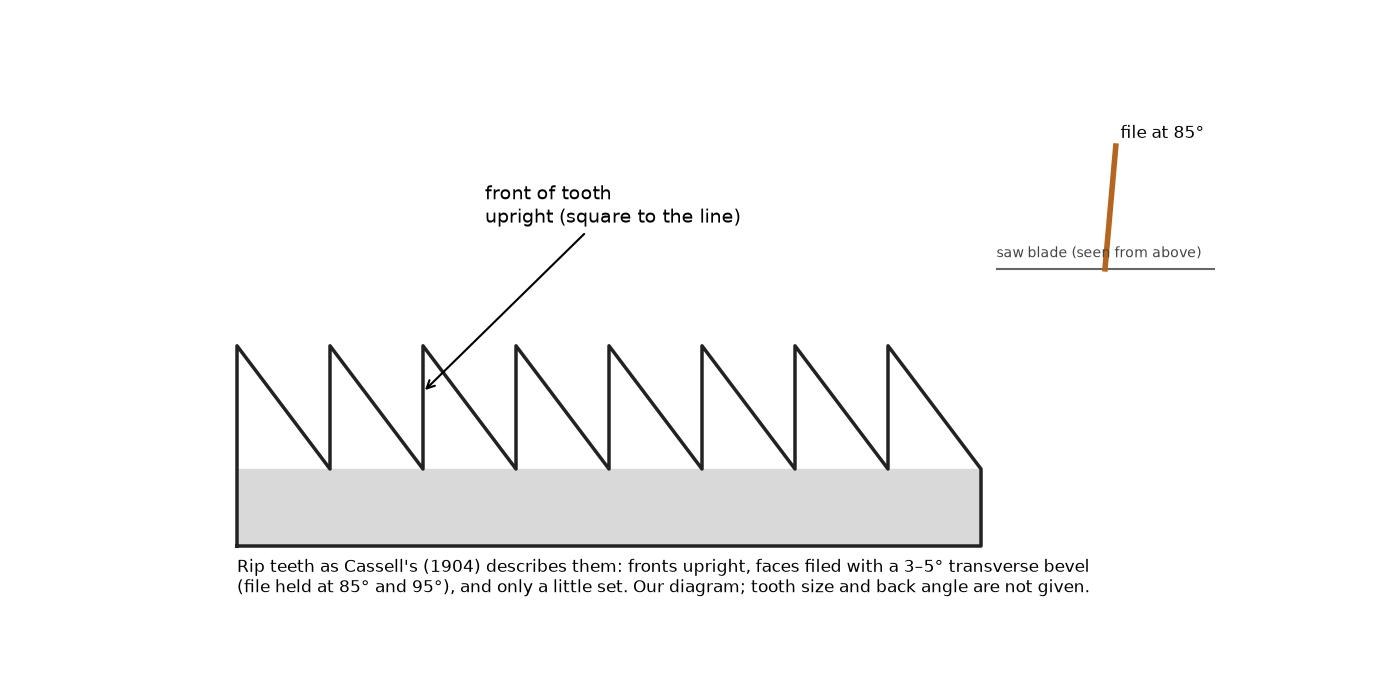


Rip Saw: a Hand Saw Filed with Upright Teeth and Little Set (Cassell's Cyclopaedia, 1904)
A rip saw cuts along the grain, so its teeth work like a row of small chisels, not like the knife points of a cross-cut saw. Cassell's Cyclopaedia of Mechanics (1904) says how to file one: the fronts of the teeth perfectly upright, the faces given a transverse bevel of only 3 to 5 degrees (the file held at 85 and 95 degrees), and only a little set, less than a cross-cut saw needs.
It gives no tooth size, back angle or amount of set; those are unknown here.
Source: P. N. Hasluck (ed.), Cassell's Cyclopaedia of Mechanics vol. V (1904), p. 73, Setting Saw Teeth. Picture: our diagram.
བར་མ
An hour
ལམ་སྟོན
1
1
Read Cassell's
Read Cassell's
"The teeth in a rip saw should be so filed that their fronts will be perfectly upright. A transverse bevel of from 3° to 5° should be given to the faces of the teeth."
2
2
Clamp the saw
Clamp the saw
Clamp the hand saw in the vice with its teeth just above the jaws, so the blade cannot chatter under the file.
གོམ་པ་འདིའི་རྫས་རིགས:
 ཤིང་བཟོའི་སོག་ལེ1 hand saw
ལག་ཆས་དགོས་མཁོ:
 ལས་ཅོག་གི་འཛིན་ཆས།
3
3
File the teeth upright
File the teeth upright
File each tooth so its front stands perfectly upright to the line of the teeth. Hold the file at 85° to the blade for one side and 95° for the other, to give the faces a transverse bevel of about 5°; 3° is the least. File alternate teeth from one side, then turn the saw and file the others. Tooth size and the slope of the backs are not given (unknown).
ལག་ཆས་དགོས་མཁོ:
 སོག་ལེའི་སོ་བརྡར་ཆས།
 མ་ཤེས་པའི་ཚད།
4
4
Set lightly and evenly
Set lightly and evenly
Set the teeth alternately left and right with the saw set, the same amount on each side. A properly ground ripping saw needs only a little set, less than a cross-cut saw; how much depends on the timber, the thickness of the blade and how it is ground (not given, unknown).
ལག་ཆས་དགོས་མཁོ:
 སོ་སྒྱུར་ཆས།མ་ཤེས་པའི་ཚད།
5
5
History and honest limits
History and honest limits
On the same page Cassell's gives the other hand saws: a cross-cut saw's fronts recline about 10° and need a keener edge, a tenon saw is filed much like a hand saw with less bevel, and a panel saw, used both ripping and cross-cutting, like a mitre saw.
Tooth size, back angle and amount of set are not given; the saw is a hand saw refiled for ripping.
རྫས་རིགས
1- 1 hand sawས་ཆ་འཛིན
ལག་ཆས་དགོས་མཁོ
4- ས་ཆ་འཛིན
- ས་ཆ་འཛིན
- ས་ཆ་འཛིན
- ས་ཆ་འཛིན
བིལུ་པིརིན་ཊི་འདི་གིས་བཟོ་མི

CC0 སྤྱི་དབང
བིལུ་པིརིན་ཊི་འདི་CC0 འོག་བཀྲམས་ཡོད། ཁྱེད་རང་གིས་ཆོག་མཆན་མ་བཞེས་པར་ཕབ་ལེན་དང་བཟོ་བཅོས། བགོ་བཤའ། དགོས་མཁོ་གང་ལའང་བཀོལ་སྤྱོད་བྱས་ཆོག
བཟོ་མཁན་ལ་རྒྱབ་སྐྱོར་བྱེད་པའི་ཆེད་ཁོང་ཚོའི་བིལུ་པིརིན་ཊི་བརྒྱུད་ཐོན་སྐྱེད་ཉོ། བཟོ་མཁན་གྱིས བཟོ་མཁན་གྱི་ཁེ་ཕོགས ཚོང་པས་གཏན་འཁེལ་བྱས་པ། ཡང་ན་བིལུ་པིརིན་ཊི་འདིའི་པར་གསར་བཟོས་ཏེ་ཁྱེད་རང་གི་བིལུ་པིརིན་ཊི་ནང་མཐུད་སྦྲེལ་བྱས་ཏེ་ཡོང་སྒོ་བགོ་བཤའ་བྱེད།