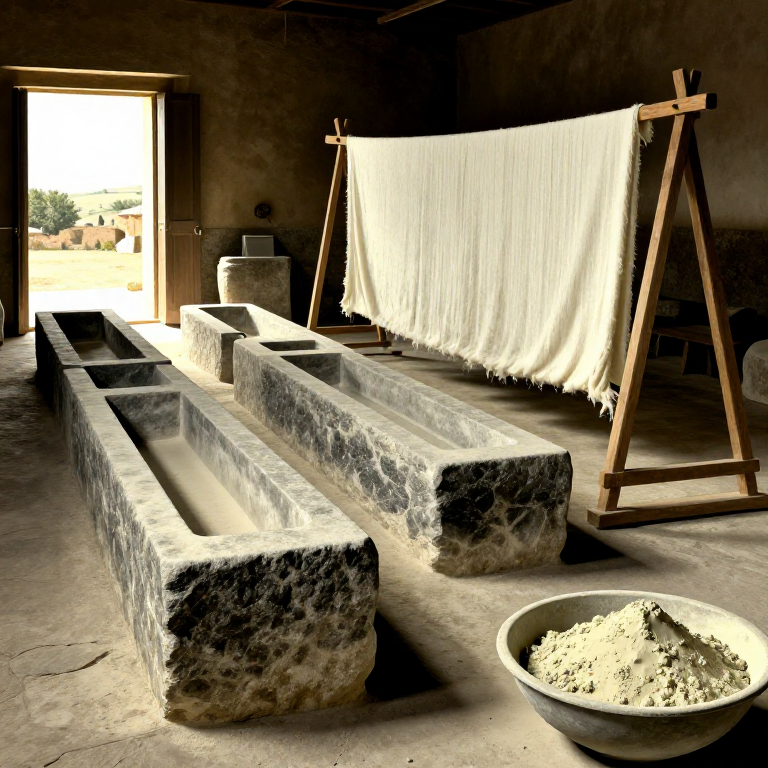


Cleaning Wool in a Fullery with Urine and Fuller's Earth — Roman Textile Processing
ལམ་སྟོན
Prepare the Fulling Liquor
Prepare the Fulling Liquor
Collect human urine in a sealed vessel and allow it to age for at least one week. During this time, the enzyme urease (produced by bacteria) breaks down urea into ammonia and carbon dioxide. The resulting solution has a pH of approximately 9 to 10 and an ammonia concentration of roughly 5 percent — an effective degreasing and mild bleaching agent. Roman fulleries collected urine from public latrines and placed collection jars (dolia curta) on street corners for passers-by to contribute. The Pompeian fullery of Stephanus had a system of interconnected vats for processing different stages. If aged urine is unavailable, dilute household ammonia to approximately 5 percent concentration as a substitute, which provides the same active chemistry.
གོམ་པ་འདིའི་རྫས་རིགས:
 རས་ཆས (འཚག་ནིའི་དོན་ལུ)1-2 metres of fabric དུམ་བུ།
 གཅིན་པ་རྙིངམ།10-15 litres དུམ་བུ།
 བེན་ཊོ་ནཱའིཊ་ས་འཇིམ།500 grams དུམ་བུ།
 ཆུ།large quantity དུམ་བུ།
 སལ་ཕར་གྱི་ལུདsmall piece དུམ་བུ།
ལག་ཆས་དགོས་མཁོ:
 རྡོ།
རྡོ། སྨྱུག་མའི་བསྐམ་ཀ་བ།
 འཁྲུ་བའི་སྤུ་ཤད།
 ར་བའི་ཤིང་གཏུབ་ནིའི་ཇེམ་ཚི
Tread the Cloth in the Fulling Vat
Tread the Cloth in the Fulling Vat
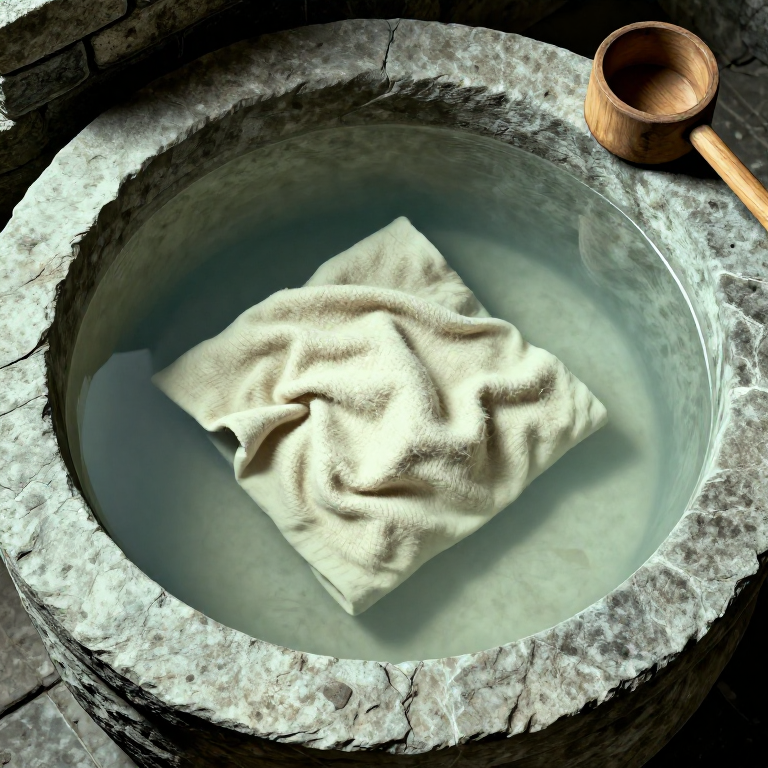
Place the wool cloth in the vat and pour in the aged urine or ammonia solution until the cloth is submerged. The cloth must be trampled (saltus fullonicus) — walked on vigorously with bare feet — for 30 to 60 minutes to work the alkaline liquid through the fibres. The mechanical action of treading, combined with the ammonia, dissolves the natural lanolin (wool grease) and lifts dirt from the fibres. The wool fibres also begin to interlock and felt under this mechanical agitation, thickening the cloth and making it more wind-resistant and waterproof. Roman frescoes from the fullery of Veranius Hypsaeus in Pompeii show fullones (workers) treading cloth in stone tubs while leaning against low walls for support. Continue treading until the cloth feels noticeably thicker and the wash liquor has turned cloudy and yellowish from dissolved lanolin.
Apply Fuller's Earth
Apply Fuller's Earth
Drain the first wash and spread the wet cloth on a flat surface. Sprinkle fuller's earth (calcium montmorillonite clay) liberally over both sides of the fabric and work it into the fibres by rubbing and kneading. Fuller's earth absorbs residual grease and stains through its high cation exchange capacity — the clay particles attract and bind oily molecules from the wool. Pliny the Elder describes several varieties of fuller's earth, noting that the best came from Sardinia and the Umbrian hills. Return the clay-treated cloth to the vat with fresh water and tread again for 15 to 20 minutes. The combination of ammonia degreasing followed by clay absorption effectively removes virtually all the lanolin and soil from the wool, leaving it clean and soft.
Rinse Thoroughly
Rinse Thoroughly
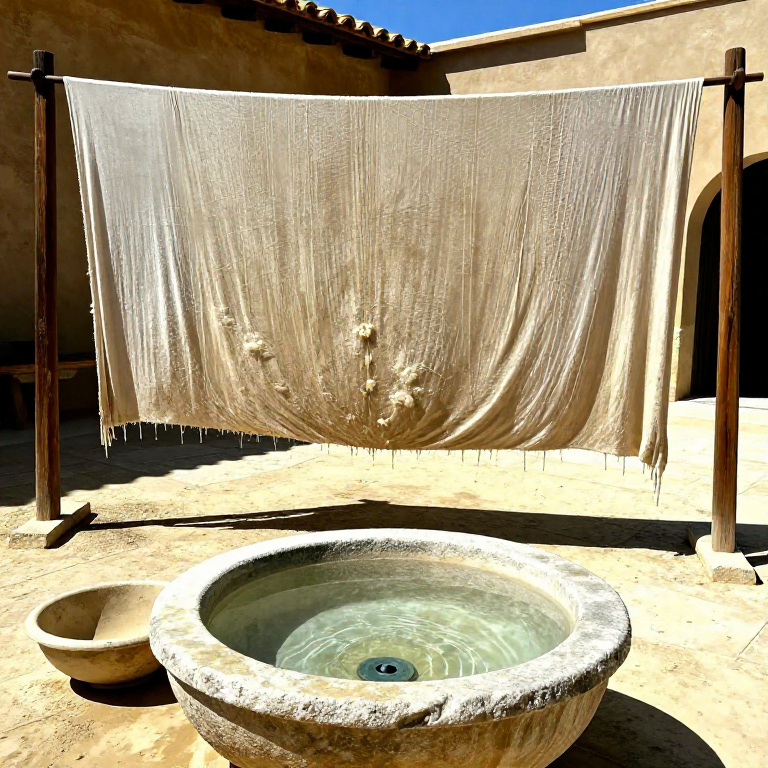
Rinse the cloth in multiple changes of clean water until no clay residue or ammonia odour remains. The Pompeian fulleries had a series of interconnected rinsing basins fed by the city's aqueduct water supply. Wring the cloth gently — do not twist violently, as this can distort the weave. For white cloth, an optional bleaching step can be performed at this stage: drape the wet cloth over a wicker frame (viminea cavea) placed above a pot of burning sulphur. The sulphur dioxide gas acts as a reducing bleach, lightening the natural yellowish colour of wool to a brighter white. This process takes approximately 30 to 60 minutes of exposure. After bleaching, rinse again with clean water to remove any residual sulphur.
Raise and Crop the Nap
Raise and Crop the Nap
Hang the clean, damp cloth on a wooden frame and brush the surface vigorously with dried teasel heads (Dipsacus fullonum — the species name literally means 'of the fullers'). The hooked spines of the teasel catch individual wool fibres and pull them up from the woven surface, creating a soft, fuzzy nap. Work in one direction only for an even finish. Once the nap is raised, crop it to a uniform length using heavy textile shears (forfex), working across the fabric in smooth, even passes. This cropping and napping process can be repeated multiple times for finer fabrics — luxury Roman togas received extensive finishing to achieve the soft, draped texture prized in formal wear. Finally, press the cloth using a wooden screw-press (prelum) to flatten and smooth the surface. The finished cloth will be cleaner, thicker, softer, and more water-resistant than the original woven fabric.
རྫས་རིགས
6- 1-2 metres of fabric དུམ་བུ།ས་ཆ་འཛིན
- 500 grams དུམ་བུ།ས་ཆ་འཛིན
- large quantity དུམ་བུ།ས་ཆ་འཛིན
- small piece དུམ་བུ།ས་ཆ་འཛིན
- 10-15 litres དུམ་བུ།ས་ཆ་འཛིན
- 2 ལི་ཊར།ས་ཆ་འཛིན
ལག་ཆས་དགོས་མཁོ
6- ས་ཆ་འཛིན
- ས་ཆ་འཛིན
- ས་ཆ་འཛིན
- ས་ཆ་འཛིན
- ས་ཆ་འཛིན
- ས་ཆ་འཛིན
CC0 སྤྱི་དབང
བིལུ་པིརིན་ཊི་འདི་CC0 འོག་བཀྲམས་ཡོད། ཁྱེད་རང་གིས་ཆོག་མཆན་མ་བཞེས་པར་ཕབ་ལེན་དང་བཟོ་བཅོས། བགོ་བཤའ། དགོས་མཁོ་གང་ལའང་བཀོལ་སྤྱོད་བྱས་ཆོག
བཟོ་མཁན་ལ་རྒྱབ་སྐྱོར་བྱེད་པའི་ཆེད་ཁོང་ཚོའི་བིལུ་པིརིན་ཊི་བརྒྱུད་ཐོན་སྐྱེད་ཉོ། བཟོ་མཁན་གྱིས བཟོ་མཁན་གྱི་ཁེ་ཕོགས ཚོང་པས་གཏན་འཁེལ་བྱས་པ། ཡང་ན་བིལུ་པིརིན་ཊི་འདིའི་པར་གསར་བཟོས་ཏེ་ཁྱེད་རང་གི་བིལུ་པིརིན་ཊི་ནང་མཐུད་སྦྲེལ་བྱས་ཏེ་ཡོང་སྒོ་བགོ་བཤའ་བྱེད།